
Tuscany looms large in world travelers’ imagination, and rightfully so.
It’s the birthplace of the Italian Renaissance, where unfettered appreciation for the arts and stunning natural landscapes created some of the most influential artworks in human history. It’s a place where anyone can openly dream as they peer at the prettiest rolling green hills and vineyards they’ll ever see. It’s a place where you can drink the finest Chianti, Brunello, Vermentino, and olive oil to your heart’s desire. It’s a place that every traveler must visit, as the exquisite confluence of art, nature, viticulture, and gastronomy truly makes it one of the most wonderful destinations in the world.
Planning the dream road trip through Tuscany can be a tall order, since there are so many sights, villages, wineries, restaurants, and monuments to see. Thankfully, I got to do this road trip with Jetset Times CEO and Editor-in-Chief Wendy Hung, and by following this itinerary, we enjoyed a once-in-a-lifetime adventure. Here’s our complete Tuscany Road Trip Itinerary, which includes all the top places to visit and experiences that you can’t miss!
View this post on Instagram

ROAD TRIP STOP: Florence
Florence is the natural starting (and ending) point to a trip through Tuscany, since that’s where the regional airport is located. You could plan an entire trip just around Florence, as this spectacular city offers endless sites to see and things to do. Whether you’re checking out the most iconic art from the Renaissance or indulging in the best artisan goods made in Italy, there’s never a dull moment in Florence. If time allows, it’s good to spend at least 3 or 4 days in the city as an introduction to the history and culture of Tuscany itself.
Grand Hotel Minerva
P.za di Santa Maria Novella, 16, 50123 Firenze FI, Italy
Set in the mood for a Florentine adventure, check into Grand Hotel Minerva: the perpetual grand dame of Florence. This is the most iconic hotel in the city, thanks to unbeatable views of Piazza di Santa Maria Novella and the Duomo from the hotel’s luxurious guest rooms and suites. Not to mention, it has the only rooftop pool in the city, which offers jaw-dropping 360-degree views of Florence that will make you swoon.
 Grand Hotel Minerva room views. PHOTO NADIA CHO
The hotel was designed by the legendary architect Carlos Scarpa and prolifically displays the works of numerous Italian artists. Staying at Grand Hotel Minerva is a full immersion into the history and artistic tradition of Florence – the perfect way to kick off a road trip in the land of the Renaissance!
 Grand Hotel Minerva rooftop view. PHOTO NADIA CHO
Uffizi Galleries
Piazzale degli Uffizi, 6, 50122 Firenze FI, Italy
No trip to Florence is complete without a visit to the Uffizi Galleries – home to the most iconic artworks by great masters of the Renaissance, including: Caravaggio, Leonardo da Vinci, Raphael, and, of course, The Birth of Venus by Botticelli.
Walking through the Uffizi is a wondrous exploration of Tuscany’s natural and artistic beauty that inspired prolific artworks from the Renaissance. Be sure to buy tickets in advance, as they often sell out or require waiting in a long line, and dive into human history’s most prestigious art.
 Uffizi Gallery sculptures. PHOTO NADIA CHO
Casa Ruffino – Tenuta Poggio Casciano
Via Poggio al Mandorlo, 1, 50012 Bagno a Ripoli FI, Italy
Ruffino is one of the most historic wine producers in all of Italy. Established in 1877, it was among the first producers of Chianti Classico Riserva and the first brand that created wine to be shipped all over the world, which would come to be renowned on both sides of the Atlantic. With 120 acres of vineyards spread across multiple estates throughout Tuscany that produce over 20 different types of wines, Ruffino remains a giant in the world of fine Tuscan wines.
 Ruffino Poggio Casciano Estate. PHOTO NADIA CHO
Tenuta Poggio Casiano is the only Ruffino estate open to the public for hospitality experiences. The estate is located simply 30 minutes by car from Florence, and it’s the only winery where guests can reach by taxi from the city. The property includes Casa Ruffino, a charming boutique hotel with eight guest rooms and an infinity pool overlooking the gorgeous vineyards of the estate.
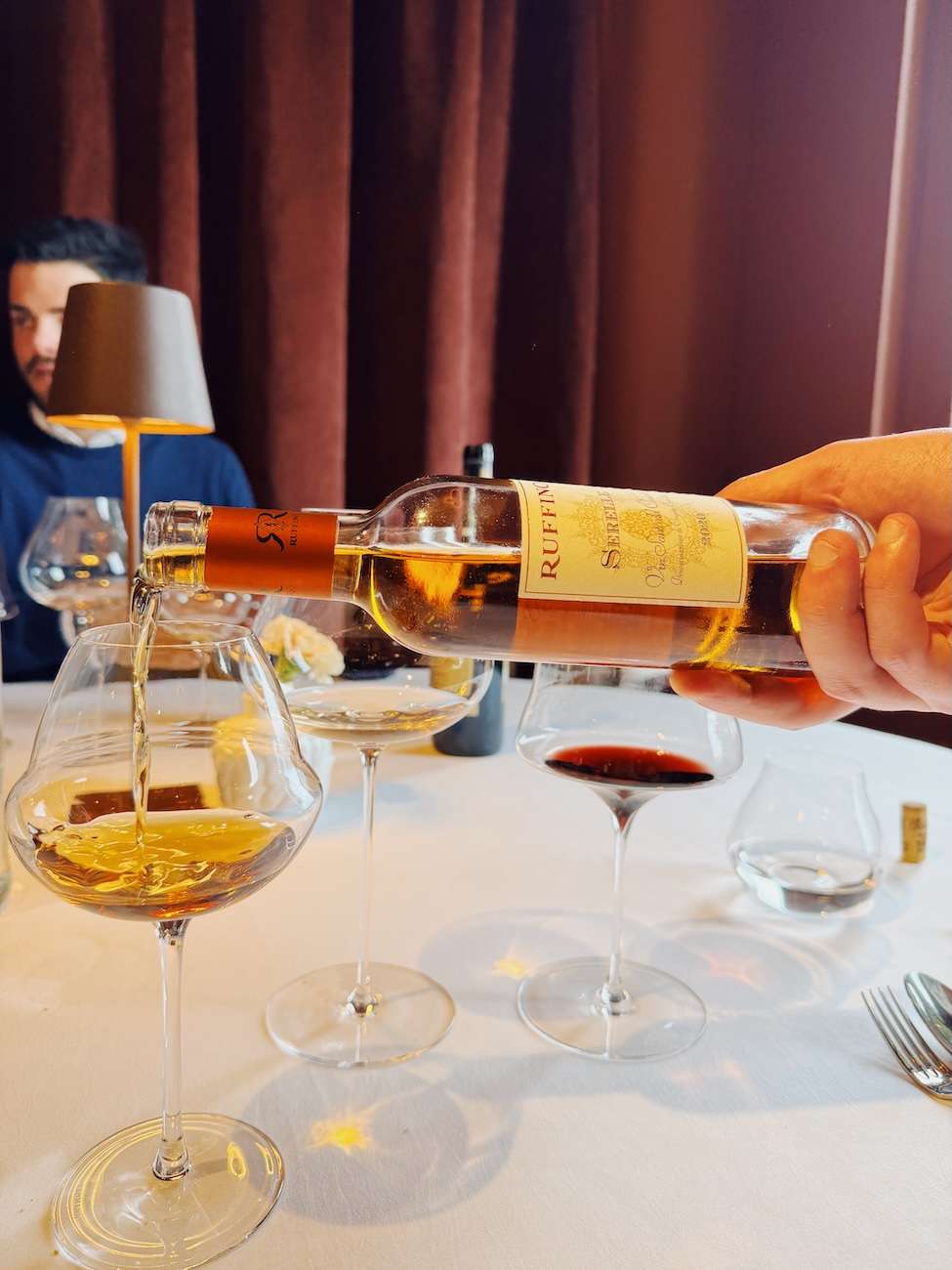 Ruffino port. PHOTO WENDY HUNG
There’s also Tre Rane Restaurant, which is open for lunch and dinner, where guests can dine in a beautifully designed dining room with views of the surrounding hills and vineyards. The restaurant prides itself on using all local and seasonal ingredients to showcase elevated Tuscan cuisine. All the dishes are creative but still rooted in the region, like the Ruffino version of vitello tonnato, made with beef carpaccio with capers and mackerel mayonnaise.
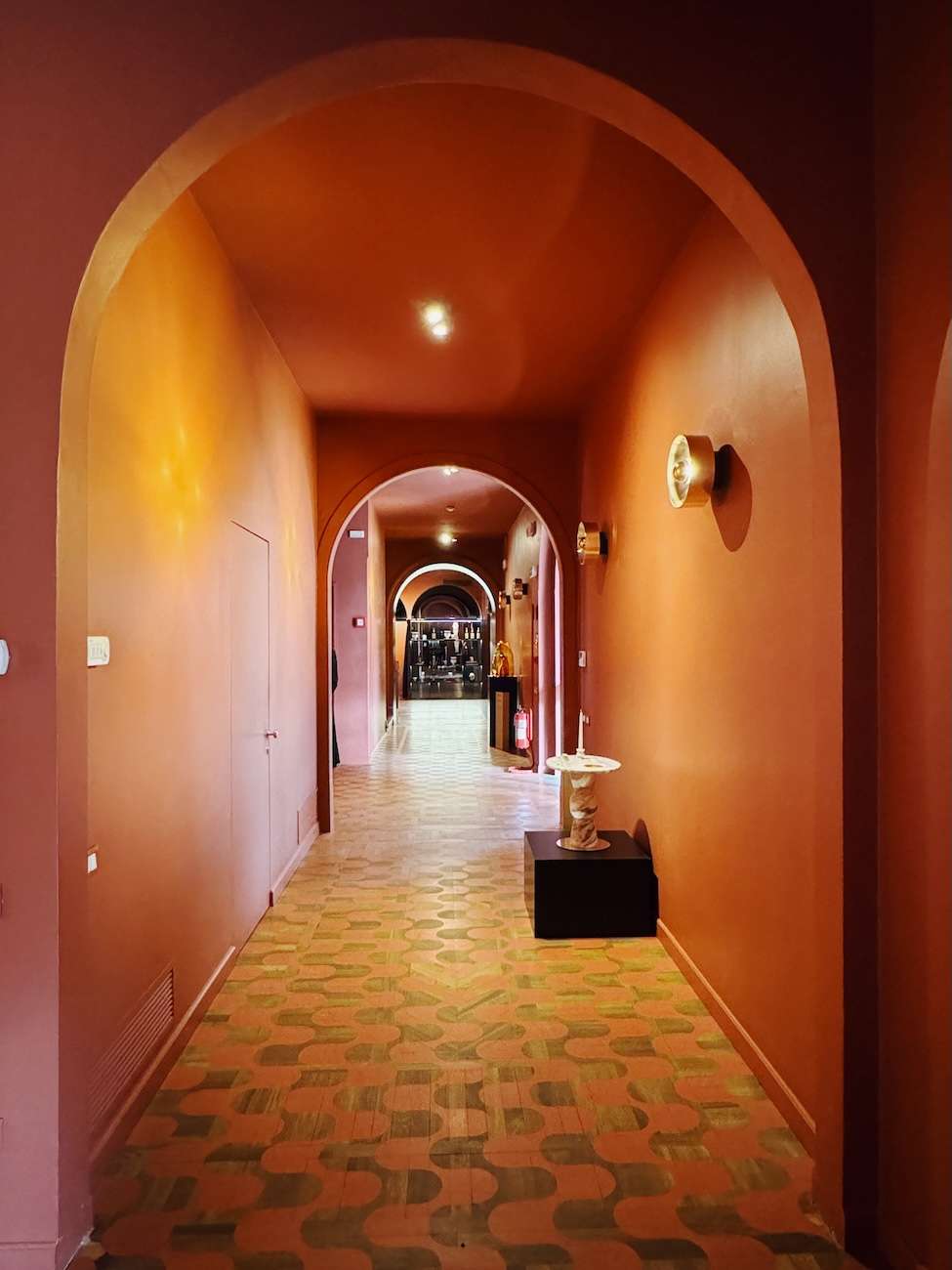 Ruffino estate. PHOTO WENDY HUNG
The menu offers the chance to try risotto with seafood from the Tuscan archipelago or venison from the Chianti woods. Of course, there’s a Ruffino wine that pairs perfectly with every dish. We highly recommend trying the Aqua di Venus white wine made with vermentino and chardonnay, and of course, Ruffino’s world-famous chianti classico, Riserva Ducale Oro.
 ORObyRUFFINO collection. PHOTO WENDY HUNG
Given that there are so many wines produced under the Ruffino umbrella, there’s a wide selection of tours and tastings that guests can choose from, depending on the variety of wines they are looking to try. The tours take guests through the Renaissance Villa, historic wine cellar, or the vineyards.
Thanks to its close proximity to Florence, Tenuta Poggio Casciano is the ideal winery to visit for a fabulous lunch or scenic wine tasting. Visit the elegant estate to learn all about Ruffino, one of the most storied producers of award-winning Tuscan wines.
 Ruffino tasting room. PHOTO NADIA CHO
ROAD TRIP STOP: Panzano in Chianti
Panzano in Chianti is a charming little town located on a hilltop, overlooking the glorious greenery of Chianti Classico. Thanks to its convenient location between Florence and Siena, as well as other popular towns such as San Gimignano and Greve in Chianti, it’s an ideal base from which to explore the region. Panzano is a calm place where you can relax by strolling along the medieval town walls while looking out at the countryside. There’s also an extensive hike between Greve in Chianti and Panzano, which takes you through Montefioralle and is the perfect opportunity for more active travelers to take in the marvelous scenery on foot.
Officina della Bistecca
Via XX Luglio, 11, 50022 Panzano In Chianti FI, Italy
Local butcher and hometown hero Dario Cecchini, put Panzano on the map when his legendary restaurant, Officina della Bistecca, was featured on Chef’s Table. Cecchini channels his reverence for using every part of the animal into a multi-course menu that features rump carpaccio, bone-in ribs, and as much bistecca alla Fiorentina as your heart can handle. All the meat is cooked over fire at the grill next to the table.
 Officina della Bistecca. PHOTO WENDY HUNG
The meal is enjoyed family-style with just one long table where all the diners are seated together and quickly become acquainted over wine and hearty food. It’s an extremely fun and lively dining experience, after which you’ll most likely walk away with new friends and an exploding stomach.
 Grilled meats. PHOTO WENDY HUNG
ROAD TRIP STOP: Gaiole in Chianti
Gaiole in Chianti is a crowd favorite among the picturesque towns in the Chianti Classico region. All the towns along this road are a pastoral dream surrounded by lush green hills and forests. Even the town of Gaiole in Chianti looks like a place out of a storybook, with its castles and stone arches perched on a hill. Castello di Brolio, the legendary winery where Baron Ricasoli first created the grape variety mix that would become Chianti Classico, can be found in Gaiole in Chianti along with many other historic castles. Gaiole in Chianti is a charming little town perfect for exploring and relaxing at a slower pace.
 Gaiole in Chianti. PHOTO NADIA CHO
Badia a Coltibuono
Loc. Badia a Coltibuono, Gaiole In Chianti SI, Italy
Nestled in the idyllic hills of Chianti, Badia a Coltibuono is a tranquil haven of Etruscan tradition and hospitality. Badia a Coltibuono has deeply historic roots as a former monastery founded by Vallombrosan monks back in 1051.
The monastery has been the site of ancient winemaking traditions for its entire history, Lorenzo de Medici even declared its wine as the best red produced in the area. 800 years later, Napoleon privatized the abbey and sent the monks away. After passing through the hands of different families, it is now under the dedicated stewardship of the Stucchi Prinetti family.
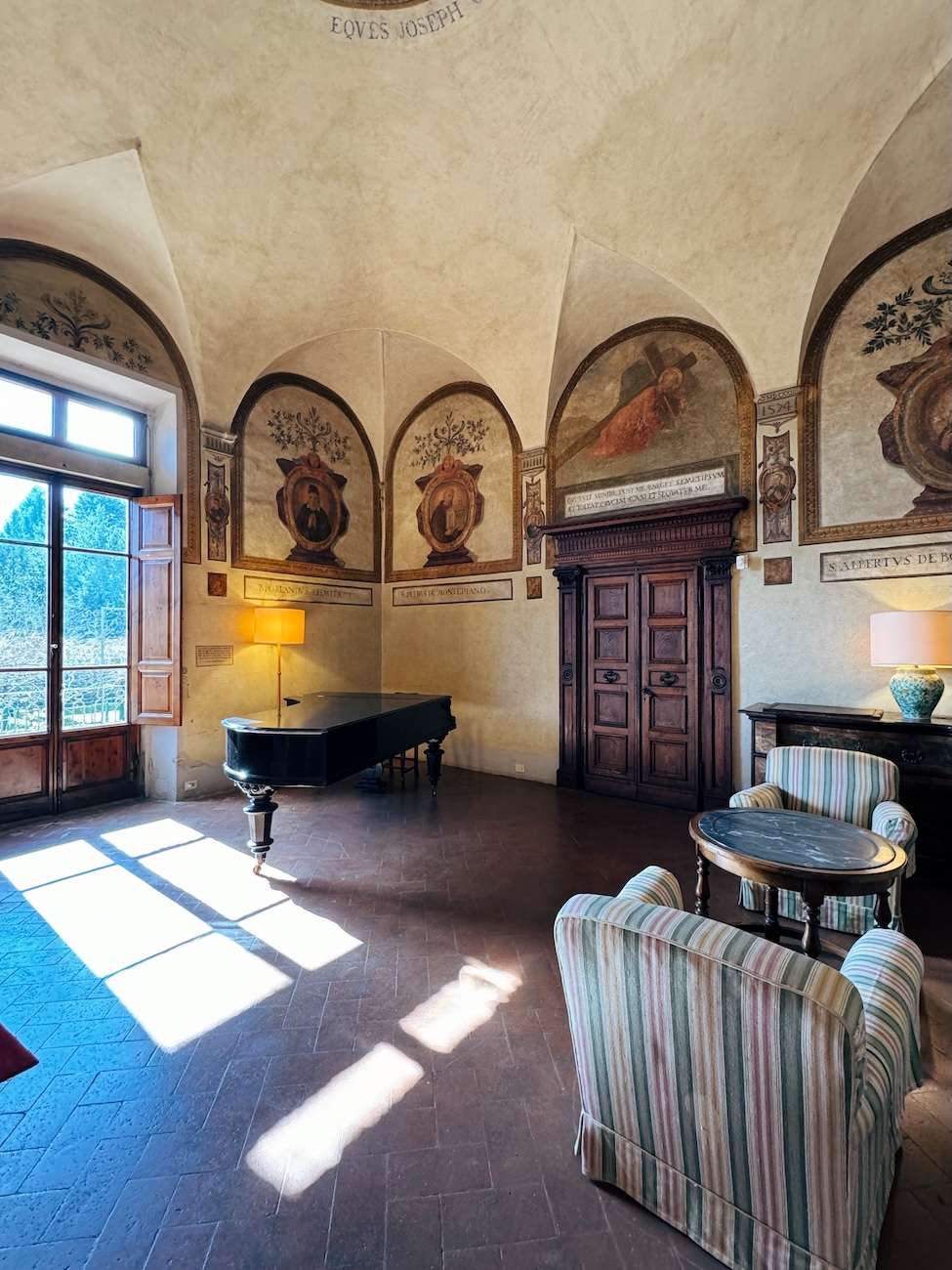 PHOTO WENDY HUNG
Badia a Coltibuono offers engaging hospitality experiences that allow guests to fully immerse themselves in the vast history and traditions of the monastery and its surroundings. The property is a beautiful destination with the original stone abbey intact and the dreamy Italian-style garden that surrounds it. A tour through the monastery will take guests through stunning 16th-century frescoes and the ancient wine cellar, where Chianti wine continues to be aged the same way it was a thousand years ago, along with precious bottles that are hundreds of years old.
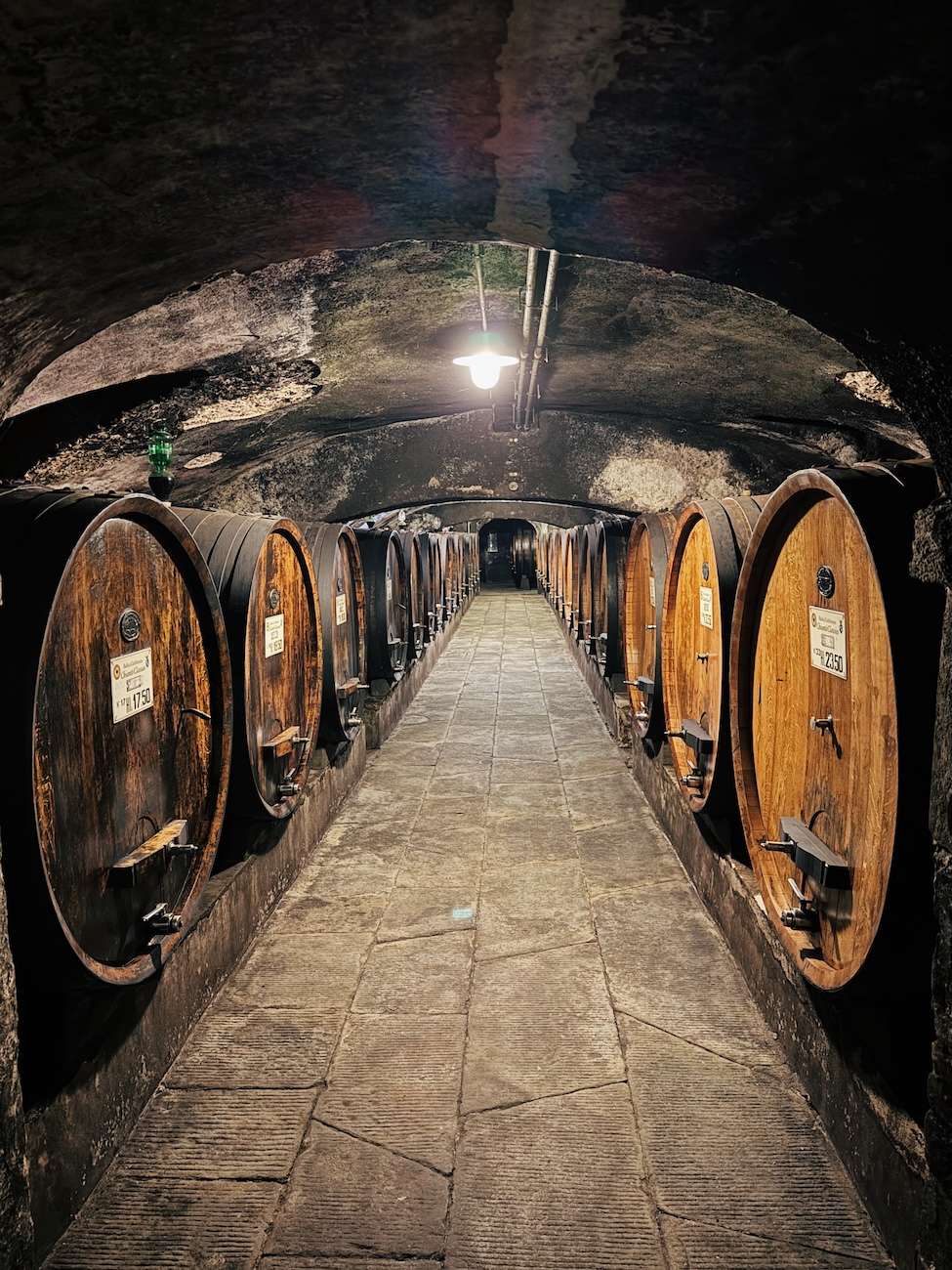 PHOTO WENDY HUNG
The cooking class, which takes place in the abbey’s gorgeous Italian kitchen, is one of the best experiences guests can take part in. A local cook will guide you to make homemade dishes such as focaccia, biscotti, and handmade pasta. It’s the perfect chance to get your hands in semolina flour and learn how to knead and cut fresh pasta, which you’ll later devour with wine produced at the monastery. If you’re lucky enough to make almond biscotti, be sure to enjoy it with a glass of golden Vin Santo wine, which makes for a truly heavenly combo.
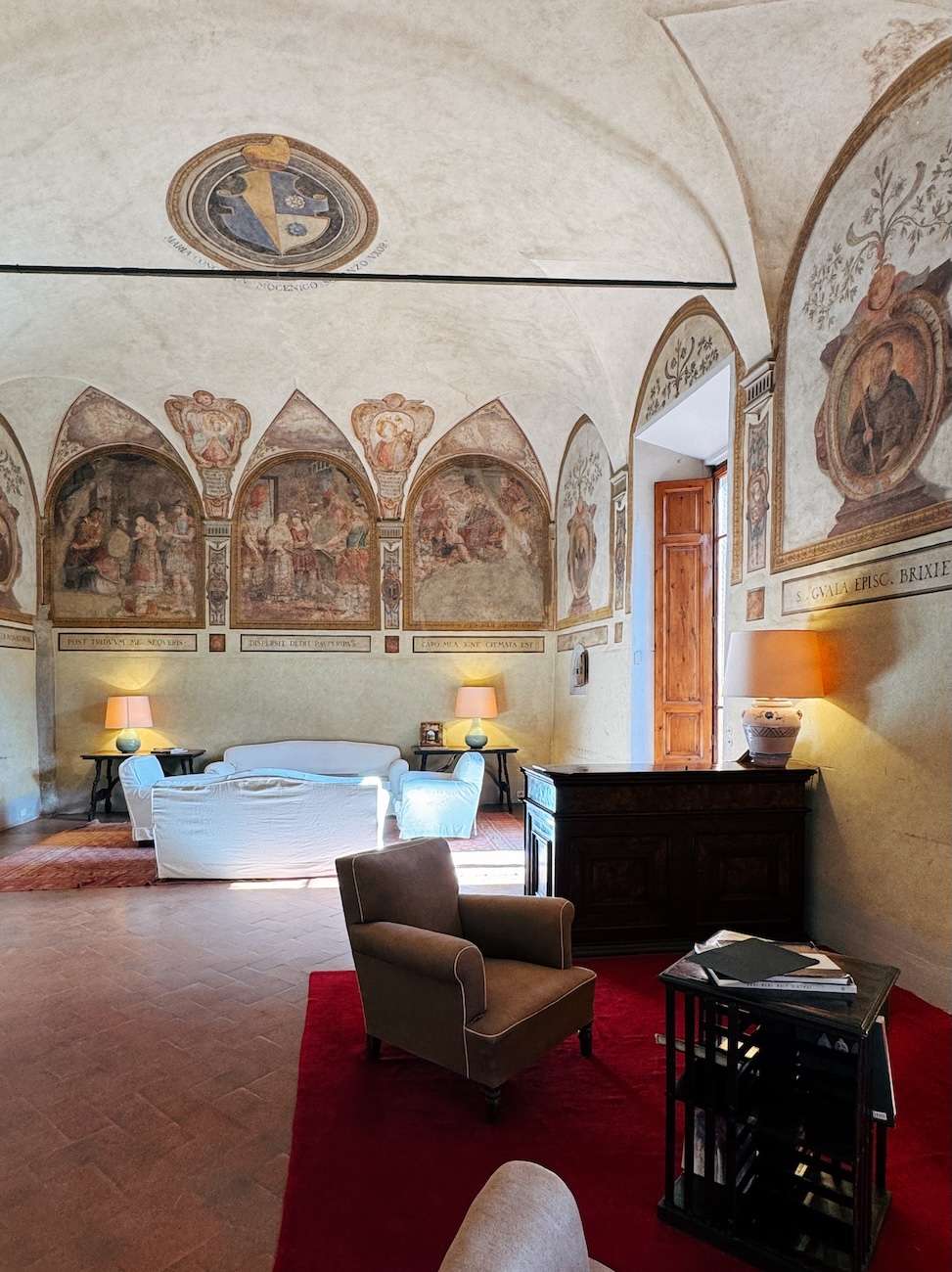 PHOTO WENDY HUNG
Badia a Coltibuono also has apartments and rooms where guests can stay in the abbey. The lodgings have been refined with modern comforts like Wi-Fi and air-conditioning but still maintain the traditional experience of staying in a historic property. There’s also the restaurant, which serves wholesome Tuscan cuisine that highlights the full glory of the area’s local ingredients. You can dig into mouthwatering dishes like homemade pappardelle with wild boar, cappellacci stuffed with pecorino, and eggplant parmesan topped with 30-month-aged parmesan.
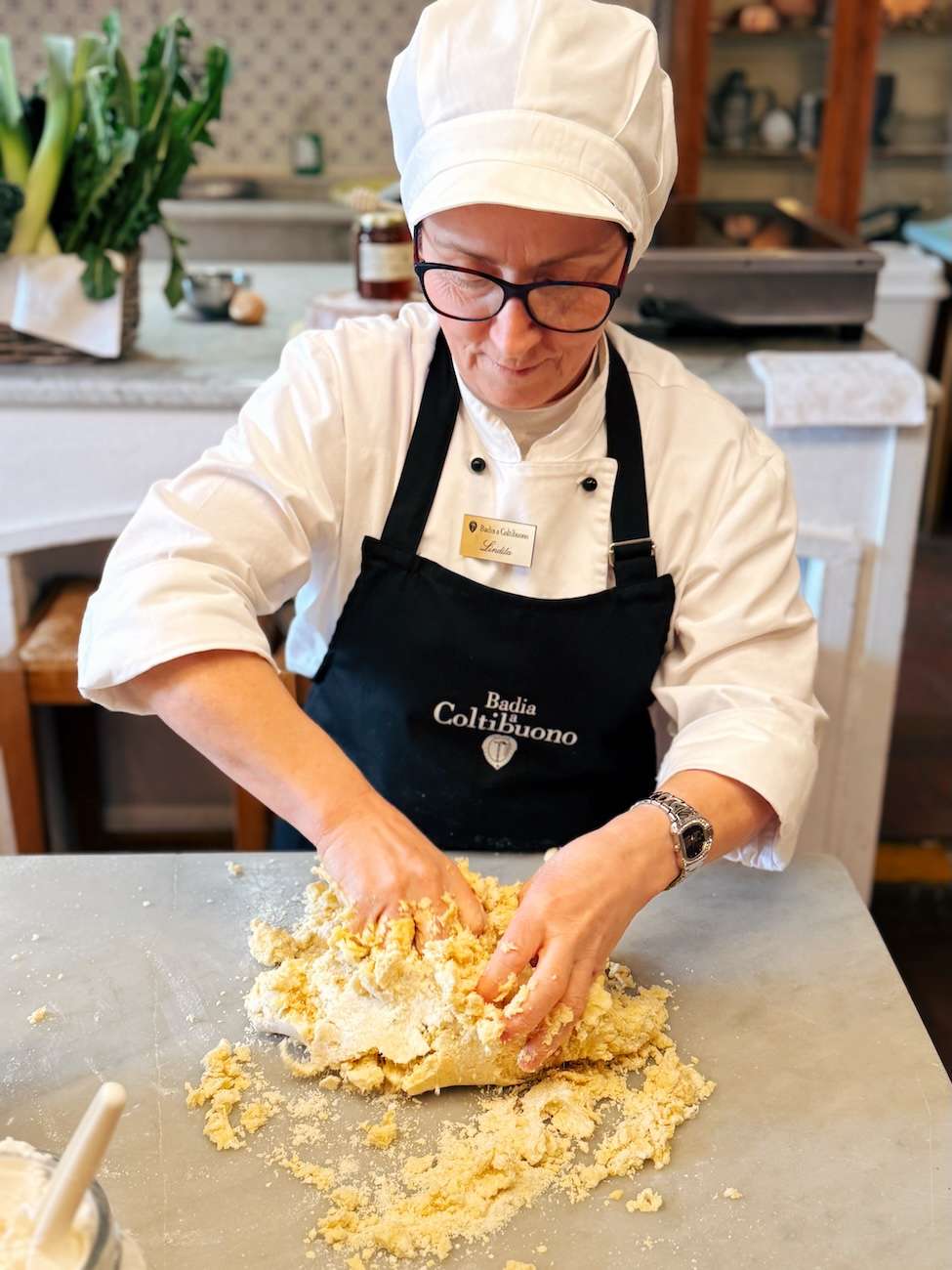 PHOTO WENDY HUNG
Badia a Coltibuono is one of the most exquisite and beautiful properties to visit in Tuscany, with an ancient history that goes back further than most. Whether you’re stopping by for lunch or getting into a cooking class, Badia a Coltibuono will be one of the most memorable stops on your travel itinerary through Tuscany.
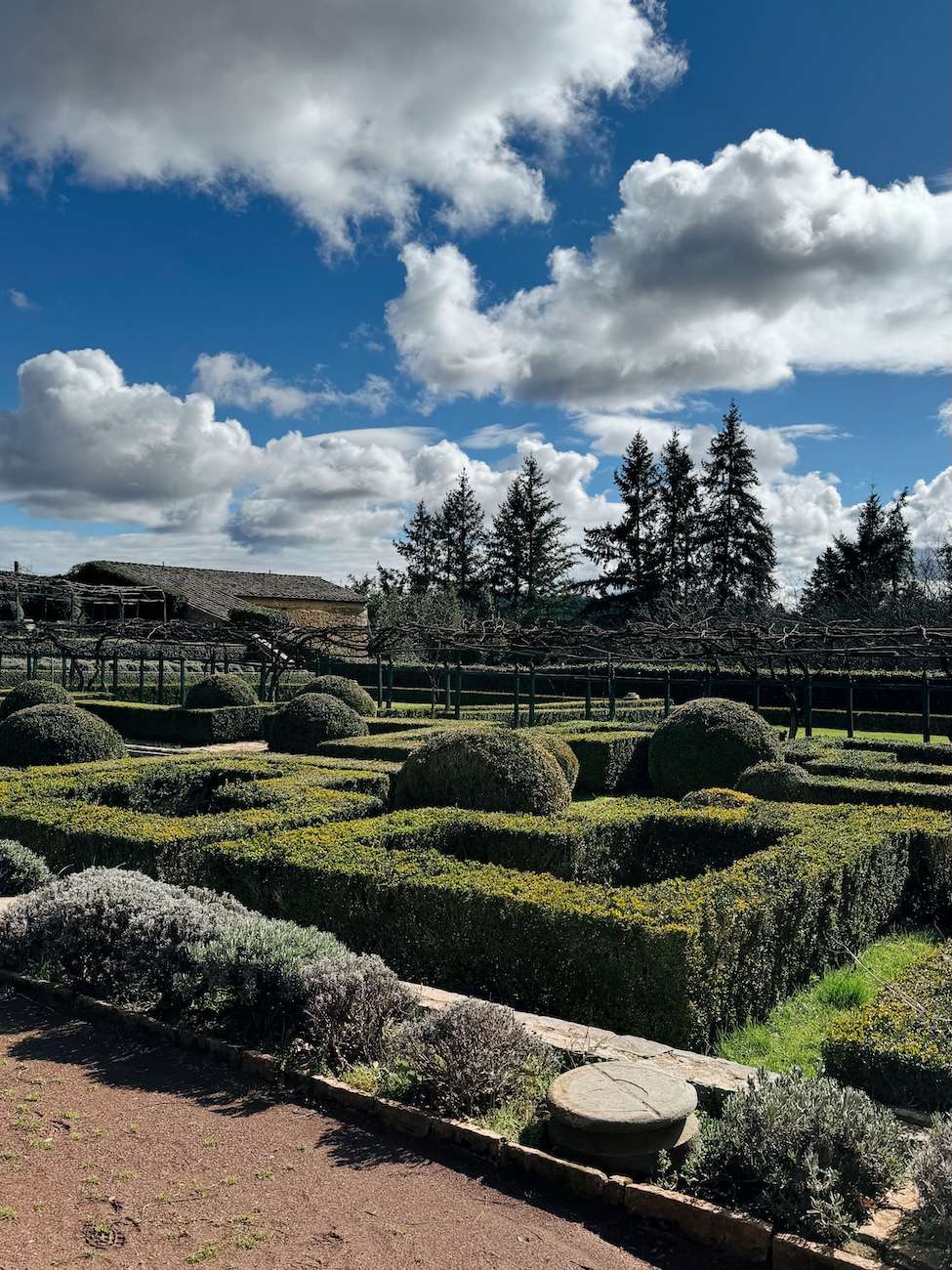 PHOTO WENDY HUNG
ROAD TRIP STOP: Montepulciano
Montepulciano is a Renaissance hill town that is famous for producing the very fine Vino Nobile di Montepulciano. The highly prized wine is made with Sangiovese grapes, which grow in the vineyards around the village; thus, there are quite a few notable wineries in the area offering tastings. The drive into Montepulciano is pretty and rustic. Upon arriving into town, there’s instant medieval charm with little picturesque piazzas and winding roads flanked by local shops that sell the best artisanal products this town has to offer.
 Montepulciano Wine Cave. PHOTO NADIA CHO
 Montepulciano street. PHOTO NADIA CHO
 Montepulciano castle. PHOTO NADIA CHO
Pizzeria e Cucina da Linda
Via Elio Bernabei, 2, 53045 Montepulciano SI, Italy
Just driven into town and are looking for a place to quickly sit down and eat because you’re ravenously hungry? As was the case when Wendy and I arrived in Montepulciano, look no further than Pizzeria e Cucina da Linda.
Homey and casual, Pizzeria e Cucina da Linda is clearly the place that locals prefer for a lunch break. There’s a long list of pizza options, all of which are delicious and quickly delivered. The crust is perfectly crispy and chewy, and quite generous with the toppings!
 Pizzeria e Cucina Linda. PHOTO NADIA CHO
Fattoria Pulcino Ristorante
Strada per Chianciano 146, 37, 53045 Montepulciano SI, Italy
It’s not difficult to find Fattoria Pulcino, located close to the base of the main road after entering the town gate. It’s an extensive wine shop that not only offers Vino Nobile and other Tuscan wines but also sells every regional product that travelers would crave to buy, including: pecorino di Pienza, cold cuts, olive oil, honey, jams, legumes, and pasta. The generous ladies at the counter will offer free wine and cheese tastings while you shop.
 Montepulciano Fattoria Pulcino. PHOTO NADIA CHO
ROAD TRIP STOP: Pienza
Pienza might be the most romantic town on this route, right in the middle of Val d’Orcia. This is the place to capture the picture-perfect views of the rolling hills and cypress trees that visitors travel to Tuscany for. Such is the beauty of Pienza, considered as the “ideal city of the Renaissance” and was declared a UNESCO World Heritage Site, along with the entire Val d’Orcia. Every corner of Pienza oozes charm and beauty, from magnificently preserved palazzos to chapels and cathedrals surrounded by the most stunning landscapes.
 Pienza piazza. PHOTO NADIA CHO
Porta al Ciglio
Via del Casello, 53026 Pienza SI, Italy
Walking along the city walls of Pienza can be described as looking out from the balcony of Tuscany. This is the spot to snap some of the best views of Val d’Orcia; with its smooth, velvety green hills dotted with cypress trees and the slopes of Monte Amiata in the background. Be sure to circle a lap all the way around to capture views from various angles. Afterwards, peruse around the main square, Piazza Pio II, to take in the harmonious urban planning of this perfect Renaissance town.
 Pienza bar. PHOTO NADIA CHO
 Pienza charm. PHOTO NADIA CHO
 Pienza views. PHOTO NADIA CHO
Pecorino di Pienza
Parmesan’s punchier and more flavorful cousin, pecorino, is all the rage and ever plentiful in Pienza. Pecorino di Pienza, made with sheep’s milk from ewes raised in the Val d’Orcia, is one of the most famous cheeses in the world for its round, buttery flavor with hints of grass and sweetness. Cheese fanatics will rejoice walking down Corso il Rosselino, as there’s no shortage of cheese shops selling wheels of the prized Pecorino di Pienza. Pop into any one of them for a taste of this unique cheese, which you won’t find anywhere else.
 Pecorino di Pienza shop. PHOTO NADIA CHO
ROAD TRIP STOP: San Gimignano
San Gimignano is famous for its tall towers, which puncture the Tuscan skyline. It is no doubt one of the most architecturally interesting towns in Tuscany, and the presence of many towers also gave it the name “Medieval Manhattan” back in the day.
Walking through the town centers of Piazza Duomo and Piazza della Cisterna, is to be transported back in time as you look up at the dramatic medieval towers and facades. Climb up Torre Grossa – the tallest of the remaining towers – for spectacular views of the town and the hills. The Cathedral of San Gimignano is also worth visiting for its beautiful frescoes and the chapel of Santa Fina, which is painted top-to-bottom with magnificent works of Renaissance art.
 San Gimignano. PHOTO NADIA CHO
San Martino 26 Ristorante
Via S. Martino, 26, 53037 San Gimignano SI, Italy
In the medieval heart of San Gimignano, you’ll find one of the most creative Michelin restaurants in Tuscany, San Martino 26. Headed by Albanian chef Ardit Curri, the Michelin-starred gem gives one of the most original tasting menus you’ll have in a long time. Chef Curri is a master in highlighting flavors and melding textures in a clean, concise approach.
 San Martino 26. PHOTO NADIA CHO
The dishes play with both traditional Italian, Albanian and other international influences, like the perfectly crispy borek made with chickpea flour and salami from a nearby farm in Poggibonsi. Expect highly creative dishes like cabbage with mint ice cream and cauliflower beurre blanc, which is a perfect amalgamation of sensation and texture. Other seasonal items include beef fillet aged with koji and slated ricotta cheese consommé and creamy cagnone-style risotto cooked with sage and brown butter.
 PHOTO WENDY HUNG
San Martino 26 is housed in an intimate, cavernous space which also blends traditional stone walls with trendy contemporary art. The warmth and hospitality of Chef Curri and his team can be felt from beginning to end at the restaurant. Headed to San Gimignano? Be sure to make a reservation at San Martino 26, where you’ll be in for a fun, creative meal that’s hard to find anywhere else.
 PHOTO WENDY HUNG
ROAD TRIP STOP: Siena
Siena is a proud city in the heart of Tuscany, which boasts just as much culture and history as its northern neighbor and perpetual rival, Florence. The city center of Siena is a UNESCO World Heritage Site as a testament to ingenious medieval urban planning from the 14th century. The Piazza del Campo is one of the grandest piazzas to set foot in, surrounded by magnificent buildings, such as: Palazzo Pubblico, and Torre del Mangia. There’s no shortage of museums, like Museo Civico and Pinacoteca Nazionale di Siena, to gaze at extensive Sienese art on display. An essential stop for those who want to delve deep into the history of Tuscany.
 Siena Piazza del Campo. PHOTO NADIA CHO
Siena Cathedral
Piazza del Duomo, 8, 53100 Siena SI, Italy
The Cathedral of Siena is world-renowned for its artistry and originality. The most impressive feature of the cathedral is the floor composed of 50 meticulously painted panels completed over 500 years. The cathedral floor is so precious that it’s only displayed on specific days of the year, between June and July and then between August and October. Look up, and the vault ceilings are painted blue with stars in the Gothic style, making the entire cathedral ever so dreamy from top to bottom. The Duomo di Siena is a masterpiece of Italian art, unlike any other cathedral.
 Siena Torre del Mangia. PHOTO NADIA CHO
Osteria Le Logge
Via del Porrione, 33, 53100 Siena SI, Italy
Osteria Le Logge is the most iconic and renowned restaurant in Siena. Going 48 years strong, it’s a place to feel immediately at home. The dining room is classically decorated with wall-to-wall bookshelves showcasing old books and wine bottles, along with hand-drawn sketches that are framed on the walls. The homey, familiar decor makes Le Logge feel beautifully intimate.
 PHOTO WENDY HUNG
The osteria has always been a cosmopolitan meeting point, and the food reflects its history through worldly manner of preparing local ingredients and dishes. There are refined Tuscan dishes with delightful surprises, like: perfectly roasted artichoke with coffee sauce, or rabbit with a cute little carrot and radish tart on the side. Plus the unbridled generosity and hospitality of owner Mirco, and his team, making Osteria Le Logge the can’t-miss restaurant destination in Siena.
 PHOTO WENDY HUNG
ROAD TRIP STOP: Montalcino
Montalcino is the greenest and, thus, one of the most scenic parts of Tuscany that is essential to visit. The town itself is defined by the majestic Fortress of Montalcino, which sits grandly on top of a hill and surrounds the historic town with its medieval walls. Catch some of the best views and snapshots of never-ending vineyards, mountains, and cypress trees while driving around Montalcino. Not to mention, this area produces one of the most prized wines in the world, Brunello di Montalcino, so popping in for a wine tasting is a definite must!
 Montalcino. PHOTO NADIA CHO
Castello Banfi – Il Borgo
castello di, 53024 Poggio alle Mura SI, Italy
Head straight to Castello Banfi to experience the best wines, food, and hospitality in Montalcino. Simply drive up the winding roads surrounded by cypress trees and vineyards as far as the eye can see, then arrive at the stunning estate.
The ancient castle dates all the way back to the 9th century, now houses a luxurious Relais & Chateaux hotel, two restaurants, an enoteca, and a historic glass museum.
 Castello Banfi castle. PHOTO NADIA CHO
The Italian American family of Banfi’s current CEO, Cristina Mariani, has deep roots in the region. The family played a huge role in developing the land and prestige of Montalcino, converting it from one of the poorest areas in Tuscany into one of the wealthiest and most coveted over the span of nearly 50 years.
Castello Banfi consists of Il Borgo Hotel, La Taverna restaurant, La Sala dei Grappoli restaurant, La Enoteca for wine tastings, and the glass museum. La Taverna is a fabulous spot for lunch, since it’s the perfect excuse to visit Banfi even for those not staying in the hotel.
 Castello Banfi wineries. PHOTO NADIA CHO
La Enoteca is open for wine tours and tastings. Banfi produces excellent bottles with the most prized grape varieties of the region, including Chianti Classico Riserva, Vermentino, Sangiovese. The absolute iconic, of course, is the Brunello di Montalcino, which is awarded for its deep, perfectly balanced flavor and the velvety path its flavors unfurl.
For all its exquisite wines and hospitality experiences, Castello Banfi is the destination in breathtaking Montalcino!
 Castello Banfi. PHOTO NADIA CHO
La Taverna serves wholesome Tuscan cuisine with traditional dishes such as pinci pasta with Maremma boar ragout, ribollita, honey-glazed ribs, and Tuscan stew with local rooster. The space is both homey and classic, with time-worn frescoes and tapestries on the walls. La Sala dei Grappoli is the property’s Michelin restaurant, which offers a more elevated menu that’s still rooted in the ingredients of the local terroir.
 Castello Banfi La Taverna tasting menu. PHOTO NADIA CHO
