There are approximately 1200 varieties of cheese made in France, which equates to weigh about 1 billion tonnes!
JST CITY GUIDES:





France runs on Central European Standard Time (GMT+1). If it’s 2:00 pm in NYC, it’s 8:00 pm in France (6 hours ahead).
If you are a U.S. Passport Holder, you are allowed to stay in Paris for a period of 90 days without a visa.
Your passport will need to be valid at least six months beyond your stay. Immigration offices may ask citizens to show enough money for their stay as well as a return airline ticket.
EU, EEA, and Swiss citizens do not need a visa to enter the country of France. Click here for more visa application guidelines.
There are multiple airports in France. Charles de Gaulle is the country’s biggest international airport with the Air France airline. It’s a good connection to other French regions and international cities. The Paris Orly Airport is the country’s busiest airport in terms of domestic and international traffic. Other common airports include the Bordeaux Mérignac Airport, the Marseille Provence Airport, and the Lyon Saint-Exupéry Airport.
From the Charles de Gaulle airport to the center of Paris, there are three modes of transportation you can take: train, bus, or taxi.
The regional RER train is a cheaper option. This only costs 10 euros and is about a 50 minute ride. Bus tickets cost 11.50 euros with a 70 minute ride. Le Bus Direct is a faster service, but it is 17 euros. To reach the city center the fastest? Catch a taxi. You will be charged with the flat rate of 60 euros for a 40 minute ride.
Click here to book your ride and more travel info from the Charles de Gaulle airport. Click here for more airport information in France.
Transportation in France is similar to a connected web branching off of Paris. Rail, road, air, and water are common means of getting around.
SNCF is the popular railway in France, and unlike road traffic, they drive on the left. Click here for ticket prices and to book a trip.
Paris, Lyon, Toulouse, Montpellier, Saint-Etienne, Strasbourg, and Nantes also have tram services around their cities.
Apart from the SNCF, OUIGO offers a variety of low-cost tickets for rides by train or bus. The advantage of OUIGO is that is provides direct train lines, which the SNCF doesn’t necessarily serve. For example, OUIGO has a direct line Lille-Montpellier, without transits.
Urban bus services are provided at a flat-rate charge.
Many people travel along the rivers of the Seine, the Loire, and the Rhône.
France has 478 airports in total, with the most common airline being Air France (it serves 120 domestic destinations and 120 international destinations).
The Paris Metro runs roughly from 5:30 am to 12:40 am from Sunday-Thursday. On Fridays, Saturdays, and days before holidays the Metro runs 5:30 am to 1:40 am. The times between trains are usually 2 minutes during rush hour and up to 13 minutes during late hours.
Click here for more info on metro passes, tickets, maps, and times.
Overall, France is fairly safe. Many women visit this country alone and have found it to be quite safe if they’ve taken the proper precautions and stay alert, especially at night. Always remember to keep an eye on your belongings and follow your instincts.
Safety tips for France:
- If you’re renting an apartment, make sure the door clicks locked behind you. Some of these doors are extremely old and do not shut just from swinging back.
- Keep your eyes open to pickpocketing. People often will ask you to sign pieces of paper when really it is a scam to distract your attention.
- Keep your belongings in the safe in your hotel or apartment.
- When riding the Metro, do not purchase tickets from anyone who is not an authorized vendor.
- If you’re using a wallet, only keep a small amount of cash on you.
- Beware of your surroundings when visiting ATMs and hold you hand over the number pad when typing in your pin. ATMs in banks are the safe way to go.
France is known for its cool winters and mild summers. Along the Mediterranean, expect hotter summers. Winter temperatures range from 32-46 degrees Fahrenheit and summer temperatures range from 61-75 degrees Fahrenheit. If you want areas with warmer temperatures, travel to the southern regions of the country.
French is the official language, and it is by far the most widely spoken. Of foreign languages, English is spoken by 39% of the population, Spanish by 13%, German by 8%, Italian by 5%, and Portuguese by 3%.
Some helpful phrases to know:
Bonjour: Hello
S’il vous plaît: Please
Comment vous appelez-vous?: What’s your name?
Oui/Non: Yes/No
Comment allez-vous?: How are you?
Pardon: Sorry
Je ne comprends pas: I don’t understand
Où sont les toilettes?: Where are the toilets
C’est combien?: How much is it?
Merci beaucoup: Thanks a lot
Local rules to follow in Paris and France:
- Make an effort to speak French, even if it’s just “hello” and “thank you.”
- Don’t ask for coffee to-go, this is uncommon and being in France means taking your time.
- The service charge is included in the bill, but if your server went above and beyond, leave some extra change.
- Most French people leave their bathrooms closed in their houses or apartments.
- It’s very common to kiss people when greeting them, saying goodbye to them, or thanking them. Most people kiss once on each cheek.
- Use the formal “vous” for “you” to be polite as a general rule of thumb.
- If someone is having people over, it is common to arrive 15 minutes late.
- Keep your hands on the table during your meal. If bread is served, feel free to break it with your hands.
- Keep your voice low. Being loud is public is considered very rude and impolite.
- If you are invited into someone’s home, it is customary to bring a gift, such as: a bottle of wine or a box of chocolates.
- If you are addressing a stranger, be sure to add “Monsieur” or “Madame”.
The currency used in France is the euro. Denominations are 5, 10, 20, 50, 100, 200, and 500 notes. Obtaining cash in France is easy, and you’ll find ATMs in banks and post offices. ATMs usually have better exchange rates than currency-exchange offices as well. VISA and Mastercard are accepted by most restaurants and shops.
Tipping! ~ This is not an obligation in France, but people usually leave some extra change on the table if their service was excellent.
If you’re from America, the voltage in France will be twice the usual amount you experience back home (around 240 volts). You may need an adapter or voltage converter.

Most people in France are drinking tap water every day. You can also buy a fancier glass bottle of water at restaurants, but most people agree that water in France tastes good and is very safe.
You can usually find wifi access in France in public parks, gardens, libraries, and museums. Over 260 public places in Paris have wifi, so it is pretty easy to find.
The Ville de Paris and the Île-de-France region offer free internet service in Paris to all people, whether you are a visitor or a resident.
The best option for a stay longer than two weeks is to pre-purchase a SIM card or buy one at an airport once you arrive in France. Cheaper options are usually around $25.
Uber is very active in France, and many people say it is much more convenient than taxis. Uber is only a couple euros cheaper, but you can use them most anywhere.
A cheaper option is Heetch. It is the same principle as Uber, only lower priced!
France has a large LGBTQ+ community, with Le Marais District well-known for many gay bars and clubs. In general, France is very welcoming for all kinds of people with all kinds of backgrounds. There are many gay-friendly bars, and Paris holds one of the largest pride festivals in the whole continent with people traveling from far and wide in order to become a part of the celebration.
France has many organic wine vineyards as well as new and upcoming car-sharing services. This country is aiming to increase its sustainability with carbon-neutral public transport or even all-natural public adventures. In 2007, a public bicycle-sharing program was established, with rental stations spread throughout the city of Paris. Many hotels have been awarded the green label for taking green initiatives in terms of their water, waste, and hotel energy. You can support the local economy by shopping in small neighborhood stores and open-air markets that support organic farmers.
A TIMELINE OF FRANCE'S HISTORY
This cultural and artistic movement in France is defined as a “rebirth” in Europe. This included the spread of humanism, exploration of “The New World,” and development in printing, architecture, painting, sculpture, music, literature, and science.
Joan of Arc dresses in men’s clothing and wins in battle against the English in the Siege of Orleans. She is forever known as a heroic and brave female in French culture.

Louis XIV begins the construction of Versailles.

The Treaty of Paris is signed to end the American Revolutionary War.

The French Revolution ends the French monarchy going back to the 9th century after disparity between royals (Louis XIV and Marie Antoinette) and the rest of the population. This is followed by the establishment of the First Republic.

Marie Antoinette became immensely unpopular as the Queen of France, and many people accused her of having sympathy for French enemies. Antoinette was ultimately convicted of treason and was executed by the guillotine.

Napoleon Bonaparte aims to overthrow the government; a new constitution is created.
Pasteur is credited for explaining the process of fermentation of French wine, helping the French wine industry with the problem of wine spoiling overseas (it usually turned into vinegar on long voyages).

Belle Époque was a period where the arts flourished in France. The arts climate in Paris gave way to new innovations in literature, music, theatre, and visual art. Salons became popular (places were aristocrats could support the arts). Artists like Monet, Picasso, Van Gogh, Gauguin, and Degas were a huge part of this art scene.

WWI: massive casualties in trenches in the north-east for France. 1.3 Frenchmen are killed and even more wounded by the end of the war.
Peace Treaty of Versailles; Germany agrees to reparations.
WWII: Germany occupies much of France. Rise of the French resistance begins.
Allied forces land at Normandy during D-Day.

Migration of Arabs to France: France needed laborers for urban development and offered citizenship to people from Morocco and Tunisia.
The first Paris Fashion Week! This was held at the Palace of Versailles for a fundraiser to restore the palace.

Socialist candidate François Mitterrand is elected president. He held the longest time in office in French history and was the first left-wing politician.

The first female French Prime Minister is elected: Edith Cresson.

The Euro replaces the franc, first minted in 1360.
In January 2015, two brothers forced their way into the Charlie Hebdo satirical newspaper offices in Paris, killing 12 people and injuring 11 people. The gunmen identified themselves as members of Al-Qaeda.

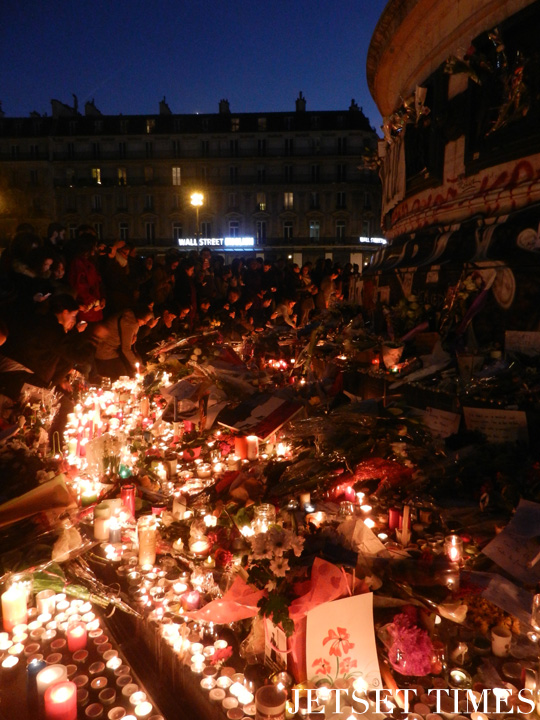
The November 2015 attacks were a series of coordinated terrorist attacks which took place in Paris and Saint-Denis, killing 130 people and injuring 413. A three month state of emergency was declared, and France has been on high alert ever since.
Major fire at the Notre-Dame cathedral in Paris, damaging much of its roof and spires.