
Doug Walker grew up in the skateboard era – an expression of freedom, of who you are. From a neighbor’s pool to a skateboard park six miles away, skateboarding and surfing was a rising style of free form during a time of limitless boundaries.

In 2007, he cold called a famous surfer/photographer back in the 70s and 80s, Aaron Chang. Doug Walker is an artist, a filmmaker at heart. By reaching out to Aaron, it was an act of reclaiming lifelong passions – surfing and filmmaking. Though his interest to work with a legend in the surf photography industry didn’t result to anything substantial at the time; in 2008, Doug’s wife gave him a camera. She knew he had put his passions on hold and said, “go do something.” Doug took the camera, flew to Los Angeles for a project. Early in the morning, he went to the beach at Sunset Point to shoot some surfers. That day, he went back to the office, sifted through his images and knew he wanted to do something with surfing.
He woke up the next morning, followed a habit of browsing through Rose Bowl Swapmeet, a flea market in Southern California, where he typically looked for anything surf-related: magazines, old surfboards, hula girl lamps, oil painting of water…etc. At the market, he came across three file boxes. The first box contained stacks of manilla envelopes with a label: 1974. He reached inside and pulled out a stack of black and white negatives of surf legends taken by famous surf photographers. He took one out, held it to the sun. What he saw was a flashback of his teenage self, in his bedroom, waiting for the next issue of surf magazine to arrive.
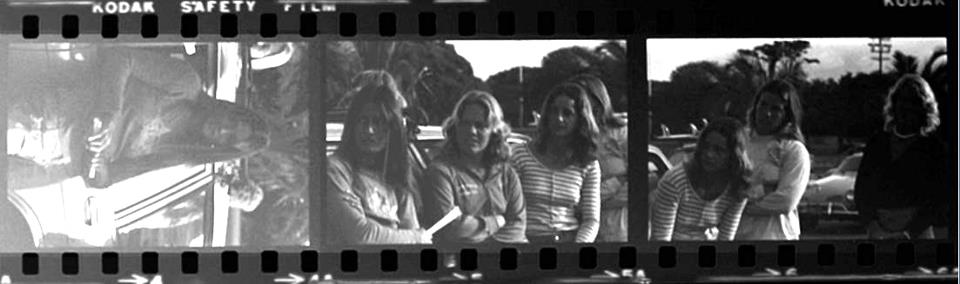
Doug remembers the stack of images he found,
“when you’re twelve years old, all you want is that magazine, cut the pictures out and paste them on the wall.”
He knew what the negatives were, the guy wanted to sell them for $10 per sheet, Doug had $40 cash so he bought four sheets out of a thousand that were there. He walked away thinking he had 120 amazing images of history. But the entire day, he repeated to himself, “If I don’t get the rest of that stuff, it will get lost. It’s history and we’ll never see it again. So he went back, bought the entire collection and started scanning images until 3am. Suddenly, he discovered one particular image with clear indication of who the photographer was: Aaron Chang, the legend he made a phone call to, one year prior.
The next day, he called Aaron and said, “Look, I’m not trying to stalk you, but I think I have something of yours that will blow you away.” Thy met and surfed in Del Mar. Since then, Doug hasn’t stopped. He spent one whole year organizing the entire collection of 30,000 images, built twenty notebooks of proof sheets then decided to put them in a suitcase and went to North Shore of Hawaii. With his camera in hand, Doug began looking for people in the photographs.
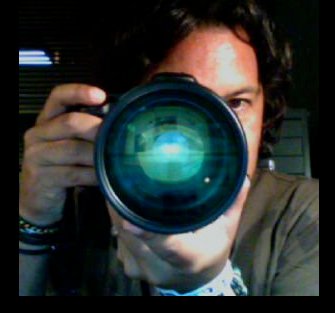
“As soon as you put images of guys who are now in their late 50s and 60s, and they’re looking at images of when they were twenty years old, you see their eyes light up.” Doug remembers, “They go back in time. I think it’s very special whenever we see ourselves in our prime, especially if you’re a professional surfer, seeing yourself in your 20s.” Over the course of three years, Doug tracked down as many surfers and photographers as he could, and interviewed industry legends: Aaron Chang, Dan Merkel aka “Man Mountain,” Bob Barbour, Bernie Baker, Buttons, Greg Weaver, Jock Sutherland, Rory Russell, Larry Bertlemann, Bobby Owens, Duncan Campbell…and more.
“I think the film is very unique for the element of sensitivity.” Doug explains his final product, a film incredibly close to his heart: Lost and Found, recently awarded at San Francisco Frozen Film Fest, Honolulu Film Fest, San Diego Surf Film Festival, Santa Barbara International Film Festival…etc. “The film has soul, it has heart. I discovered a lot of guys who talked about their mothers or their fathers. That’s very cool, because I bet back in their 20s, they didn’t talk much about their parents. But to go back in time, when they’re not around. I think it was a time for these surfers to digest a little.”
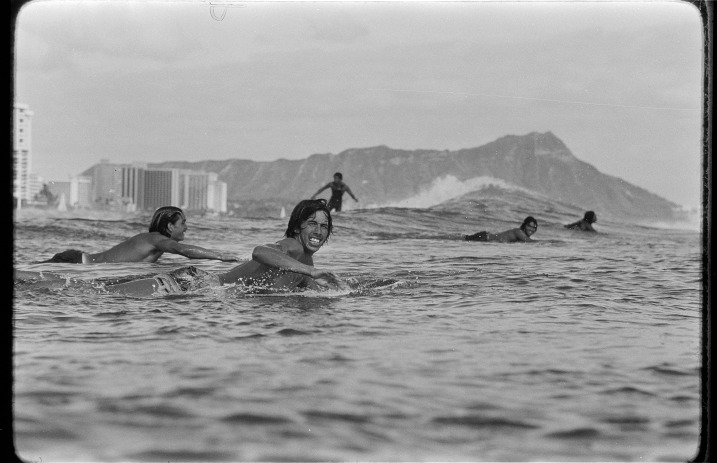
Doug’s favorite subject was Dan Merkel, who was one of the hardest working surf photographers in the 70s. “Every time you look at an image that he shot, it stands out. So I really remembered his name. Of all the things he’s been through in life, the film has given back to him. It has created awareness for the industry, it’s my way of helping people out. The film is about sharing, and to show the surfing world. It’s a different approach to surfing films.”
To Doug, all surfers are artists. “Look at Jack Johnson, he’s an amazing artist. They all have cameras now, traveling around the world.” He recently read an article on John John Florence, an American surfer who won numerous contests last year. “We’ve seen him grow up in the past few years, but he’s really into traveling with cameras. He has an amazing collection.” Beyond surfers as artists, the idea of freedom and expression is a fundamental philosophy in the lifestyle: a true expression of who you are.
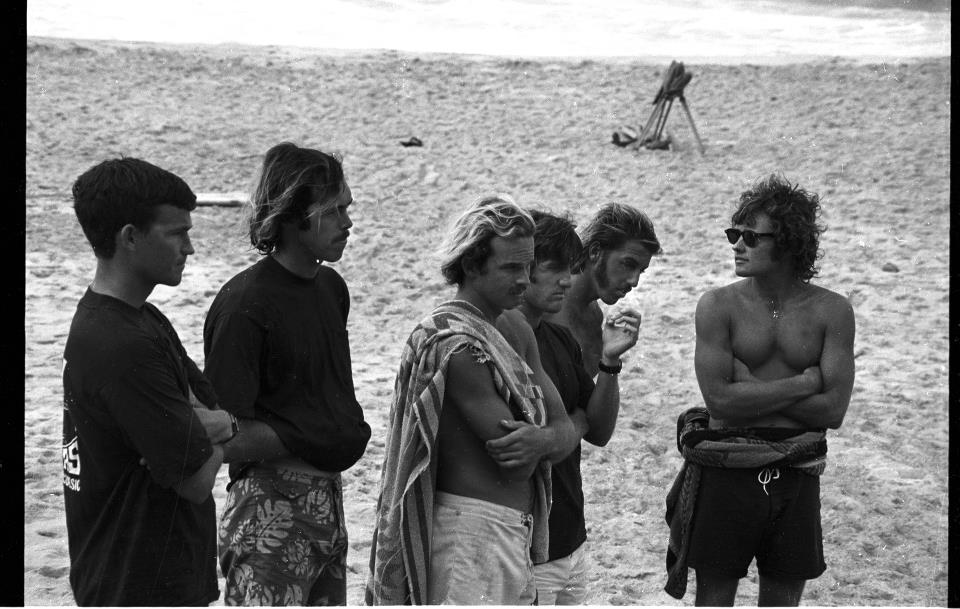
Growing up in Los Angeles’ San Fernando Valley, Doug lived the dream of skateboarding and surfing that inevitably shaped him to who he became. His mother worked for Warner Brothers, so he had his hands around the industry at a very young age. Later, he went to Hawaii and dreamt of becoming a pro surfer. To this day, it’s still a sport that he loves. When he got a job back in L.A. at an animation studio, he was surrounded by artists who introduced him to the editing field. He began to dabble with directing then met his wife and opened his own production office in San Francisco in 1994.
As he explained, surfers are travelers who live a lifestyle that proves: you can live with almost nothing. He remembers driving to Mexico and camped out with his friends in Baja as teenagers. “My friends and I went every couple of months, took a tent and slept on the beach. We had no money, but made sure we had enough to get a case of Coronas. We would heat cans of beans with the fires we had built, and put them on tortillas. We would surf three time a day.” That was the life. On these trips, they were free spirits, just going with it.
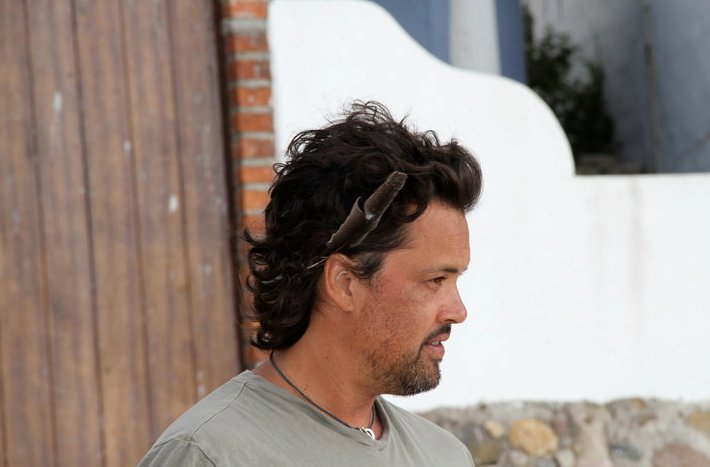
With time, he has traveled extensively to Europe, Africa, even Jamaica. In the end, it’s North Shore in Hawaii, a place where he dreamt of being a pro surfer, and a place that circled him back with legends coming to life from boxes of negatives he serendipitously discovered at a flea market. Lost and Found gave surfers and photographers the freedom to be open, share personal lives.
With the film, he hopes to extend a depth of sensitivity of the surfing culture to the outside world. For all surfers and travelers, happiness resides in freedom. Truly, it all goes back to those cans of beans and tortillas.
To learn more about the film, Lost and Found, visit the website.
