
Every trip I have the opportunity to take, regardless of the destination, teaches me a lot of things.
I grew up going to school in Bucharest and spending all my vacations at my grandparent’s home. Spending my childhood bouncing between the underground vibes of the capital and the boho vibes of the countryside definitely influenced me and my music. Bucharest is my home, and I am very attached to it, but I always felt the need to travel and see the world. Every trip I have the opportunity to take, regardless of the destination, teaches me a lot of things. I get to meet a lot of fun and new people and the most important thing is the inspiration I get from everything that I see and feel around me – I use all those emotions in my music and visuals.
1. Experience A Live Concert At The Historic Romanian Athenaeum.
Strada Benjamin Franklin 1-3, Bucharest 030167, Romania (map, website)
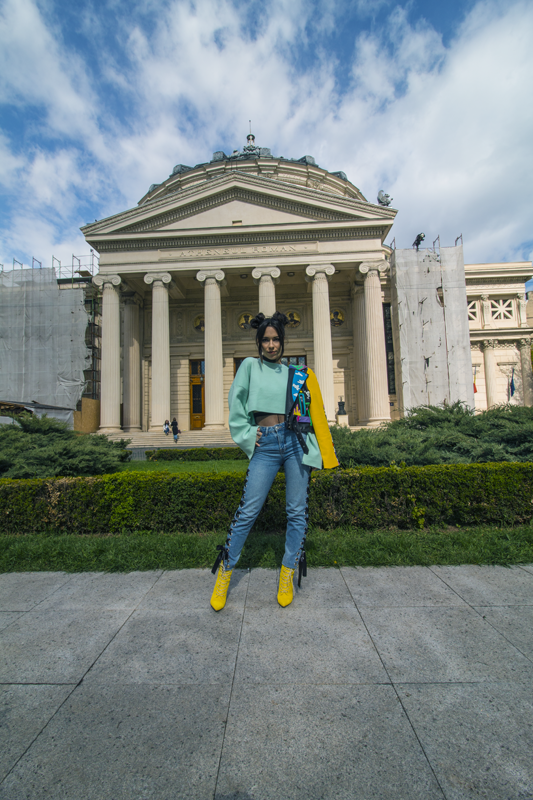 Photo: Freia
The Romanian Athenaeum is a concert hall in the center of Bucharest and a landmark of the Romanian capital city. Currently, the Athenaeum is in renovation. Opened in 1888, the ornate domed circular building is the city’s main concert hall and home of the George Enescu Philharmonic and of the George Enescu annual International Music Festival.
The overall style is neoclassical, with some more romantic touches. In front of the building, there is a small park and a statue of Romanian poet Mihai Eminescu. Inside, the ground floor hosts an ornate conference hall as large as the auditorium above. The auditorium seats 600 in the stalls and another 52 seats in lodge seating. Recognized as a symbol of Romanian culture, the building has been inscribed in 2007 on the list of the Label of European Heritage sites.
2. Walk Up The Artistic Steps On Xenofon Street.
Strada Xenofon, Bucharest, Romania (map)
 Photo: Freia
The Xenofon Street in Bucharest is often referred to as the city’s only “stairway” street. Every year this 220-year-old stairway is painted a variety of colors by cool urban artists. The Xenofon stairway is located in Cotroceni area, which has its unique charm in the city, given its quiet streets and beautiful old houses that can be seen all over the area. Here you’ll spot many of the city’s unused streetcars, divided in two sections and linked by a small passage. In 2014, the street got a facelift when, as part of a socio-cultural project, painter Eva Radu colored the street with eight images of some of Bucharest’s most famous cultural and historical landmarks.
3. Don’t Miss The Charles de Gaulle Statue.
B-dul Aviatorilor, Bucharest, Romania (map, website)
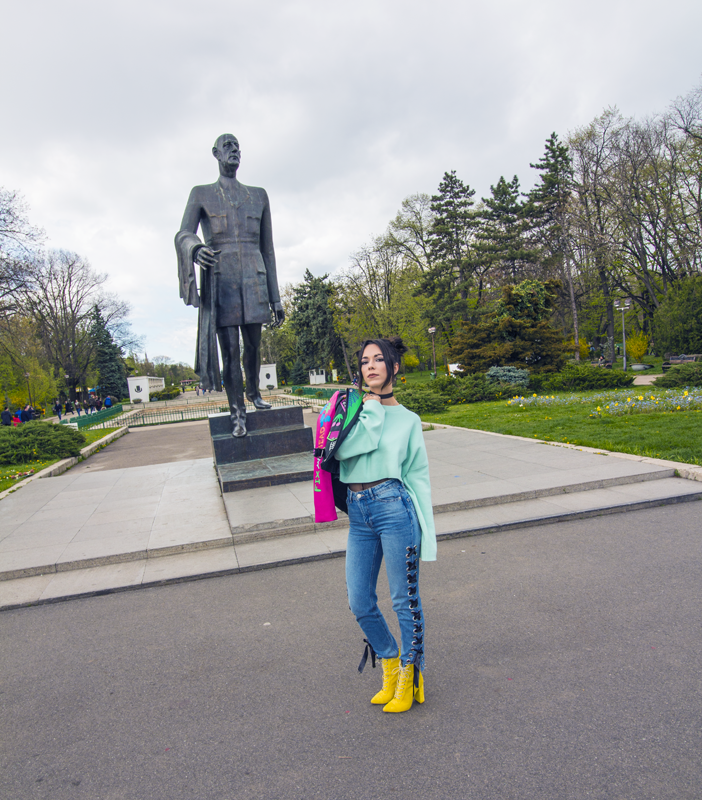 Photo: Freia
As soon as you enter the park, you’ll see the famous Charles de Gaulle Statue located in front of the biggest entrance at Herastrau Park, the largest and my personal favorite park in Bucharest. The statue is located in the middle of Charles de Gaulle Square, a very popular intersection in northern Bucharest.
Herastrau Park is located to the northwest of the square. L’arc de Triomphe is located in its own square a few hundred meters to the west on Constantin Prezan Boulevard, while Piața Victoriei, where the Romanian Government headquarters is situated, is located south, at the end of Aviatorilor Boulevard.
The state-owned Romanian television station is situated some 100 meters to the southeast, on Calea Dorobanților. The Primăverii neighborhood, which includes houses of the former communist nomenklatura, is located to the northeast.
4. Visit the Mausoleum In Carol Park.
Strada Cuțitul de Argint 12, Bucharest, Romania (map, website)
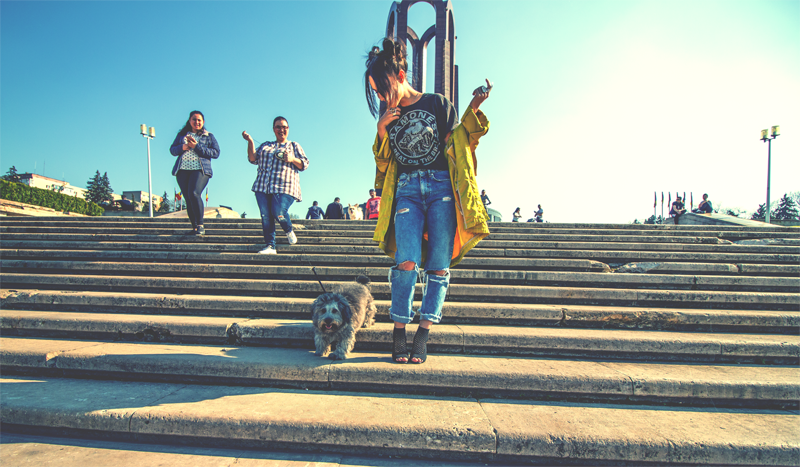 Photo: Freia
The Mausoleum in Carol Park is the monument of the heroes that fought for the freedom of the country and people during the communist period. During communist times in the 1960s, this impressive mausoleum was built in the park for the communist leaders. It stands today and nobody dares to demolish it. In fact, it’s an interesting concept, built entirely of black and red marble from Carrara, Italy, which is world famous for its premium marble.
5. Visit Palace of Parliament, The World’s Second Largest Administrative Building.
Strada Izvor 2-4, Bucharest, Romania (map, website)
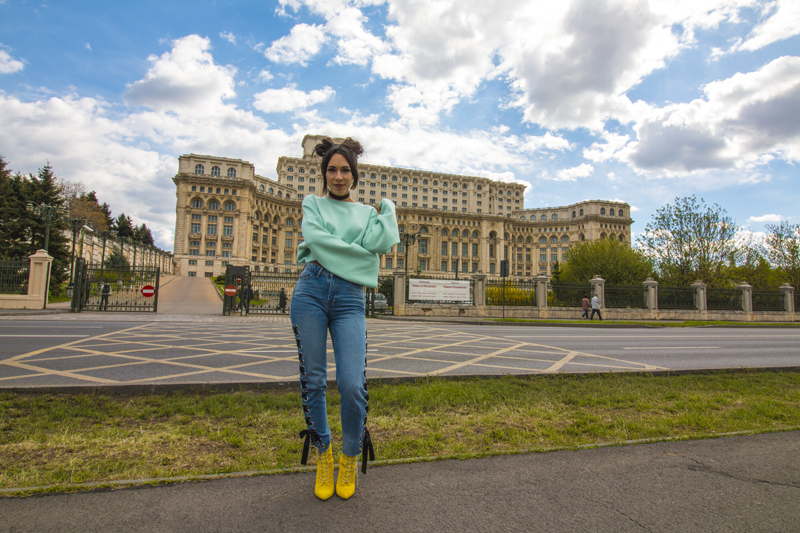 Photo: Freia
The Palace of Parliament houses the seats of parliament of Romania. It’s also the second-largest administrative building in the world, after the Pentagon in the United States. A colossal parliament building known for its ornate interior composed of 23 sections, it houses the Senate and the Chamber of Deputies, plus three museums and an international conference center. The National Museum of Contemporary Art, Museum of Communist Totalitarianism and Museum of the Palace are hosted inside the Palace. Though named the House of the Republic (Romanian: Casa Republicii), after the Romanian Revolution in 1989, it became widely known as the People’s House (Romanian: Casa Poporului). Due to the impressive endowments it receives, state institutions and international bodies routinely organize conferences, symposiums, and various events here. Even with so many events, the building remains about 70% given its immense size.
6. Take A Stroll Through The Beautiful Herastrau Park.
B-dul Aviatorilor, Bucharest, Romania (map, website)
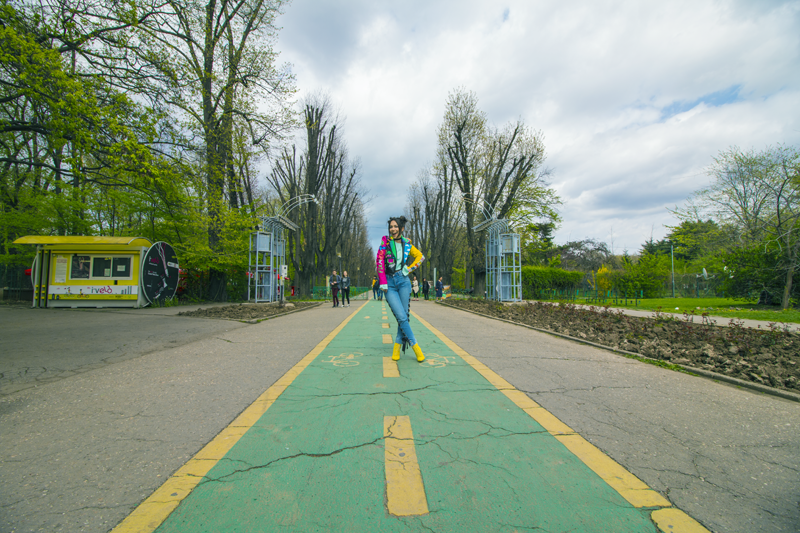 Photo: Freia
Herastrau Park is the largest park of Bucharest, situated in the north of the city around Herastrau Lake. The park covers an approximate area of about 187 hectares (462 acres), of which 74 hectares (183 acres) is the lake. Initially, the area was full of marshes, but these were drained between 1930 and 1935, and the park was opened in 1936. The park is divided into two zones: a rustic or natural zone (the Village Museum), which is left more or less undisturbed, and a public/active domain with open areas for recreational activities, where small boats are allowed on the lake.
In 1936, the work began for the creation of the National Park (Parcul Național) in Herăstrău. For this, several dozen squalid houses, as well as an industrial plant were expropriated and torn down, being replaced with alleys and trees. The park was officially opened to the public in May 1939, becoming Bucharest’s largest park.
7. Stroll Through Historic Carol Park.
Strada Cuțitul de Argint 12, Bucharest, Romania (map, website)
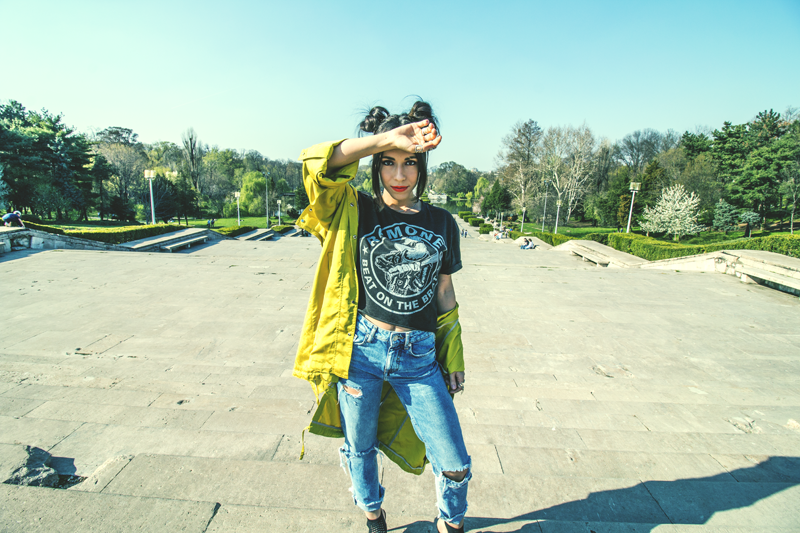 Photo: Freia
Carol Park, named after King Carol I of Romania, is also known as Liberty Park. Featuring a beautiful French garden, the park is located in the south central area of Bucharest, partly on Filaret hill. Originally capable of hosting various exhibitions, the park suffered considerable modifications during the communist regime, including a name change to Parcul Libertății (Liberty Park).
The park has officially been listed as a historical monument since 2004. The park is maintained by City Hall, whereas monuments are in the care of the Ministry of Culture and Religious Affairs. This park is also very well known for one of the most beautiful and largest open-air theaters in Bucharest called Arenele Romane (Roman Arenas). In the past 20-25 years, some of the most memorable concerts from international rock and pop stars have all graced the stage here.
8. See World Class Art At Royal Palace Of Bucharest.
Calea Victoriei 49-53, Bucharest 010063, Romania (map, website)
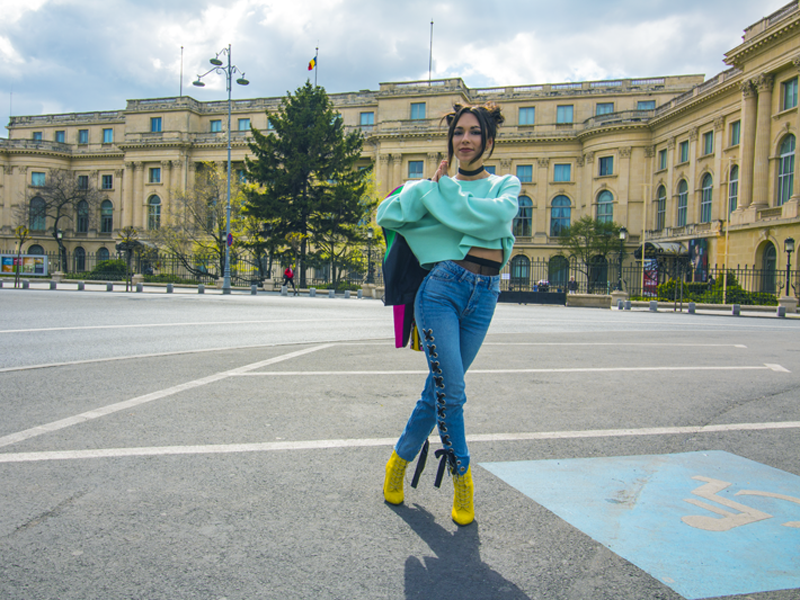 Photo: Freia
The Royal Palace of Bucharest is at present home to the National Museum of Art of Romania since the 1950s. The Royal Palace underwent subsequent extension work in the course of history, but the bottom line is nowadays it stands out as one of the most notable neo-classical buildings in Bucharest. Tragically, the building was burned down during the 1989 revolution, and the restoration work continued until the end of the 20th century. The building has now been restored to its former glory.
9. Visit The Historic L’Arc De Triomphe.
Piața Arcul de Triumf, Bucharest, Romania (map)
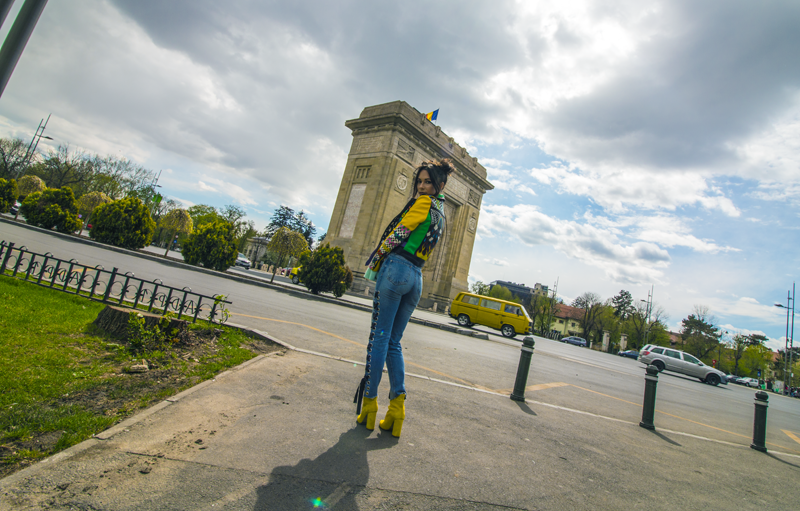 Photo: Freia
L’arc de Triomphe (The Arch of Triumph) is a triumphal arch located in the northern part of Bucharest, on the Kiseleff Road. As the first wooden triumphal arch in the city it was built hurriedly after Romania gained its independence (1878), so that the victorious troops could march under it. Another temporary arch was built on the same site in 1922, after World War I, which was eventually demolished in 1935 to make way for the current triumphal arch, which stands today. The arch was officially inaugurated in September 1936.
The arch measures 25 meters x 11.50 meters (89 feet x 38 feet) at its base and a height of 27 meters (89 feet), and was designed by architect Petre Antonescu. Renowned Romanian sculptors, such as Ion Jalea and Dimitrie Paciurea, created the sculptures that decorate the facades. Nowadays, military parades are held beneath the arch every December 1st to coincide with Romania’s national holiday.
Article written by Freia.
