
It’s impossible to resist the red-hot, spicy, comforting, flavorful calling of Korean food.
Traveling through South Korea is just as much of an epic gastronomic journey as it is a cultural one. Koreans love bold, hearty flavors that result in the ultimate comfort food. Here’s a list of everything one must eat when traveling through Korea!
View this post on Instagram
Kalbi
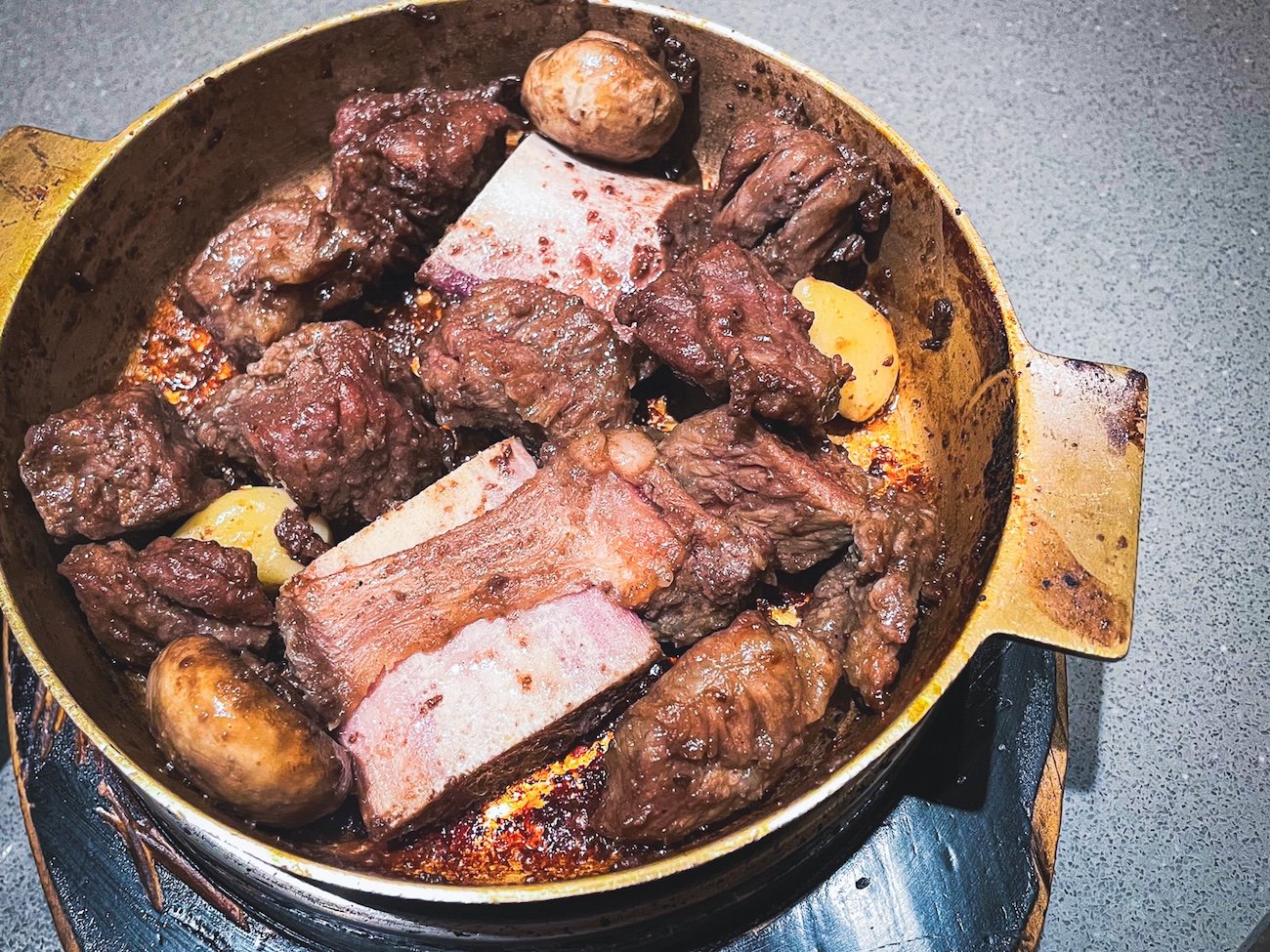 Kalbi. PHOTO NADIA CHO
Kalbi is the premium meat item to order when eating Korean BBQ, as it’s also what Korean royals enjoyed devouring at banquets during Imperial eras. Kalbi is beef short rib marinated in sweet ganjang (Korean soy sauce) sauce, then grilled. Originally, kalbi came in the form of regular short ribs with meat wrapped around small chunks of bone. Korean American restaurants in Los Angeles, however, created a new cut of kalbi by slicing thinner strips of meat straight across the bone, which is now referred to as L.A. kalbi. These days, it’s more common to see the longer strips of L.A. kalbi whenever hungry diners order kalbi at any Korean BBQ.
Kalbi, when cooked to perfection; is tender, juicy, sweet, and savory. It’s one of the most premium items on the menu for a reason, but no Korean BBQ grill is complete without it!

Bulgogi
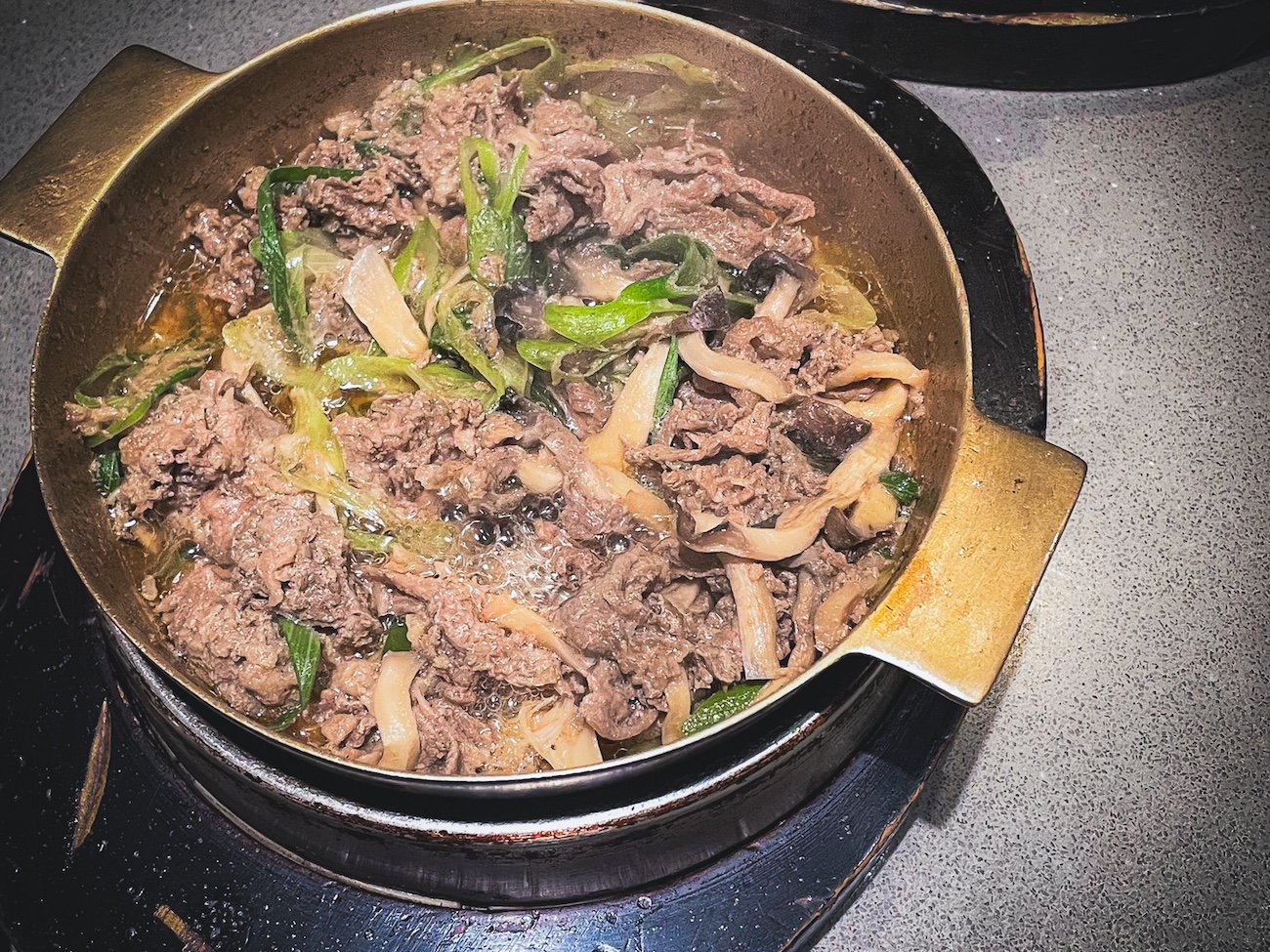 Bulgogi. PHOTO NADIA CHO
Bulgogi is made with a similar sweet, savory soy sauce marinade like kalbi but uses thinly sliced pieces of beef sirloin or ribeye. Once it’s grilled, the meat curls deliciously into itself, becoming soft and tender. Bulgogi is one of the most well-known Korean dishes, which you can order at any Korean BBQ restaurant. It’s fabulous to eat with rice, as well as in the form of a lettuce wrap with a dollop of ssamjang (Koreans’ favorite spicy chili paste with fermented soy bean.) You can also order pork bulgogi (dweji bulgogi) – made with a red gochujang marinade. It’s spicier, while the meat is slightly thicker than its beef counterpart.
Tteokbokki (Spicy Rice Cakes)
Tteokbokki is the king of Korean street foods. You’ll find heaping cauldrons bubbling with red-hot tteokbokki at any street food market or casual eateries.
Tteokbokki is made of long, chewy rice cakes cooked in a spicy red gochujang sauce, with various combinations of toppings depending on where you’re eating. The most popular toppings consist of odeng (fish cakes,) vegetables, steamed egg, and ramen noodles (if you want tteokbokki with ramen noodles, be sure to order rah-bokki instead.)
While Koreans are used to the taste, be aware that tteokbokki can be pretty spicy, especially for newbies. But as the national street food; these red, hot rice cakes are high on the must-try list when in Korea!
 Photo by Jeremy Li on Pexels
Hotteok (Korean Sweet Pancakes)
Hotteok is one of Korea’s most beloved street foods. Every Korean person has fond memories of eating a hot hotteok fresh off the grill in the street. It’s a rice cake batter filled with brown sugar syrup and sesame seeds, then flattened and pan-fried to a crisp. It’s a heavenly mix of sweet, greasy, and chewy. Truly, what’s not to love! Hotteok is easy to come by, as it’s one of the most popular and common items sold by street and market vendors. Go to any street food and you’ll find glutinous hotteoks sizzling on the grill.
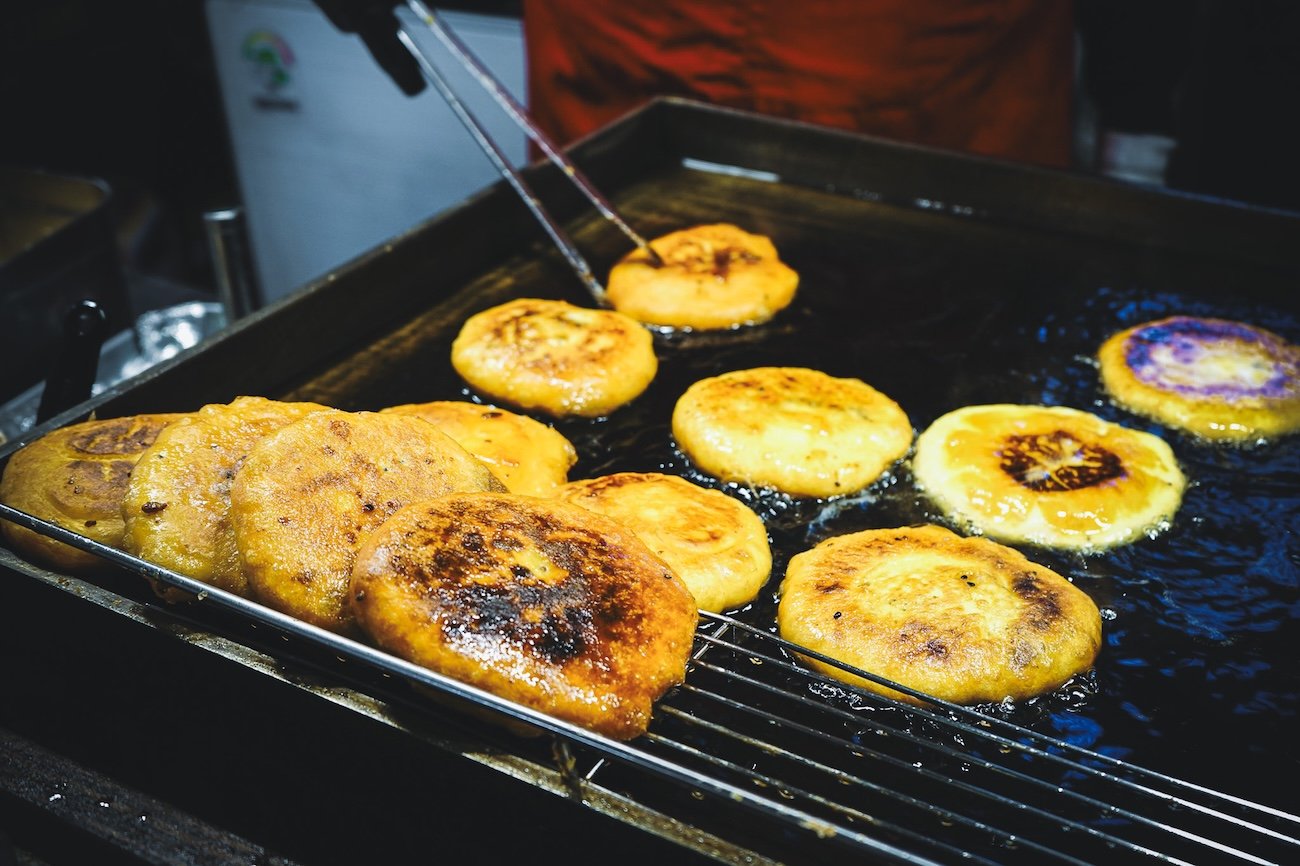 Hotteok. PHOTO NADIA CHO
Kimbap (Rice rolls)
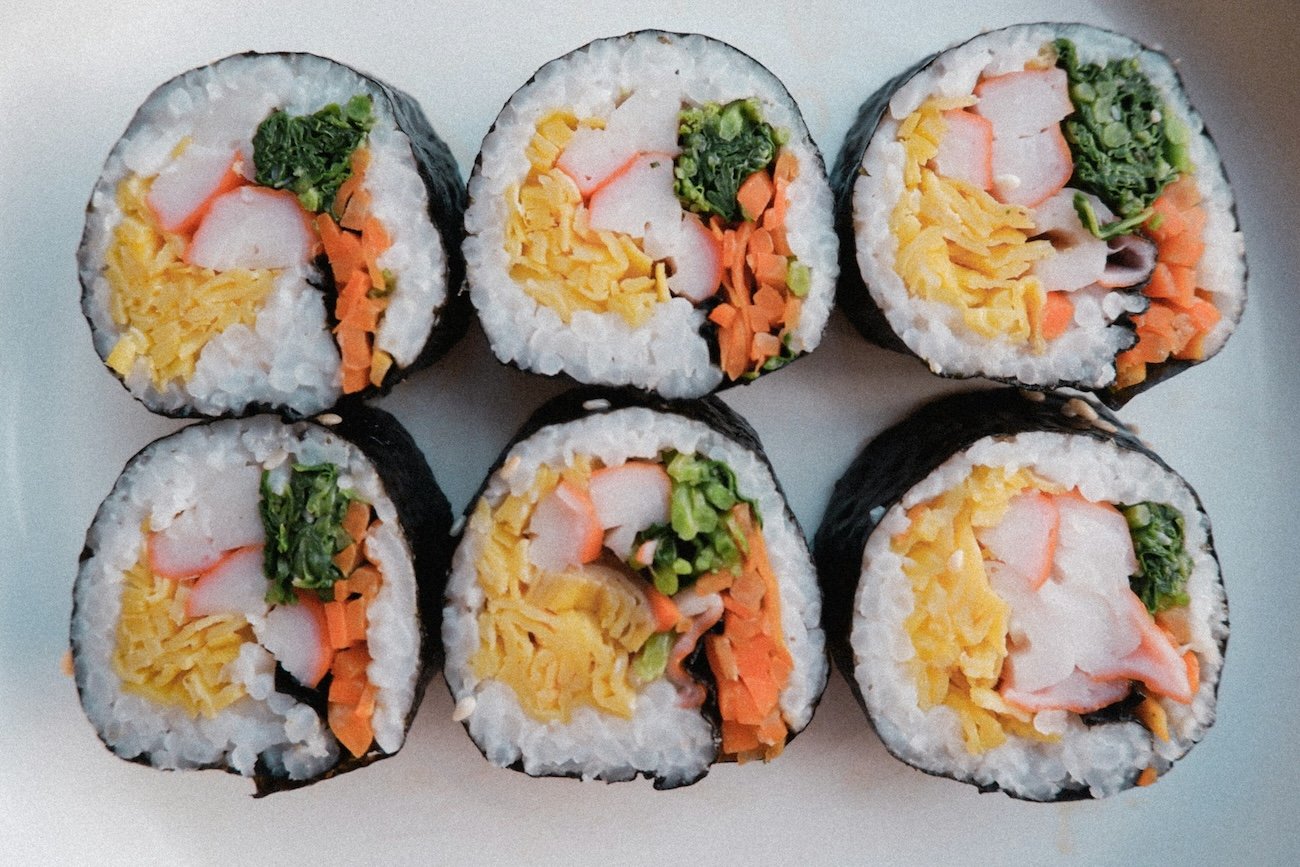 Photo by Devi Puspita Amartha Yahya on Unsplash
Kimbap is another national favorite that every Korean grows up eating. Kimbap is made by spreading a bed of rice on a sheet of seaweed (nori or gim in Korean) and layering in pieces of vegetables, meat, or even tuna. The whole thing is rolled up and cut into bite-size pieces. You’ll likely see these circles of rice wrapped in seaweed with colorful fillings in the middle in convenience stores and street food markets. Koreans most often pack it in lunchboxes and take kimbap to picnics. It’s the perfect savory and convenient snack that’s most delicious when enjoyed outside.
Mandu (Korean dumplings)
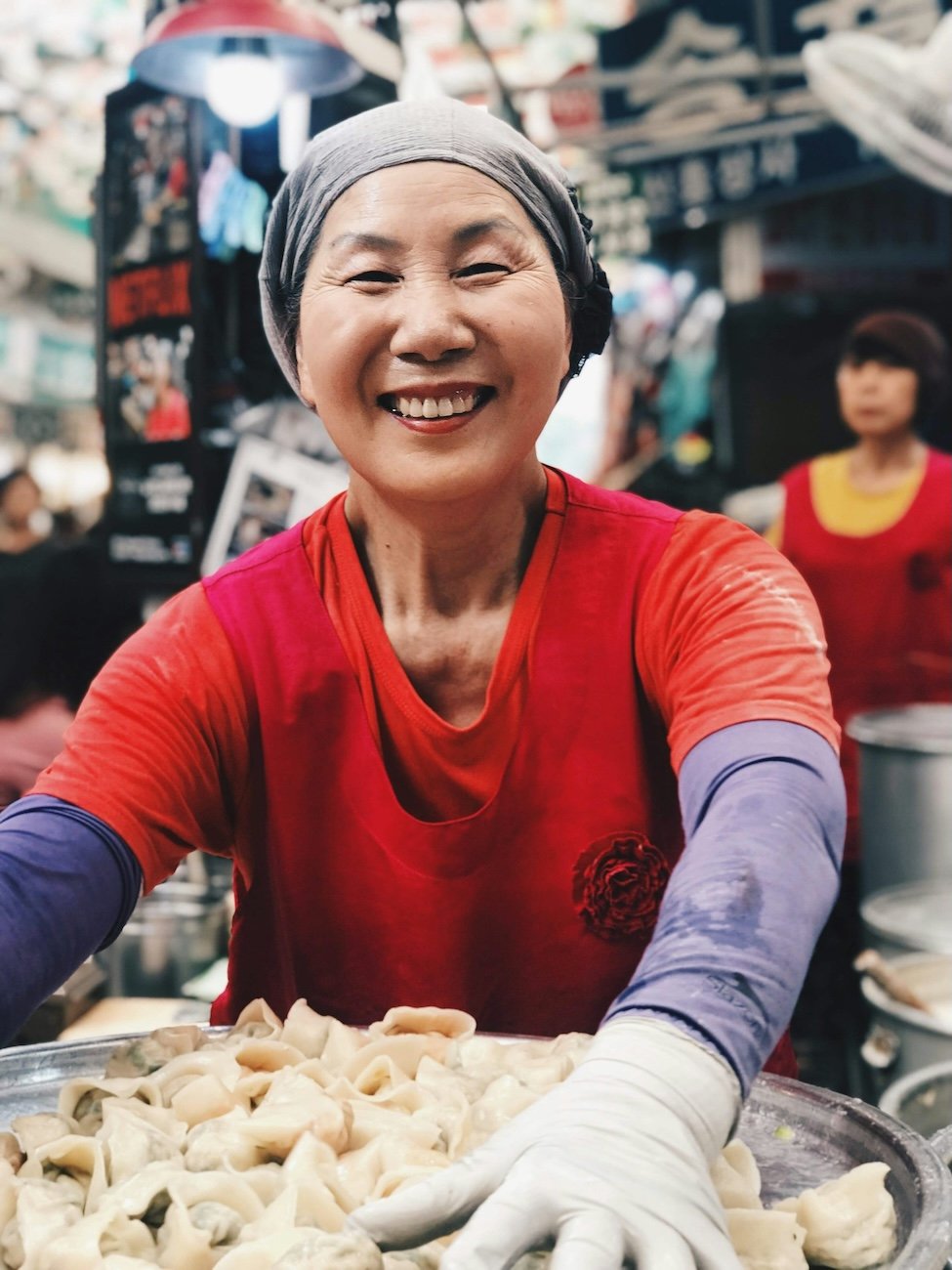
Mandu is the name for dumplings in Korean, and Koreans sure know how to make super tasty dumplings. Korean dumplings come steamed more often than fried.
Mandu is bigger than gyozas or Chinese dumplings due to having more filling, and the skin is softer and slightly thicker. You’ll find endless varieties of mandu with different fillings, including: kimchi mandu, gogi mandu (with meat,) vegetable mandu, and even japchae mandu. Wang mandu (which means King Dumpling) is an extra-large, extra-stuffed dumpling wrapped around itself in a circular shape – an excellent choice to order at a diner whenever it’s available.
Bindaetteok
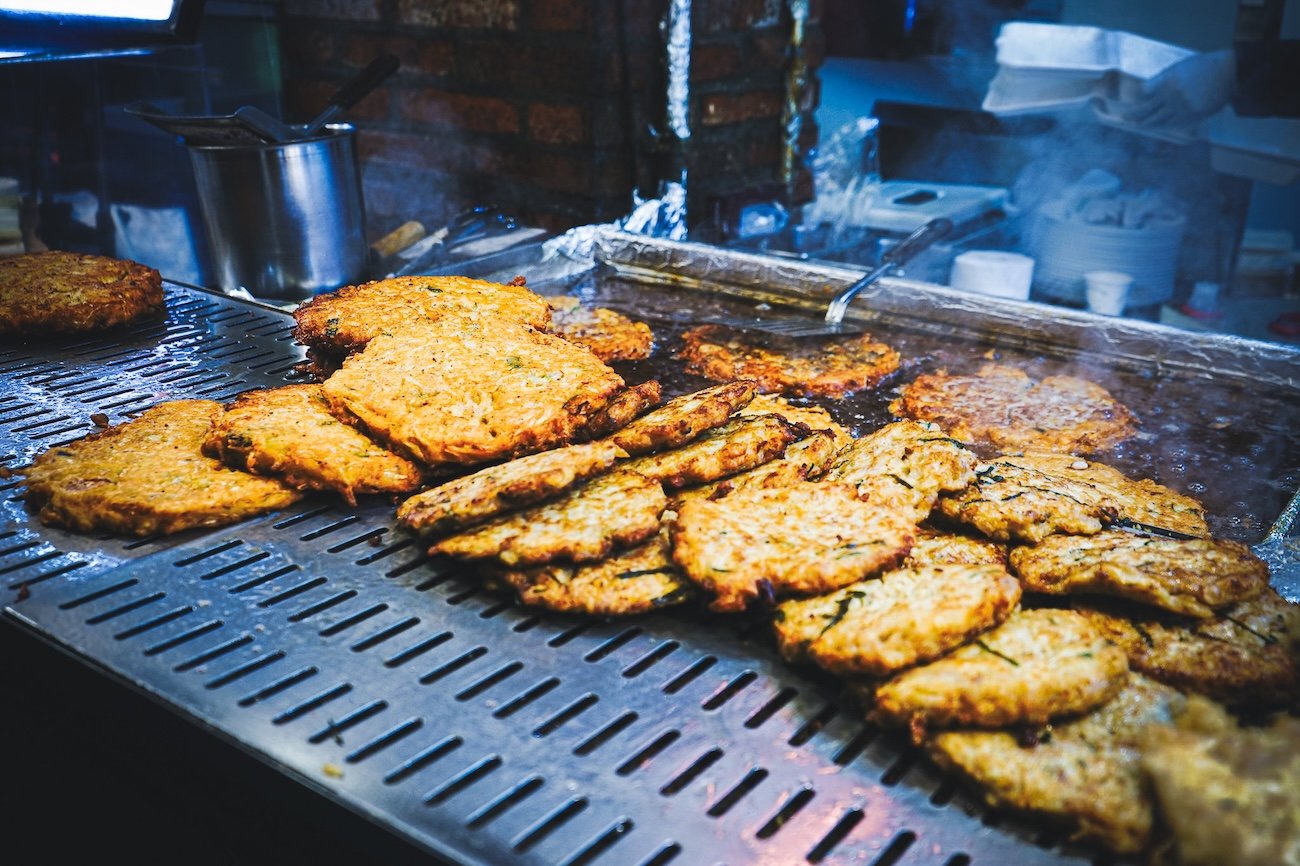 Bindaetteok. PHOTO NADIA CHO
Korean pancakes are called jeon or buchimgae and come in different varieties. Buchimgae is pan-fried in a thin shape like a pancake, except Korean pancakes are savory and use any combination of ingredients mixed with batter. One of the most popular Korean pancakes is bindetteok, made with ground mung beans and kimchi that’s fried in oil until it becomes a crispy golden fritter. Bindaetteok is thicker than other types of buchimgae, as the mung bean gives it a hearty texture. You’ll see bindaetteok in street stalls everywhere, especially in Gwangjang Market in Seoul. Other popular types of jeon include pa-jeon (scallion pancakes,) haemulpajeon (seafood pancakes,) and kimchi-jeon. All are delicious as they come thin and crispy right off the grill.
Naengmyeon (Cold Buckwheat Noodles)
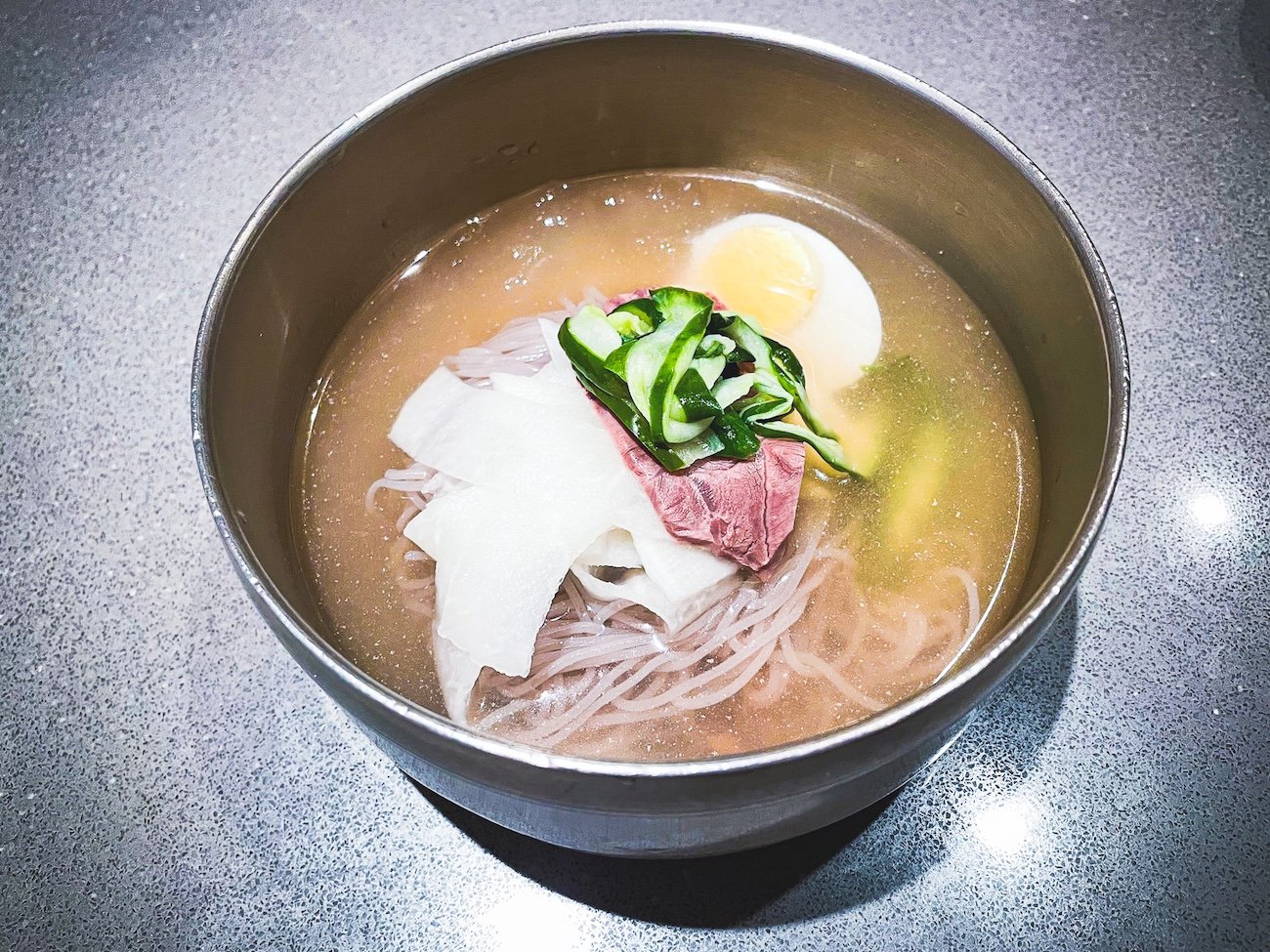 Naengmyeon. PHOTO NADIA CHO
Naengmyeon is one of those quintessentially Korean dishes that you won’t find anywhere else (except in Koreatown, of course.) Naeng means cold, and myeon means noodles, so this is a cold noodle dish mostly popular in the summer to combat humid heat. The noodles are made of potatoes and thin buckwheat with a highly chewy texture. The noodles are then placed in a clear, tangy-sweet broth made of beef broth and radish kimchi brine, to be flavored with hot mustard for an extra kick. Toppings include thin slices of beef, radish, cucumber, boiled egg, and a slice of pear. It’s common to serve naengmyeon with ice in the bowl to keep the broth chilled.
This version of cold naengmyeon is specifically referred to as mul naengmyeon. But there’s also bibim naengmyeon, which is a version without the broth also served cold. Bibim naengmyeon uses the same thin buckwheat noodles, but instead of the broth, the noodles are mixed with sweet, spicy cho-gochujang and similar toppings.
Dak Kalbi (Chicken Kalbi)
Dak Kalbi, or Chicken Kalbi, is a crowd favorite commonly found in casual eateries and pochas (outdoor food stalls.) Dak kalbi consists of chicken cutlets marinated in a sweet and spicy gochujang sauce, along with other sides like sweet potatoes, cabbage, rice cakes, and vegetables. The entire lot is cooked on a large flat grill at the table.
It’s a particularly fun activity to grill dak kalbi and drink soju with friends, especially on a night out. This is why there are entire streets in nightlife areas like Hongdae lined with restaurants that serve dak galbi, and ducking into any of these casual restaurants or pochas is a great way to enjoy a very local Korean experience.
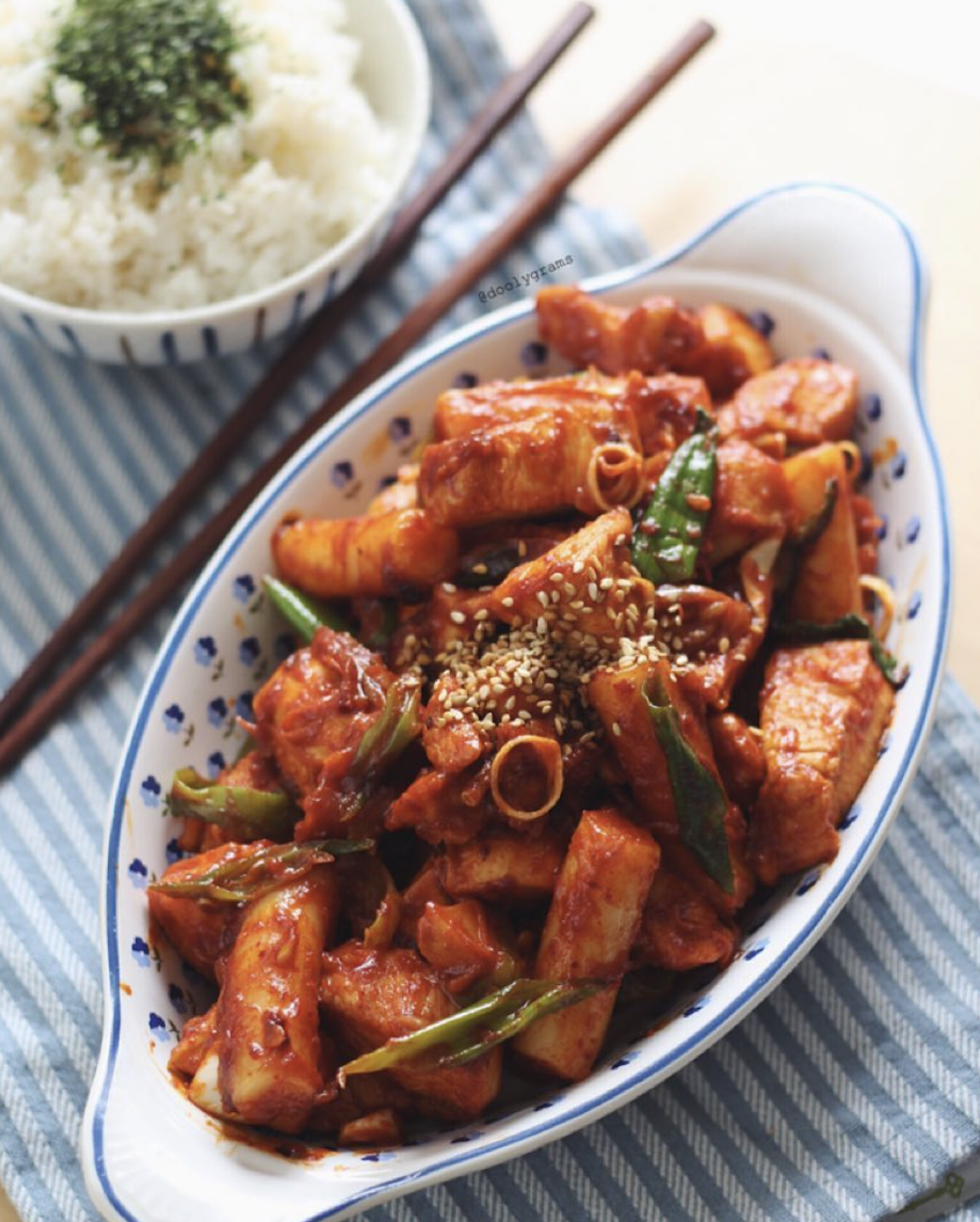 Dak Kalbi. INSTAGRAM @doolygrams
Budae-jjigae (Army Base Stew)
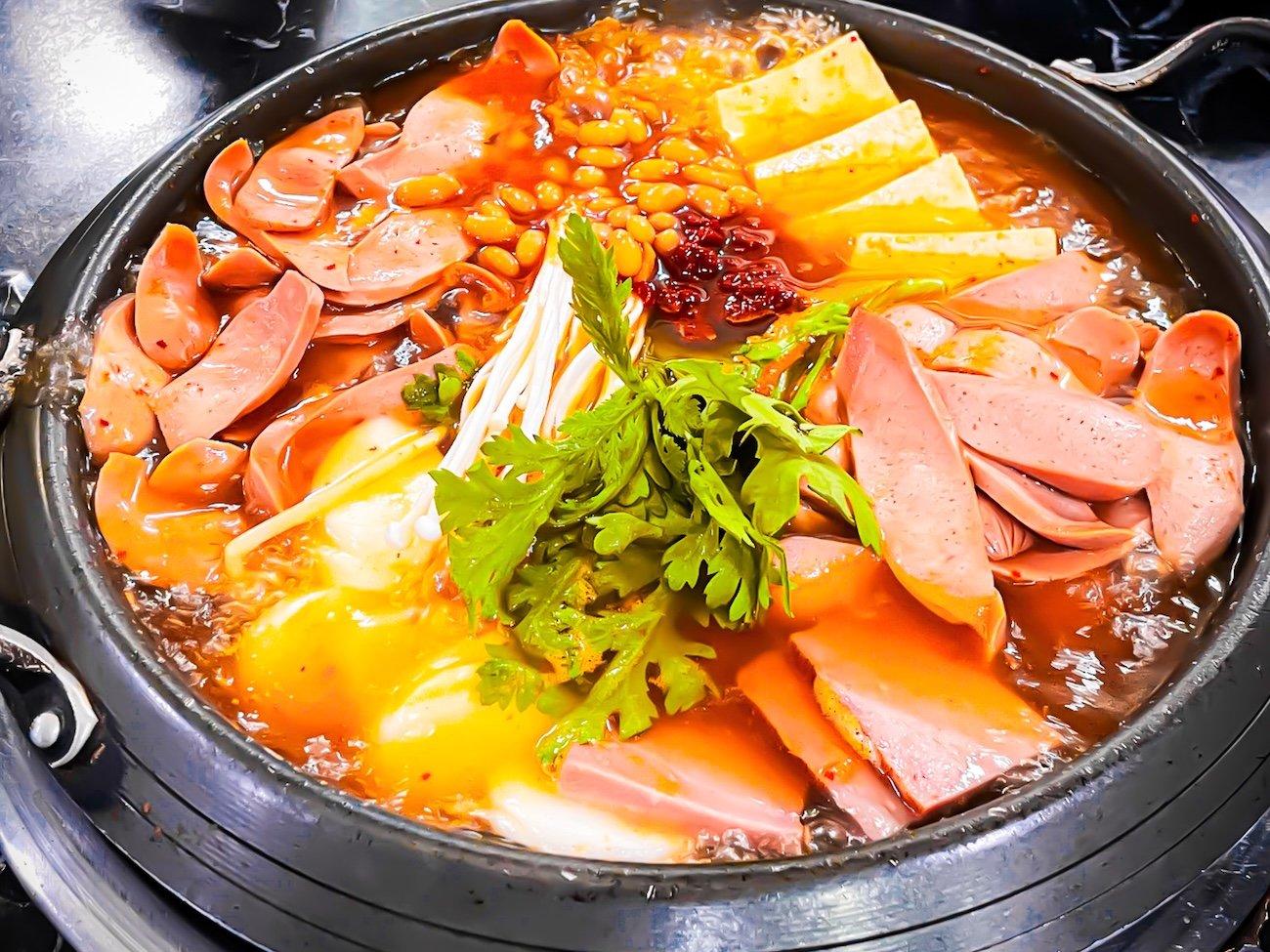 Budaejjigae. PHOTO NADIA CHO
Budae-jjigae is a fun dish to try, as it’s a fusion between Korean and American ingredients that was invented in the army. After the Korean War, American soldiers that were stationed near Seoul brought American canned goods like Spam, sausages, cheese, ham, and beans. Local Koreans used these foreign ingredients and boiled them together in a Korean-style stew with kimchi, tofu, gochujang, instant ramen noodles, and sometimes even put American cheese on top. The result is a bubbling hot stew served in a large pot meant for sharing, it continues to be a popular staple in Korea today.
Samgyetang & Seolleongtang
 Photo by Cyprien Delaporte on Unsplash
Nobody can beat Koreans in making a more comforting soup, especially when it’s a Korean halmoni (grandma) cooking it. The best Korean soup dishes, which are also amazing for your health, are samgyetang and seolleongtang.
Samgyetang is made by boiling an entire chicken stuffed with sweet glutinous rice, ginseng, jujubes, and garlic. The chicken is boiled until it’s super soft and falls off the bone. There’s nothing better than eating morsels of tender chicken with slightly sweet sticky rice and kimchi, with the flavorful broth to wash it down. Seolleongtang is made with ox bone and brisket boiled over low heat for hours until there’s a milky bone broth, which is absolute heaven. Many Koreans put rice directly in the soup to slurp it up with the delicious broth and soft pieces of brisket. Both samgyetang and seolleongtang are highly nutritious and amazing for your health while being the most comforting version of soup that you could ever have.
Korean Corn Dog
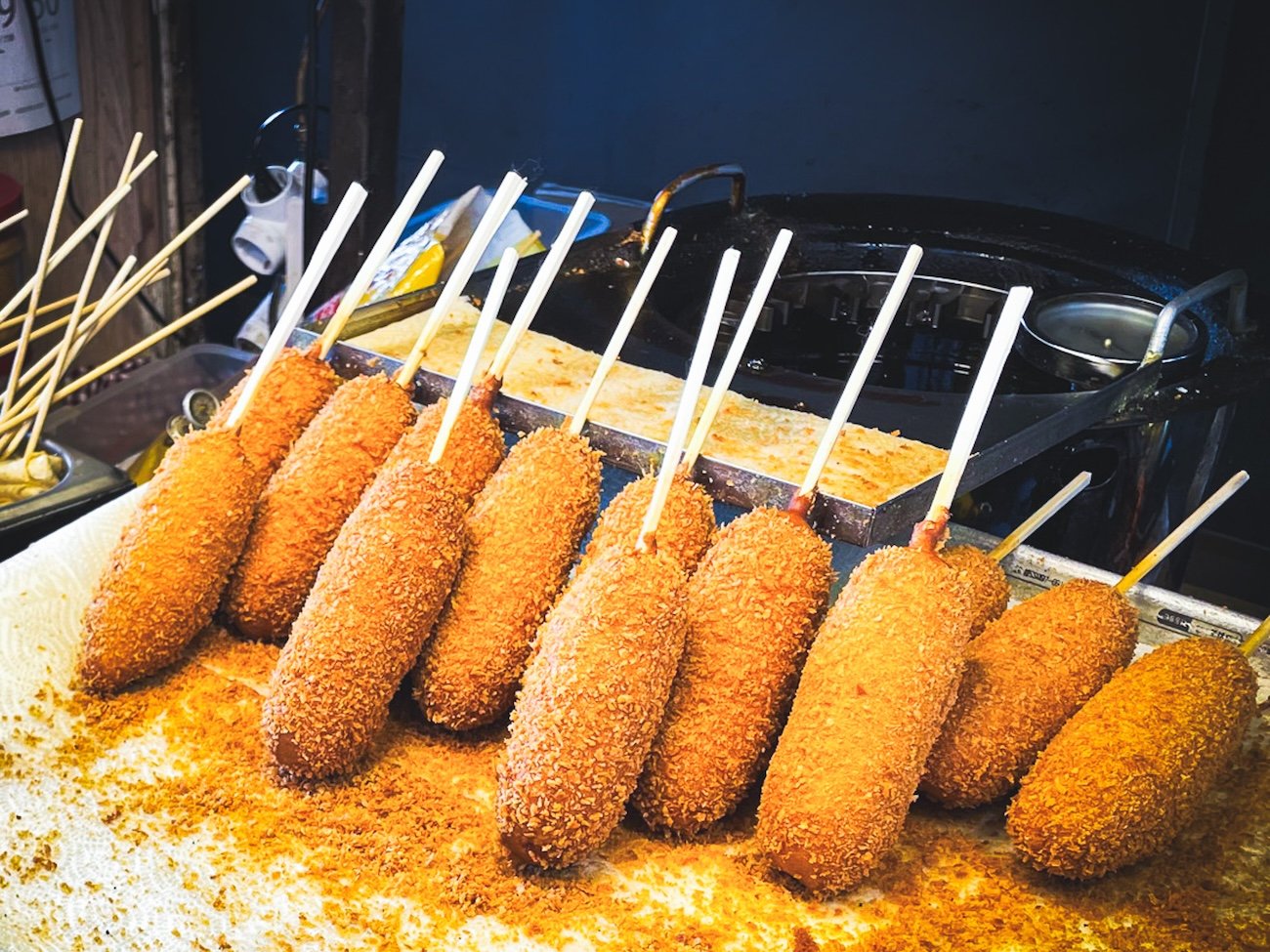 Korean corn dog. PHOTO NADIA CHO
Anyone who hasn’t tried a Korean corn dog is seriously missing out. Korean corn dogs are like American corn dogs on steroids. Instead of the regular batter, Koreans include glutinous rice flour to give the outside that sweet, chewy, mochi-like texture. Then, they are coated with panko, and once fried, they’re given a sprinkle of sugar. The result is an ultra-crunchy and chewy corn dog that’s sweet and savory at the same time. Smother that baby with ketchup, mustard, and some extra sugar if you’d like, and it’ll be the best corn dog you’ll ever have in your life. There’s nothing more exciting than biting into a crispy corn dog on a street corner. So, if you see a vendor selling these babies, do not let the opportunity pass you by!
Boongeo-ppang (Korean Fish Bread)
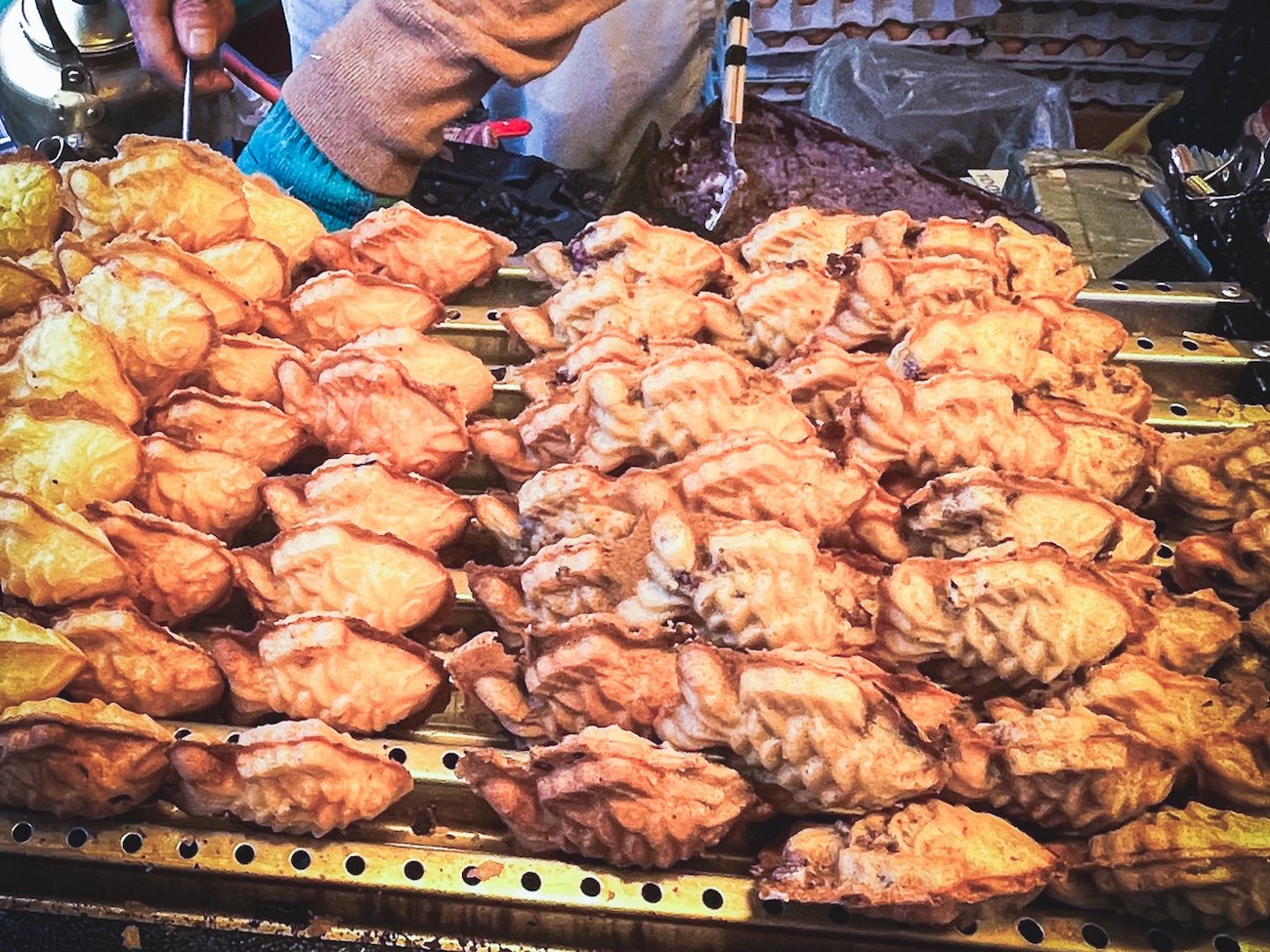 Bungeoppang. PHOTO NADIA CHO
Boongeo-ppang, also sometimes called ing-uh ppang, is the Korean version of taiyaki. Boongeo is the name for carp, and ppang is bread, which is how the snack gets its name. Similar to taiyaki, fluffy waffle mix is poured into a fish-shaped mold then stuffed with a filling. The most common filling is sweet red bean paste, but it’s common to find other popular fillings like custard cream or savory fillings like cheese or pizza. The result is a crispy, sweet waffle that reveals hot, creamy filling when you bite into it. You can find street vendors selling boongeo-ppang on many street corners, and you can usually buy 1-5 fish for just 1,000-2,000 KRW.
