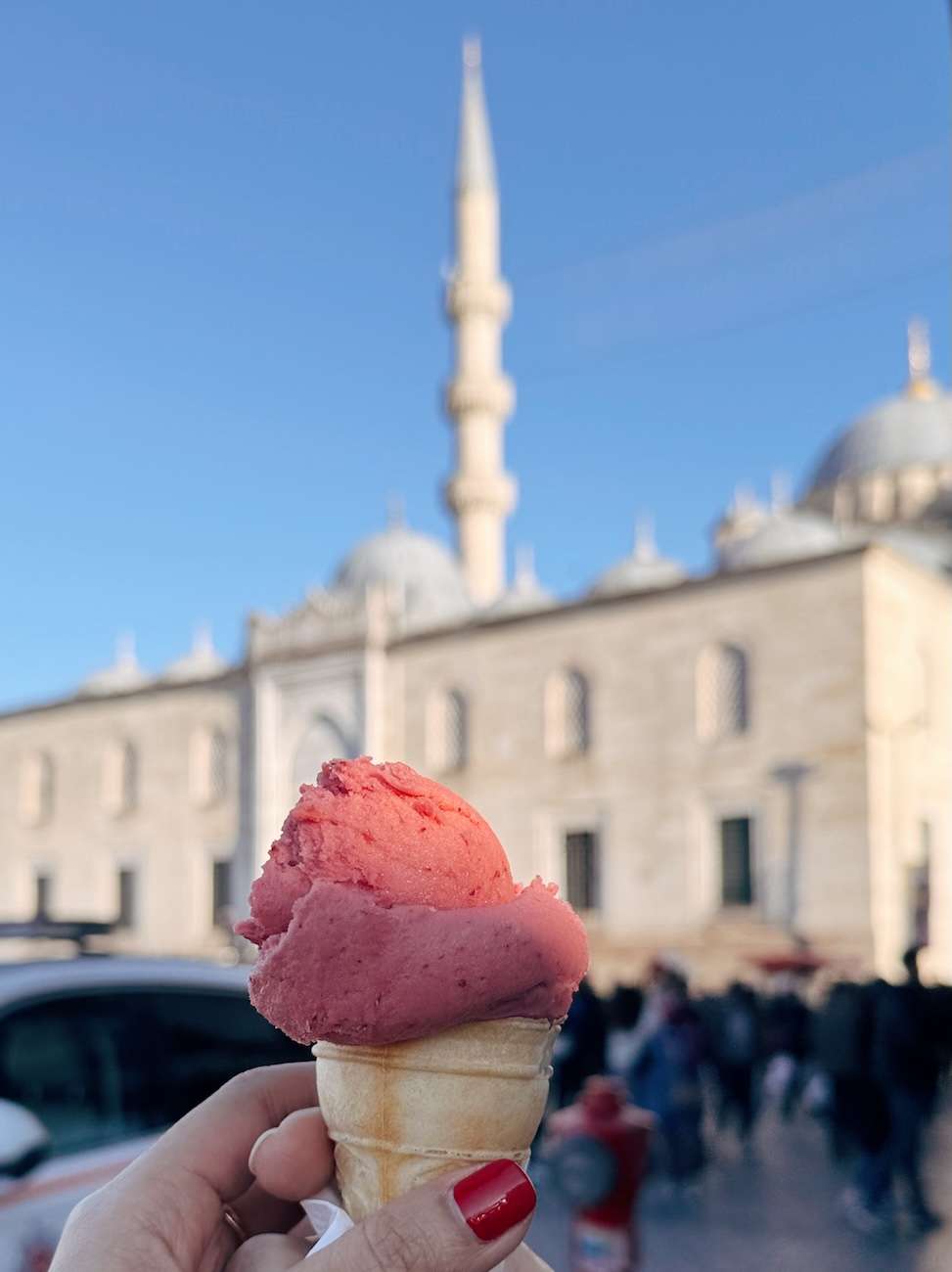
Stretch it. Twist it. Flip it upside down.
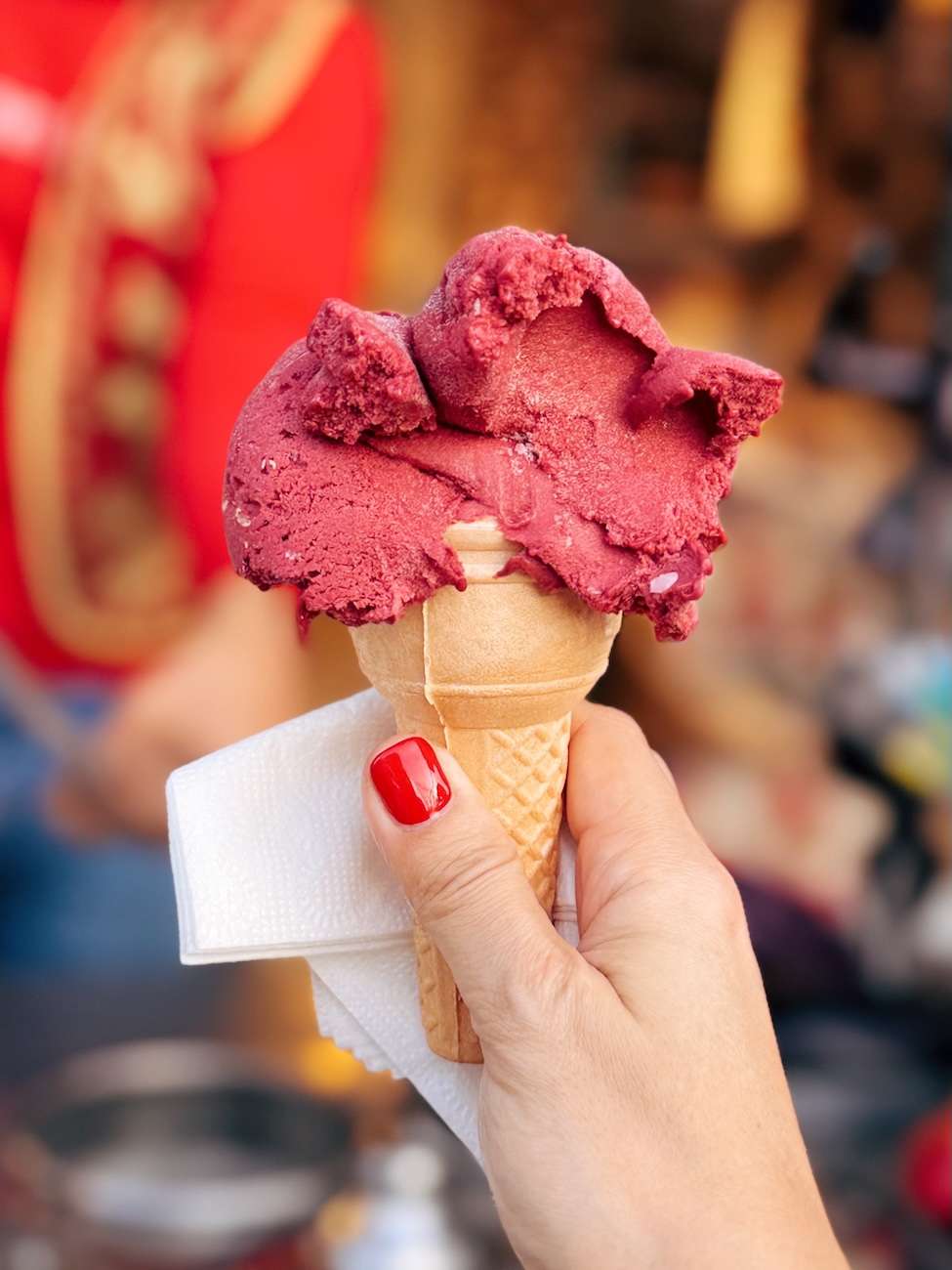 Turkish ice cream. PHOTO WENDY HUNG
Turkish ice cream isn’t just dessert — it’s a performance.
Known locally as dondurma, this iconic treat is famous for its elastic texture, slow melt, and playful street vendors who turn every scoop into a show.
Traditional Turkish ice cream originates from Kahramanmaraş in southern Turkey. Often called “Maraş dondurması,” it’s made using time-honored techniques passed down for generations.
Unlike regular ice cream, dondurma is dense, chewy, and delightfully resilient — thanks to two special ingredients.
View this post on Instagram

How Turkish Ice Cream Is Made
The magic lies in its unique recipe:
1. Salep
A flour made from the dried tubers of wild orchids. Salep gives dondurma its signature elasticity and thickness.
2. Mastic (Damla Sakızı)
A natural resin harvested from mastic trees. It adds a subtle pine-like aroma and contributes to the chewy texture.
3. Rich Milk & Sugar
Full-fat goat’s or cow’s milk is slowly heated, sweetened, and combined with salep and mastic.
4. Churning & Beating
Instead of fast mechanical churning, the mixture is stretched and pounded with long metal paddles. This aerates the ice cream while activating its elastic structure.
A frozen dessert so sturdy it can be sliced with a knife — or held upside down without dripping. Slow-melting and velvety, allowing the flavor to linger longer on the palate. Classic flavors include:
- Vanilla
- Chocolate
- Pistachio
- Walnut
- Seasonal fruit varieties