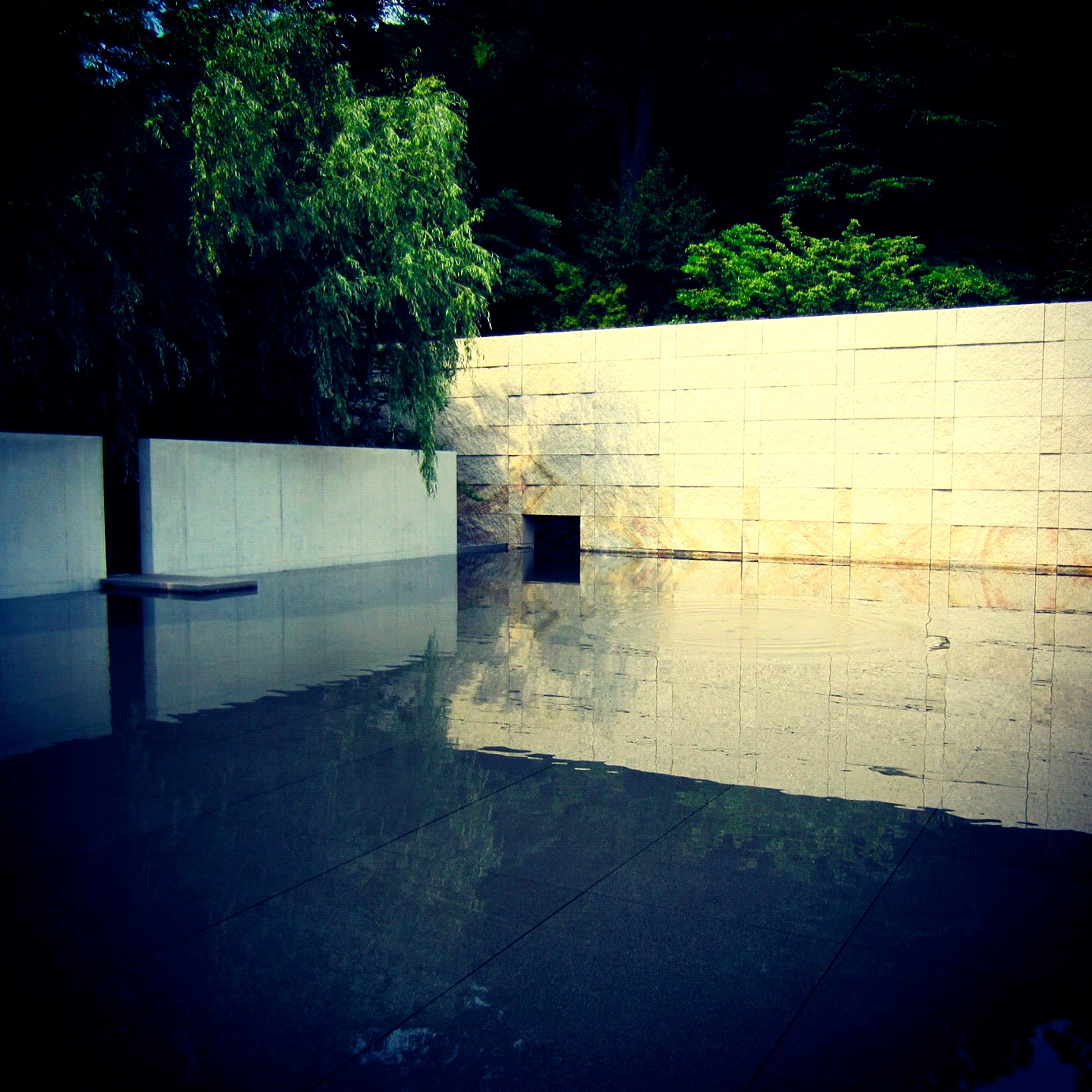
On a hot Tuesday in Kanazawa, I sought refuge in the D.T. Suzuki Museum, tucked away in a hidden street close to the heart of the city.
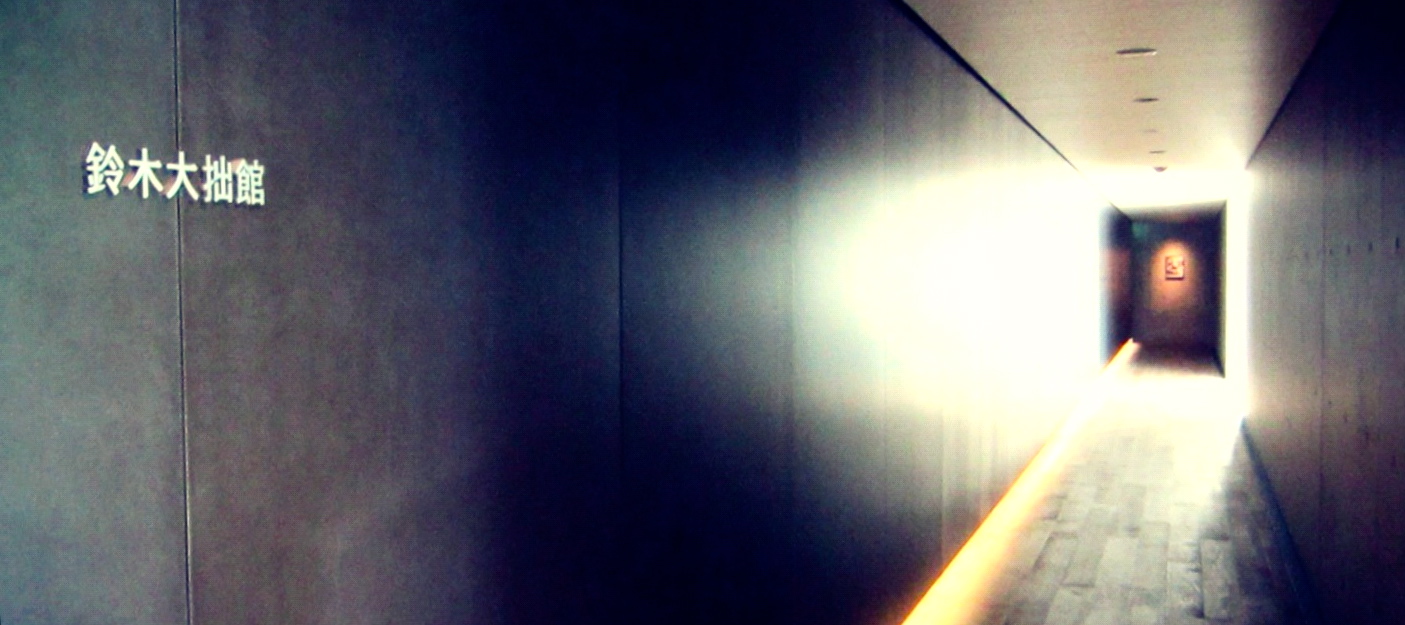
It was just far enough from the pulse of everyday life. Aside from being drawn into the cool oasis under the mid-July sun, I was intrigued by the architecture of the museum, designed to commemorate the life and times of Daisetz Teitaro Suzuki. He born in Kanazawa in 1870 and is celebrated here as an international champion of Zen Buddhism.
At first, the quiet exterior and minimal adornments of the museum are similar to other Japanese museums, where history hangs delicately out of reach behind glass on stretches of calligraphy-stained parchment. Smooth concrete passageways accentuated by interactive video displays, and the clean reception desk in front of a textured accented wall do not seem surprising for a modern museum. (The building, which felt like a younger cousin of the MoMA in New York, shares the same architect: Yoshio Tanaguchi.)
I began to think about Tanaguchi’s architectural choices to immortalize the man responsible for much of Zen Buddhism’s 20th century Westward permeation. Since its opening in the Fall of 2011, visitors have been attracted to the museum as much for the architecture as for their interest in D.T. Suzuki, a prolific figure in the history of Zen Buddhism. Throughout his education and seventy-year global career, he authored books in English and Japanese about Zen Buddhism. In addition, he served as translator for Chinese, English, Japanese, and Sanskrit literature, the bulk of which lines an entire wall of the museum’s “Learning Space”.
Zen Buddhism.
The lifeworks of D.T. Suzuki.
A fresh, white-walled emblem of modern architecture.
As my mind tried to tie these things together, I found my feet carrying me through the museum’s three distinct interior spaces and three gardens. Perhaps what trumped both the “Exhibition Space” and “Contemplative Space” was the moment I steppedoutside to the “Water Mirror Garden”, and I saw a soft ripple moved through a reflection of the sky.
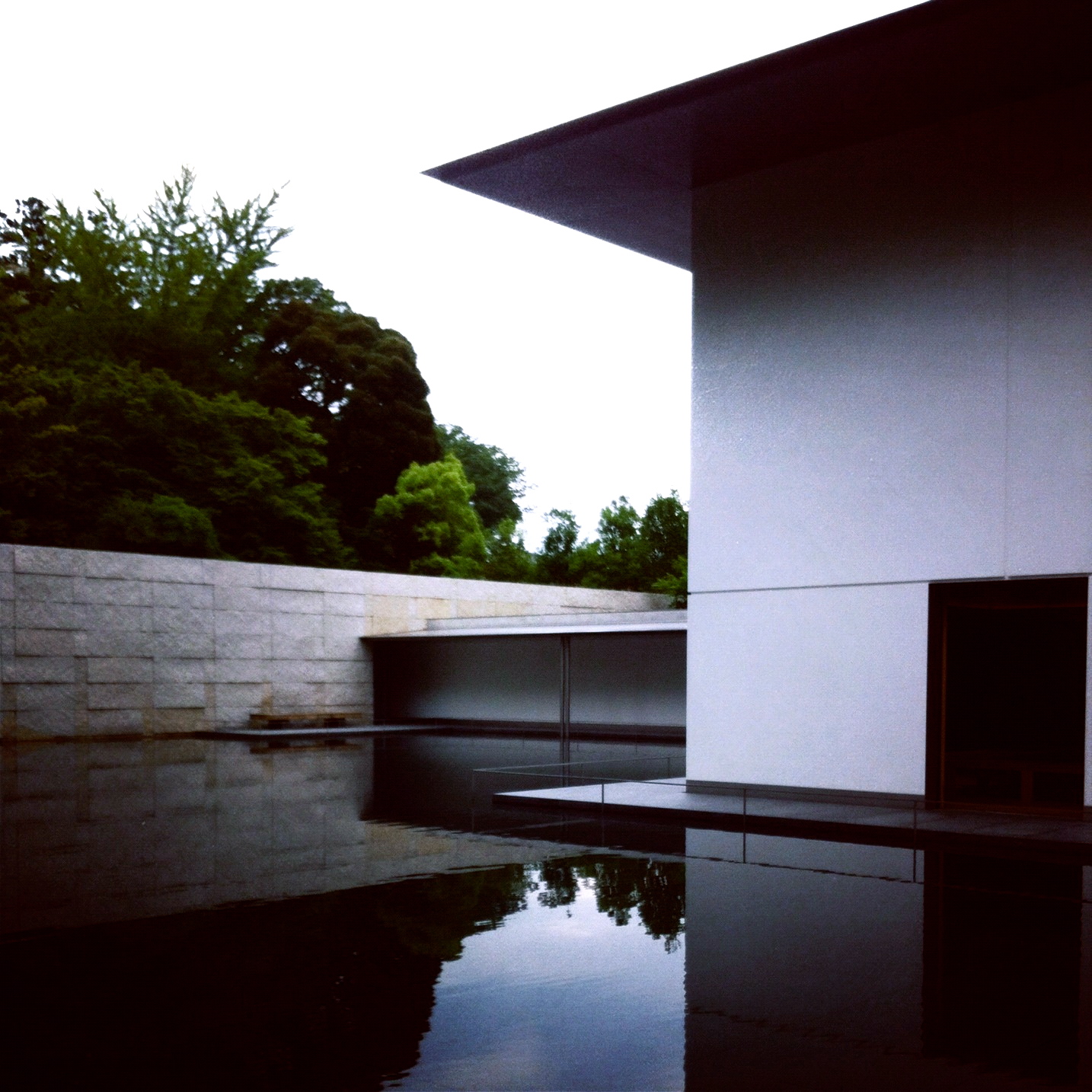
During my tour of the museum, I got used to the idea that this experience was designed to take its visitors to Zen Buddhism, not to take Zen Buddhism to the visitors. Is this the haven that D.T. Suzuki would have envisioned in his birthplace? Is this the reading room he would have chosen to house his knowledge and the tangible products of his life and career? Maybe not. But it is where Tanaguchi envisioned Zen Buddhism coming out to meet the world today, a place where we might feel comfortable reflecting under the shade of a maple tree. The D.T. Suzuki museum is a haven from the commercial bustle of the twenty-first century Japanese city. Tanaguchi has harnessed our modern tastes for polished concrete walls and slick mirrors of water and breathed life into his vision to honor the works of D.T. Suzuki.
Article written by Marina Kaneko.