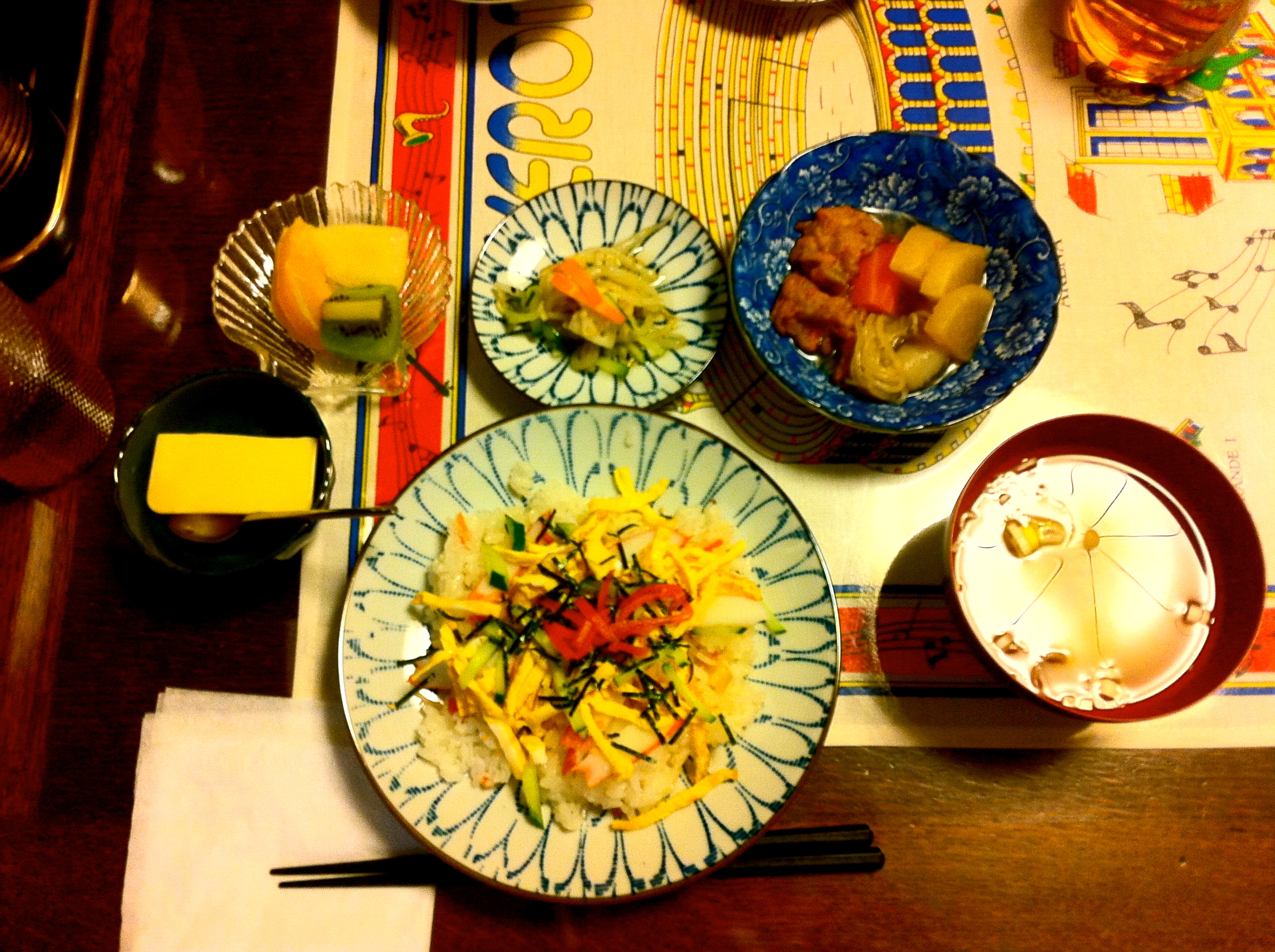
In Kanazawa, nearly every meal featured an array of dishes and flavors.
The first night I sat down to have dinner with my host family in Kanazawa, Japan, a medley of mismatched saucers and bowls was waiting for me. The full spread included miso soup, rice, pickled cucumber salad, tofu custard, a regional version of oden stew, and a serving of freshly cut fruits. The number of dishes set before me was surprising. Cursed with being a slow eater since childhood, I was also struck by a pang of anxiety: where do I stick my chopsticks first? I let out an “Itadakimasu!” and followed my host grandmother’s lead by starting with the tofu. I then worked my way counter-clockwise around the place setting.
Spending a year eating in college dining halls had honed my skills of navigating stacks of plastic beige plates and fishing out the right kind of spoon from a bucket of utensils, but it had not prepared me for this. Beside me, my 8 year-old host brother had downed his plate of chirashi zushi in less than 10 minutes, leaving me to chat in broken Japanese with my host grandmother as I hopped from dish to dish, afraid of leaving anything uneaten lest I insult my host family.
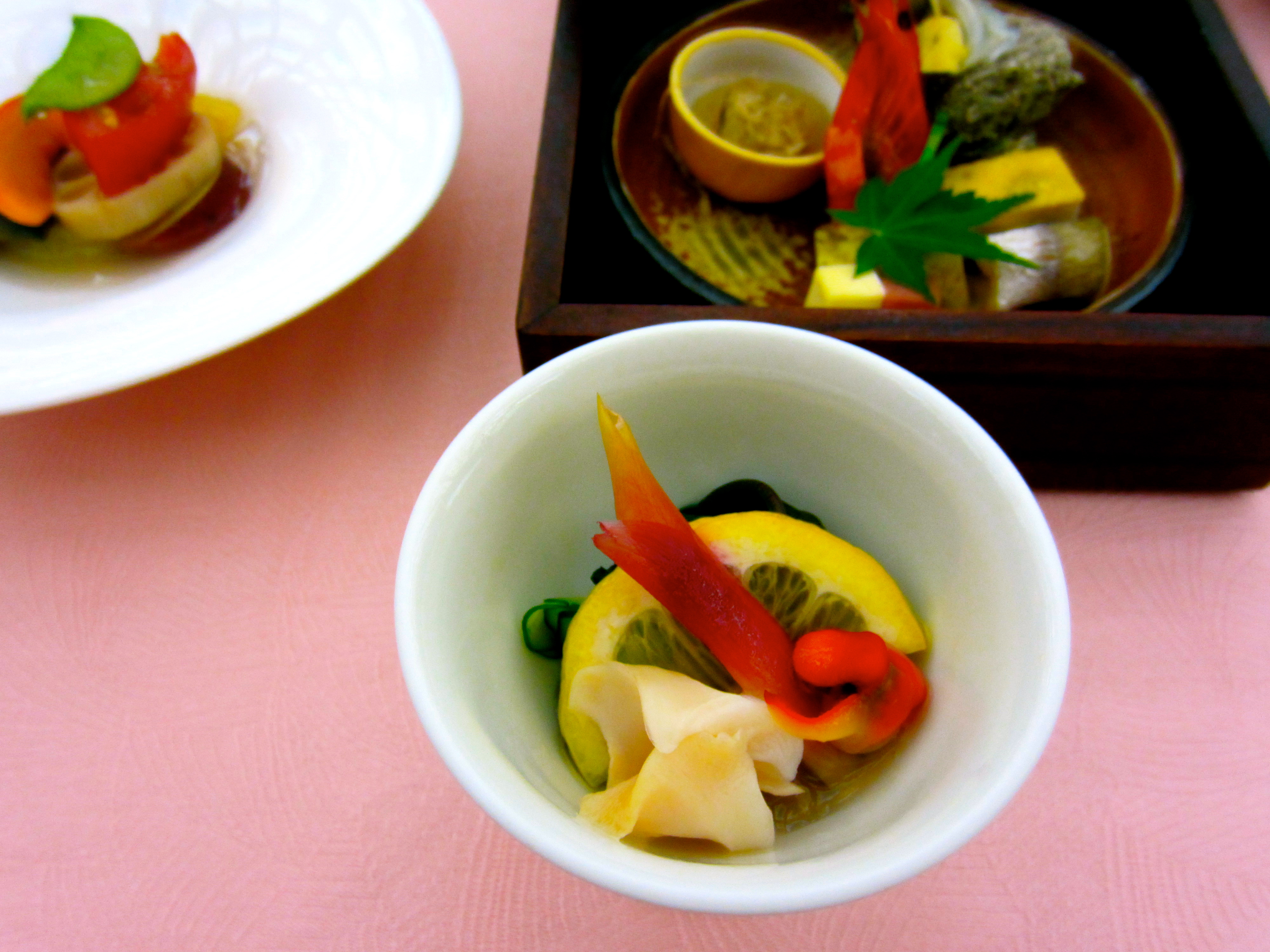
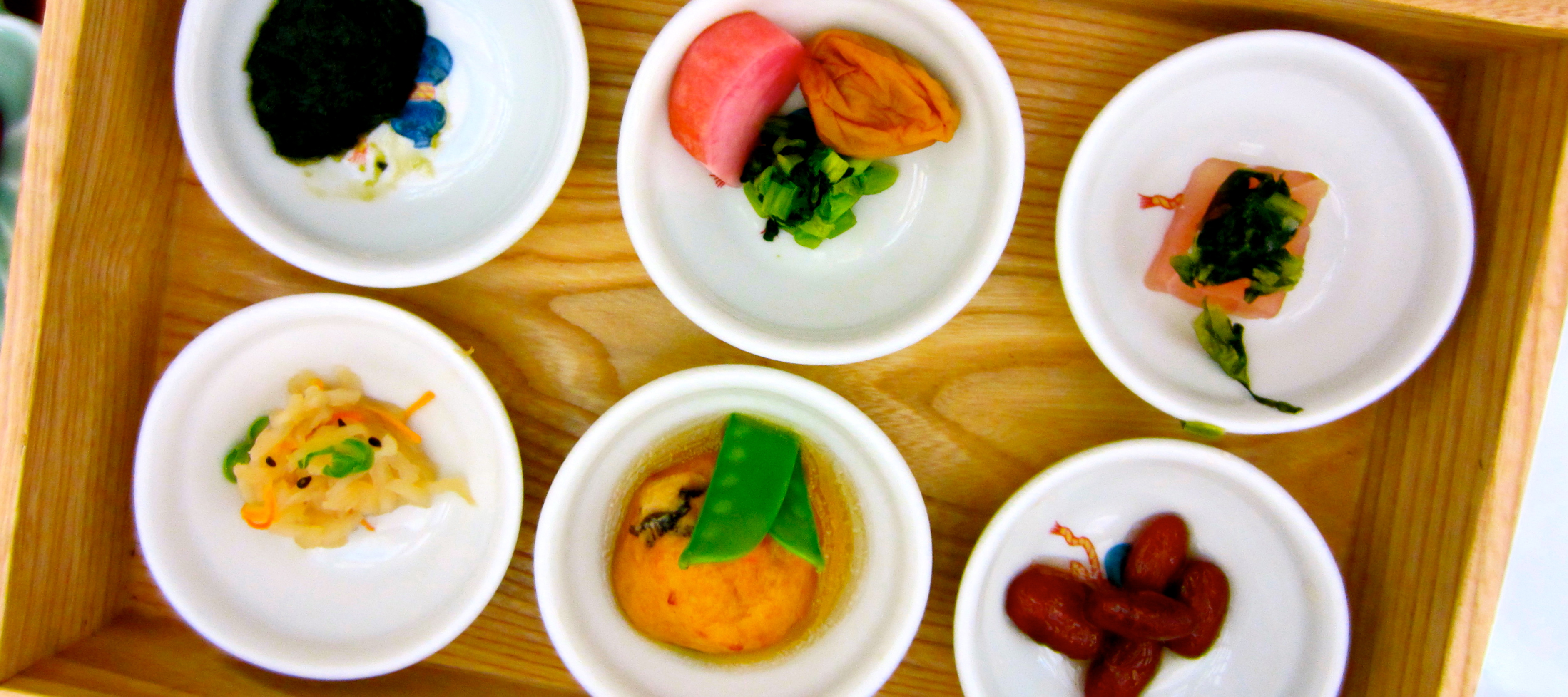
In Spain, tapas provide an assortment of after-work snacking, in China, a cast of dim sum dishes round out a tasty weekend brunch. Korea has bamcha, France, amuse-bouche. This idea of furnishing a meal in small tastes is practiced across the globe, and Japan is no stranger to the game. Ryokan, or traditional inns, often serve a multi-course menu, requiring the use of upwards of a dozen plates ranging from hand-thrown clay pots to detailed lacquer-ware. Though not quite as elaborate, during my summer in Kanazawa, nearly every meal featured an array of dishes and flavors. Even my bento lunchboxes from the supermarket were comprised of something steamed, something fried, something pickled, and something simmered in broth. Every meal was a cultural privilege, and I was grateful for the small and numerous doses of Japanese food that maximized this indulgence.
The amount of preparation that went into each meal I shared with my host family was reflected at 6:30 every evening in the number and variety of dishes that covered the table. As my two-month homestay elapsed, I had more time to fully appreciate the people seated around the table, too. In preparing such elaborate dinners and opening up their well-stocked dishware cabinet to me, my host family also welcomed me into their hearts and displayed the hospitality that the Japanese extend so humbly and generously.
Article written by Marina Kaneko.