
Just 45 minutes from Barcelona lies Vilafranca del Penedès, the city where one can rediscover the pure essence of Catalonia.
 FACEBOOK Festa Major de Vilafranca del Penedès
Between August 29th and September 2nd, Vilafranca del Penedès dresses up for its “Festa Major,” the most important festivity of the year for this small city in the province of Barcelona. Excitement is breathed through its streets, packed with people traveling from all corners to enjoy the events that take place during these days: processions, parades, fireworks, night concerts, and many other traditional Catalan customs.
Although every town in Catalonia has its own date to enjoy its Major Fest, the one in Vilafranca del Penedès is always among the most anticipated and memorable. Perhaps its significance stems from a long history, which dates back centuries, or from the variety of cultural activities; but this festival has consolidated as an identity for the local community and showcases of Catalonia’s rich cultural heritage. Precisely, to deeply understand the Major Fest of Vilafranca del Penedès, we spoke with Pere Sánchez, a native of the city and a member of “El Ball d’en Serrallonga,” one of its most characteristic practices.
View this post on Instagram
What makes Vilafranca del Penedès worth visiting, and what sets it apart in Catalonia?
 Photo by @penedesturisme
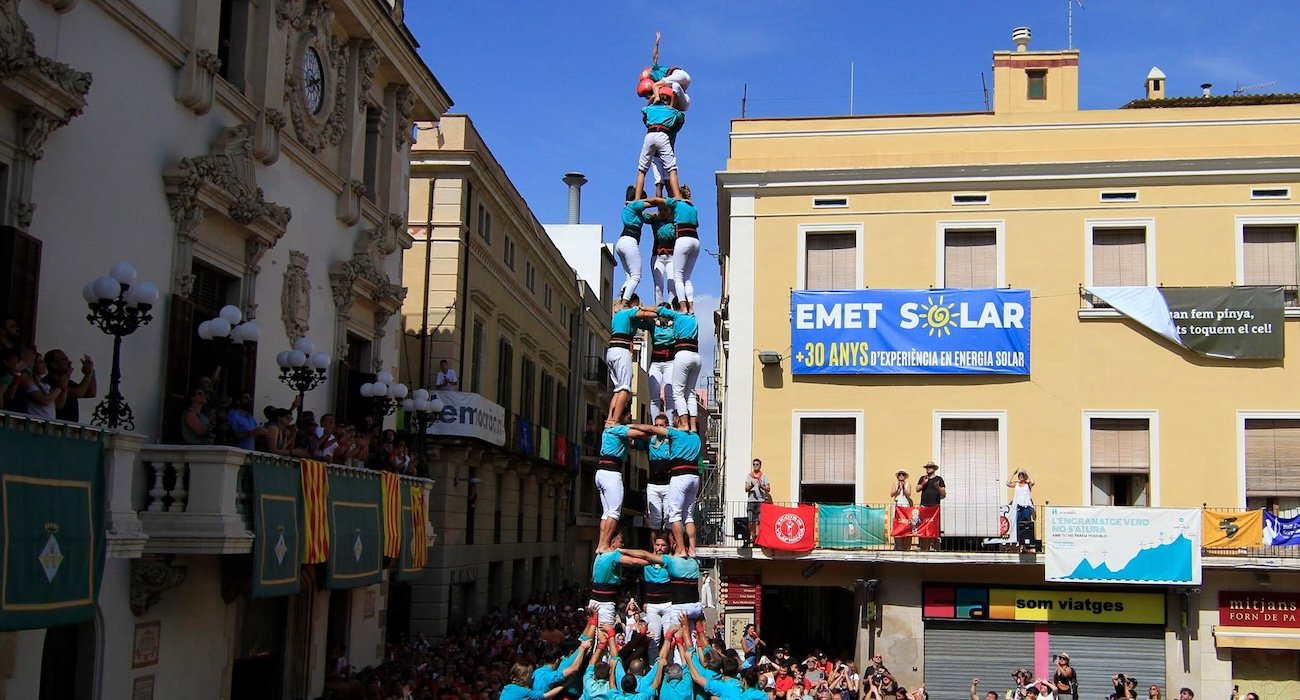
Despite its confluence between two of the main cities in Catalonia (Barcelona and Tarragona,) Vilafranca del Penedès is well known for wine culture, commonly recognized as the Capital of Wine. The village is surrounded by dozens of wineries hundreds of years old, inviting visitors to enjoy premium products elaborated in the very same place our ancestors did. On the other hand, Human Towers (“Castells”) are the greatest cultural activity involving the whole city; we have two different groups named “colles” in Vilafranca that, during the summer season, travel along the Catalan geography to offer their most difficult constructions.
What are the features that make “Festa Major” of Vilafranca del Penedès such a special festival in the region?
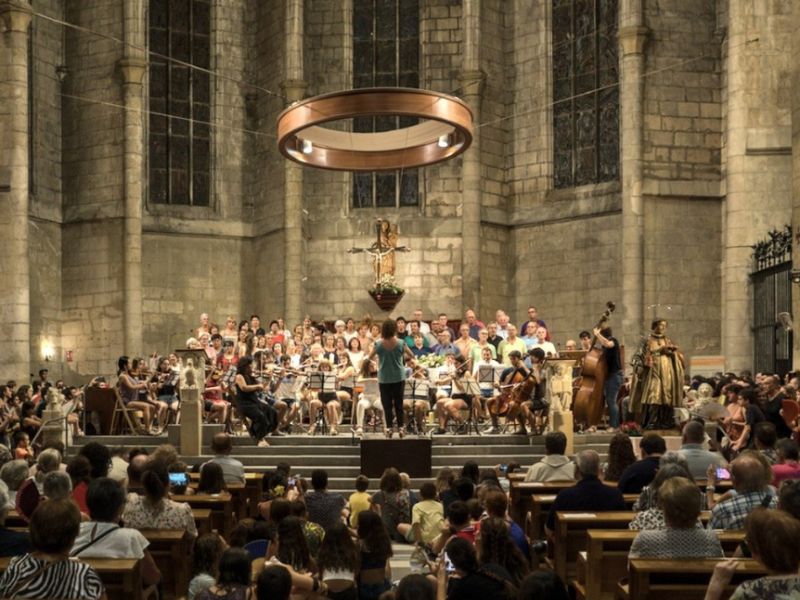 Photo by @turismevilafranca
From August 29th to September 2nd, we celebrate the festivity of Saint Felix, which eventually acquired the popular name: “Festa Major” (something like “Major Fest”.) It involves lots of different activities, such as: live music, fireworks, Human Towers competitions, and folkloric events.
Currently, in Vilafranca we can find seventeen different folkloric associations that participate in procession through the streets to celebrate Saint Felix’s birth. According to the legend, Saint Felix’s relics were brought to Vilafranca in the seventeenth century to help farmers with rain; meanwhile, people were supposed to sing a gospel named “Els Goigs.”
In that long procession we have different beasts, some armed with firecrackers, with centuries of history, much before Saint Felix relics’ arrival. Such is the case of “El Drac de Vilafranca,” a dragon from the twelfth century which, according to science studies, is the oldest beast in all of Europe.
What does the “Festa Major” mean for the identity of the people of Vilafranca del Penedès and Catalonia in general?
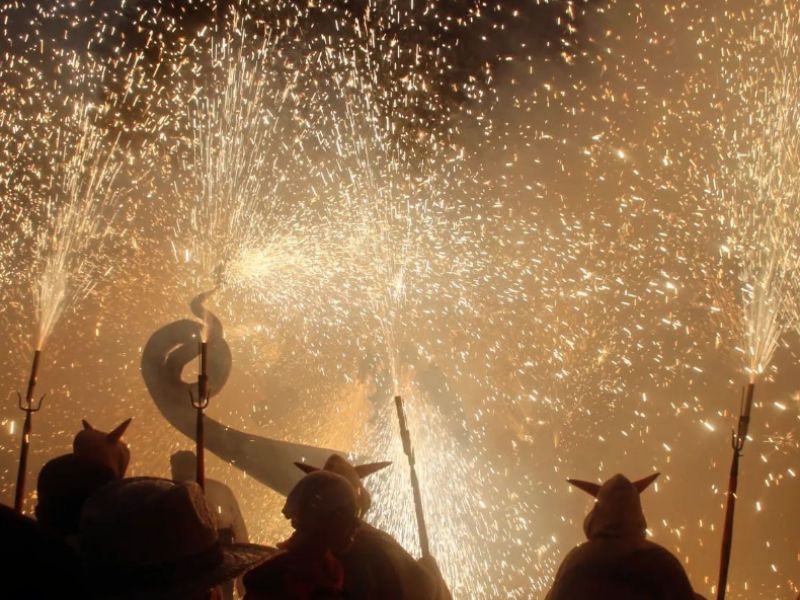 Photo by @dracdevilafranca
For the village, since the opening event with the thunderous line of firecrackers, the “Festa Major” and all the rehearsals that make it happen suppose a moment of extreme happiness that connects us with the past, especially our childhood. It is also a strong demonstration of Catalan identity and defense of our language, as we attend church and sing the gospel songs named “els Goigs” in Catalan, a language that was forbidden for a long time in Spain. Our culture also lives its maximum splendor through the exhibition of Human Towers, one of Vilafranca’s greatest prides.
Finally, the last axis of our identity expression are the people themselves; we spent most of these days in the streets, sleeping very little, and hanging out with different people, some of them for the first time in months. A moment of community that is fundamental in our Mediterranean culture to strengthen ties between each other.
What are your most memorable experiences during these days? What sights or experiences are must-do’s for visitors?
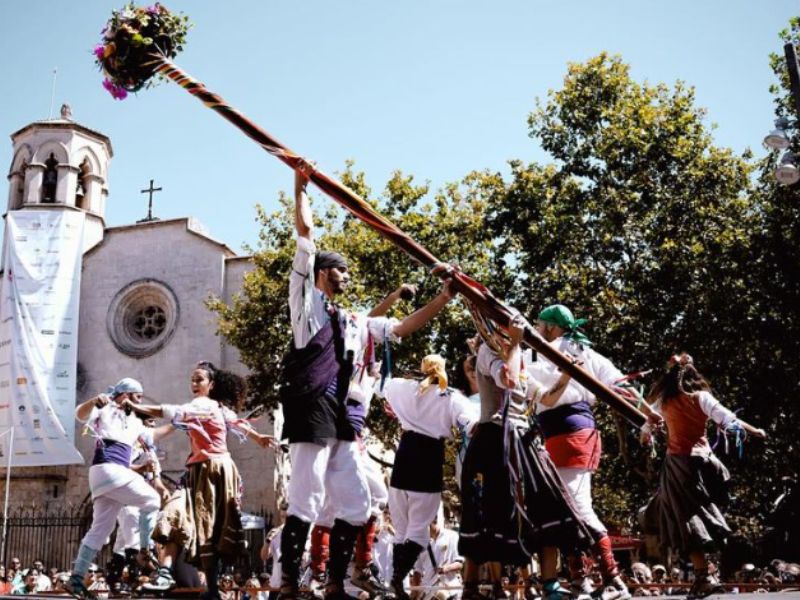 Photo by @gitanesvila
I would recommend three different chapters of our Major Fest. First, Saint Felix’s gospel or “els Goigs,” in Santa Maria church, is a good moment to get into it. To see different people, some of them nonreligious, singing with the choir something learned during their childhood. Secondly, the procession with different folkloric groups is really cool to enjoy the dances at the rhythm of music hundreds of years old. Finally, the human towers’ competition on the 30th of August is something you can’t miss while you are visiting the village: you will witness a living sign of cultural identity, and the most difficult human constructions in the whole world.
You take part in these traditions from within by being a member of the Dance of Serrallonga. What significance does that hold for you?
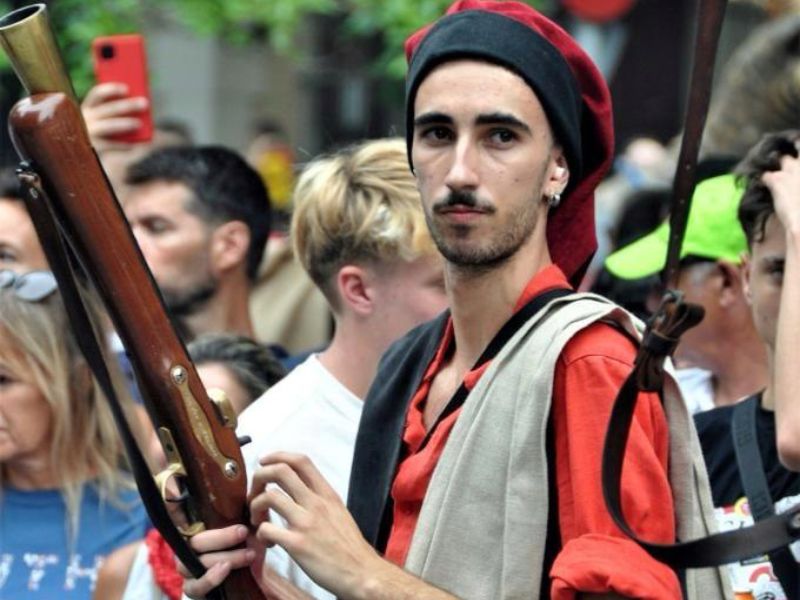 PHOTO Aitana Esteban Rando
I’m proudly a member of one of the folkloric groups in the processions: “El Ball d’en Serrallonga.” We are twelve people, each one carrying a blunderbuss and dancing at the rhythm of a song, shooting at the end of it. The origin of our folkloric group came from a real character of Catalan history named Joan Sala and Serrallonga. He was a bandit from the sixteenth century that became famous for its service to the poor people by stealing the rich ones; kind of a Catalan version of Robin Hood.
Personally, I decided to join this group three years ago since I was captivated by the thunderous sounds of the blunderbuss, but also by what Serrallonga represents for the Catalan people: a symbol of rebelliousness against the power and injustice, especially representing the Spanish power that has been oppressing Catalonia for centuries.
Why is “Diada” a key part of the “Festa Major”?
 Photo by @sloz.vision
“Diada” is a Human Tower contest held on August 30th in Vilafranca del Penedès which involves the four best groups of the moment. Each one of them is supposed to execute three different towers in three periods, with an extra one at the end executing a Tower with only one person per level, named “pilar.” In Sant Felix’s contest, we assist to the highest level of exigence that entails some risks of falling and getting hurt. Nonetheless, experts have proved that people are more likely to suffer dangerous injuries in other common physical activities, like football, than in human towers. You just must pay attention to the event, be quiet during the climb, and, if you desire to, ask for some members of the groups to take part! Remember, Saint Felix Day, or “Diada,” is the most important date in Human Towers’ calendar; maybe you can be part of the history.
What are some of your recommendations that ensure visitors to fully enjoy themselves?
 Photo by @pastoretsdevilafranca
I would say that you shouldn’t be lazy! There are lots of activities as well as crucial moments, and these five days of the Major Fest must be totally dedicated to living them. I understand that it may be difficult, but please try to visit as many things as you can, it would create such a unique experience for you. Moreover, we are conscious that there are lots of differences between cultures, and it’s possible that you could find something irrelevant or strange; don’t worry! In Vilafranca del Penedès, we are open to foreigners who want to learn and participate in our festival, as it’s also part of the human patrimony. Feel welcomed to our village, ask anything you wish, and enjoy these five magical days!
