Often eclipsed by Samarkand and Bukhara, Khiva has transformed itself from the slave trade of Central Asia to the Pearl of Uzbekistan. It is, undeniably, worth the adventurous voyage.
Welcome to three kilometers of mystery and grandiosity of Khiva – a 1,500-year-old open air museum boasting more than 60 extravagant mosques, mausoleums, madrasas, palaces and museums. As an imperative stop on the Silk Road, Khiva lugs the ghastly weight of a slave trade from the 17th to 19th centuries, especially notorious for captured Persian and Russian slaves that were sold like livestocks. Today’s Khiva is a continuous exhibition of stunning architecture, and it all begins from a stalwart fortress: Itchan Kala.
View this post on Instagram
Kalta Minor Minaret
As a dedication to Muhammad Riza Ogahi – the Khiva poet and statesman – the minaret features verses of his poetry. Ogahi himself also marked several writings on the tiles that were destructed during the Soviet era. Once Uzbekistan became independent, the writings were restored from Ogahi’s manuscripts.
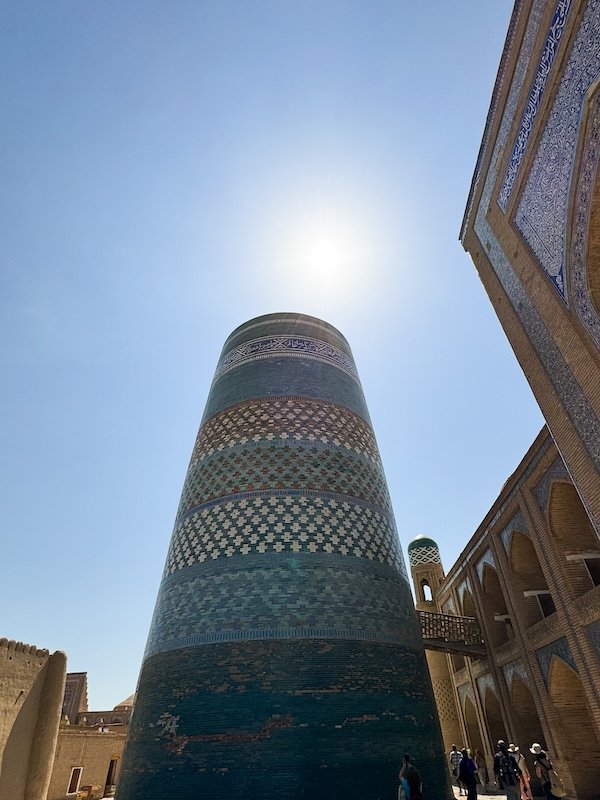 Kalta Minor Minaret. PHOTO WENDY HUNG
Covered in geometric glazed tiles, the minaret displays a popular design patter of the time. Travelers can climb up to the second floor of the monument, and admire the iconic structure from a different perspective.
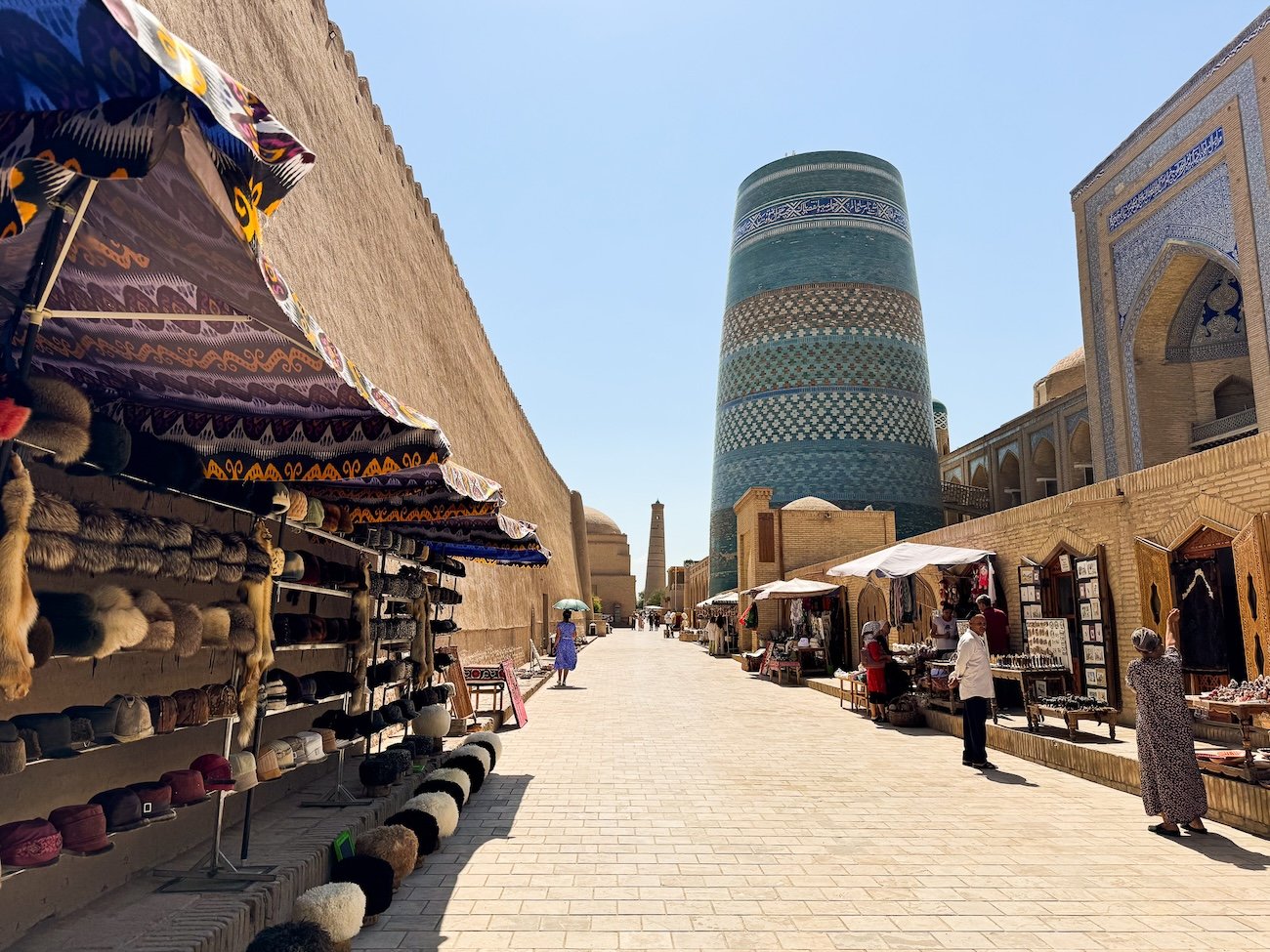 Main entrance. PHOTO WENDY HUNG
Kuhna Ark
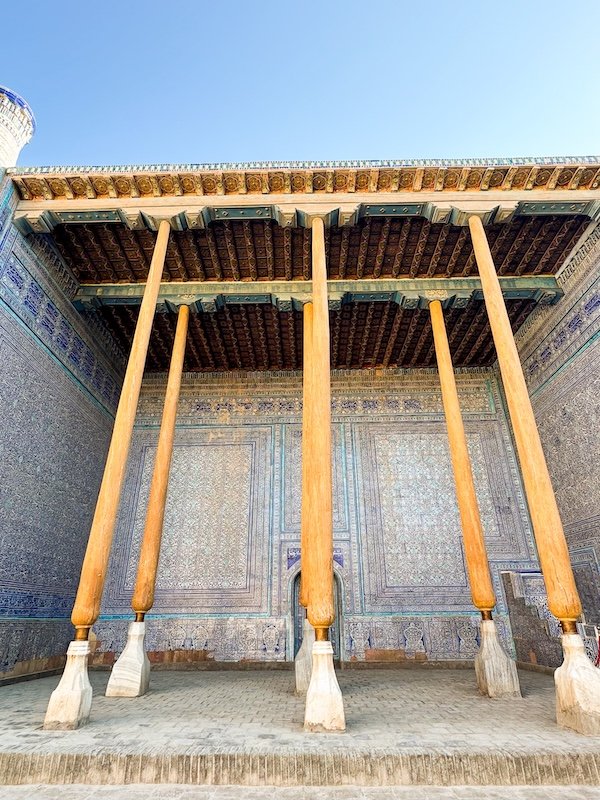 Signature pillars. PHOTO WENDY HUNG
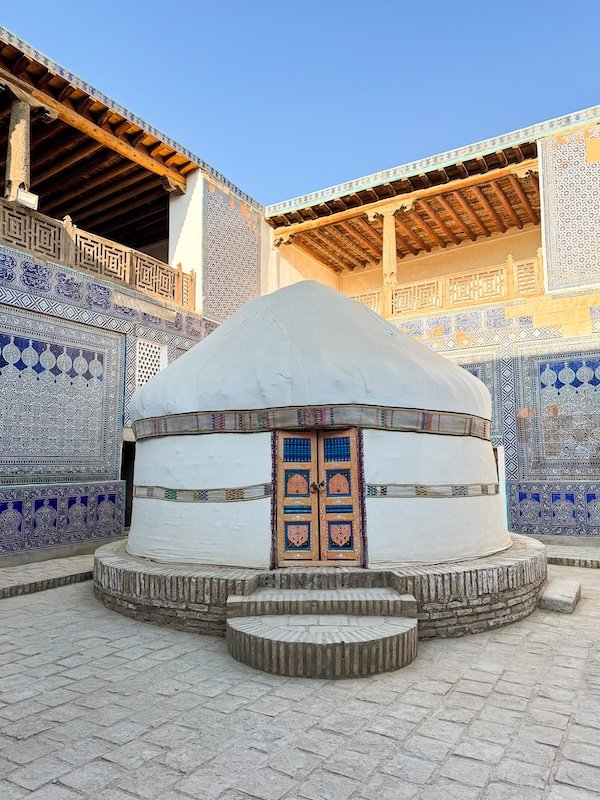 Yurt. PHOTO WENDY HUNG
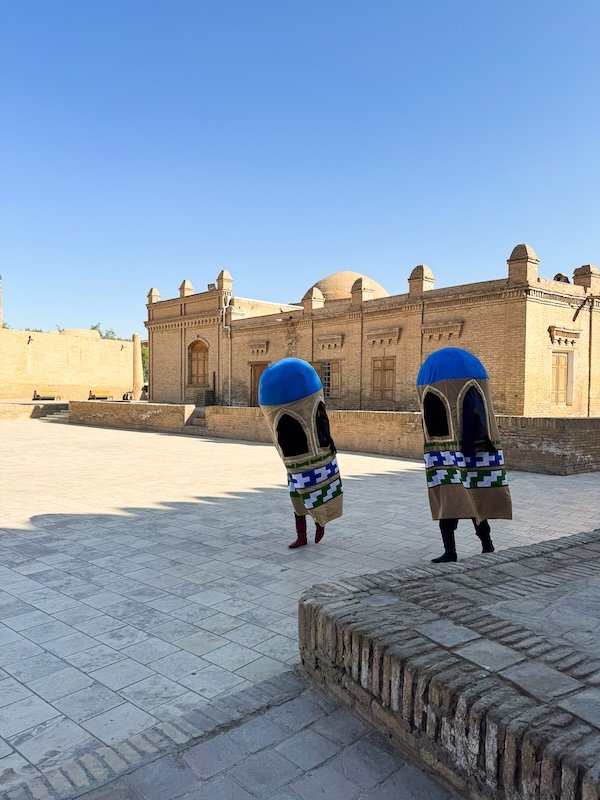 Kuhna Ark. PHOTO WENDY HUNG
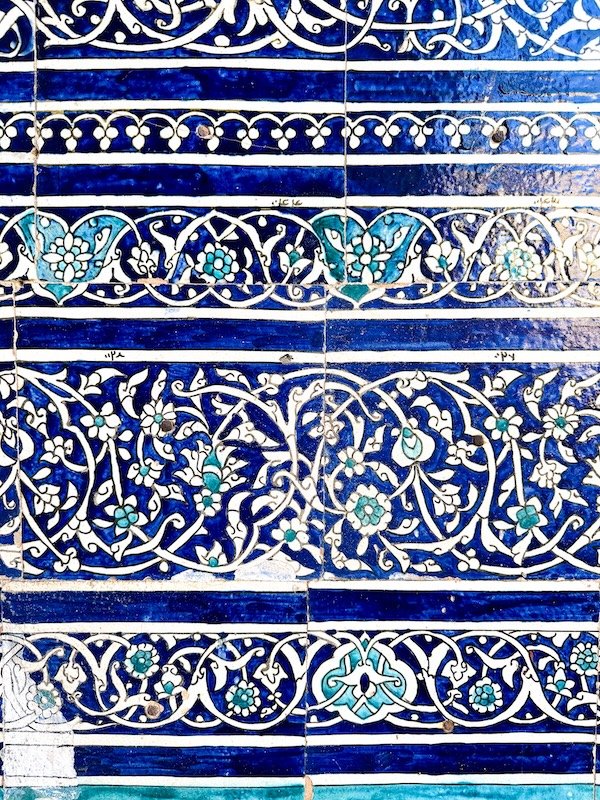 Decorative tiles. PHOTO WENDY HUNG
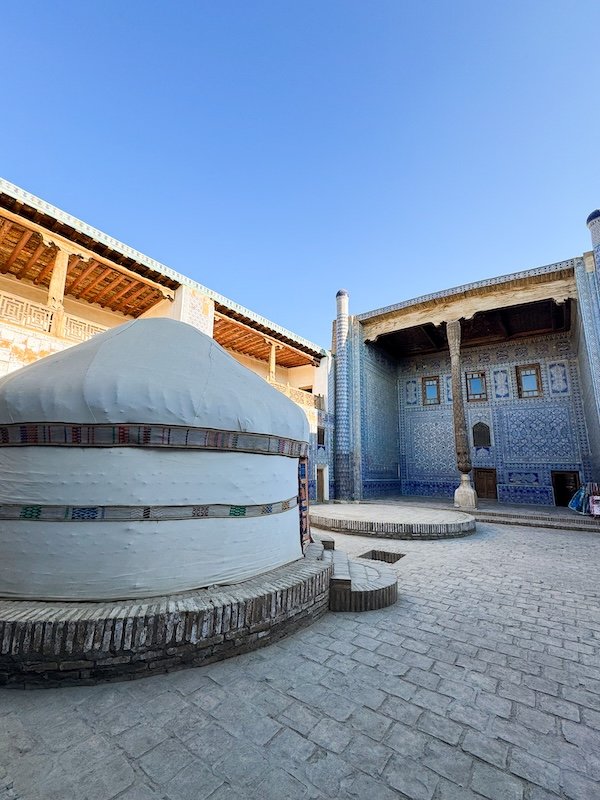 Inside Kuhna Ark. PHOTO WENDY HUNG

Pahlavan Mahmud Mausoleum
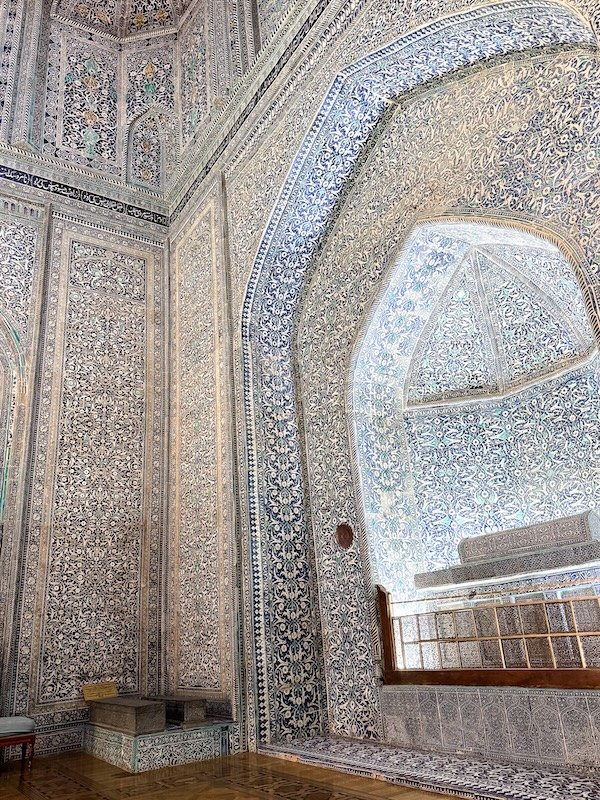 Interior of Pahlavan Mahmud Mausoleum. PHOTO WENDY HUNG
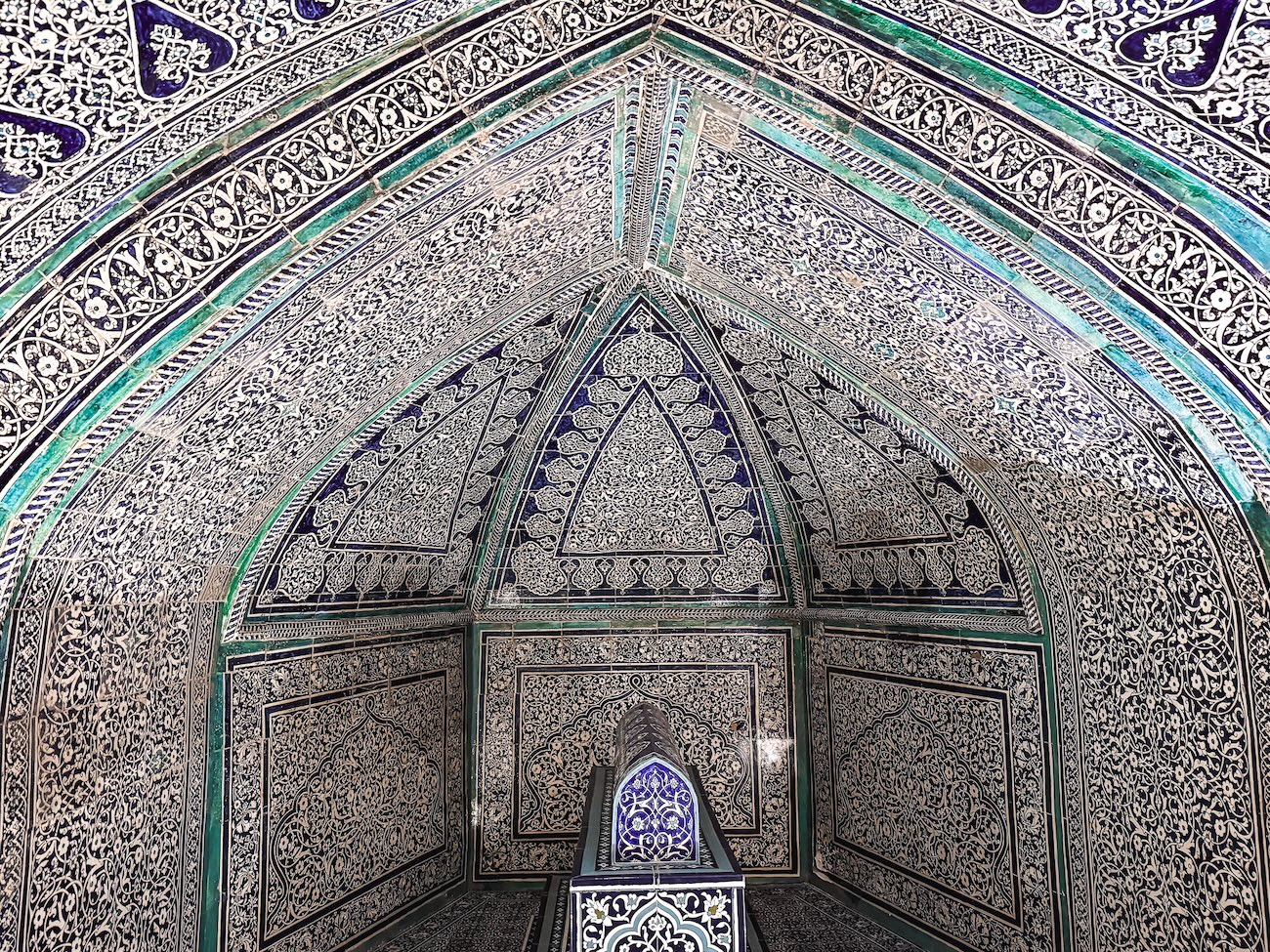 Beautiful tile work. PHOTO WENDY HUNG
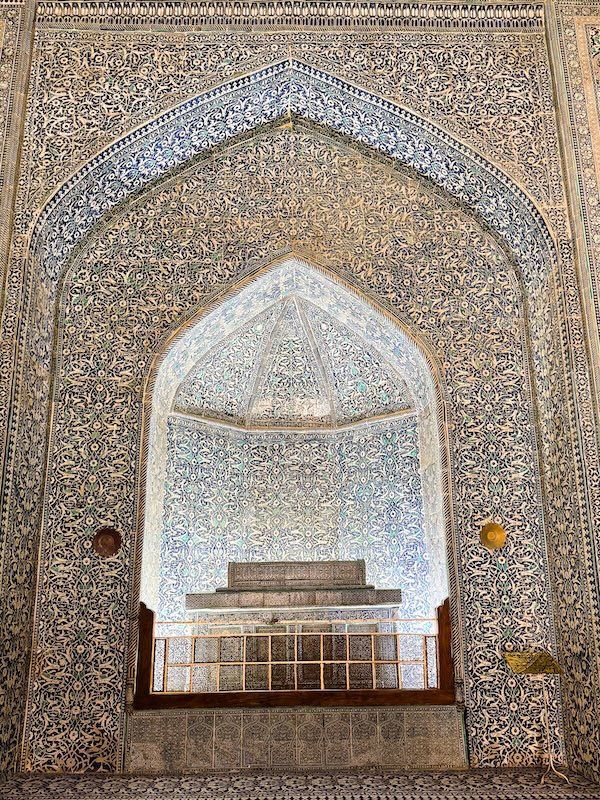 Pahlavan Mahmud Mausoleum. PHOTO WENDY HUNG
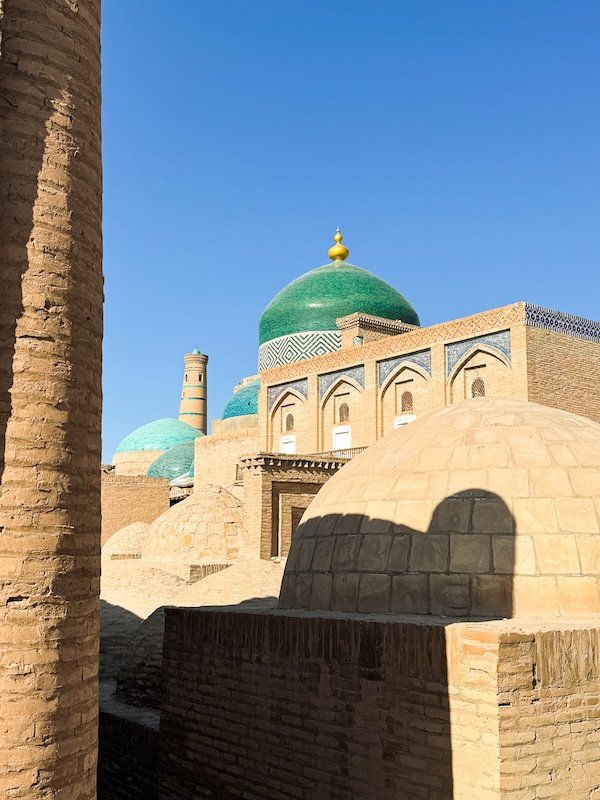 Green dome. PHOTO WENDY HUNG
Juma Mosque
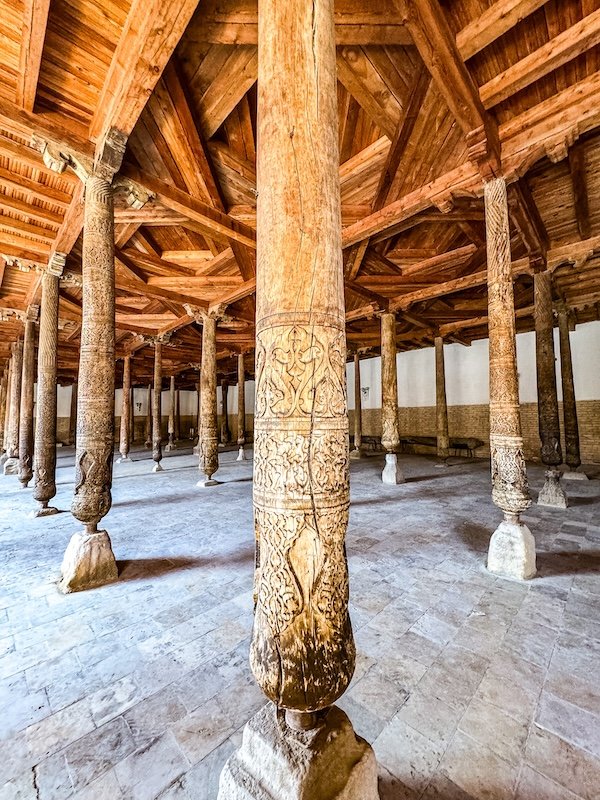 Juma Mosque. PHOTO WENDY HUNG
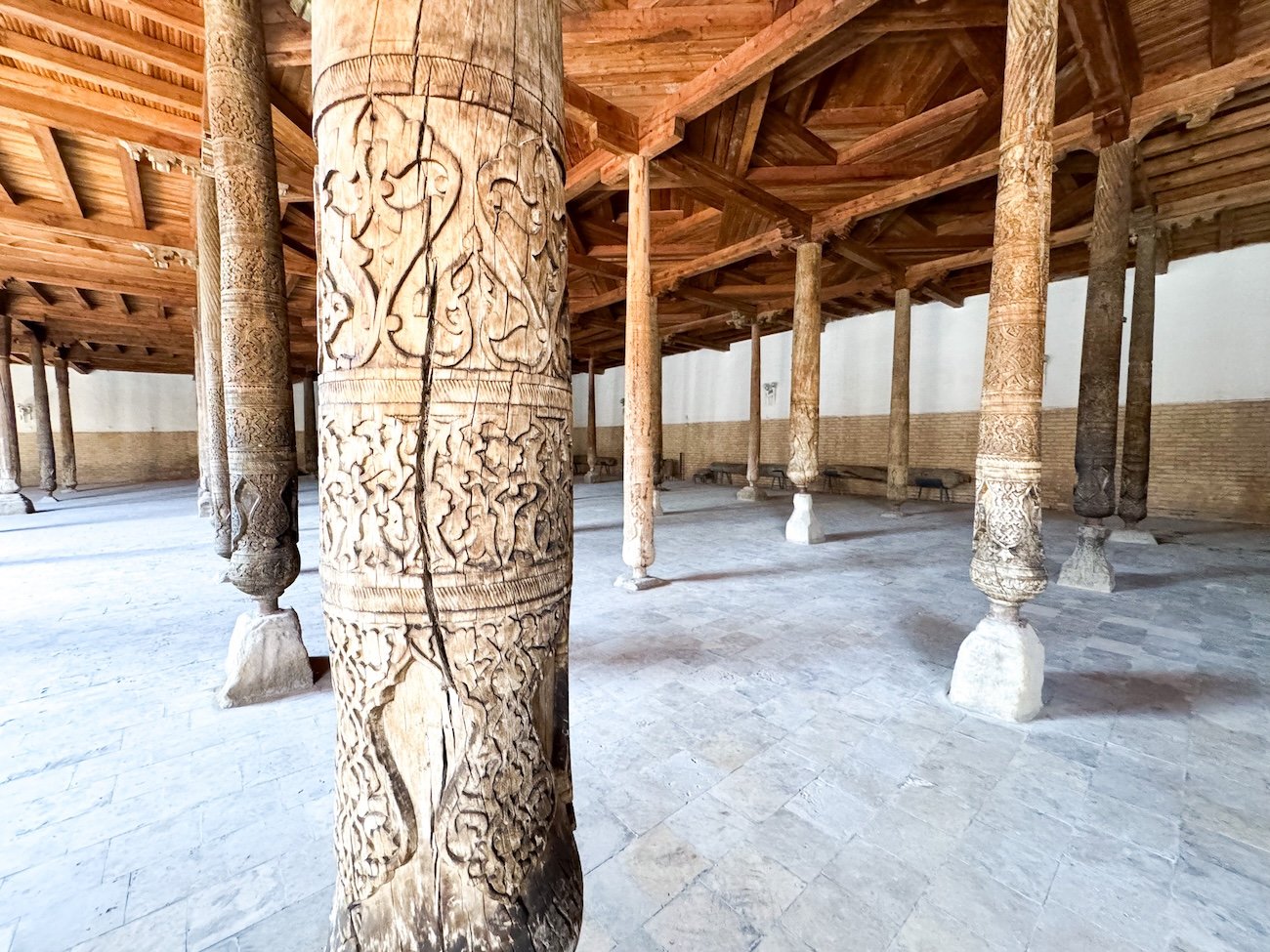 Pillars inside Juma Mosque. PHOTO WENDY HUNG
Islam Khodja Minaret / Madrasa
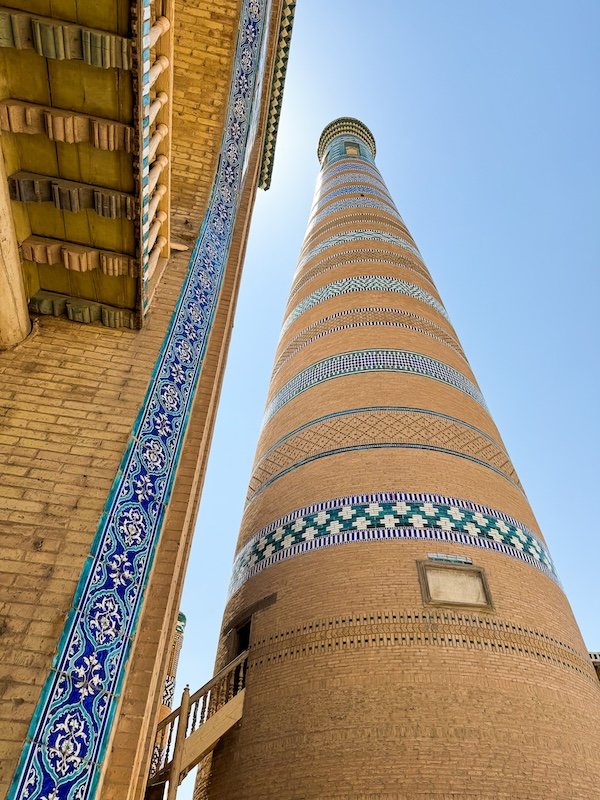 Islam Khodja Minaret. PHOTO WENDY HUNG
Toshhovli Palace
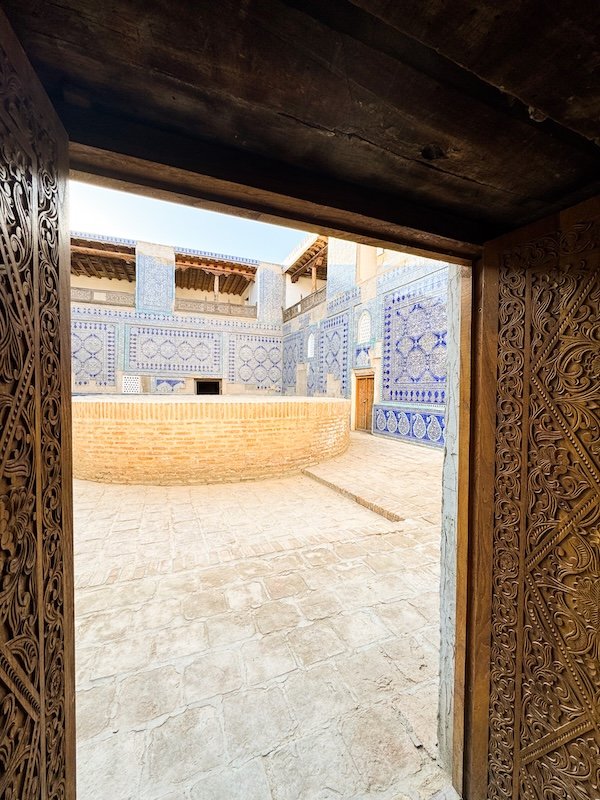 Tash Kauli Palace. PHOTO WENDY HUNG
Shop at various stalls.
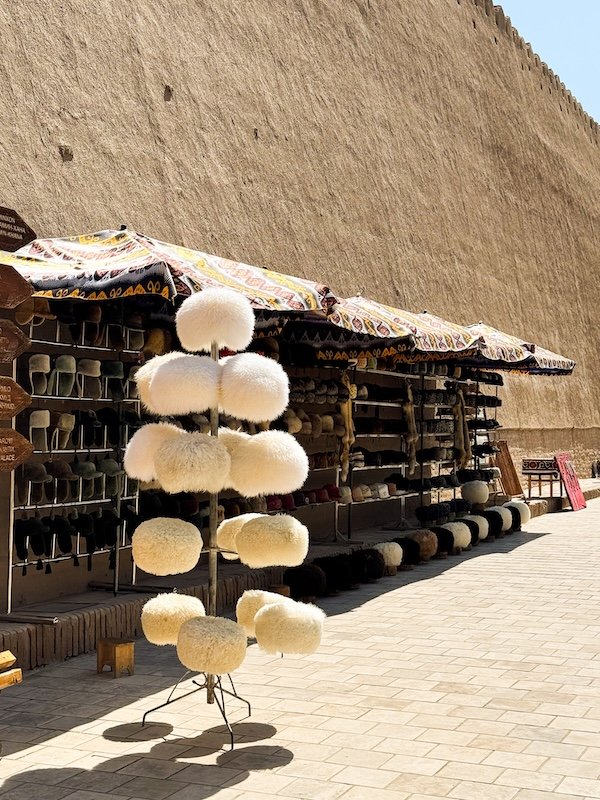 Popular hats. PHOTO WENDY HUNG
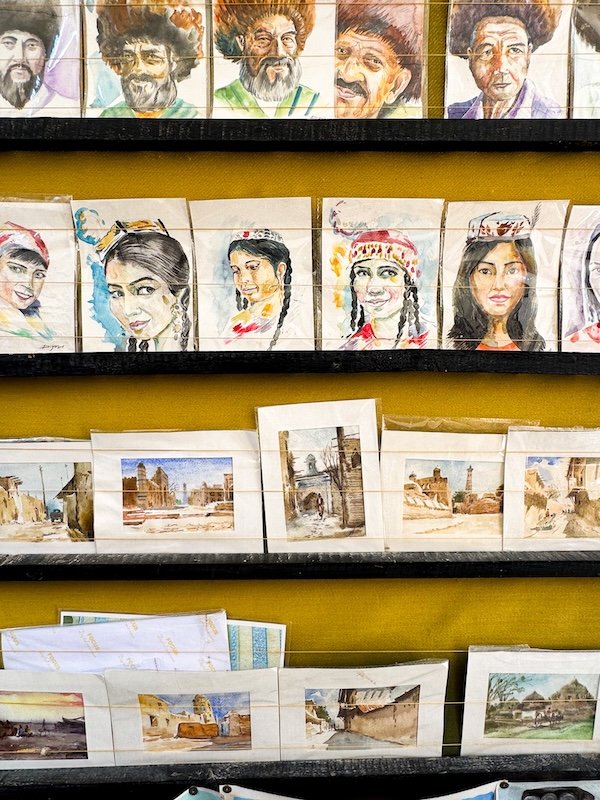 Artwork by local artists. PHOTO WENDY HUNG
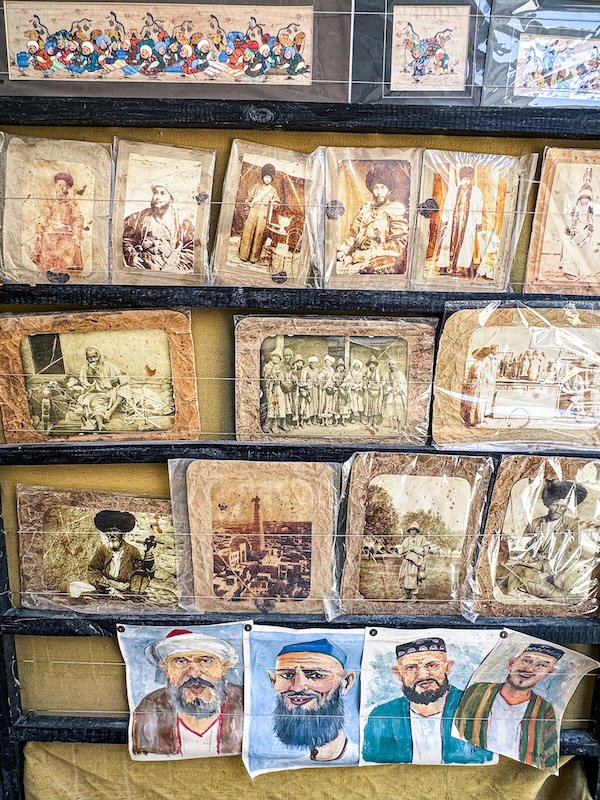 Historical photographs. PHOTO WENDY HUNG
Cafe Zarafshon
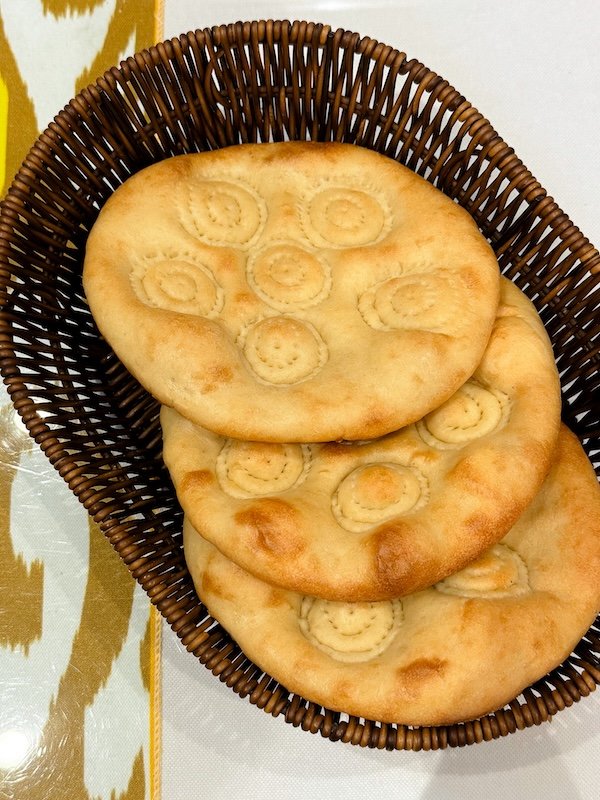 Traditional Uzbek bread. PHOTO WENDY HUNG
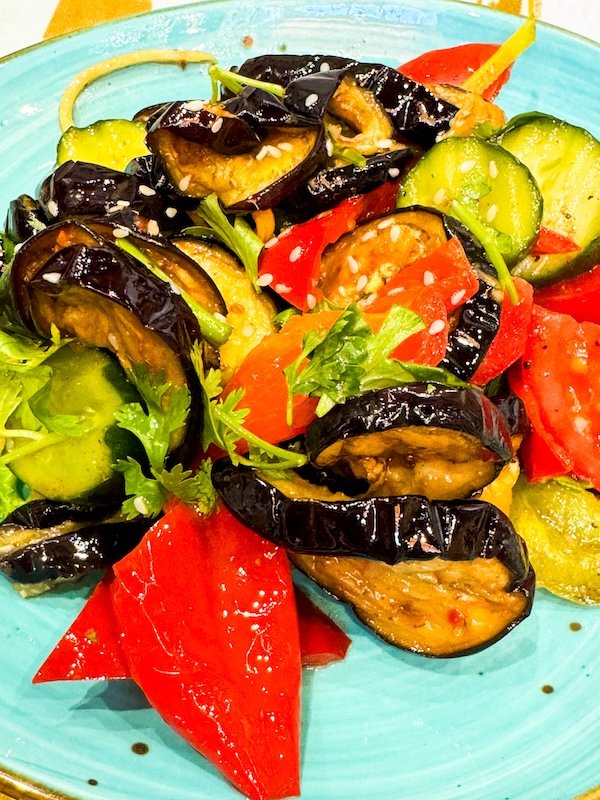 Eggplant salad at Cafe Zarafshon. PHOTO WENDY HUNG