
Bukhara is a fine example of a well-preserved medieval city, exhibiting the thriving power of Central Asia from 10th to 17th century.
Opulent mosques, spectacular madrasas and majestic mausoleums.
Did you know that people have been around the region of Bukhara for at least five millennia? Located on the Silk Road, Bukhara has long been a center of trade, culture, academia and religion. During Islam’s Golden Age, Bukhara became the intellectual hub of the Islamic world. Today, it welcomes travelers with 140 architectural marvels, while the entire city center has been listed as a UNESCO World Heritage Site. Here are some of the best things to do in this grandiose city.
View this post on Instagram
Ismail Samani Mausoleum
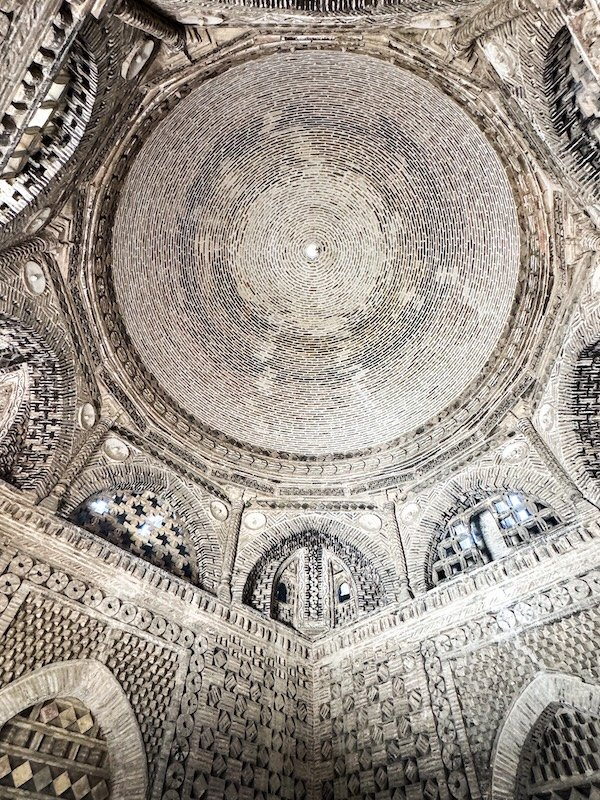 Ismail Samani Mausoleum’s interior dome. PHOTO WENDY HUNG
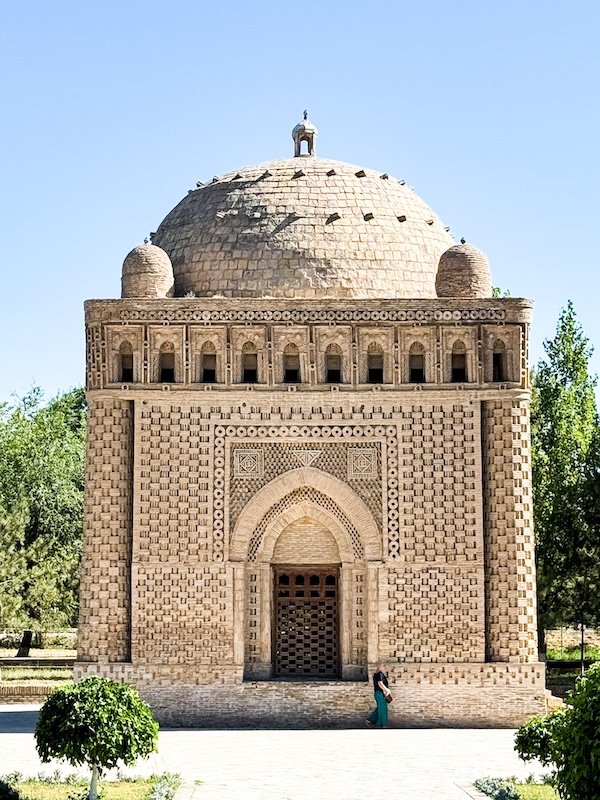 Ismail Samani Mausoleum. PHOTO WENDY HUNG
Ismail Samani Mausoleum is a resting place for the powerful Samanid dynasty around the 10th century. One of the three burials belonged to Nasr II, who was a fierce leader and led Bukhara’s prosperity in politics, science, architecture, medicine, literature and art. The building itself is celebrated as the oldest funerary containing design elements of Central Asia, particularly of early Islamic styles through a circular dome, sharp arches, and elaborate geometric designs. For architecture fans, this is a must-see since it’s the only surviving monument from the Samanid Empire.
Chashmai Ayub Mausoleum
Inside Chashma-Ayub Mausoleum, which means “Job’s Well,” there’s a well inside. The water is believed to be healing. In addition, this architecture’s exterior is incredibly unique with a dome shaped like a cone, very uncommon in Bukhara at the time. Today, visitors can learn more about water in the aqua museum residing inside the mausoleum.
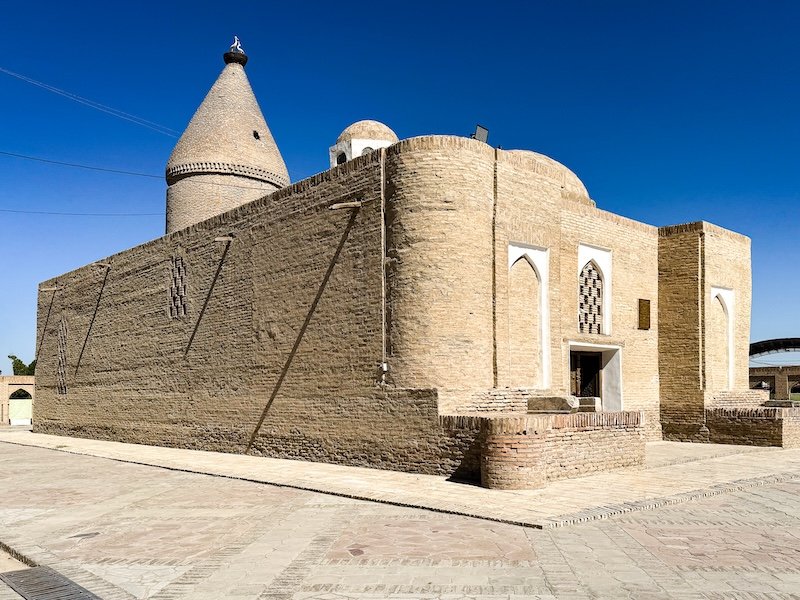 Chashmai Ayub Mausoleum. PHOTO WENDY HUNG
Bolo Hauz Mosque
Words can’t describe what a true stunner Bolo Hauz Mosque is in person. It majestically features twenty intricately carved wooden pillars installed for worship during summer months. At 42 x 10 meters, the pillars can easily make any human existence feel miniscule. Constructed in 1712, Bolo Hauz is one of the last buildings that came to fruition right before the modern era. It’s served as a Friday mosque, frequented by the Emir of Bukhara to show that he was just like everybody else.
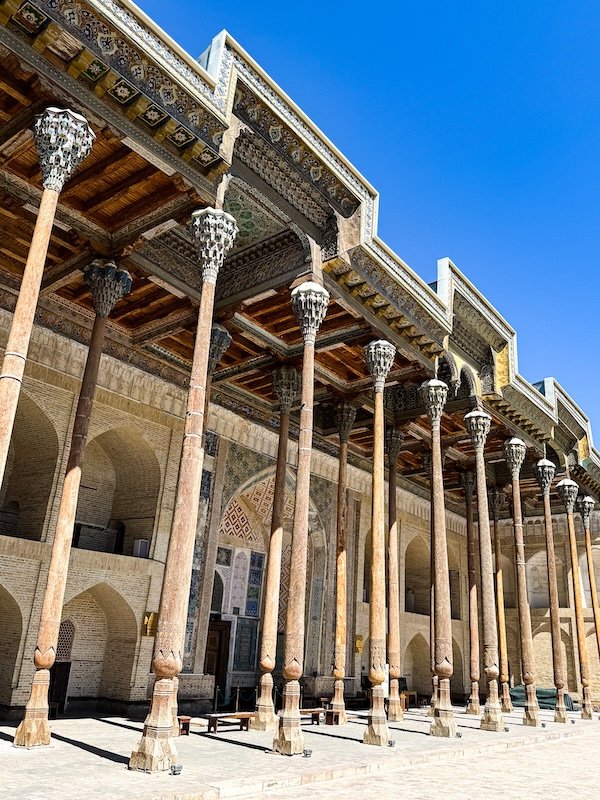 Bolo Hauz Mosque. PHOTO WENDY HUNG

Ark of Bukhara
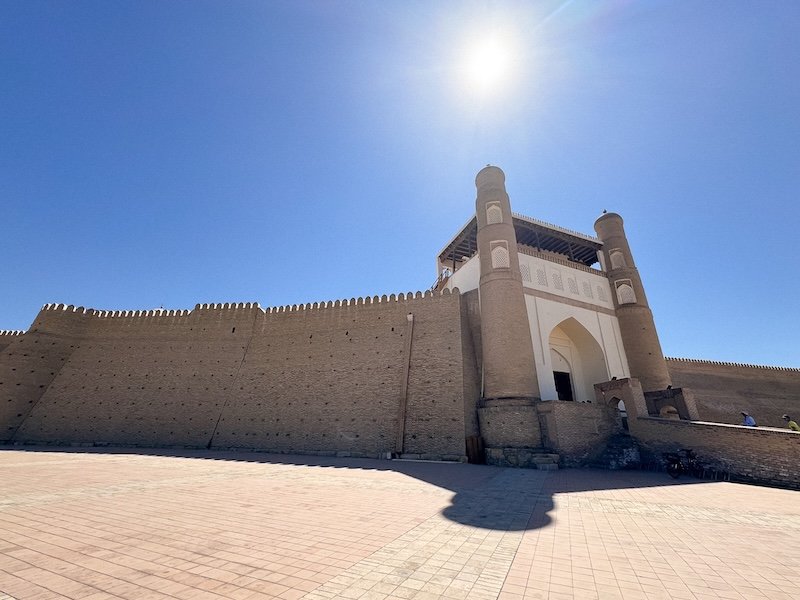 Old Citadel. PHOTO WENDY HUNG
A city within a city! The Ark of Bukhara is a gigantic fortress built around the 5th century. In fact, it was still in use until Russian Red Army’s occupation in 1920. Inside the military defense walls, there existed a town which housed over 3,000 elite residents, including: emirs, scholars, poets, officials…etc. There were royal courts that determined judicial decision for the surrounding region. Today, travelers can admire the former throne room, reception and coronation courts, as well as numerous museums that span from archeology to Bukhara’s history.
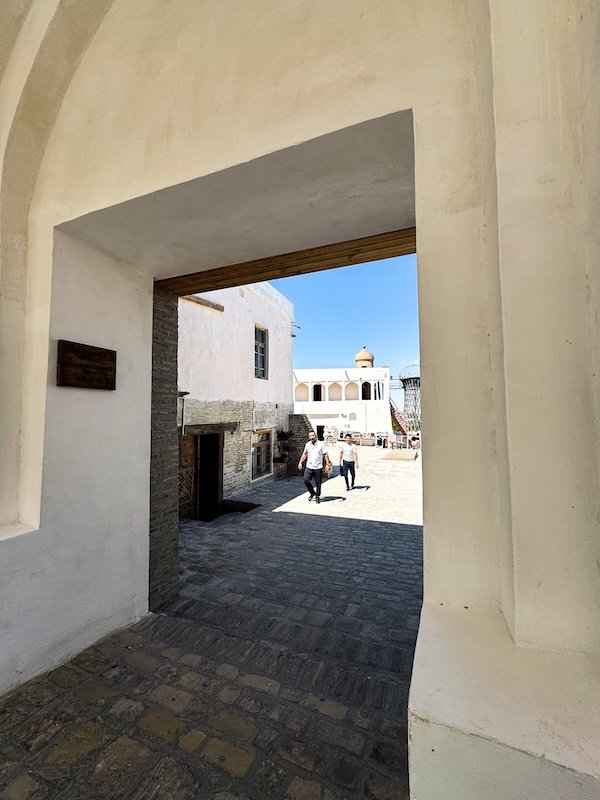 Ivory walls. PHOTO WENDY HUNG
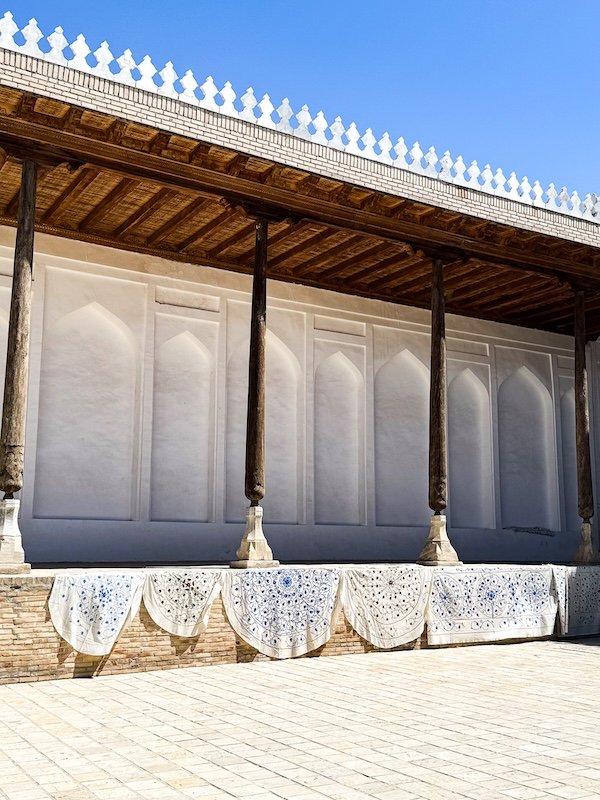 Royal court. PHOTO WENDY HUNG
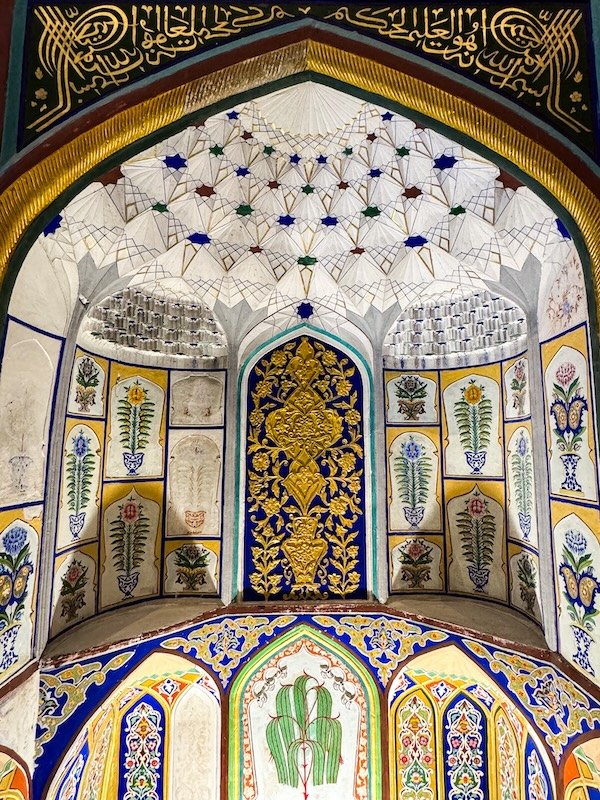 Old Citadel’s Throne Room. PHOTO WENDY HUNG
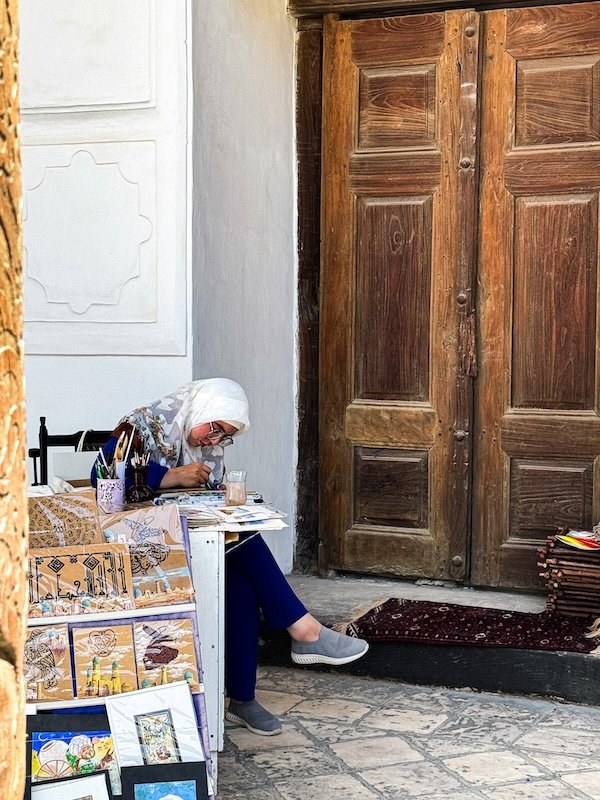 Artist at work. PHOTO WENDY HUNG
Kalan Mosque
The ultimate star of Bukhara is the turquoise jewel, Kalan Mosque, a splendid monument from the 15th century once considered as one of the biggest mosques in Central Asia. A unique feature is inclusion in the national list of estate real objects of material and cultural heritage of Uzbekistan.
On the opposite side is Mir-i Arab Madrasa, built with the profits from selling 3,000 Persian slaves. In order to rid his guilt, Shaybanid Khan Ubaidullah commissioned the Islamic school to be one of the most significant in the Islamic world.
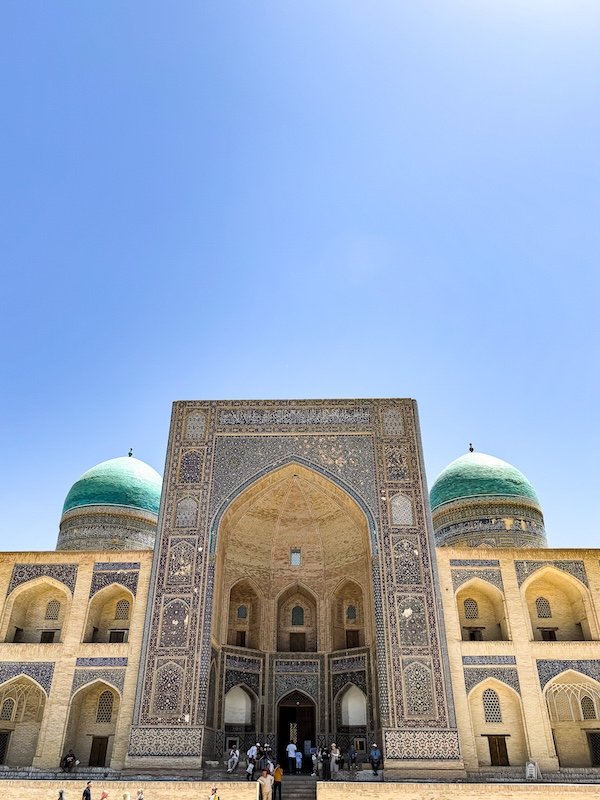 Kalan Mosque. PHOTO WENDY HUNG
Chor Minor Madrasah
Another quirky madrasa is Chor Minor (meaning: four minarets,) vaulted by four chunky azure domes. It certainly stands out in midst of alleyways that can easily be mistaken as a maze. Constructed by wealthy Turkmen merchant Khalif Niyazkul, the number 4 seemed to imply several meanings, including: the four dynasties of Bukhara rulers (Samanids, Sheibanids, Karakhanids, and Mangyt,) or it could also symbolize Niyazkul’s four children.
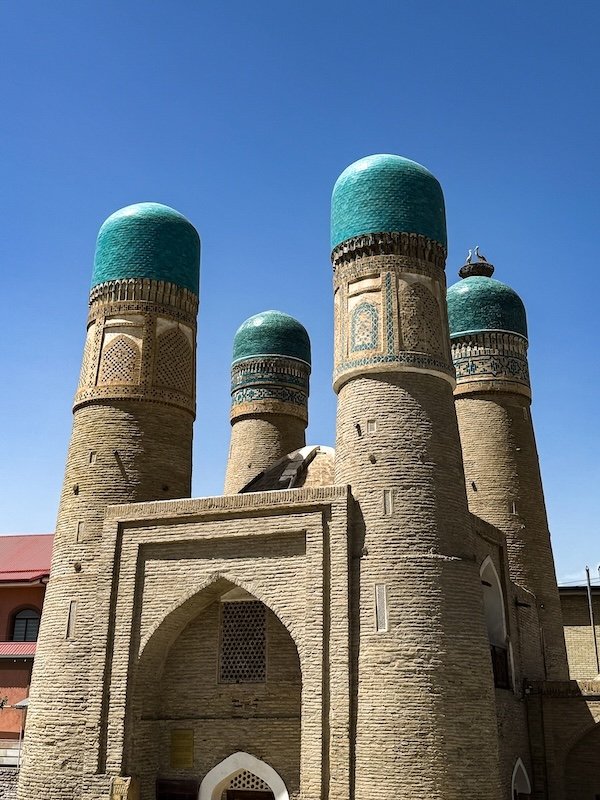 Chor Minor. PHOTO WENDY HUNG
