
The capital city of Turkmenistan: Ashgabat, is full of mystery to the outside world. But once we landed, it was one fascinating surprise after another.
The night we arrived in Ashgabat, the city embraced our presence with bright neon lights that boldly screamed for our attention. They illuminated stadiums, reticent buildings, busy malls that created a florescent universe easily could’ve been mistaken for Vegas or Dubai. Ironically, the city’s curfew is set at 11 p.m.
Our hotel was grandiose, extravagantly massive. Glistening in shiny gold frames and smooth marbles. I thought of Macau, for some odd reason. Wi-Fi could only be accessed in this temporary home, outside of it, internet connection and SIM cards were as dead as the city in the heat of summer. It was evident, Turkmenistan is highly restricted and monitored.
During the day, Ashgabat’s neon lights were purely replaced with architectures blanketed in ivory white marble, glazed in royal gold. It was intentional, to create an aesthetic that is not only uniform but emblematic of immaculate stateliness.
View this post on Instagram
In the early 2000’s, former President Saparmurat Niyazov declared that all buildings must be built in white marble, “it not only makes the buildings look elegant, it also reflects the sunlight, thus cooling down the walls in the summer, while in the winter and in a gloomy weather it lightens your mood,” as it stated in the official media. I thought of various Moroccan cities: distinct shades of cerulean blue in Chefchaouen and Marrakech’s dusty pink.
Many label Ashgabat as a “weird” city, but I beg to differ. Different does not equate to weird, it’s the impetus of traveling. Ashgabat opened my eyes to a completely new world, though one that I do not agree with upon moral or political grounds. But when it comes to the people, Turkmens couldn’t have been more lovely.
As difficult as the visa application process can be, this city is surely worth a visit. Separating the government and the people is imperative while exploring through our wondrous curiosity, Turkmens might just be the most misunderstood in Central Asia. But make that call, when you’re physically there to feel, to see. Here are some of the best things to do in Ashgabat, Turkmenistan.
Halk Hakydasy
Memorial Complex
Located on a western hill overlooking the city of Ashgabat is Halk Hakydasy Memorial Complex, or the Earthquake & WWII Memorial, honoring the lives tragically lost during 1881’s Battle of Geok Tepe (during the Russian campaign to conquer Turkmens’ Teke tribe,) soldiers that sacrificed their lives during WWII and victims from the 1948 Ashgabat earthquake. The massive complex includes several colossal monuments that are beautifully illuminated at night.
The statue with a large bull carrying the Earth on his back is the locals’ explanation of an earthquake, it derives from the Turkmen belief that “Mother Earth was held on the back of a giant bull, despite that the Earth may become too weighty as the bull moved his legs and shoulders.
Specifically, the Earthquake monument features four striking red marbled columns with an eternal flame burning at the central base, they beautifully symbolize petals that protect the heart of a flower. In addition, a red marble arch hovers over two kneeling soldiers being watched over by a grieving woman.
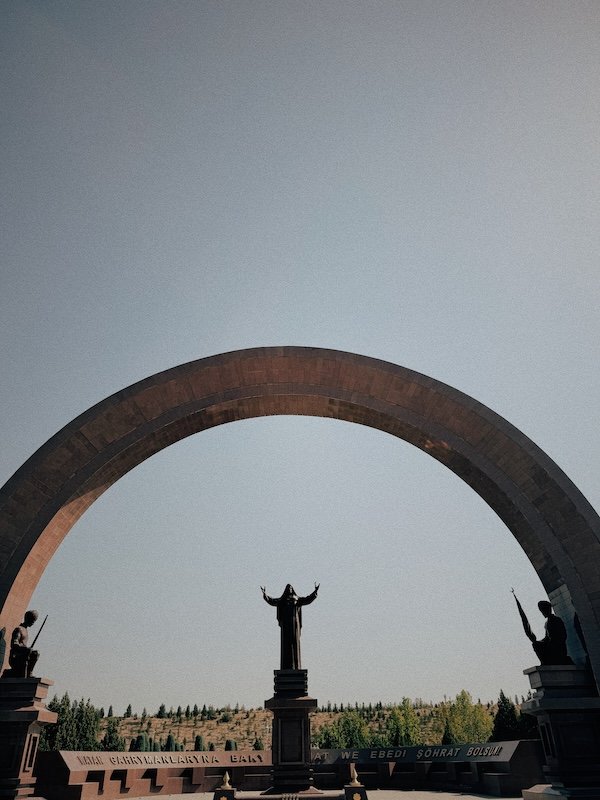 Earthquake & WWII Memorial Ashgabat. PHOTO WENDY HUNG
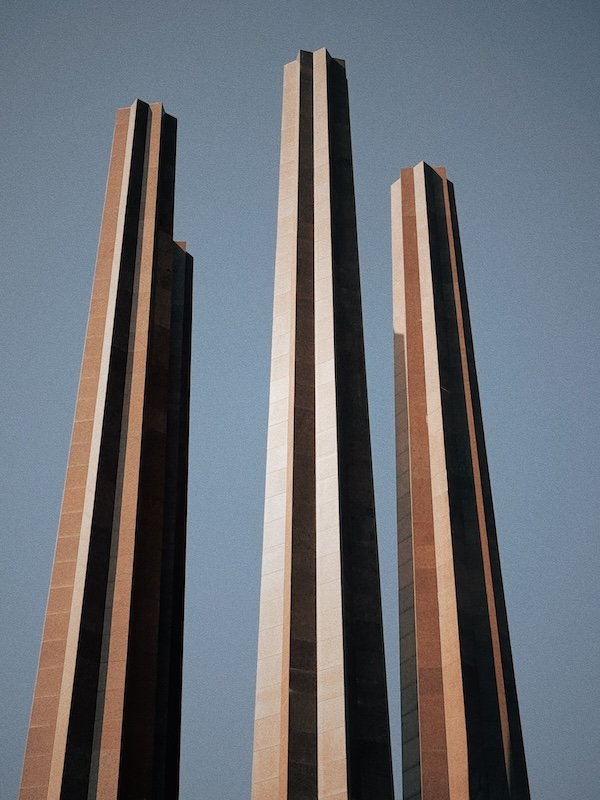 Earthquake & WWII Memorial, Ashgabat. PHOTO WENDY HUNG
Monument of Neutrality
Locally known as “The Tripod,” Monument of Neutrality was commissioned by the president of Turkmenistan, Saparmurat Niyazov, as an emblem of the country’s official position of neutrality. During times of war, similar to Switzerland, Finland, Ireland, Japan and a few others; Turkmenistan does not take sides.
The monument required $12 million to build, displaying a 12-meter gold-plated statue of Niyazov as it rotates to constantly face the sun. It’s even taller than the Presidential Palace, and stands out in the ivory skyline of Ashgabat.
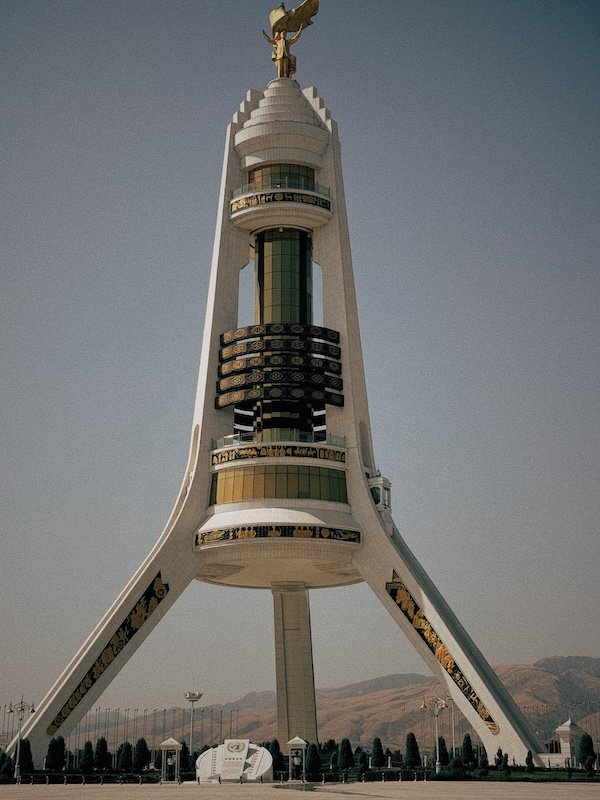 Monument of Neutrality. PHOTO WENDY HUNG
National Museum of Turkmenistan
The State Museum of Turkmenistan is a comprehensive overview of this country’s past to present, explained by permanent galleries that cover ethnography, nature to science. Opened in 1998, English isn’t utilized throughout the museum, photography isn’t allowed, and all visitors must be accompanied by a museum guide. The third floor of the museum is completely dedicated to the current President of Turkmenistan, and showcases his activities throughout the country with citizens and meetings with global leaders.
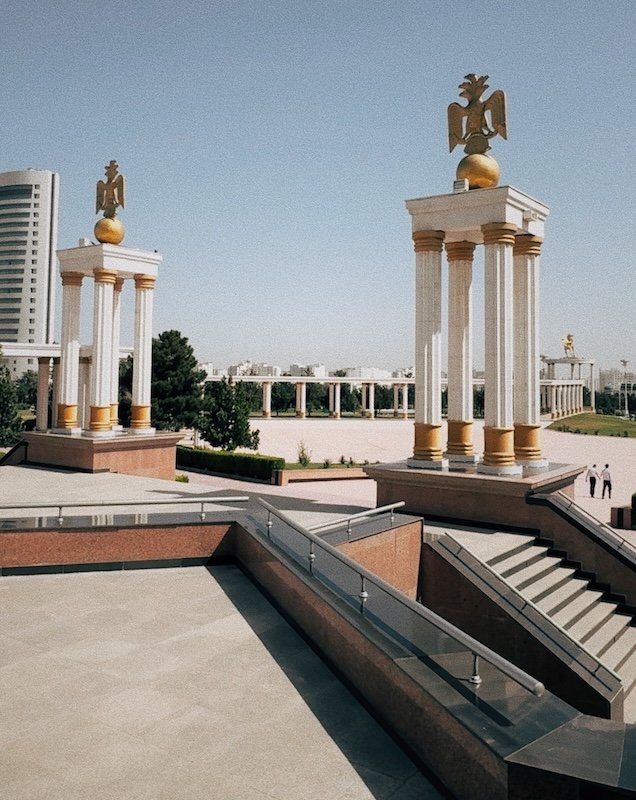 National Museum. PHOTO WENDY HUNG
Independence Monument
Independence Monument was influenced by traditional Turkmen tents and the caps typically worn by Turkmen women. To memorialize the date of Turkmenistan’s independence on September 27th, the gilded tower was constructed to be 91 meters tall, topped with a golden tower at the height of 27 meters. Inside the impressive structure, there are exhibitions that illustrate Turkmenistan art history.
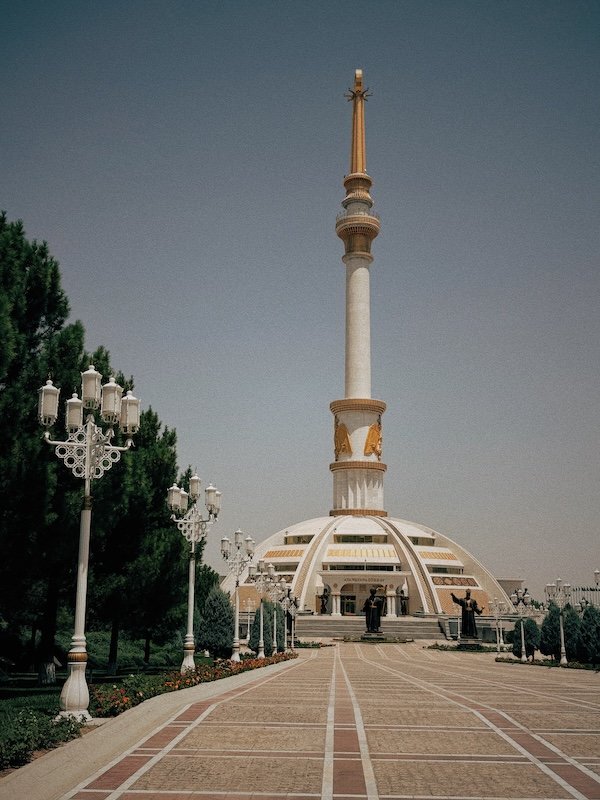 Independence Memorial. PHOTO WENDY HUNG

Alem Center
The Alem (meaning: Universe) Center encompasses a few museums, especially the Space Museum and an enormous ferris wheel inside. When it opened in 2012, it made the Guinness Records as the tallest ferris wheel in the world.
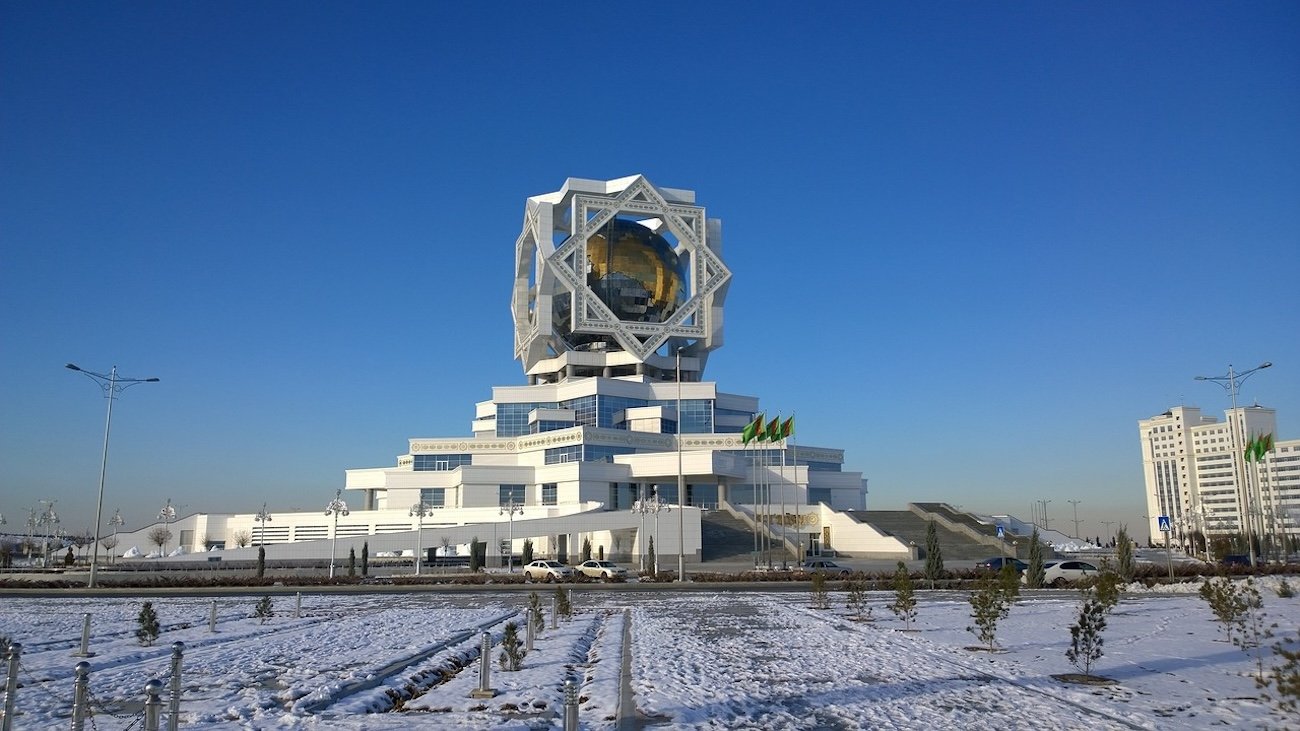 Image by hanmuhado0 from Pixabay
Old Nisa
18 kilometers from city center is Old Nisa – an archeological site built by the Parthian Empire from mid-third century BC to third century AD. The whole area signifies an ancient and powerful society that expertly created its own Parthian traditions and infused them with Hellenistic and Roman cultures. The result was a civilization known for beauty and mighty horses. Excavations reveal numerous lavishly decorated architecture used for administrative and religious rituals. A UNESCO World Heritage Site, the fortress formed by the empire also marked a significant trading hub between neighboring regions as well as denominating a barricade to Roman expansion.
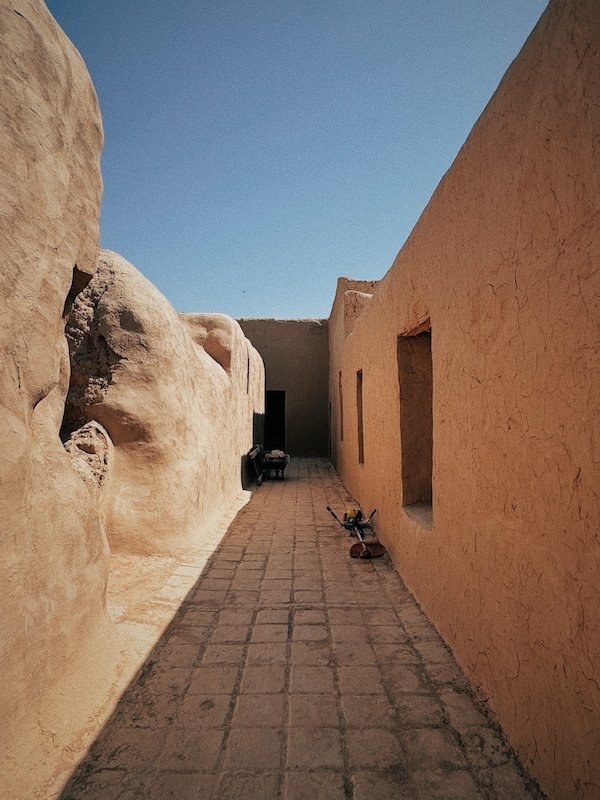 Old Nisa. PHOTO WENDY HUNG
Akhal-Teke horse farm
A trip to Turkmenistan wouldn’t be complete without learning more about the Akhal-Teke horses – a unique breed renowned for its size, speed, strength, antiquity and beauty which is evident in some horses that have pale blue eyes, or a shiny sheen to their coats that is almost metallic. They’ve been prized since ancient Persia, and later during the Parthian Empire. In the Middle Ages, it was the Turkmens who obtained the purity of the horses’ blood. Modern specialists agreed that the Akhal-Teke breed derives from ancient race horse, independently developed for many centuries.
To visit the village of Ahal requires an hour (122 kilometers) by car.
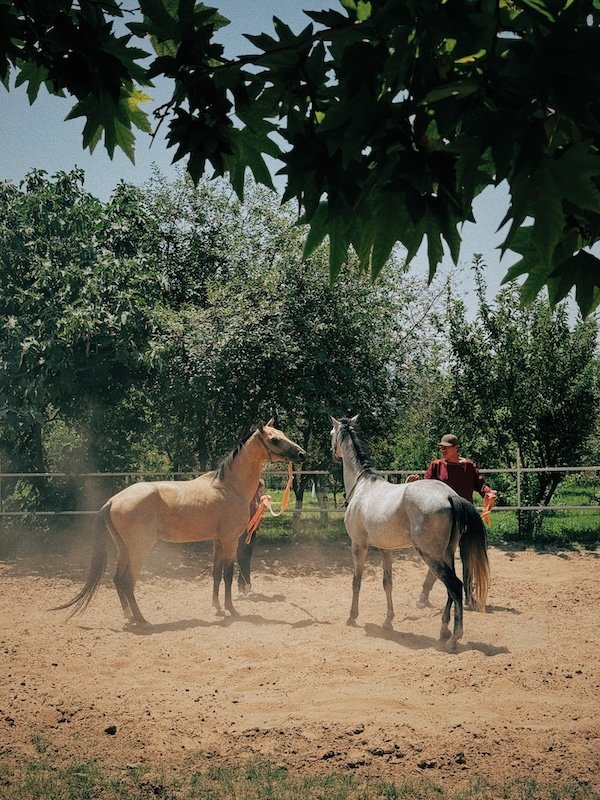 Akhal Teke horses. PHOTO WENDY HUNG
Turkmenbashy Ruhy Mosque
The grandiose Türkmenbaşy Ruhy Mosque is also the final resting place of former President Saparmurat Niyazov – the first leader of an independent Turkmenistan. The breathtaking architectural design infuses both Turkmen and Islamic elements, especially the exterior in geometric patterns and glistening domes are emblematic of Turkmenistan’s heritage. Since there are scriptures of both the Quran and Ruhnama (Book of the Soul written by Niyazov used as a state propaganda,) the mosque has become a controversy amongst devout Muslims.
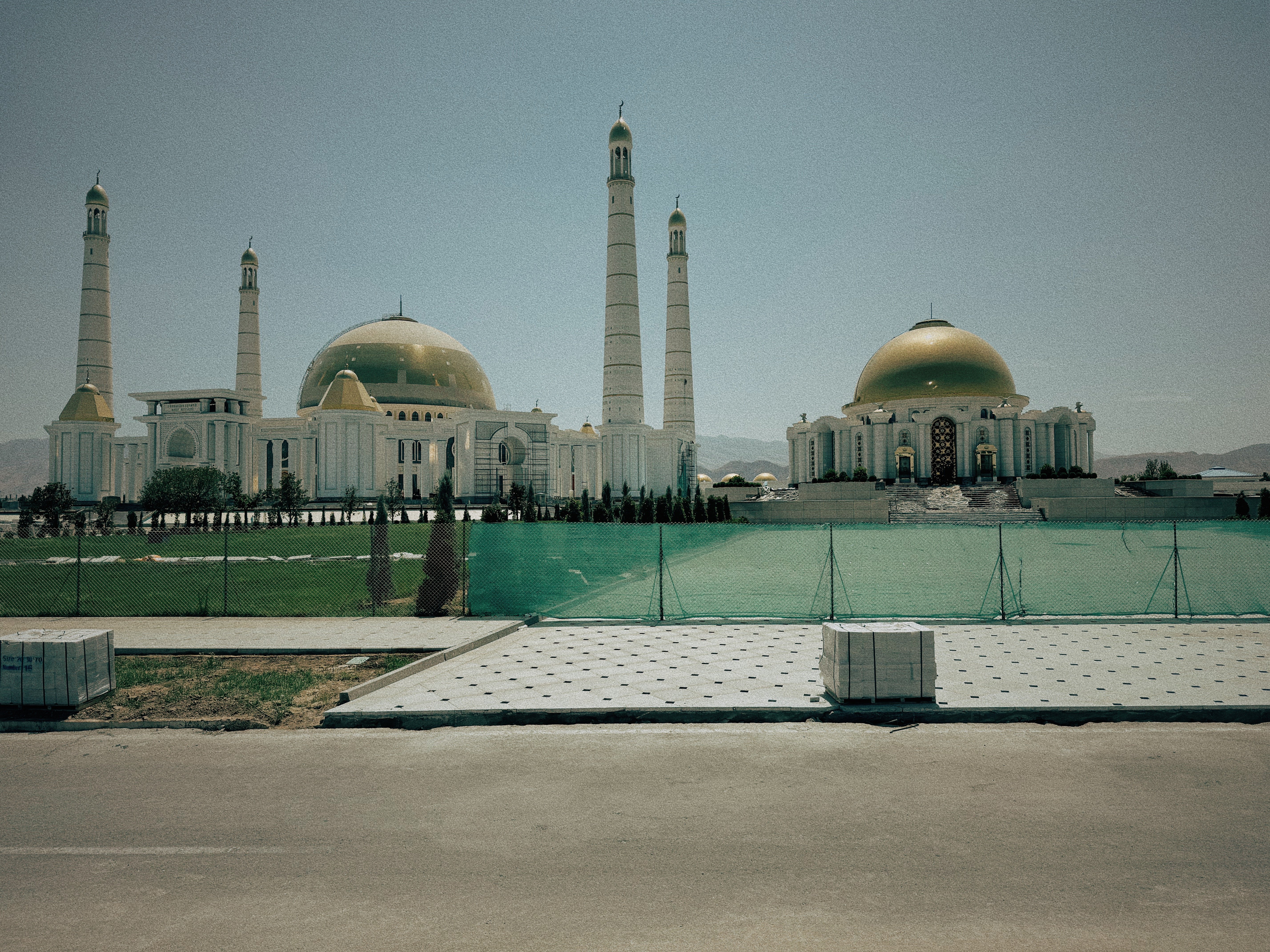 Gypjak mosque. PHOTO WENDY HUNG
Darvaza Gas Crater – “Door to Hell”
 Photo by Ybrayym Esenov on Unsplash
The most incredible site in Turkmenistan is situated 260 kilometers, north of Ashgabat: the Darvaza gas crater, or as most people call it: Door to Hell. Since the 1980s, hundreds of natural gas fires emblazon the rim and the bottom of the crater. It originally came from a burning natural gas field which collapsed into a cavern. Engineers lit the crater to prevent the spread of toxic gases. To reach the Karakum Desert, where the crater calls home, requires a 5-hour car ride via a four-wheel drive. The roads are bumpy throughout the entire journey, though on the way to the Door to Hell, there are other gas craters worthy of visiting. None, however, are as extraordinary as the Darvaza.
To go with a tour operator, they’ll most likely plan a dinner during sunset in the sandy desert. There’s nothing like biting into roasted mutton, next to lines of milky yurts. Darvaza exudes a different appearance from day to night. In the midst of total darkness, the fires burn in the belly of dusty earth. It’s truly once in a lifetime.
Ancient Merv
Along the Silk Road, Ancient Merv is one of Central Asia’s oldest and entirely preserved oasis cities. Since 3rd millennium BC, this area has continued to flourish and reached peak in 9th century as a capital of the Arabic Caliphate and later, the capital of Great Seljuks Empire – Turco-Persian and Sunni Muslim – in the 11th and 12th centuries.
Today, it’s a gigantic archeological park, including Soltan Sanjar Mausoleum honoring the Seljuk ruler of Khorasan. In 1221, Merv started to decline as Mongols attacked and burned down the mausoleum. Also, don’t miss Kyz Kala – the grandiose palatial fortress.
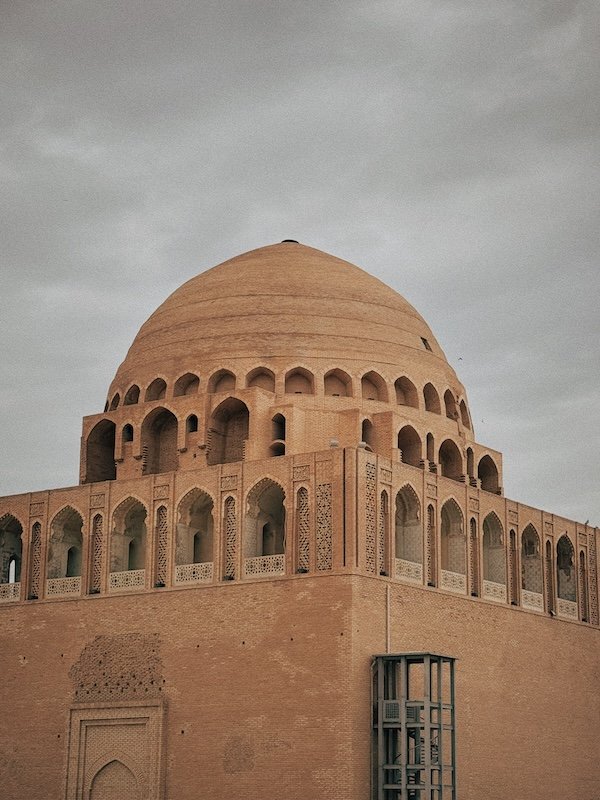 Ancient Merv. PHOTO WENDY HUNG
