
Darvaza has two faces. The so-called Door to Hell exemplifies that both fear and glory can madly coexist, melting as one.
Right smack in the middle of a close society in Central Asia, both beauty and the beast smolder for eternity. Darvaza torches in both spirits. The beast lives in its colossal physicality, incinerating flames in the middle of the quiet desert. A few steps onward, it can swallow and devour anyone daring too close. Yet, all of it kindles in jaw-dropping beauty. A golden gas crater, cradling infernos among charring sand. It is magnificent, boldly luminous. In a country highly restricted, completely monitored; one cannot feel more free in the company of Darvaza’s gallantry.
The most incredible site in Turkmenistan is situated 260 kilometers, north of Ashgabat: the Darvaza gas crater, or as most people call it: Door to Hell. Turkmenistan’s main source of economy thrives on agriculture and significant oil resources since it’s one of the world’s biggest reserves of natural gas.
Geographically, the Central Asian country borders Uzbekistan, Kazakhstan, Afghanistan and Iran. With the Caspian Sea located on the west, it provides generous natural gas and oil deposits, making Turkmenistan the fourth largest source, which is approximately 10% of global reserves.
View this post on Instagram
What is it?
Since the 1980s, hundreds of natural gas fires emblazon the rim and the bottom of the crater. It originally came from a burning natural gas field which collapsed into a cavern. Engineers lit the crater to prevent the spread of toxic gases. To reach the Karakum Desert, where the crater calls home, requires a 5-hour car ride via a four-wheel drive. The roads are bumpy throughout the entire journey, though on the way to the Door to Hell, there are other gas craters worthy of visiting. None, however, are as extraordinary as the Darvaza.
 Photo by Ybrayym Esenov on Unsplash
To go with a tour operator, they’ll most likely plan a dinner during sunset in the sandy desert. There’s nothing like biting into roasted mutton, next to lines of milky yurts. Darvaza exudes a different appearance from day to night. In the midst of total darkness, the fires burn in the belly of dusty earth. It’s truly once in a lifetime.
How to get there?
 Smaller craters. PHOTO WENDY HUNG
The best way to organize a trip to Darvaza from Turkmenistan’s capital city Ashgabat is organizing with a local tour operator. Ask your hotel concierge or your local guide for reference. The tour can arrange a driver with a jeep or a four by four, to embark on the five-hour road trip.
On the way, the roads are bumpy with infinite pot holes throughout dry and sabulous roads. For travelers prone to motion sickness, be sure to take medicine or wear bracelets to prevent from vomiting. Drivers tend to zip through the roads quite fast as they’re used to rough conditions, they may also swirl often towards the edge of desert lanes to avoid pot holes.
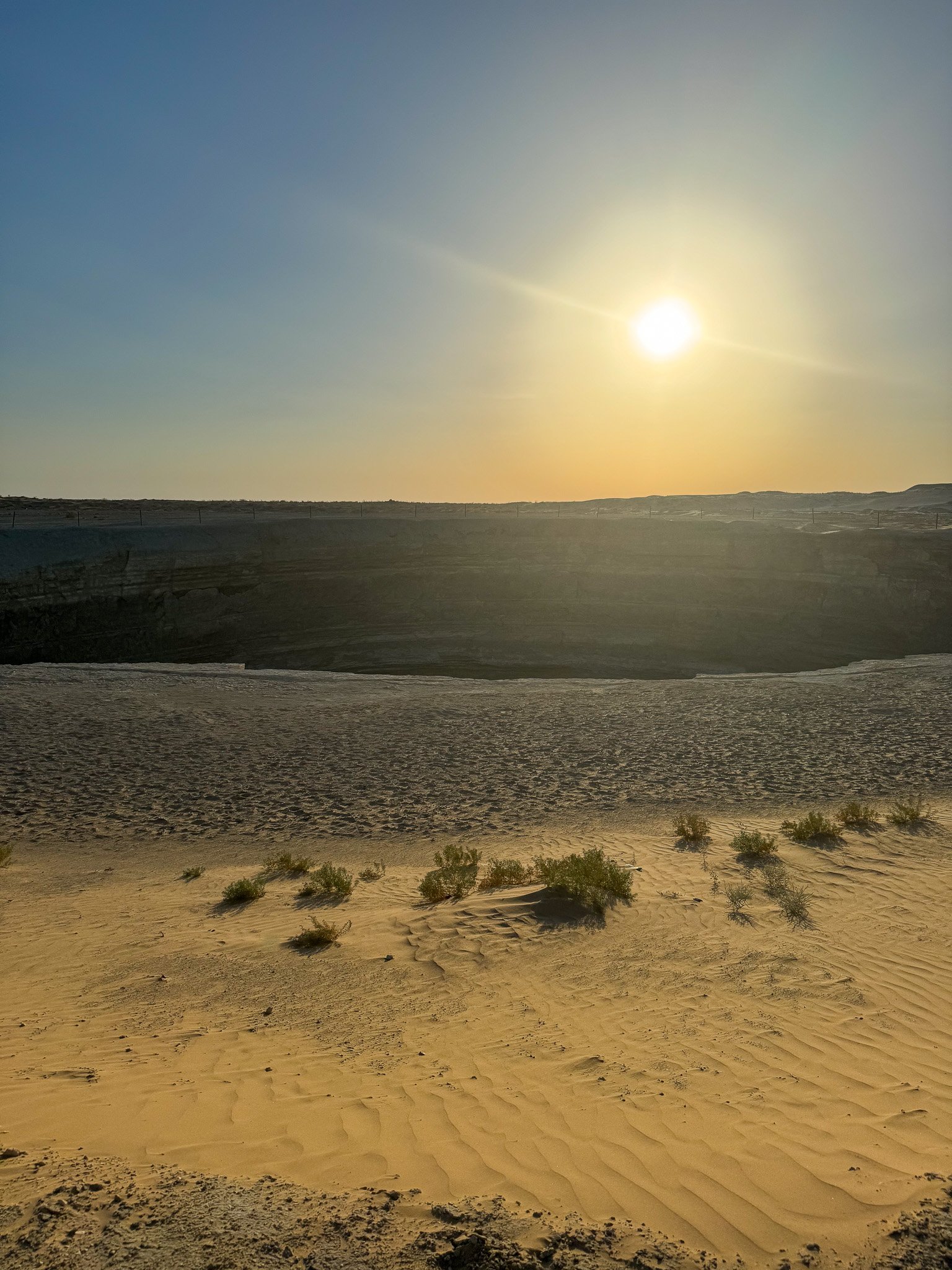 Desert sunset. PHOTO WENDY HUNG
Approximately four hours into the road trip, the drivers may stop at several smaller gas craters as previews to the Darvaza. Some gas craters might not be burning, or are merely bubbling. Regardless, they’re each beautiful to admire, especially gazing at the turquoise water amid limitless beige dunes.
What to do there?
 Darvaza at dusk. PHOTO WENDY HUNG
Upon arriving at the Darvaza during late afternoon, the tour operator drops off travelers at the Darvaza for majestic views while sunlight slowly fades, the sky alters from rose to lavender. The Darvaza appears vastly different, while there remains light compared to later into the night. During the day, there’s clear visuals of burning fires that have transformed color of the earth, from biscuit to charred. Next to the gigantic pit, human bodies strike as smaller than minuscule. It’s an overpowering experience, as what’s left of the sun heats up faces, rosy cheeks are fanned by hot winds rushing from Darvaza’s invisible flames.
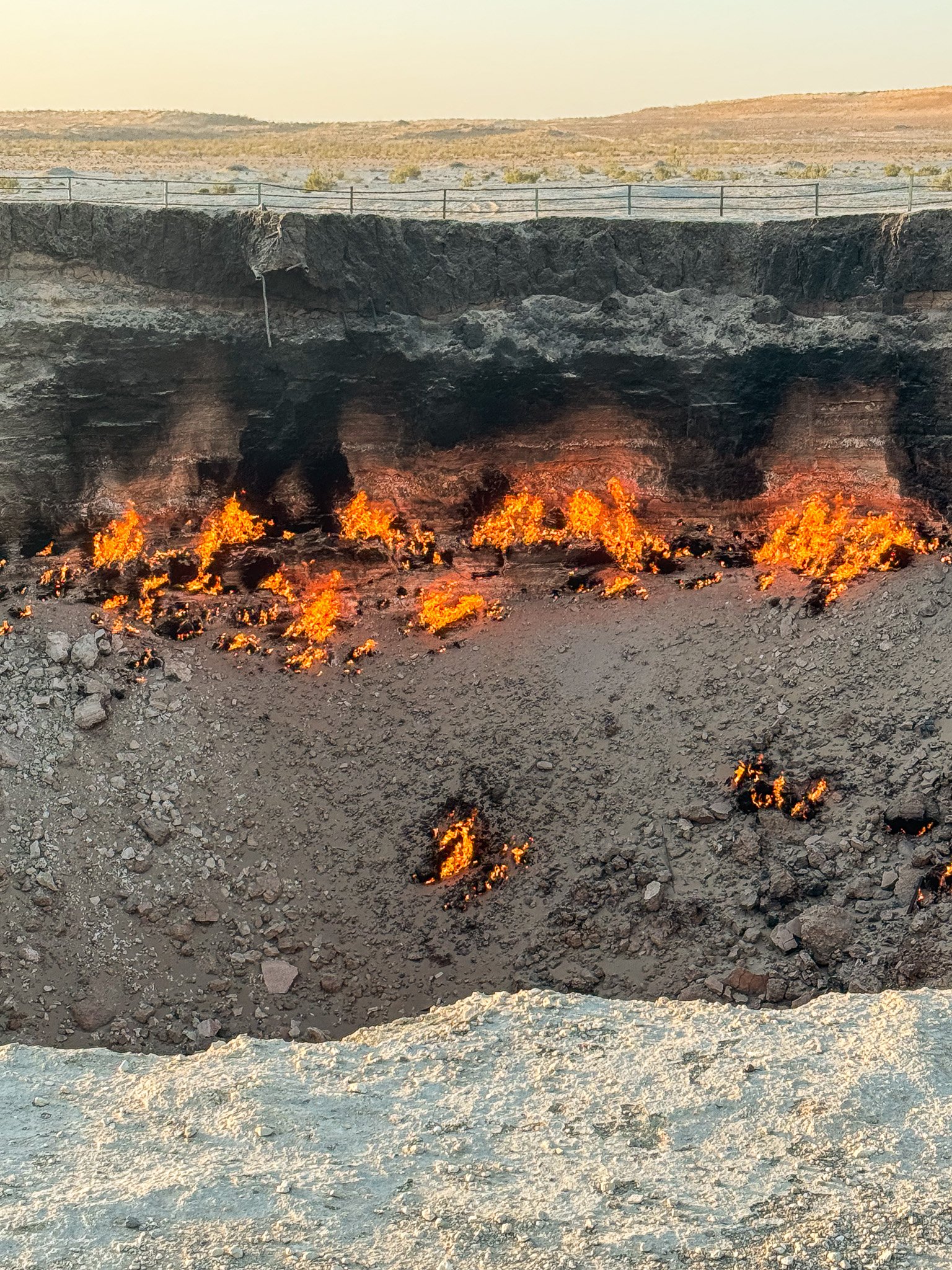 Darvaza during the day. PHOTO WENDY HUNG
Drivers shift their roles to chefs, each is in charge of a specific task. One busily grills vegetables on an open fire, while another prepares roasted mutton on a hot tin simmering upon desert sand. There are numerous pasty yurts that make authentic homes for overnighters, we, however, didn’t spend the night.
Dinner is gloriously accompanied by the sun saying good night. There’s sparkling wine, traditional Turkmen bread, and a wildly delicious feast. Right in the middle of sheer desolation.
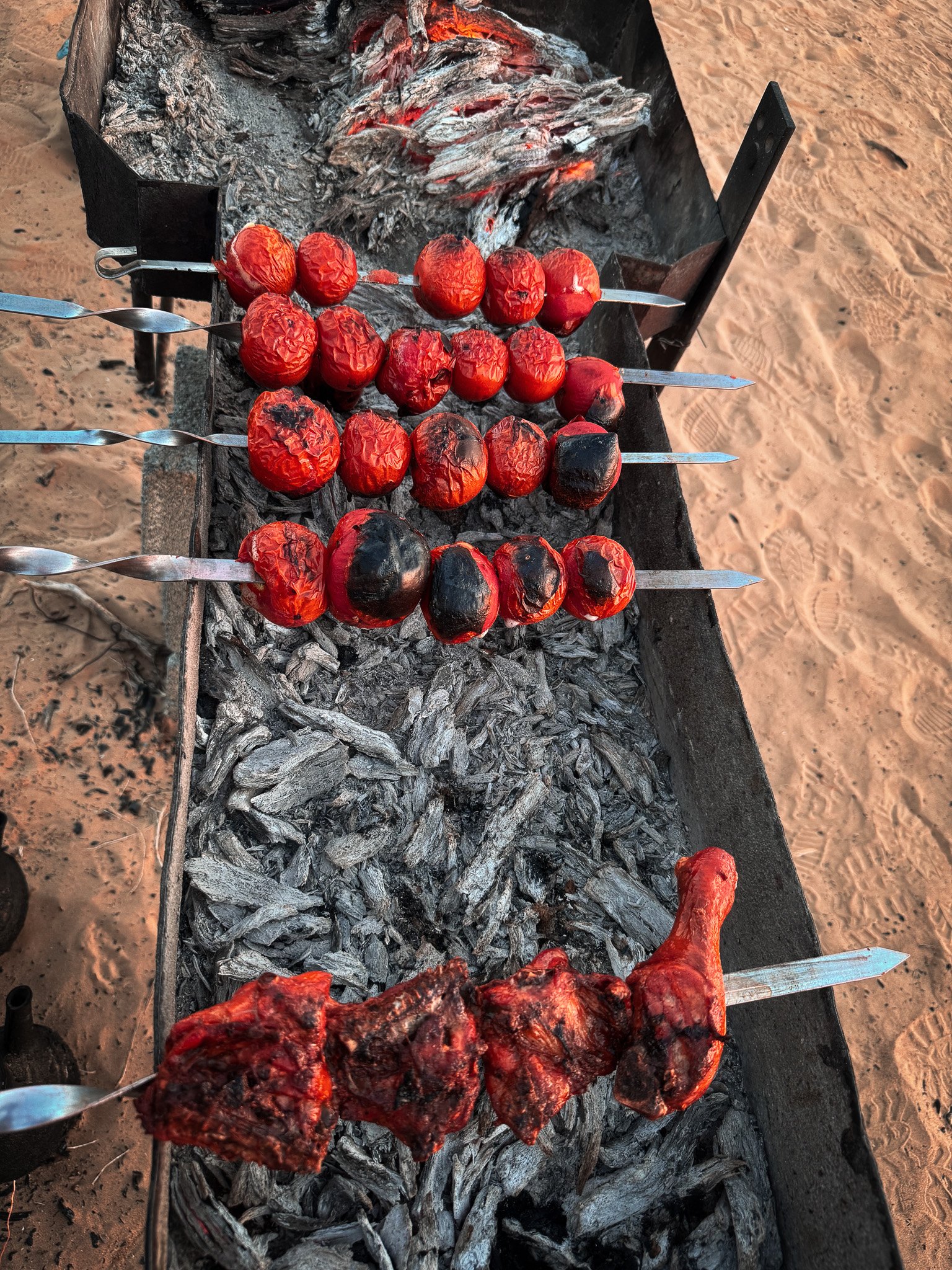 Open fire grills. PHOTO WENDY HUNG
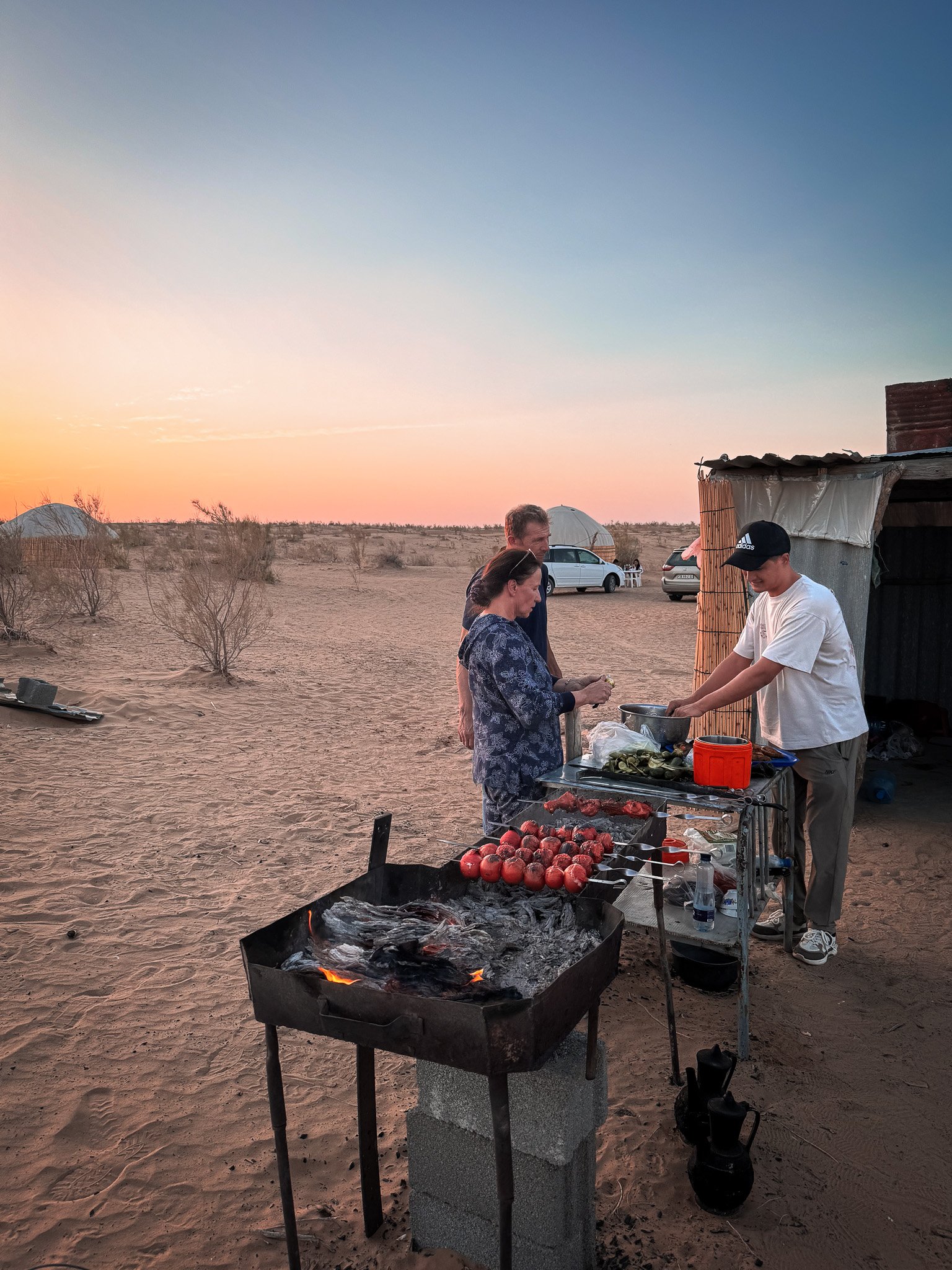 Drivers preparing food. PHOTO WENDY HUNG
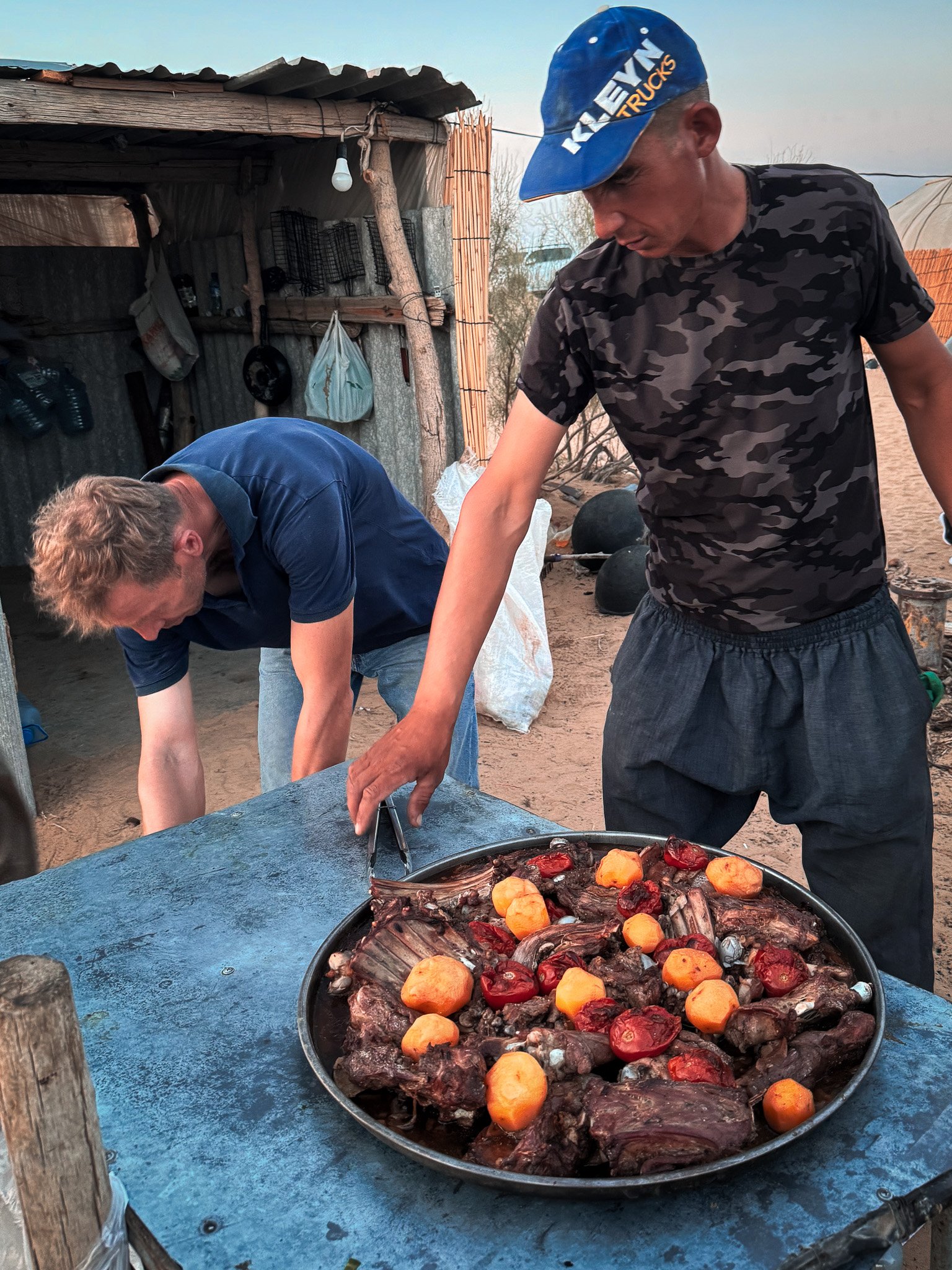 Drivers preparing dinner. PHOTO WENDY HUNG
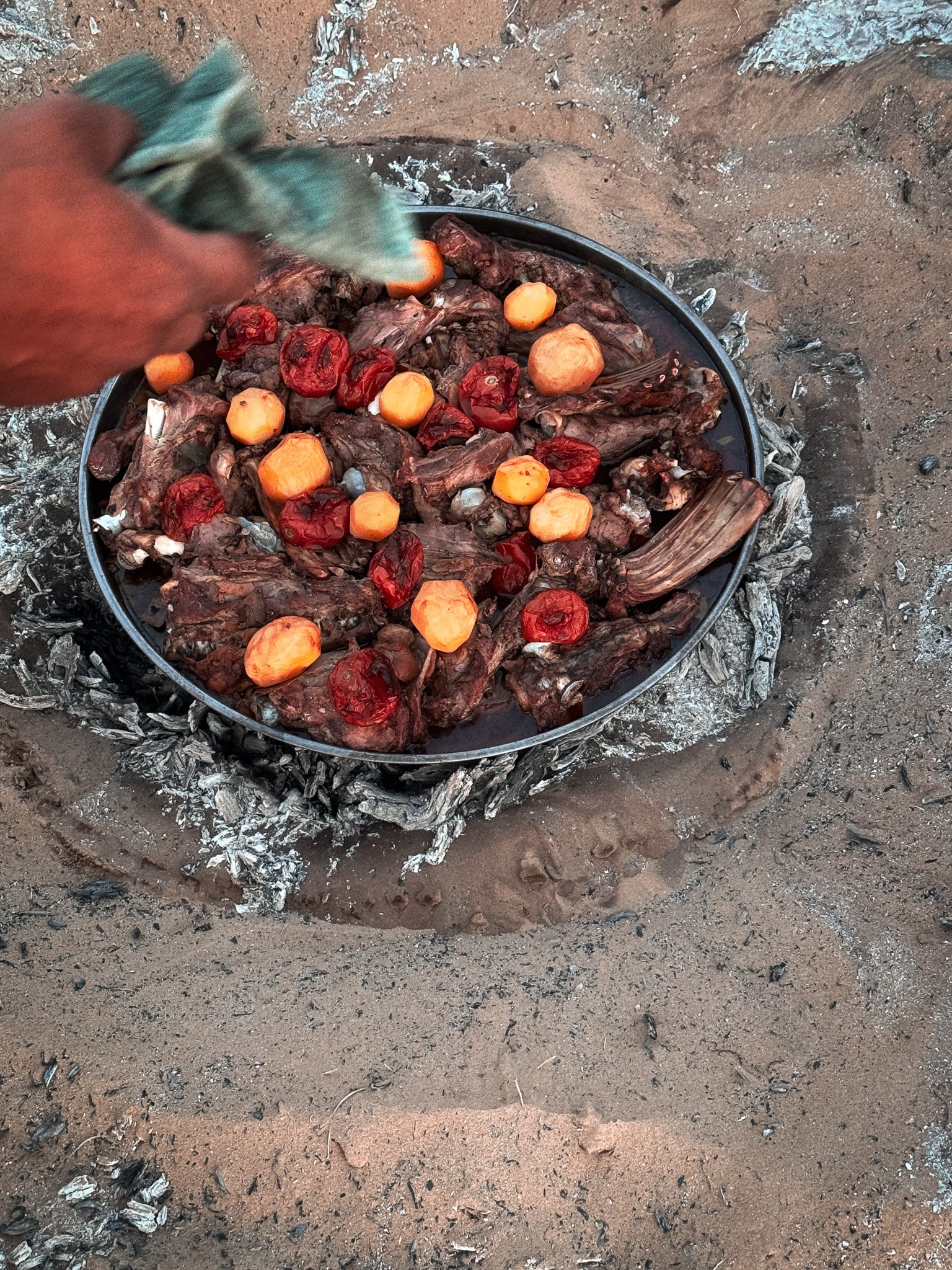 Roasted mutton. PHOTO WENDY HUNG
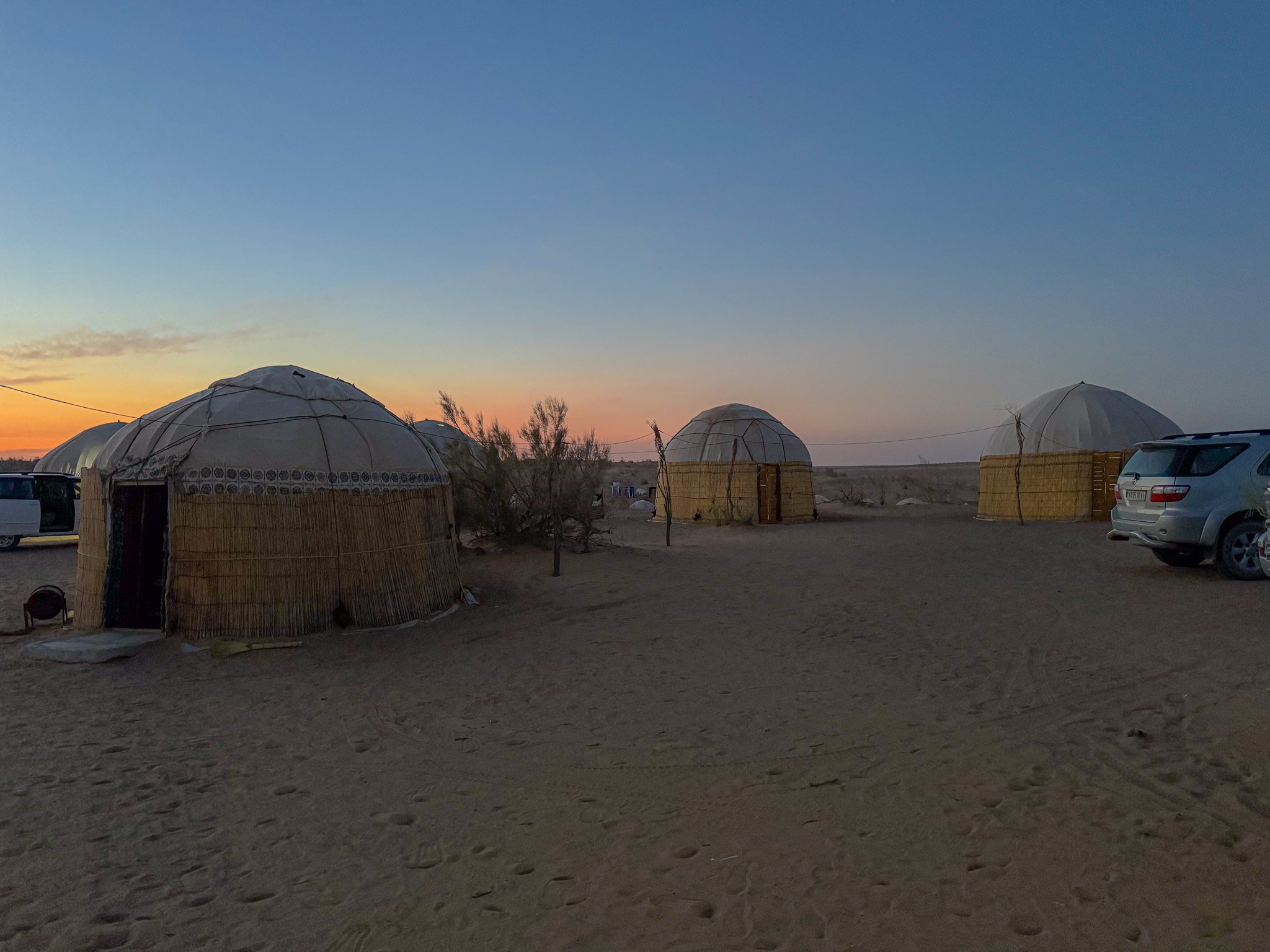 Yurts at dusk. PHOTO WENDY HUNG
After the meal is joyously devoured, local guides take our satiated bodies over for a last hour next to the Darvaza. At 70 meters wide and 20 meters deep, the fiery giant seems evermore fierce. In complete darkness, the crater appears to become evermore alive. There’s only one question resting on my mind: how did I get here?
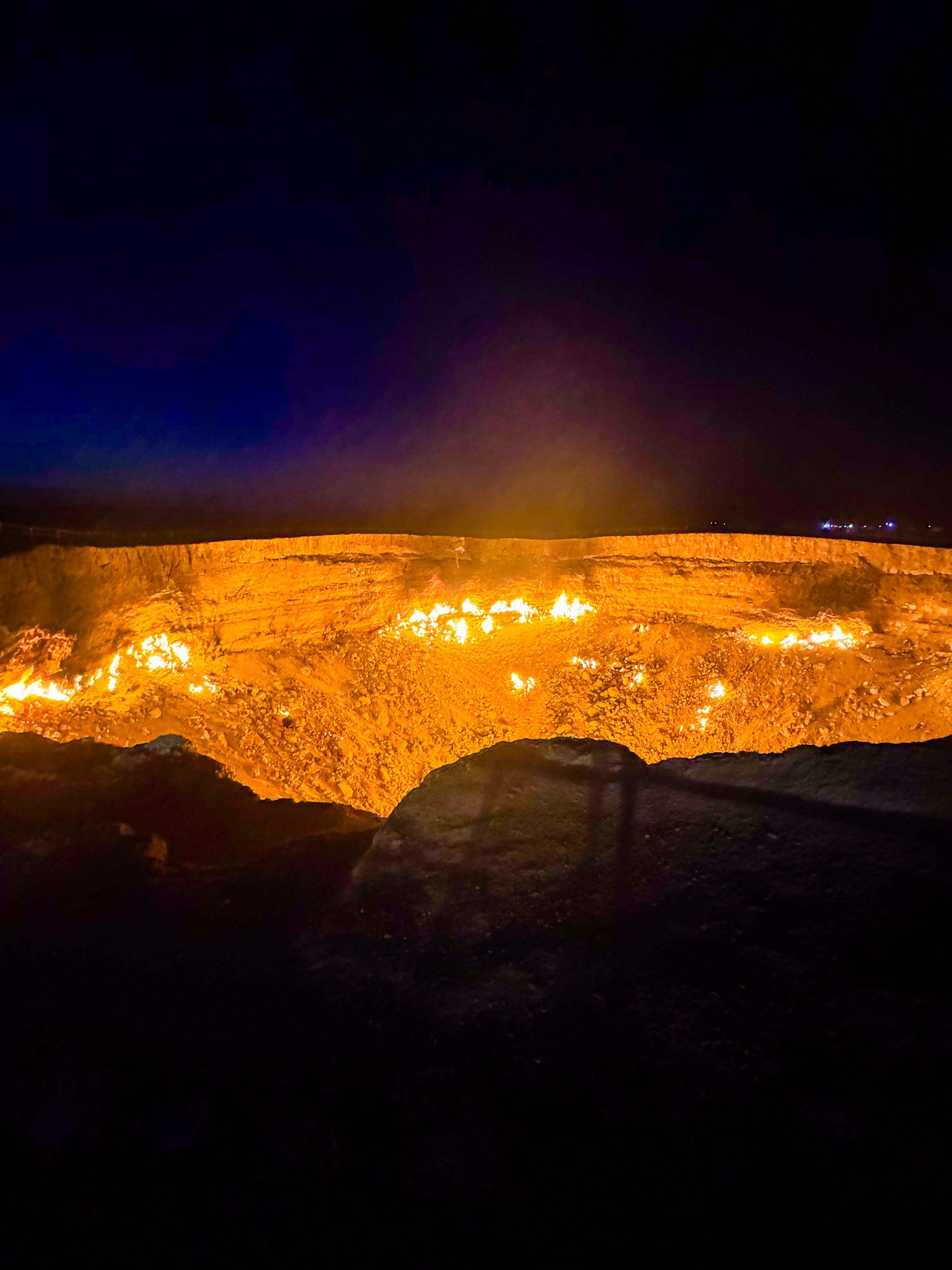 Darvaza at night. PHOTO WENDY HUNG
It’s another five hours on the way back to civilization in Ashgabat. An utterly tough voyage for an absolutely bewildering sight, but certainly well worth the treacherous drive.
Darvaza might be known as the Door to Hell, but in so many ways, it’s also the gate to feeling graciously alive.
