
Although every temple (wat) is unique and ravishing in its own right, we’ve narrowed it down to the ones located in Chiang Mai’s Old City.
The captivating city of Chiang Mai boasts more than 300 Buddhist temples, or what locals refer to as: wat. Hence, simply strolling within the walls of Old City means that you’ll most likely stumble upon not just one, but quite a few Buddhist temples. We’ve listed just a few that have made a lasting impression in our minds, just to keep it simple for travelers that only have a quick weekend to explore.
Here are some of – what we think are – the most beautiful temples (wats) in Chiang Mai, feel free to add your own favorites to this list! For more things to do in Chiang Mai, check out 14 Amazing Things To Do In Chiang Mai, Thailand

Wat Phra Singh Woramahawihan
We begin our Chiang Mai journey at Wat Phra Singh, which is also known as “The Monastery of the Lion Buddha.” In Thailand, wat means “temple.” Clearly indicated by symbolic singh, or lions, bravely guarding the temple’s entrance. It currently houses hundreds of monks and novices, along with ancient and prized images of Buddha.
In 1345, King Phayu, who was the fifth king of the Mangrai dynasty, constructed Wat Phra Singh to house his father’s ashes. Later, during the temple’s restoration in 1925, three urns were found inside that were assumed to be royal ashes. Since then, the urns have yet to be rediscovered.
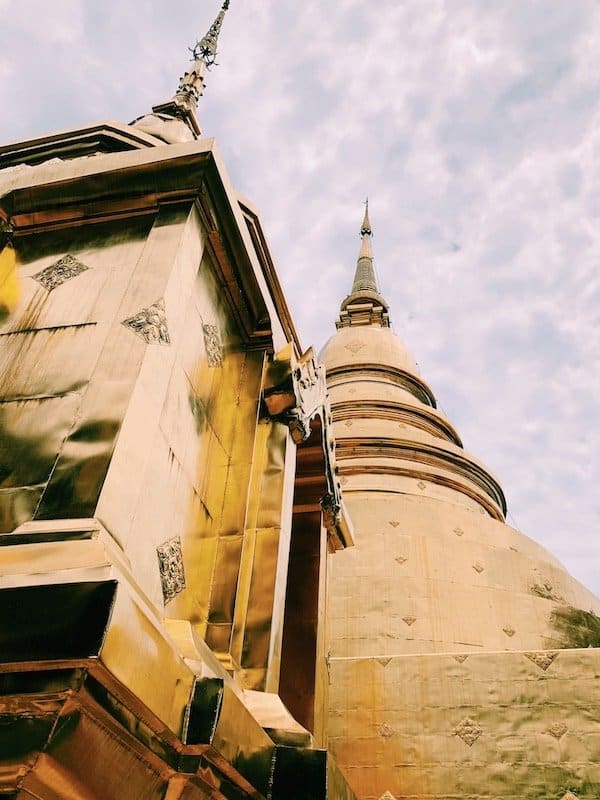 Wat Phra Singh. PHOTO WENDY HUNG
Wat Chedi Luang
Wat Chedi Luang, or Temple of the Royal Stupa, is the combination of three temples that were constructed during the 14th century by King Saen Muang Ma also as a place to bury his father’s ashes. The king passed away ten years after but the temple remained incomplete, it was his widow who finished the construction of the temple. At the time, it was the largest chedi, or pagoda, in Lanna Kingdom. In 1545, however, a massive earthquake destroyed 60 meters of the chedi, which was partially restored in 1990s. What made Wat Chedi Luang incredibly significant is also the Emerald Buddha, which was placed here then later moved to present-day Laos, then to Bangkok’s Wat Phra Kaew.
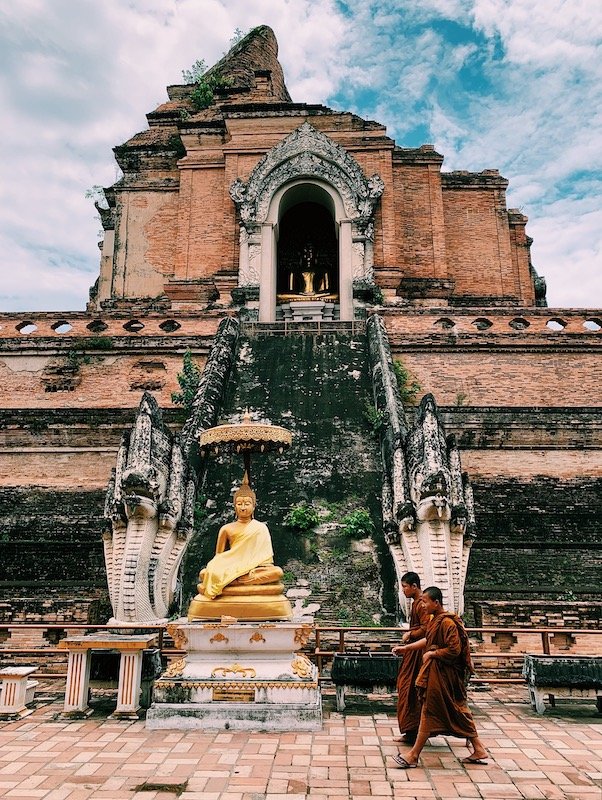 Wat Chedi Luang. PHOTO WENDY HUNG
Wat Chiang Man
Wat Chiang Man is the oldest temple in Chiang Mai, built by the founder of Chiang Mai, King Mangrai of the Lanna Kingdom in 1297. The king used this location as a camp while he was building Chiang Mai as his capital city. The temple is different from others by the Lanna-style chedi with numerous rows of 15 elephants as buttresses. The beautiful golden top of the chedi is a relic chamber.
The large viharn, or a sermon hall, is an incredible building featuring a three-tiered roof with the front embellished with wood carvings in gold.
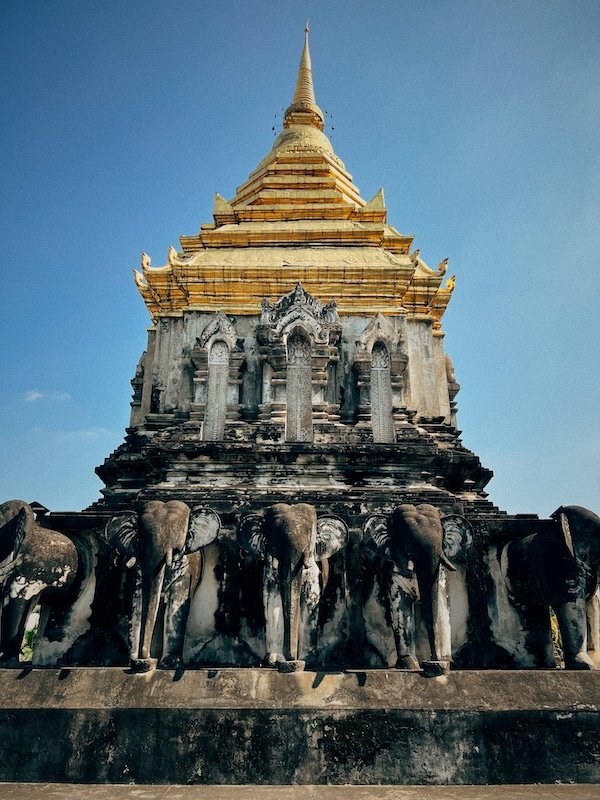 Wat Chiang Man. PHOTO WENDY HUNG
Wat Lok Moli
Wat Lok Moli used to store the ashes of a few members from the Mangrai Dynasty, until the end of the dynasty, the royal family took over and continued to care for the temple. As opposed to most Buddhist temples that face the east – where the sun rises – this wat parallels the north-south axis. The large chedi was constructed in 1527 with every side displaying images of Buddha.
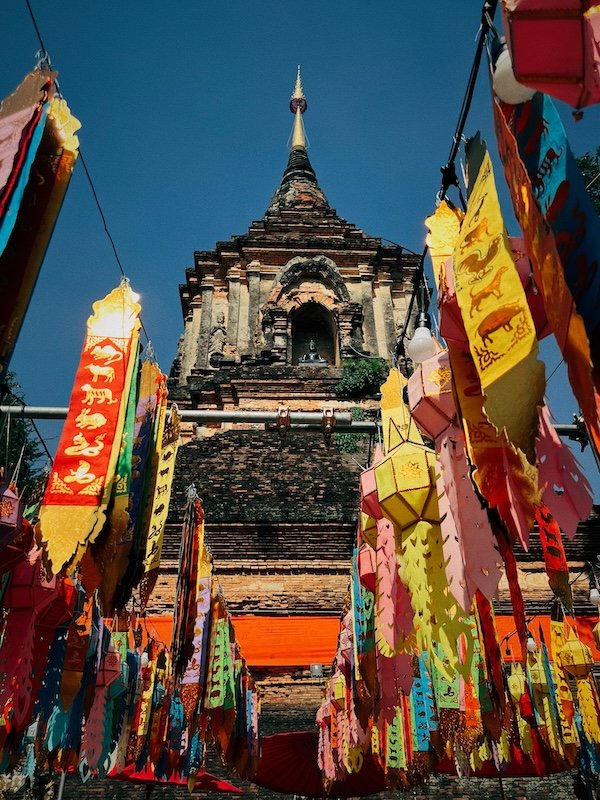 Wat Lok Moli. PHOTO WENDY HUNG
Wat Sri Suphan
Wat Sri Suphan is often referred to as the Silver Temple. Although it’s not technically located inside the Old City, it’s just right outside of it. For more than 200 years, this neighborhood has been known for its silver handicrafts, which is showcased in the construction of the temple. At the wat, guests can also learn how to chase metal and silver sheets.
Built during the reign of King Mueang Kaeo of Mangrai dynasty in 1500, the temple is constructed in Lanna-style with aluminum and silver carvings all around, featuring dharma puzzles and stories of Buddhism.
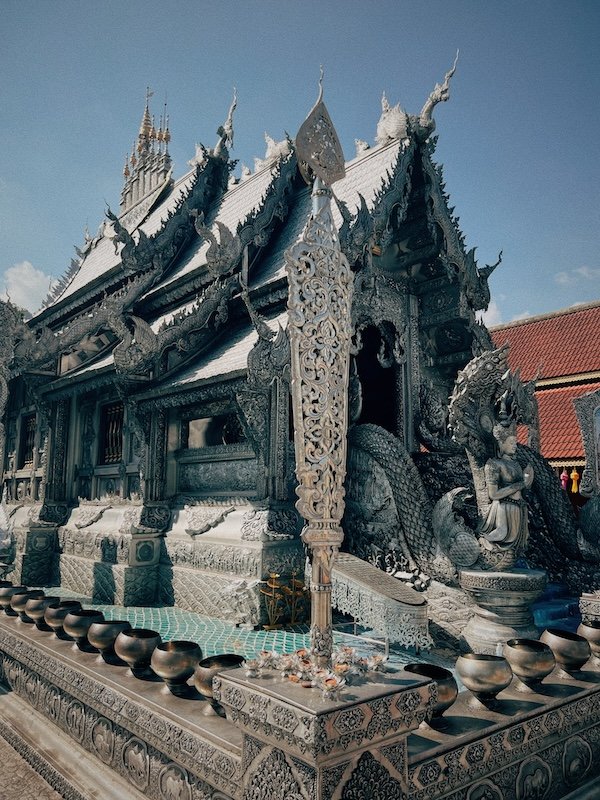 Wat Sri Suphan. PHOTO WENDY HUNG
Wat Pha Khao
A much smaller wat in the middle of the city is the beautiful Wat Pha Khao, or “Temple of White Clothes,” which is a personal favorite due to vibrant and colorful umbrellas displayed throughout the temple originally built by King Thaomekuthi Suthiwong of the Mangrai Dynasty that oversaw the Lanna Kingdom from 1292 to 1558. The name of the temple refers to the king who changed into white clothing before attending any ceremony at this particular wat.
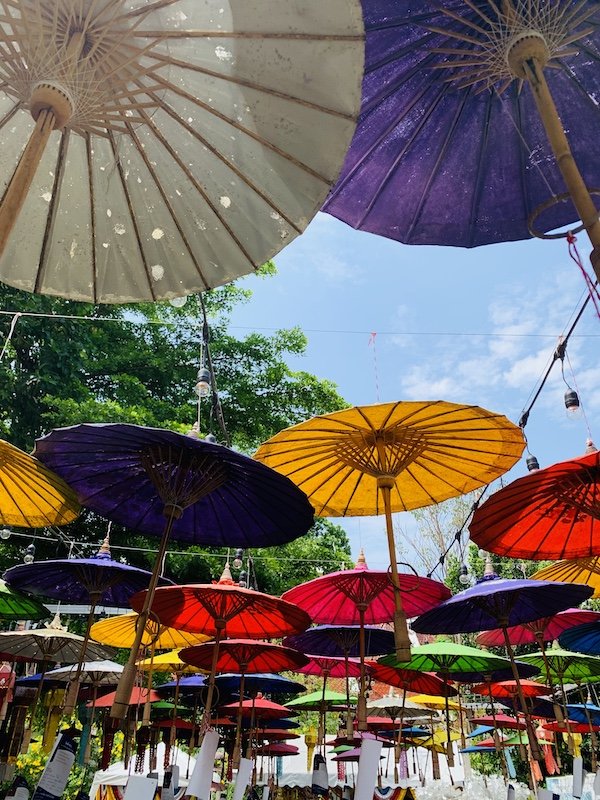 Wat Pha Khao. PHOTO WENDY HUNG
Wat Phan Tao
Wat Phan Tao was built approximately around the 14th century, making it one of the oldest temples in Chiang Mai. The name means: temple of a thousand kilns, highlighting the ovens used to create images of Buddha for other temples, like Wat Chedi Luang (see above.) Wat Phan Tao is unique in its incredible teak wood viharn constructed on the base of a stone, the structure is one of the last wooden buildings in a temple in the entire city.
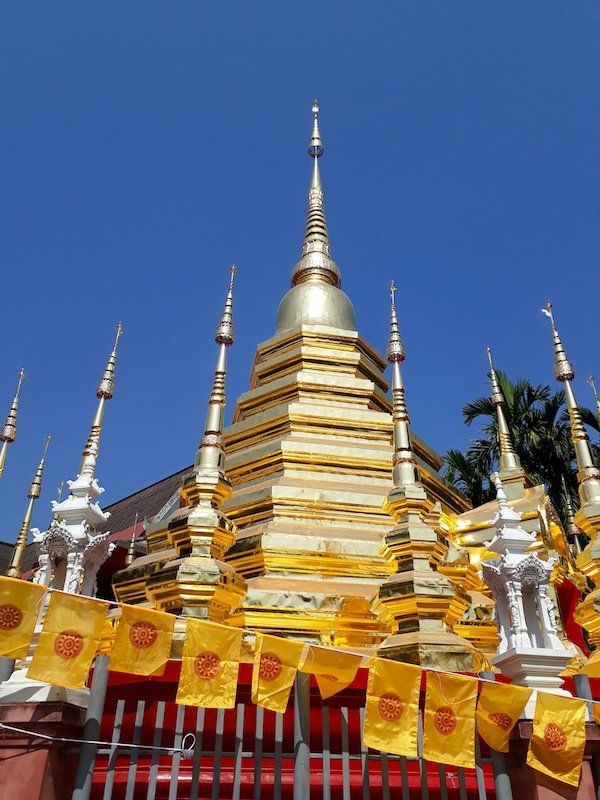 Photo by Stefan Meier on Unsplash
