Cape Finisterre, on the coast of Spain, used to mark the ‘end of the earth’ in Roman times.
Cape Finisterre, or the “end of the earth” as translated from Spanish to English, is a rocky cliff on the west coast of Spain in Galicia that used to be regarded as the end of the world in Roman times. The ominous rock formation opens up to sky-blue waves until the ocean meets the horizon — a sight that can easily be misinterpreted as the end of the world.
This landmark in Spain is one of the most visited places and a popular spot to journey to on the Camino or pilgrimage to Santiago. The sight alone is reason enough to visit the rock formation, but the site features many other aspects that attract travelers to this spot time and time again.
1. The Romans weren’t crazy
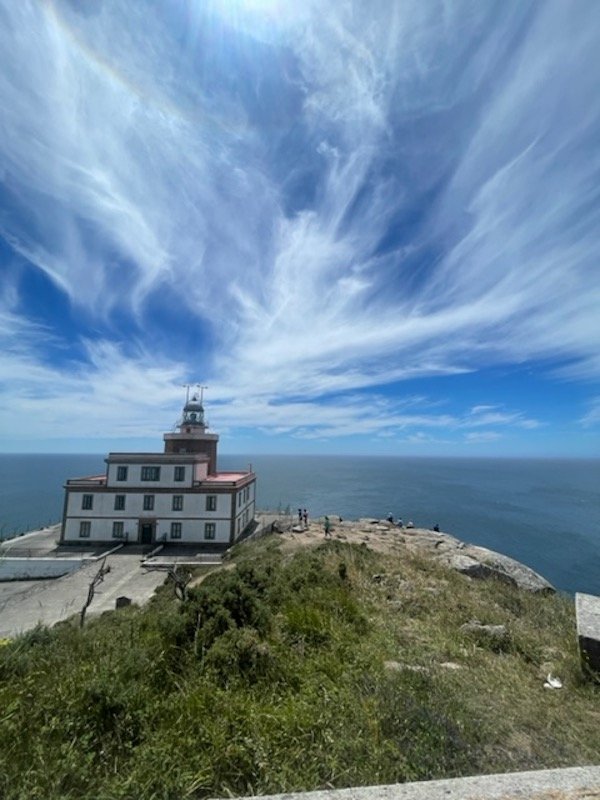 The cape and sky. PHOTO PALOMA VIGIL
As the rock formation falls off, the sparkling blue ocean extends further and further on to the point where all one can see is vast turquoise nothingness. Visitors in the Middle Ages saw this land as sacred; over time, it was seen as quite a treacherous place. The seas around the cape are known for taking the lives of many sailors in the past, and this area of the ocean is still one of the most dangerous waters to sail. Nonetheless, the awe-inspiring water everywhere the eye traverses is enough to convince you that the UK, the Americas, and the rest of the world simply don’t exist. Don’t be fooled, though; the UK is only 2,559 km away from the menacing rocky end.
2. It continues to be a sacred pilgrimage site
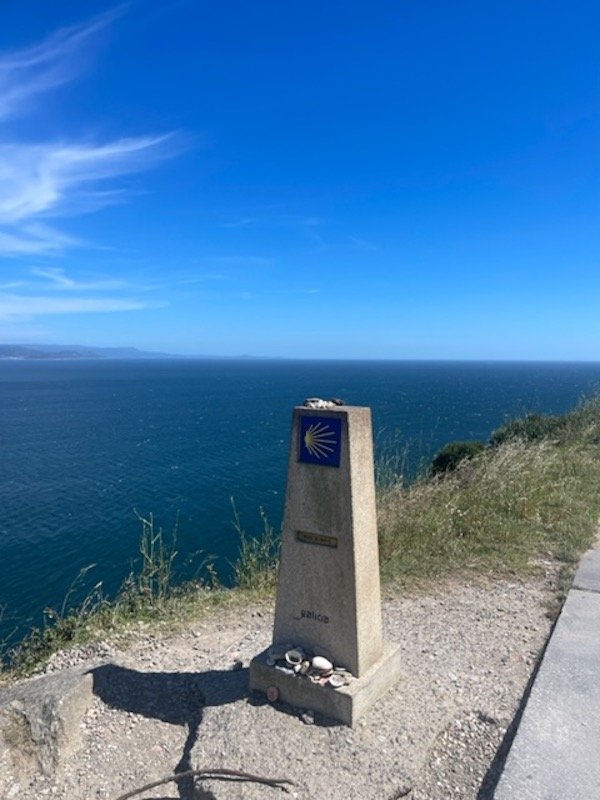 Camino symbol. PHOTO PALOMA VIGIL
The Camino de Santiago is a famous pilgrimage, religious or spiritual, for anyone willing to do the walk across Spain and sometimes through France and Portugal. A version of this hike includes the addition of trekking up the mountain that leads to Cape Finisterre. Once you have arrived at the cape, you will see hundreds of hikers finalizing their journey at the world’s end, marking the conclusion of a 3-month trip in some cases. These hikers pose in front of the iconic shell that signals km 0.000, or the journey’s end. It seems fitting to watch these hikers complete their journey at the earth’s ultimate fate. They leave their mark all over the cape by taking off their worn-in, sweaty boots to signify the end of the Camino.
3. Have the freshest fish dish of your life
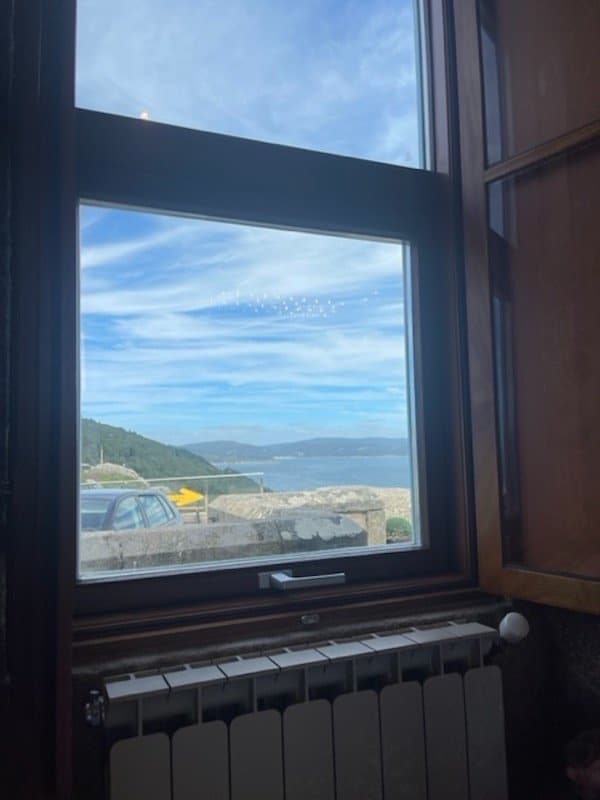 Restaurant view. PHOTO PALOMA VIGIL
Where better to have a fish fillet than on a cliff directly above waters swarming with cod, grouper, and every type of shrimp imaginable? Galician langoustines and cod are a worldwide famous delicacy, and it is impossible to get them fresher than by dining at O semafORO restaurant. This tiny but Michelin-recommended restaurant is in the only hotel at the top of the cape boasting impeccable views and the flavors of Galicia, Hotel o semafORO de fisTERRA. Make sure to book a reservation before visiting, as hungry hikers frequent this place!
4. Visit one of the most powerful lighthouses in all of Europe
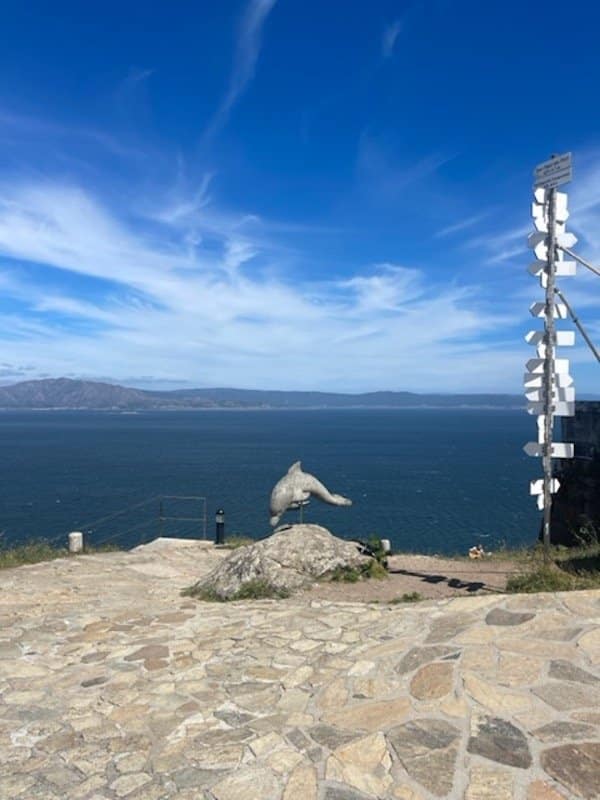 Direction signs. PHOTO PALOMA VIGIL
This lighthouse is the westernmost lighthouse in all of Europe and has been lighting the way for boats on this dangerous sea since 1853. This jagged and bloody coastline is often called the Coast of Death because of the number of shipwrecks at the bottom of the Atlantic near the cape. Thus, the lighthouse isn’t just for decoration; it covers about 65 km of light so that ships today can be aware of the sharp edges and jutting rocks coming from the coastline. This lighthouse is simple yet majestic because it seems to be the last piece of modern human construction for miles, if not light-years.
The combination of views that will paralyze your senses, Galician bites that will excite your taste buds, a history that holds many secrets, and a general sense of spiritualism makes the Cape of Finisterre a perfect stop when in Spain, Portugal, or France. But you must also ask yourself: Are you ready to take the leap and reach the end of the world?
Paloma visited the Cape of Finisterre in June 2022.