
Hanbok is the clothing that was traditionally worn by Korean people, dating back to the 1st Century – all the way to the very beginning of history on the Korean Peninsula.
Hanbok consists of a top called a jeogori, which ties at the front, that goes with a long skirt for women or pants for men. Hanbok was traditionally made of silk and typically came in bright colors such as red, yellow, green and blue.
Ever since Koreans adopted western fashion in the 19th Century, they have relegated wearing hanbok only for special occasions such as weddings, first birthday celebrations or Lunar New Year. It’s very rare to see hanbok worn in public during daily life, other than by tourists taking photos in rented hanboks at Seoul’s busiest landmarks. Thanks to brands like Leesle, however, a new generation of Korean designers are reviving cultural heritage and transforming traditional hanbok into contemporary fashion for the modern age.
View this post on Instagram
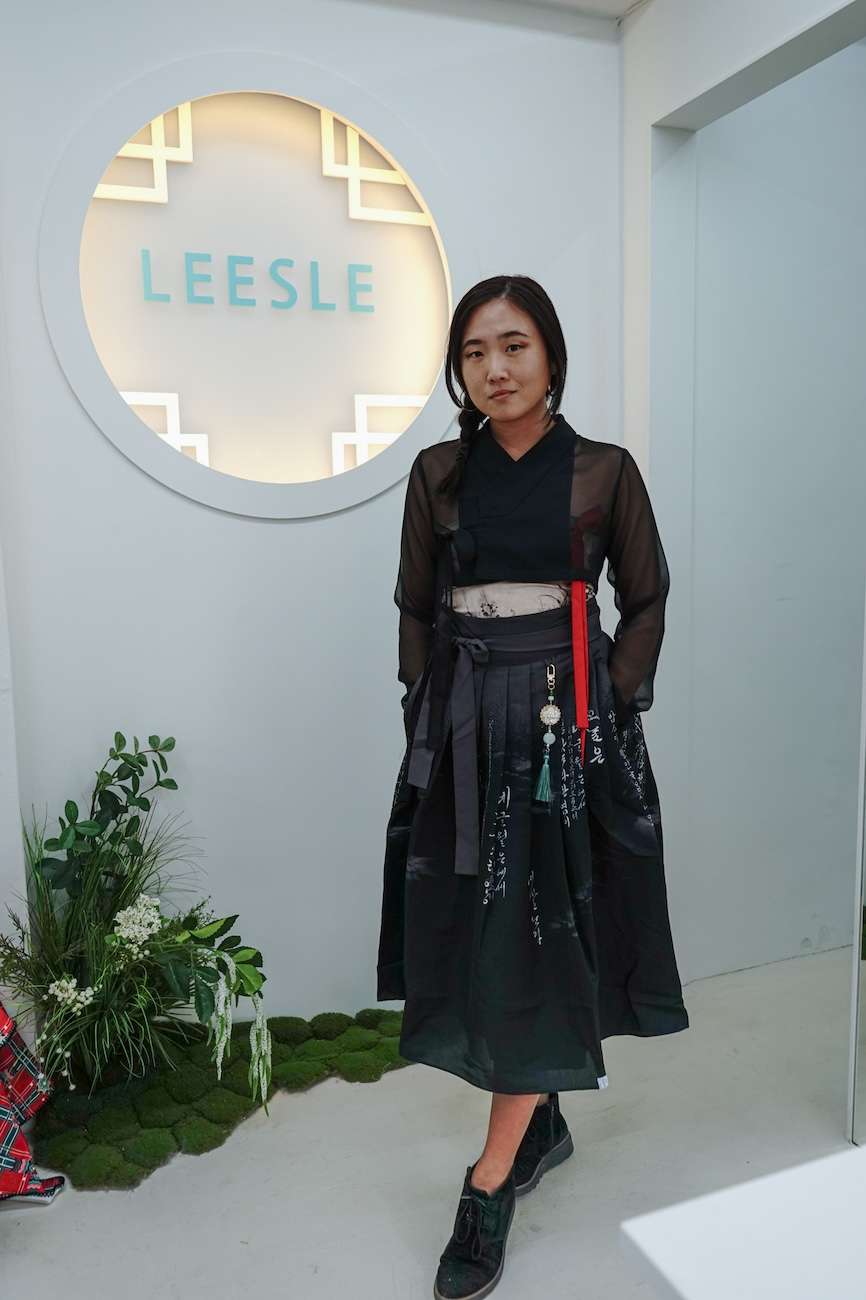 Black jeogori and skirt. PHOTO NADIA CHO
 Pink wrap skirt with custom norigae. PHOTO NADIA CHO
Yiseul Hwang is the founder and visionary behind the contemporary hanbok brand, Leesle. Hwang’s interest in hanbok started with cosplay in college when she would wear a hanbok for fun in public. Eventually, it led her to design hanboks by order for special occasions such as dol (a baby’s first birthday celebration) and weddings. Her mother also happened to be a hanbok craftsperson herself. Thanks to her passion and love for hanbok, Hwang dreamt of redesigning hanbok for current times which Koreans and people around the world could wear in everyday life, not just on special occasions.
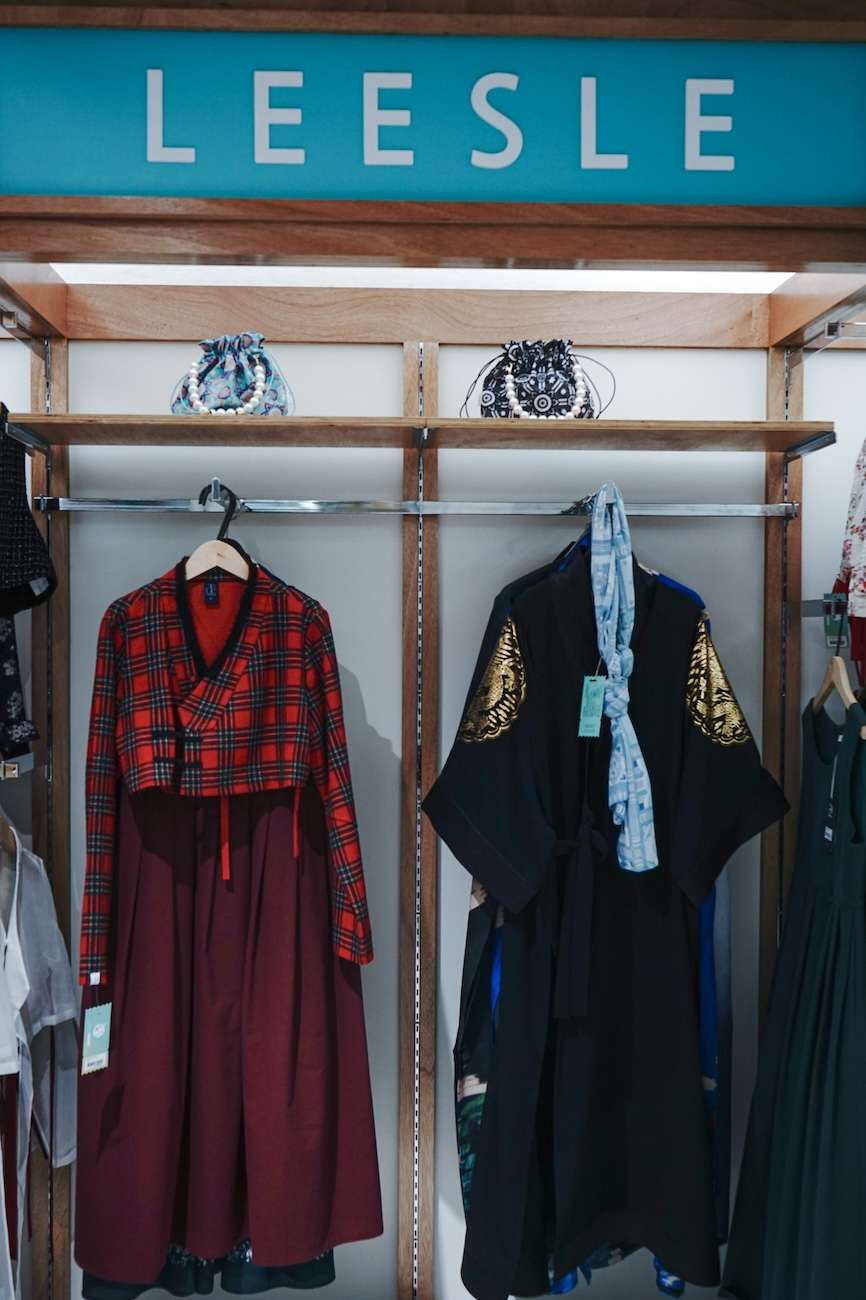 Unisex outerwear. PHOTO NADIA CHO
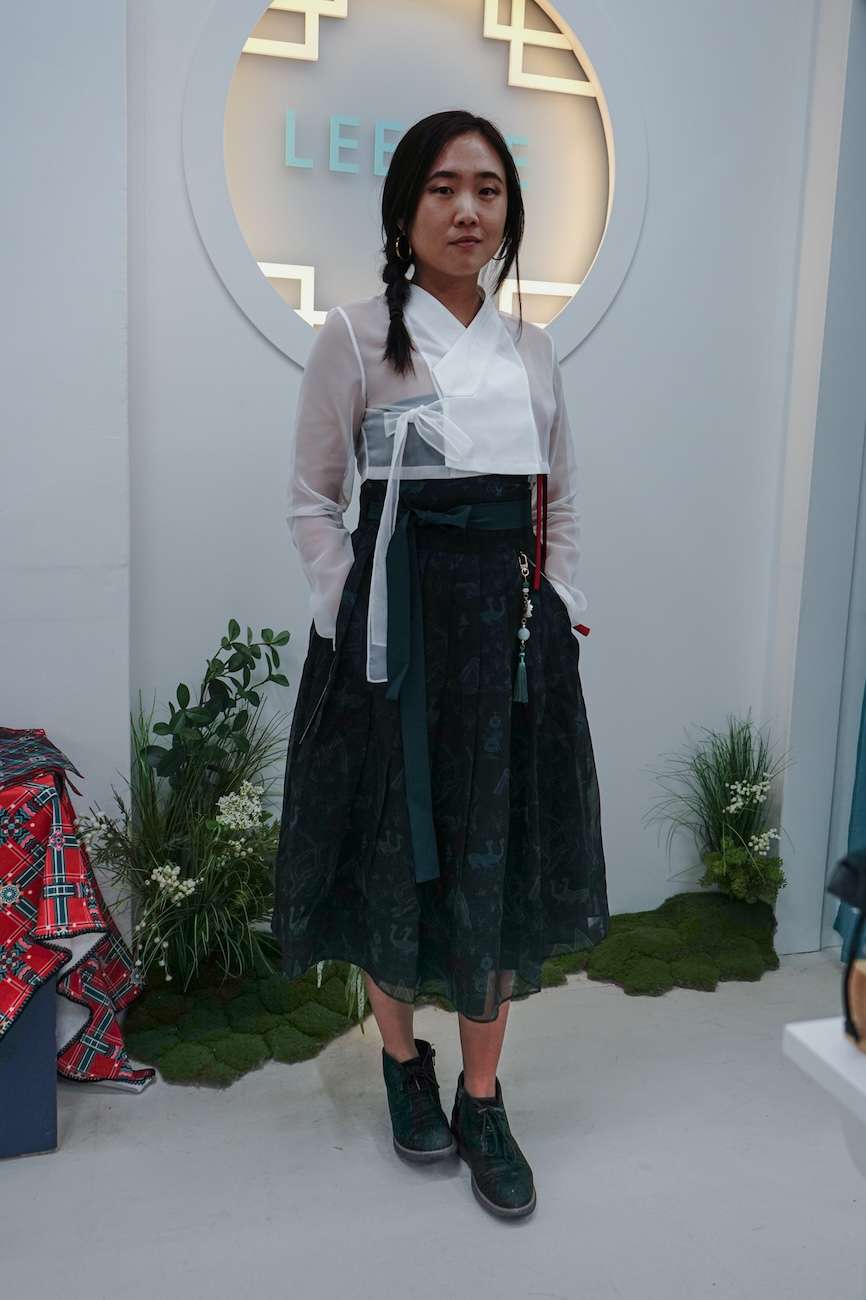 Mix and match tops and skirt. PHOTO NADIA CHO
Hwang’s first business venture into hanbok was not a hit. People appreciated the cultural heritage of hanbok, but did not convert into consumers as they merely saw hanbok as a traditional costume rather than a functional outfit. After her initial hanbok business “failed miserably” (in her own words,) Hwang pivoted to the concept of creating hanbok that could be incorporated into people’s daily wardrobes, rather than an ethnic costume.
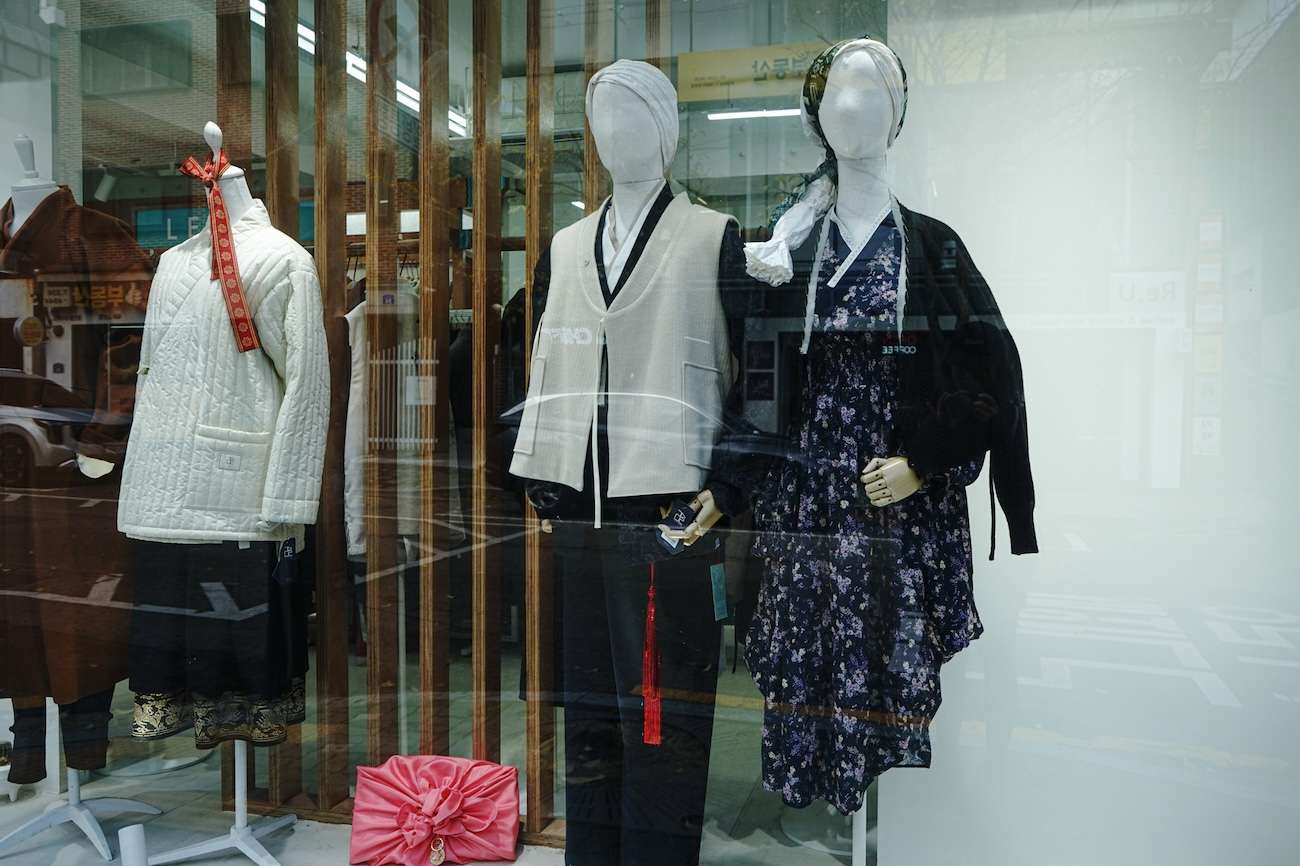 Leesle boutique. PHOTO NADIA CHO
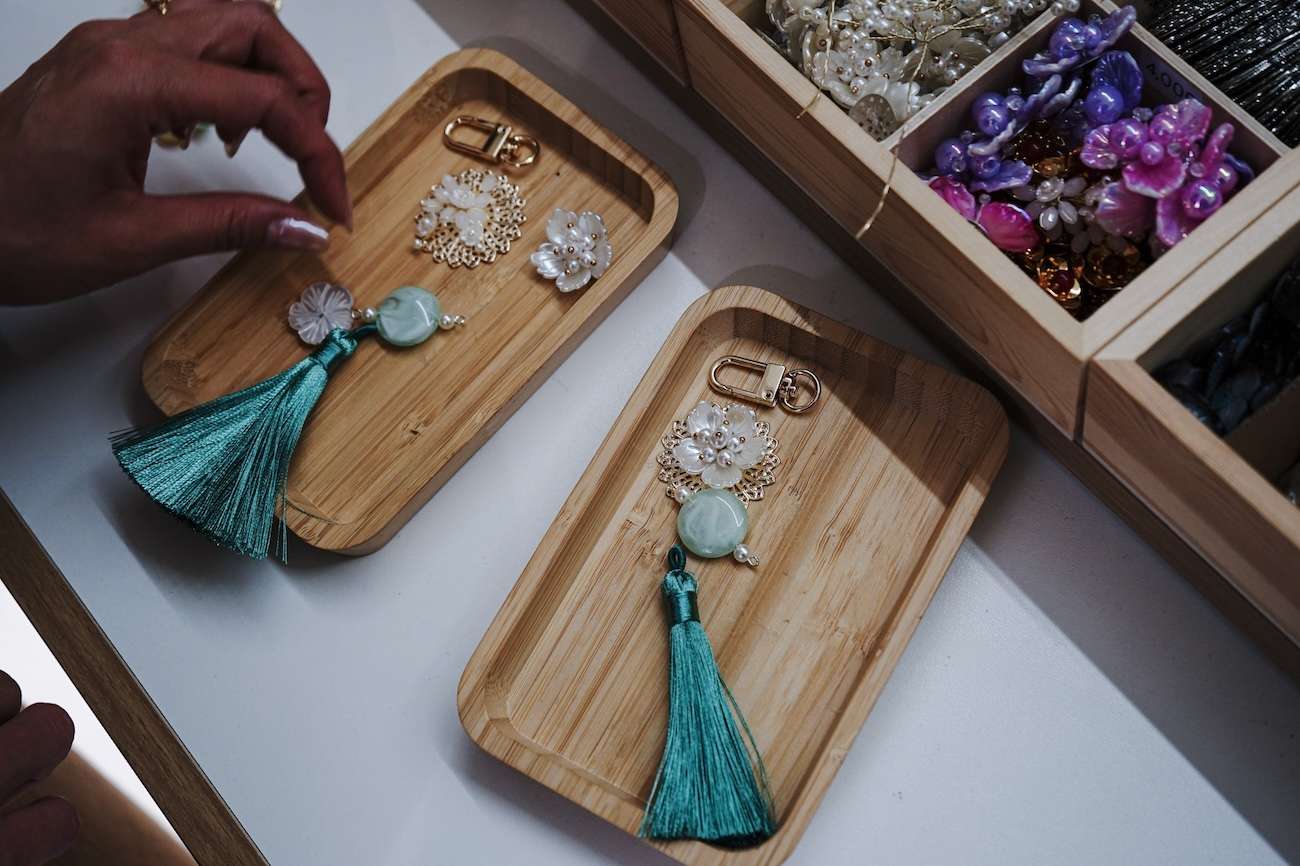 Make a norigae in Hongdae. PHOTO NADIA CHO
Hwang published her very own book, “나는 한복 입고 홍대 간다”, which translates to “I’m wearing hanbok and going to Hongdae” that succinctly illustrates this dream. She imagined a modern hanbok that could be worn to take the bus without tripping on the long skirt, and wouldn’t look out of place in Hongdae – Seoul’s hottest fashion mecca and also the location of Leesle’s Seoul flagship store.
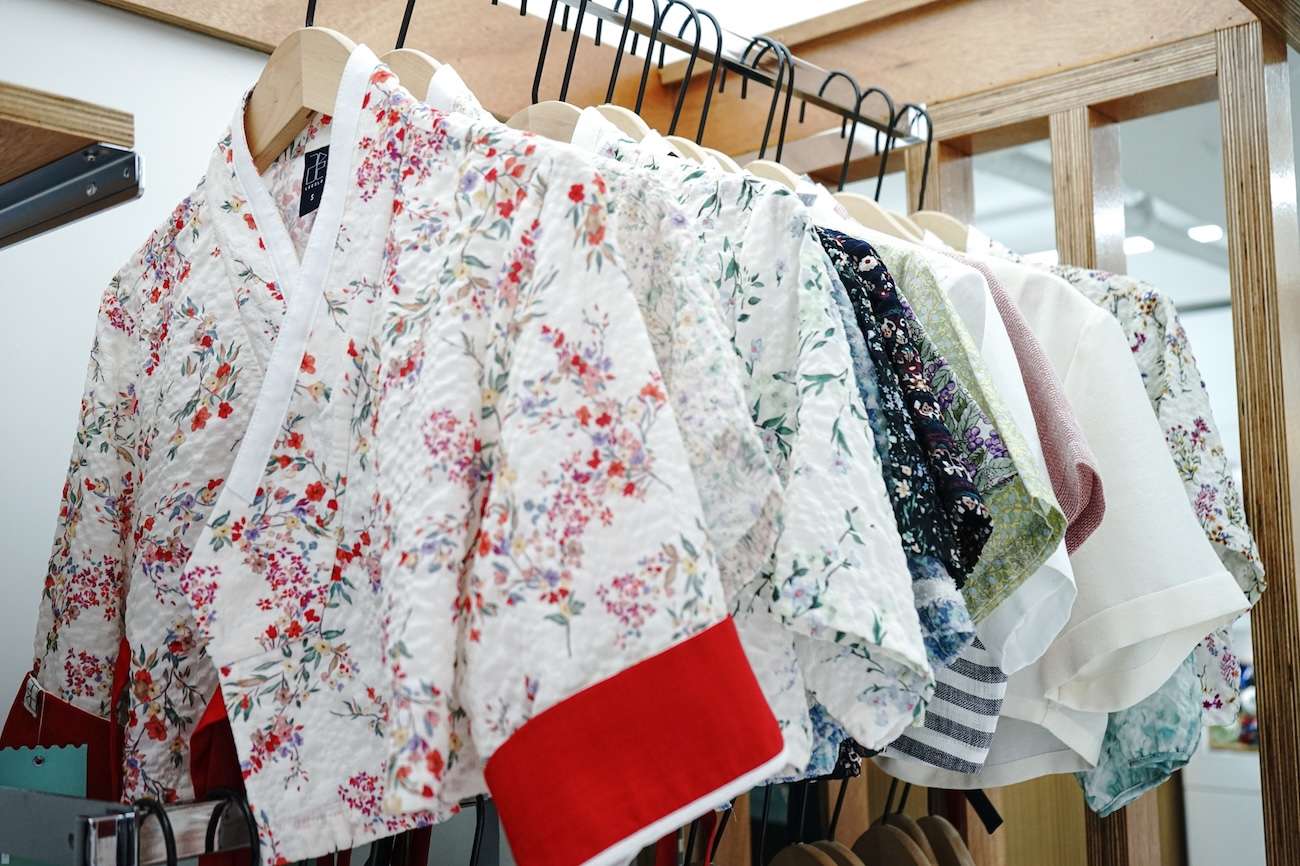 Jeogori tops. PHOTO NADIA CHO
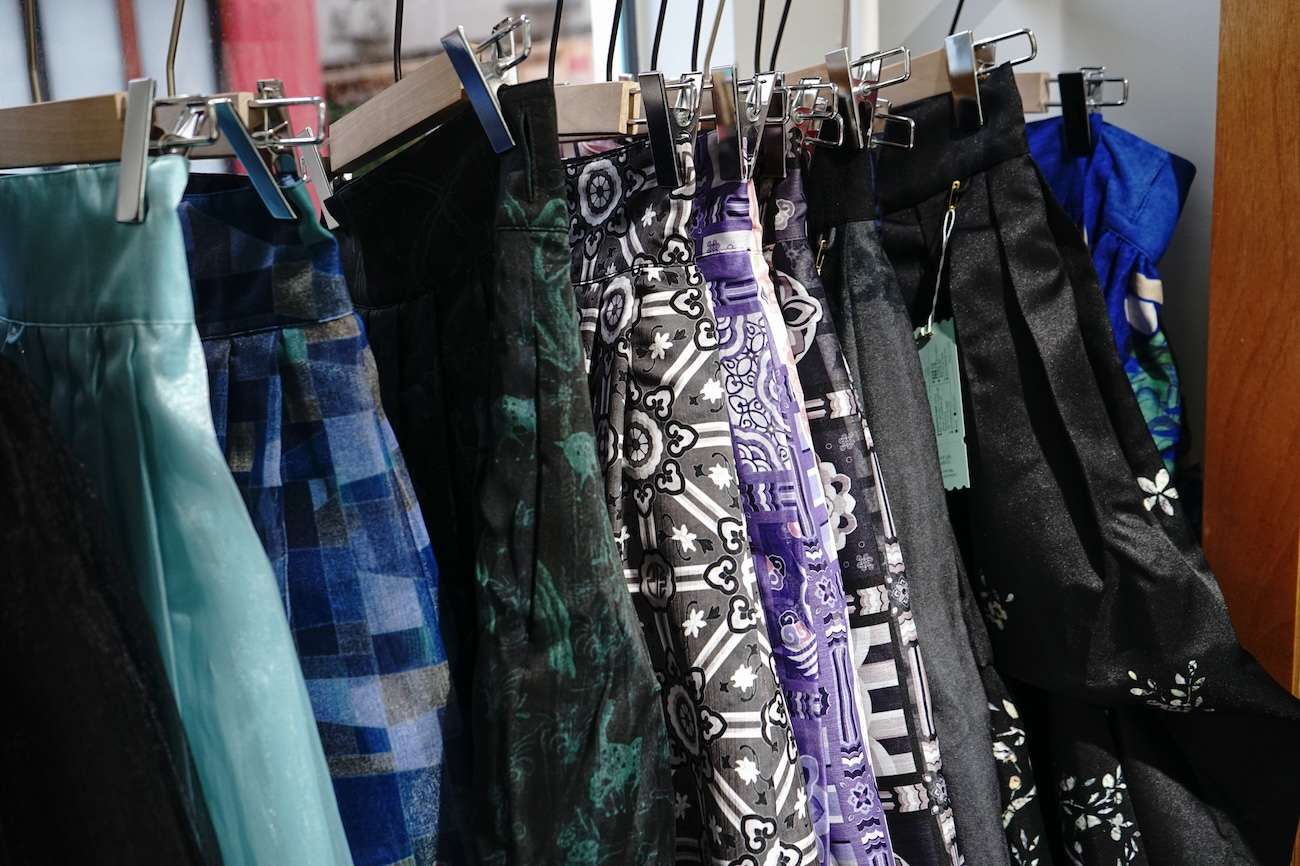 Ethnic pattern skirts. PHOTO NADIA CHO
Through trial and error, Hwang learned how to transform the traditional garb into contemporary fashion. She realized that modern consumers prefer more toned-down colors such as black, beige, white and teal; rather than the loud primary colors that traditional hanboks typically embodied. Hwang replaced traditional silk for machine-washable fabrics like polyester and linen, and also incorporates more sustainable, recycled materials whenever she can. She adjusted the length of the skirts and sleeves to be more functional for everyday life, while adding practical touches like pockets.
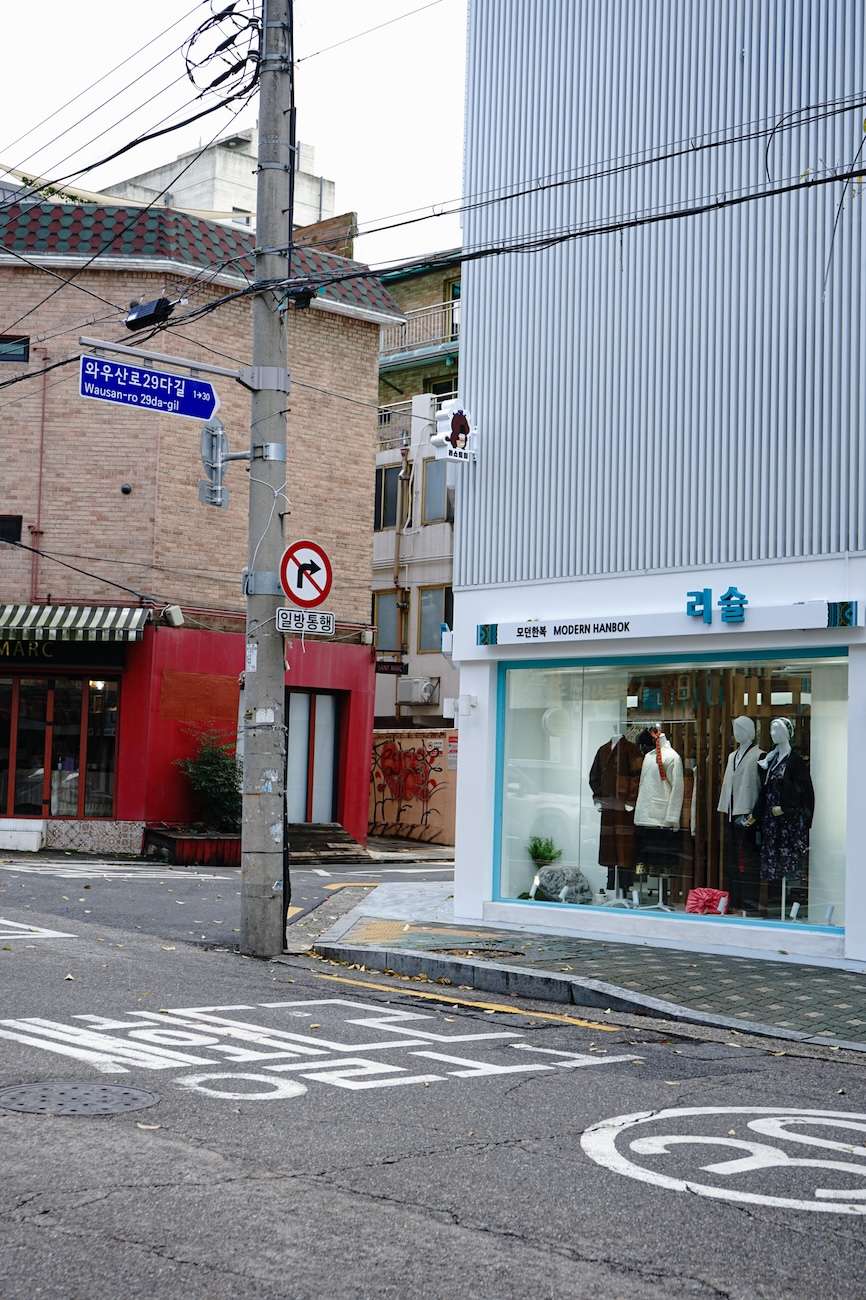 Leesle Boutique in Hongdae. PHOTO NADIA CHO
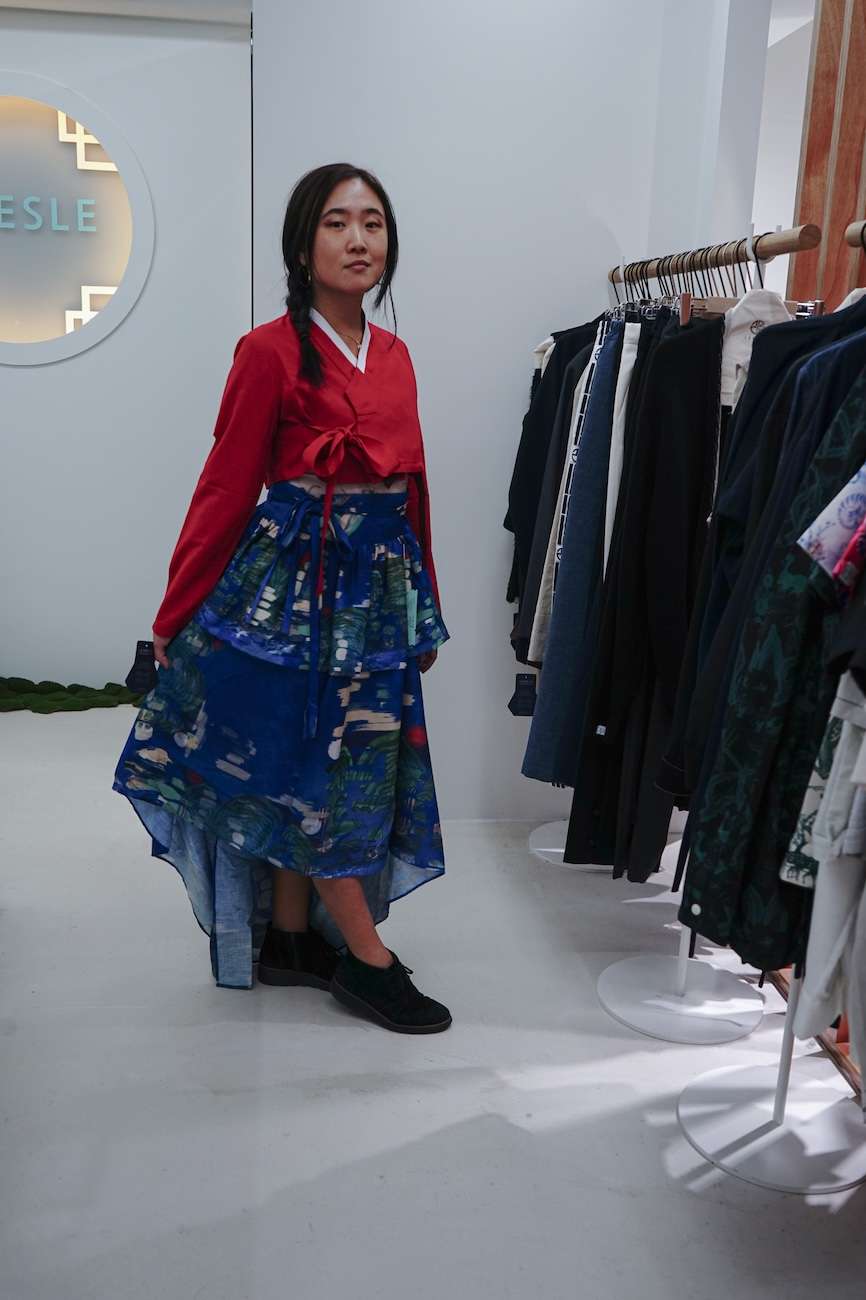 Sun Moon Paulownia skirt with red jeogori. PHOTO NADIA CHO
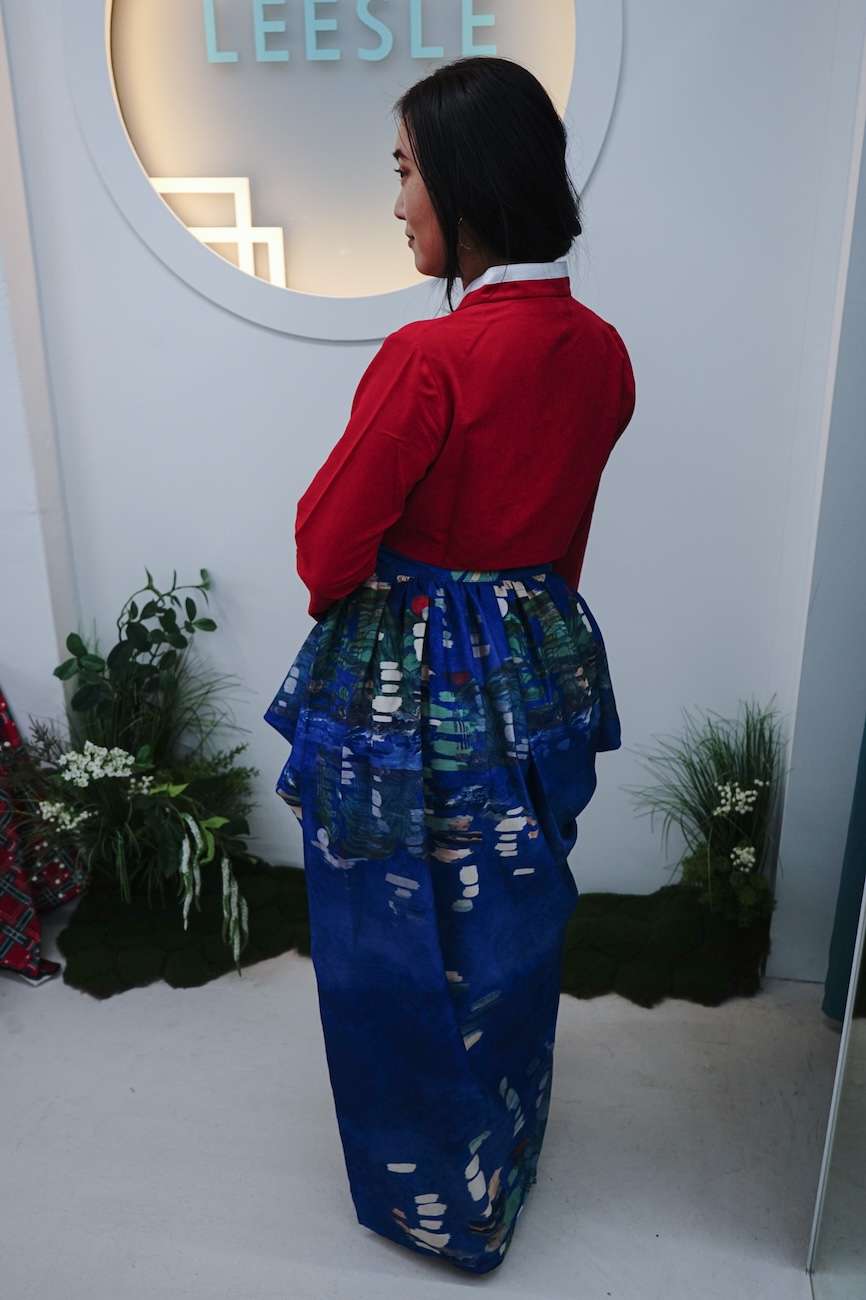 Sun Moon Paulownia girdle skirt. PHOTO NADIA CHO
At Leesle, shoppers will find ready-to-wear jeogoris (tops,) skirts, pants, and outerwear that both men and women can mix and match. Shoppers can choose among subdued block colors or original prints with Korean symbols and patterns. Leesle’s clothes illustrate Korean motifs such as hangul (Korean calligraphy) and celadon prints, elevating hanboks to be both edgy and traditional.
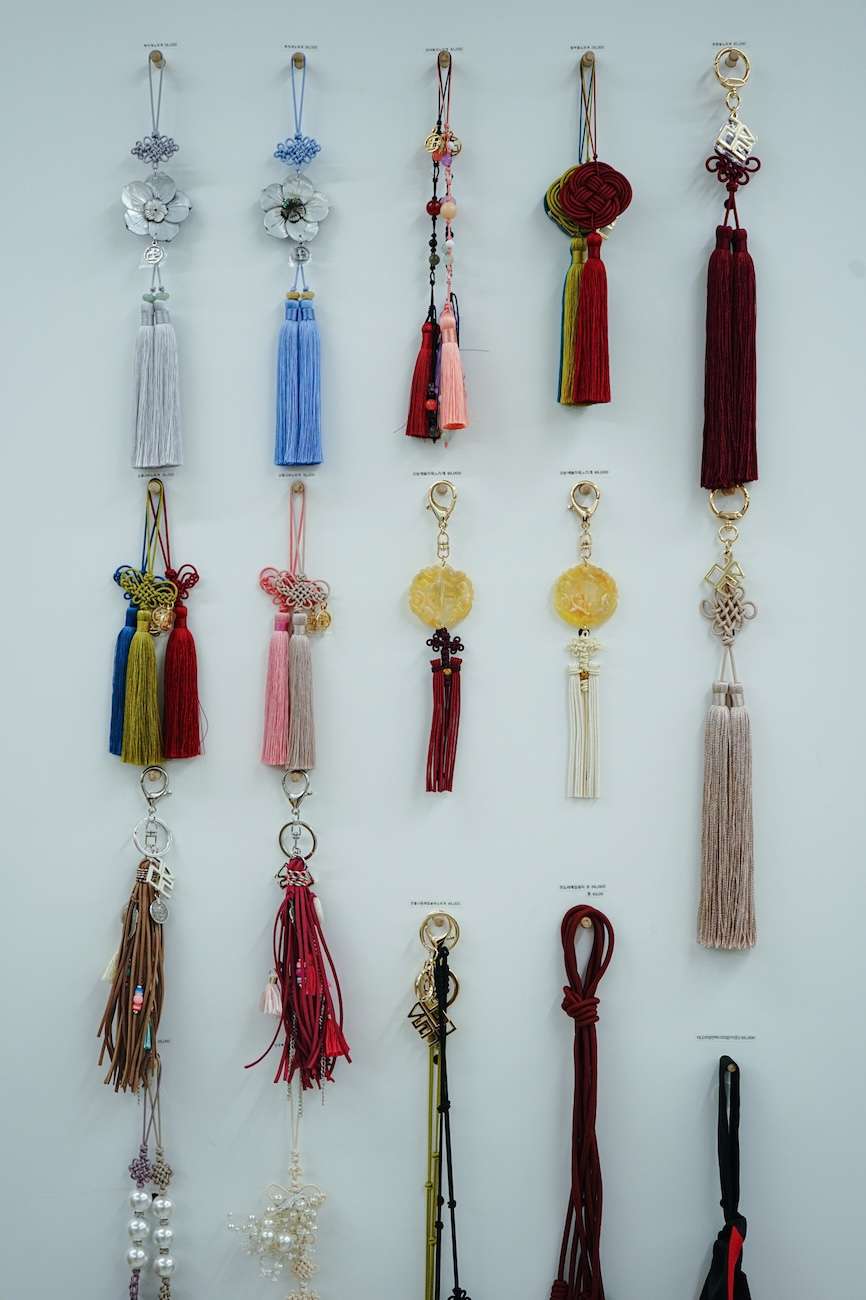 Norigae ornaments. PHOTO NADIA CHO
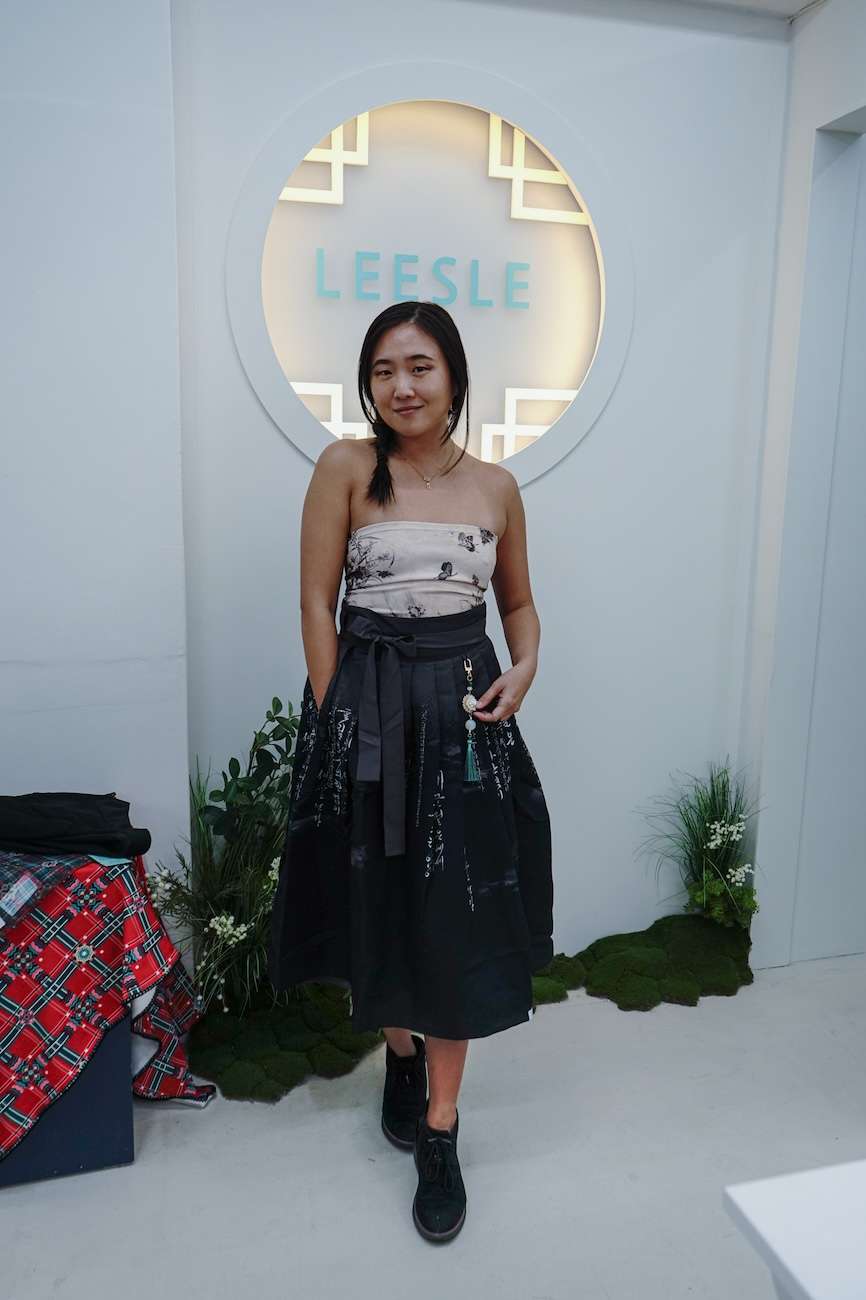 Graphic print top with norigae. PHOTO NADIA CHO
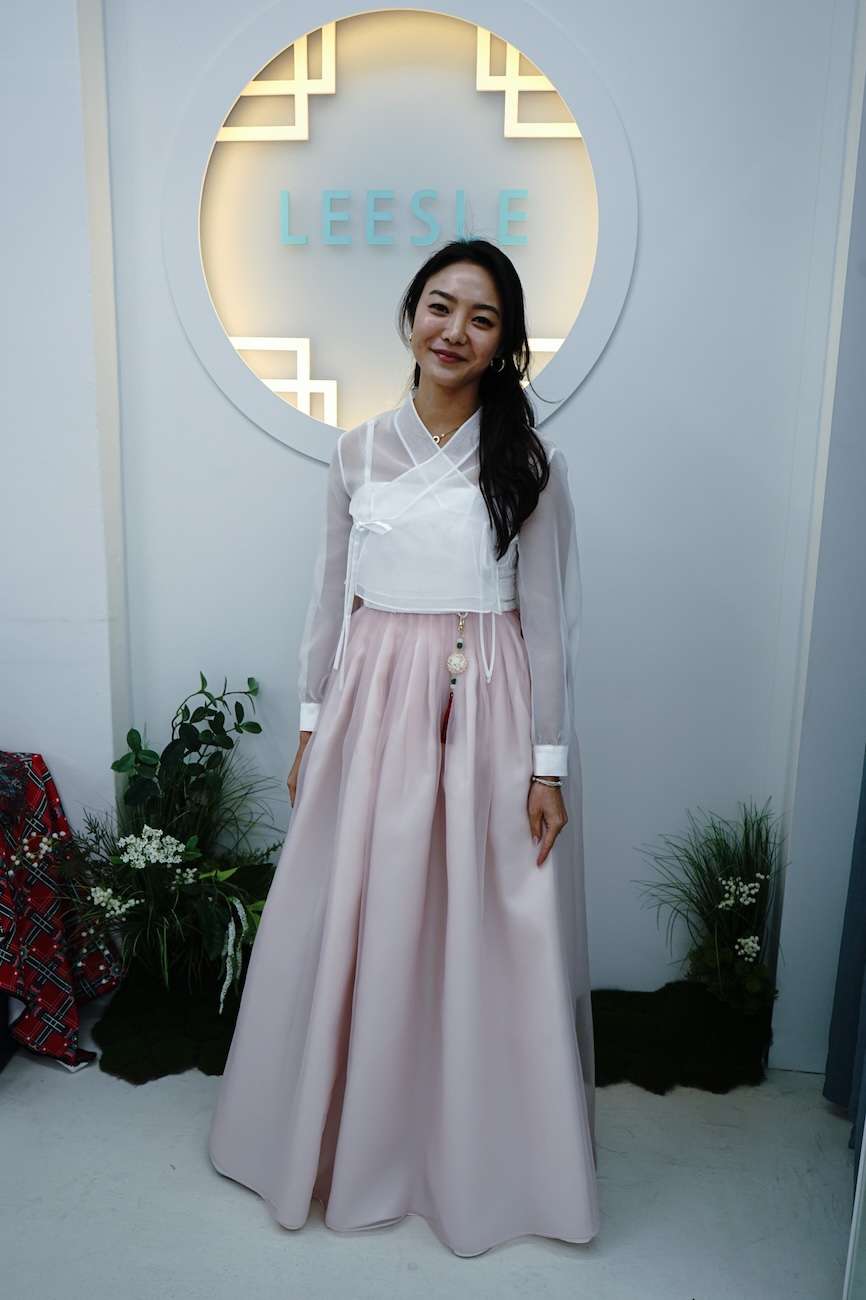 Contemporary bridal look. PHOTO NADIA CHO
At the Hongdae boutique, patrons should take the unique opportunity to make a custom norigae – a beautiful string ornament attached to the skirt to accessorize personalized hanbok. Clients can choose from a selection of beautiful trinkets, including: butterflies, flowers, beads, and jade, then link them together on a chain to create a unique hanbok accessory.
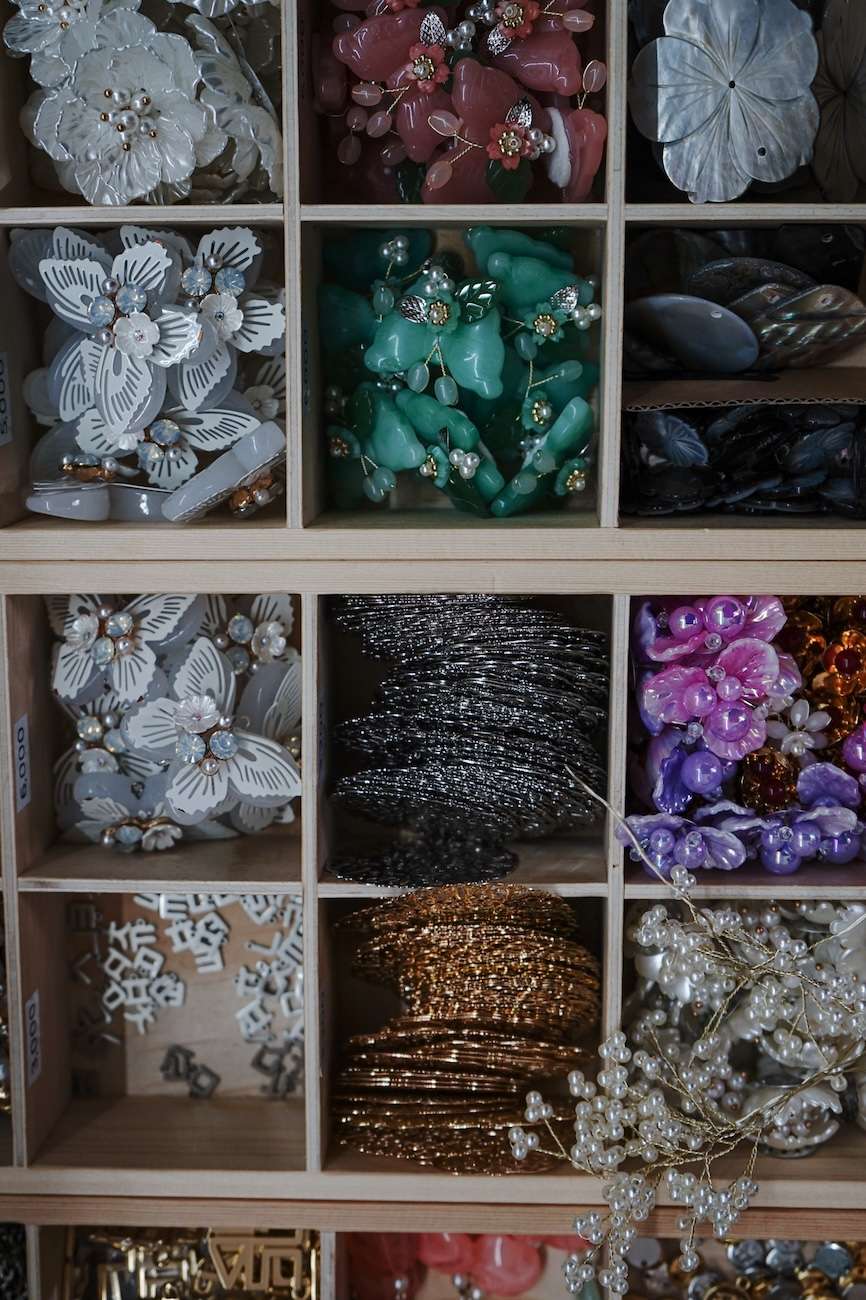 Charms for norigaes. PHOTO NADIA CHO
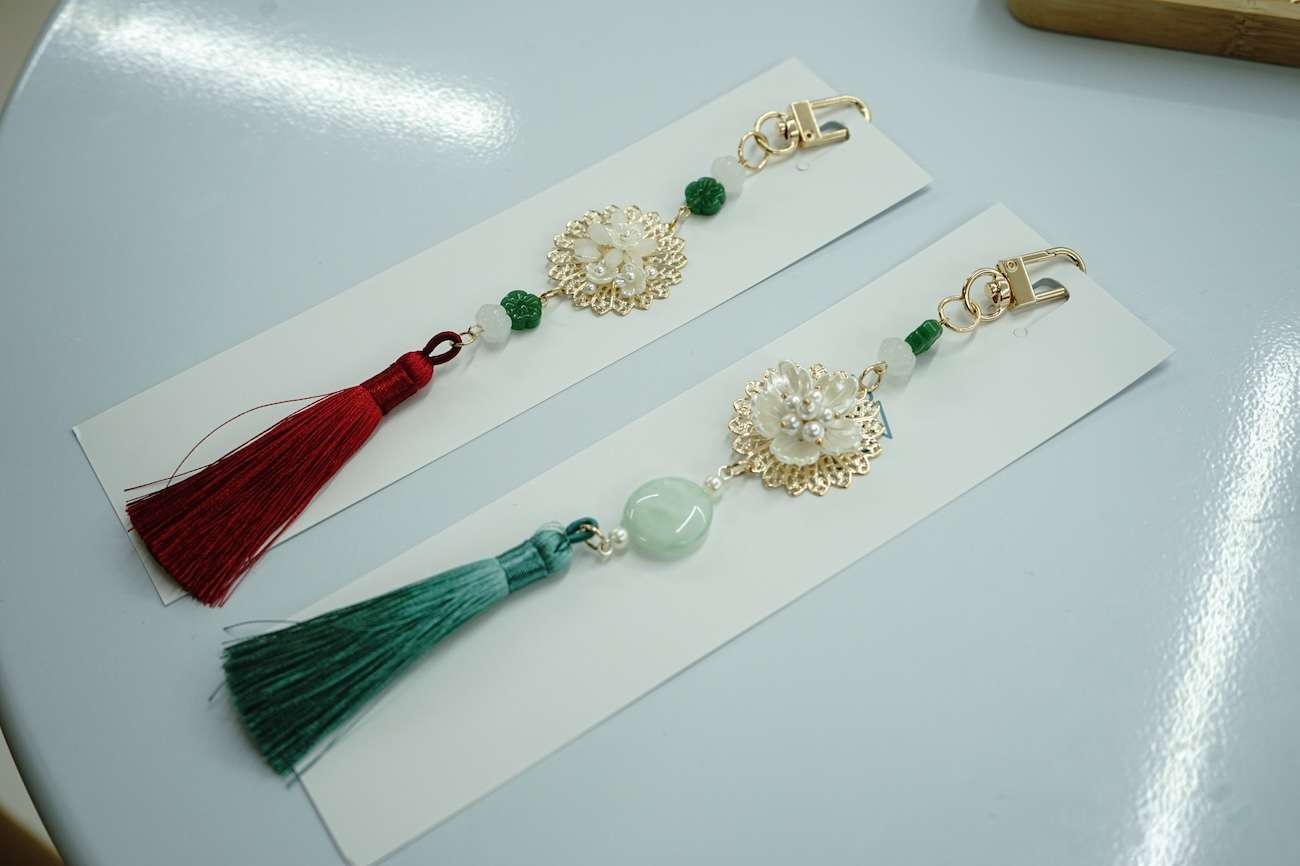 Custom norigaes. PHOTO NADIA CHO
While the new hanboks more closely resemble clothes meant for daily use, each garment at Leesle is still handmade by a team of artisans at the brand’s workshop. All of the materials used are sourced from Korea. Due to the labor-intensive nature of the garments, Leesle only premieres about two seasonal lines a year in limited quantities, which makes the hanboks truly special as they are unable to be mass-produced. As Leesle has risen in fame and popularity, the brand has been tapped to collaborate with K-pop icons such as BTS, as well as iconic Korean brands such as Samsung.
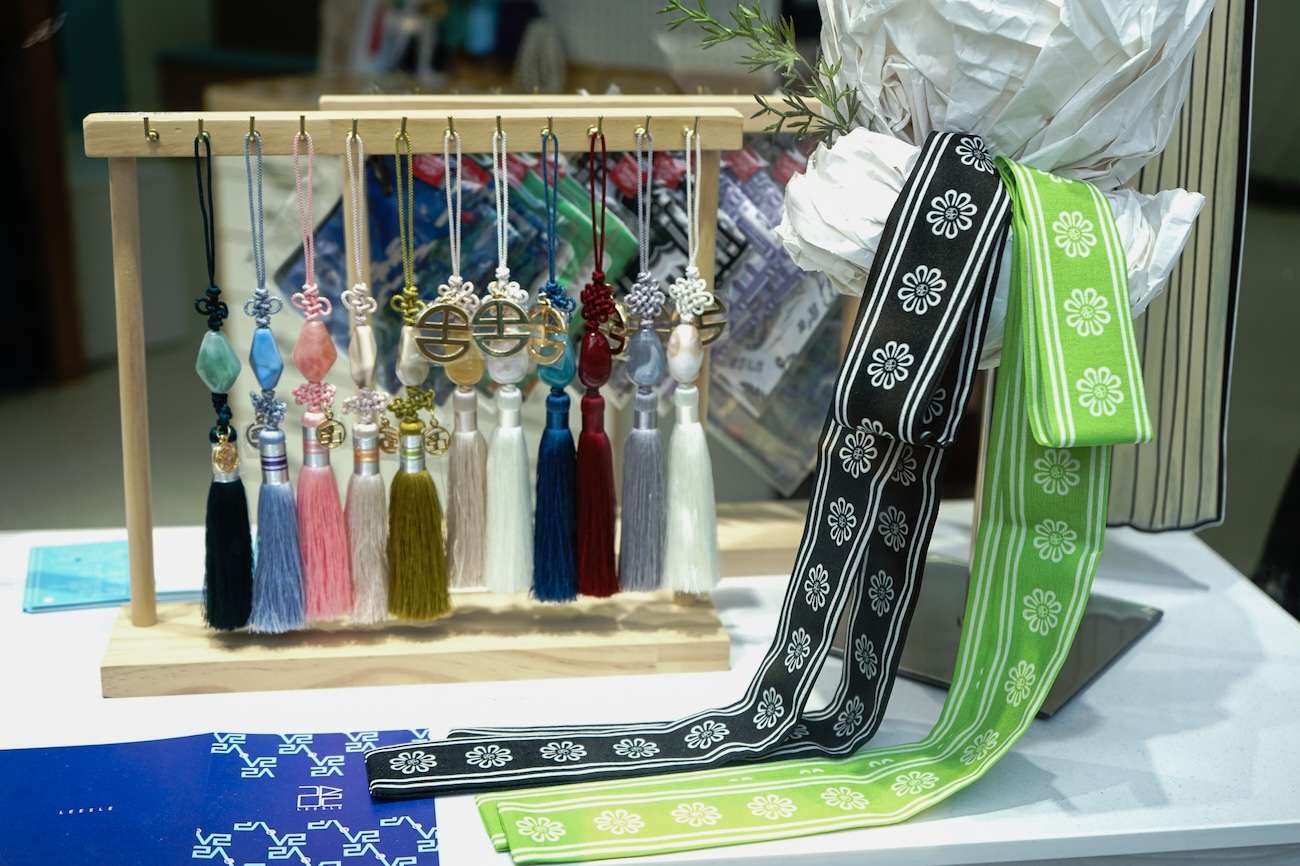 Custom norigae making. PHOTO NADIA CHO
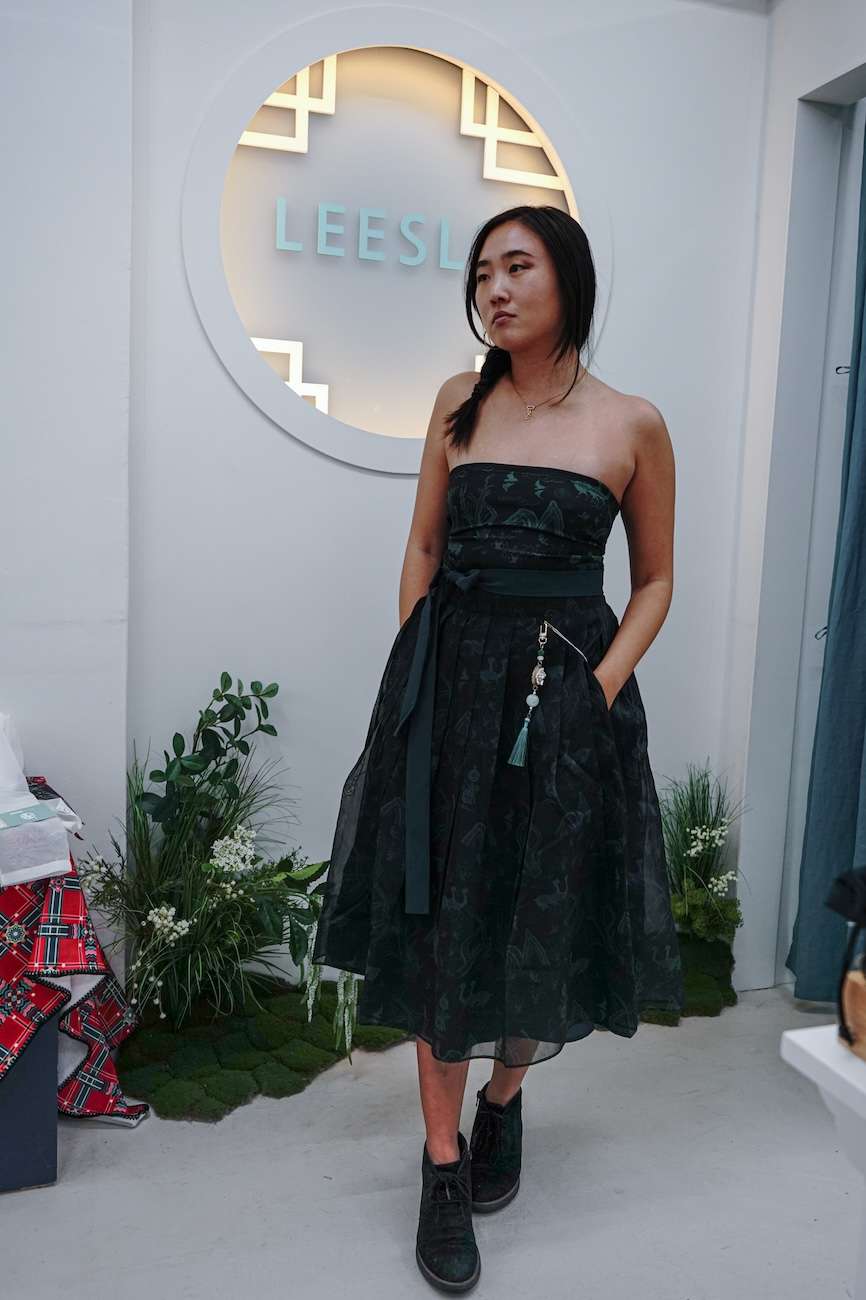 Edgy prints. PHOTO NADIA CHO
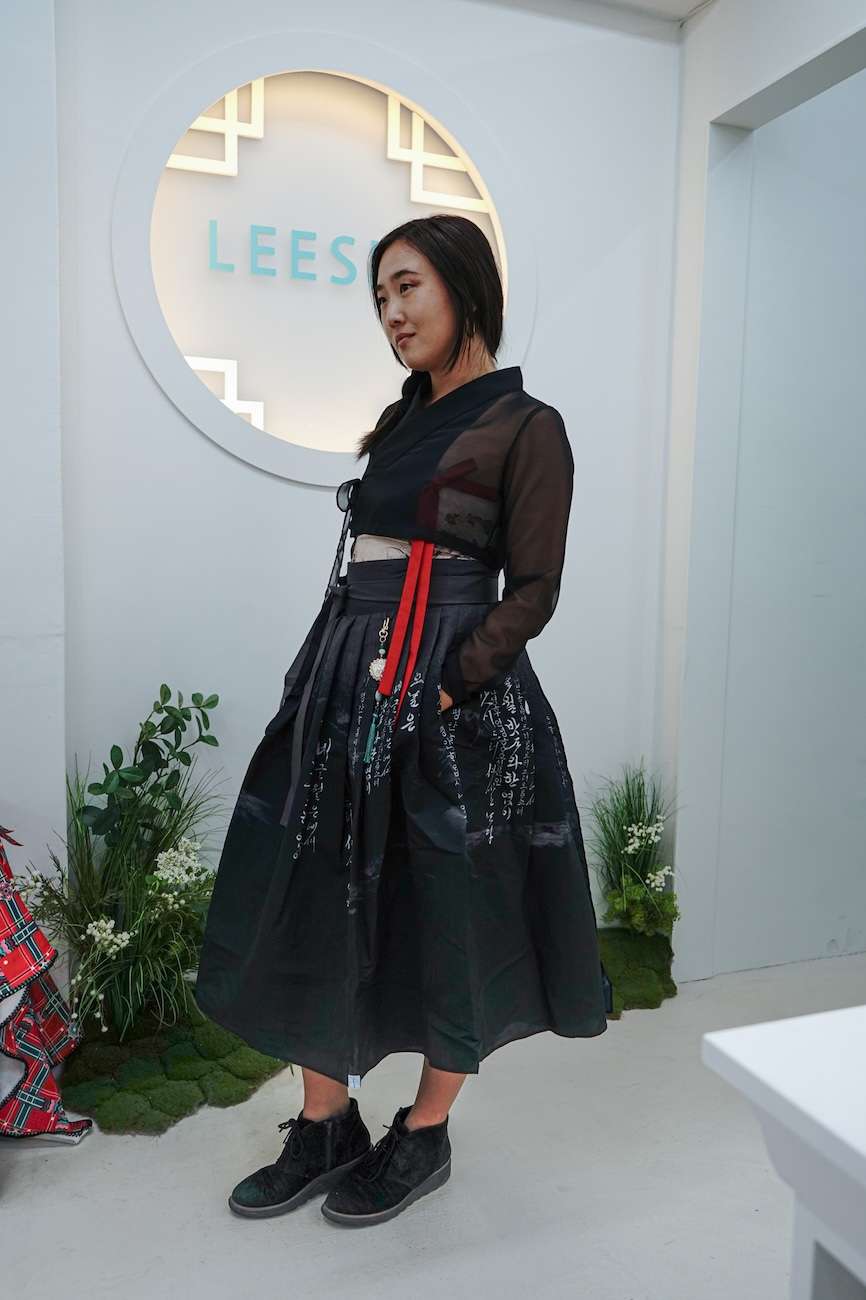 Calligraphy print skirt. PHOTO NADIA CHO
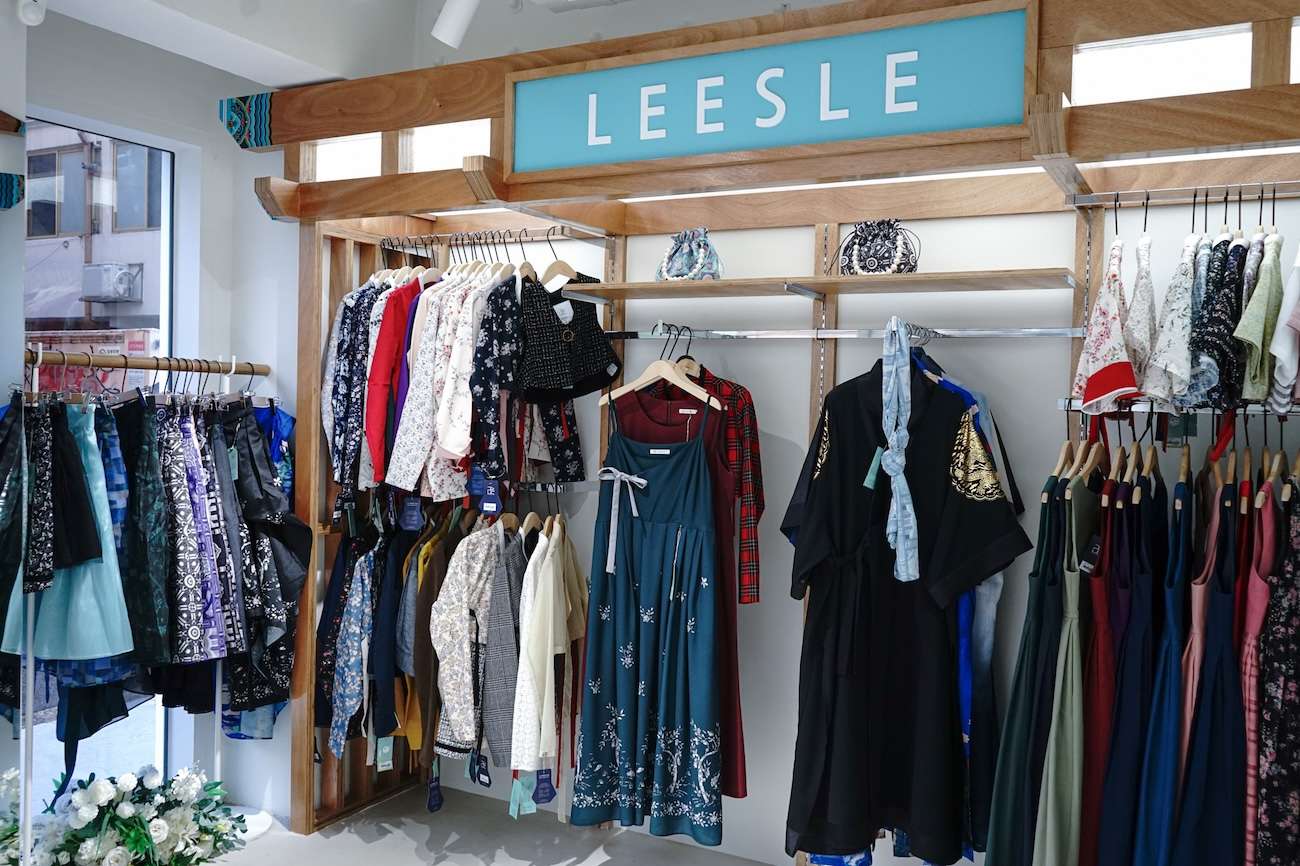 Contemporary hanboks. PHOTO NADIA CHO
Innovative brands like Leesle have invited Koreans to take part in the revival of their cultural heritage by reincorporating hanbok back into their personal wardrobes. With its global reach, Leesle also invites the rest of the world to discover the ethnic legacy of hanbok as contemporary fashion. Leesle hopes that hanbok will become a fashion staple, as routine as blue jeans, in the closets of Koreans and people around the world.
Next time you visit Seoul, stop by Leesle in Hongdae to take home your own contemporary piece of Korean tradition.
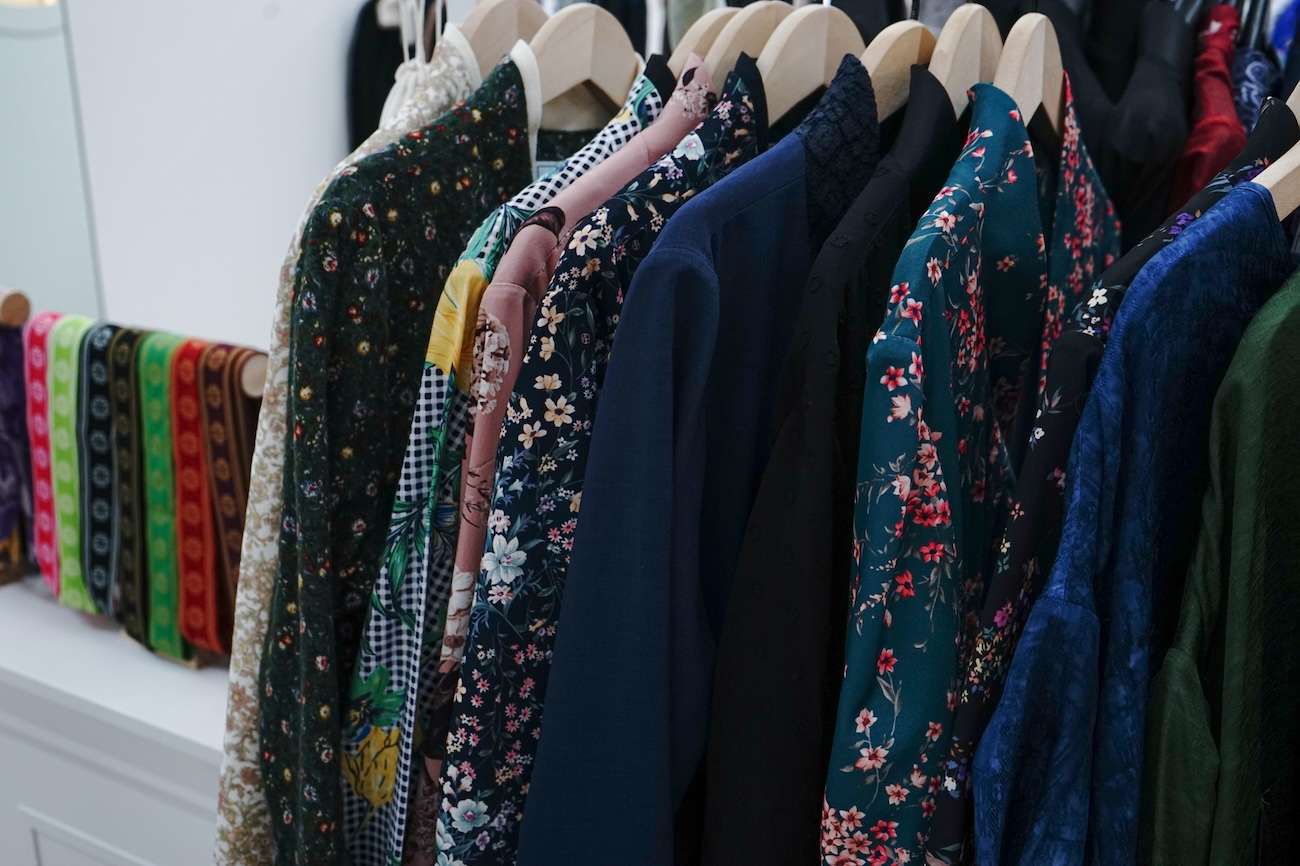 Colorful print jeogoris. PHOTO NADIA CHO
