From centuries-old Islamic architecture and magnificent royal palaces to colorful gardens and lively traditional souks, discover the historical landmarks and cultural treasures that make Marrakech one of Morocco’s most captivating destinations.
Marrakech, often called the Red City for its distinctive terracotta-colored buildings and ancient ramparts, is a destination where centuries of history meet the rhythm of modern Moroccan life.
Founded in 1070–1072 by the Almoravid dynasty, the city developed into an important political, commercial and cultural center, leaving behind an extraordinary collection of palaces, mosques, gardens and historic monuments.
Whether wandering through the winding streets of the UNESCO-listed Medina or admiring the intricate craftsmanship of its royal architecture, there is no shortage of remarkable places to discover. Here are must-see attractions to include on your next visit to Marrakech.
Jemaa el-Fnaa Square
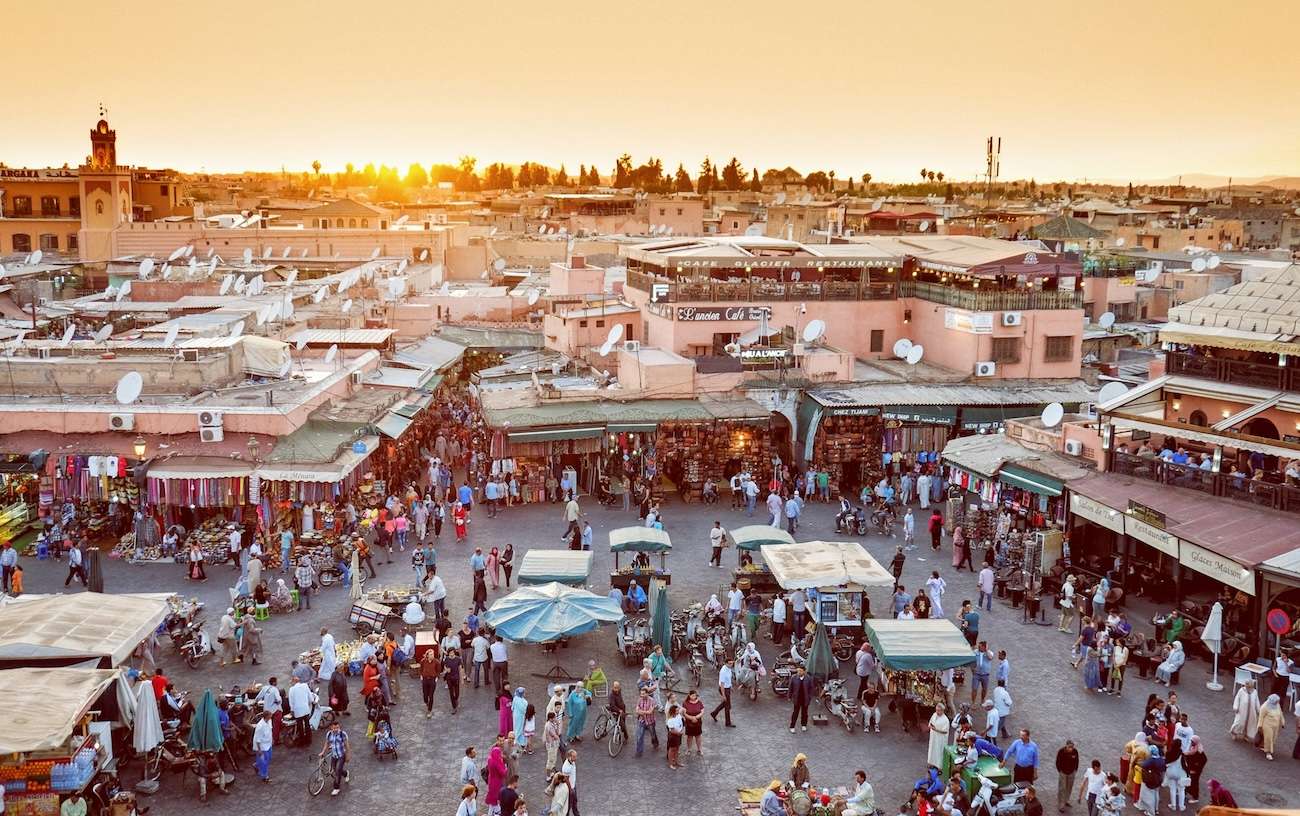 Photo by CALIN STAN on Unsplash
At the heart of Marrakech’s Medina, Jemaa el-Fnaa is an iconic public square that has served as a gathering place for merchants, performers and storytellers for centuries. Recognized by UNESCO as an intangible cultural heritage site, the square preserves Morocco’s oral traditions through music, food and even snake charmers. During the day, visitors encounter fresh orange juice vendors, market stalls and street performers, while the atmosphere transforms after sunset as food stalls illuminate the square with traditional Moroccan dishes.
TRAVEL TIP: Visit in the late afternoon and stay until evening to experience the square at its liveliest. For a panoramic view, head to one of the surrounding rooftop cafés.

Koutoubia Mosque
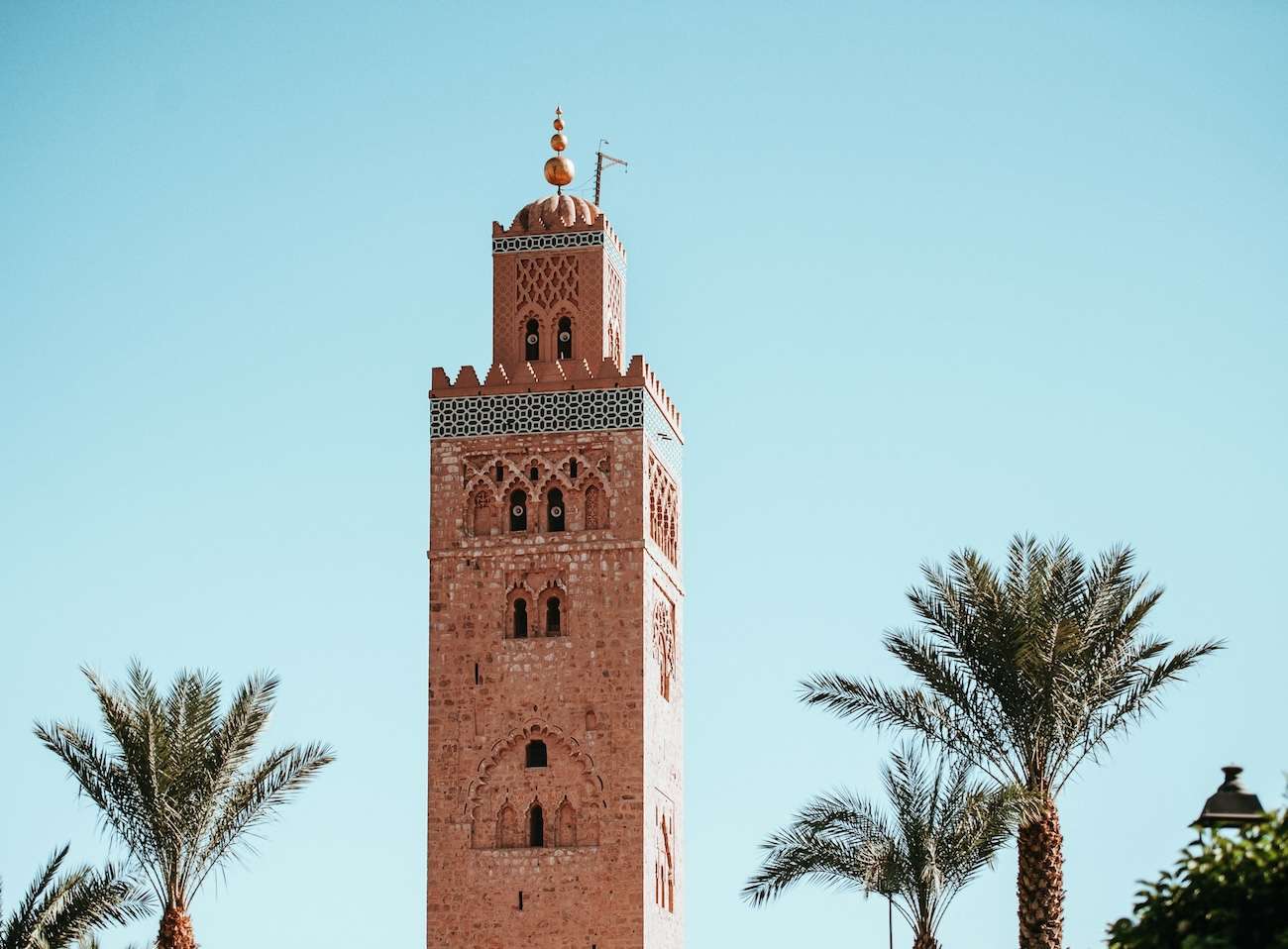 Photo by Annie Spratt on Unsplash
One of Marrakech’s most recognizable landmarks, the Koutoubia Mosque dates back to the 12th century, when construction began under the Almohad dynasty around 1150. Its impressive 77-meter-high minaret dominates the city’s skyline and became an architectural inspiration for other celebrated structures, including the Giralda in Seville.
The mosque takes its name from the Arabic word for booksellers, reflecting the book market that once occupied the surrounding area. Although the interior is reserved for Muslims, visitors can admire its magnificent exterior and surrounding gardens.
TRAVEL TIP: Walk through the Koutoubia Gardens in the late afternoon when the sunlight casts a warm glow over the minaret, making it a beautiful photography spot.
Bahia Palace
 Photo by Abdelhamid Azoui on Unsplash
Built during the 19th century, Bahia Palace is a magnificent example of Moroccan and Andalusian-inspired architecture. Its construction began under Grand Vizier Si Moussa and was later expanded by his son, Ahmed ben Moussa, also known as Ba Ahmed, who intended to create one of the most impressive residences of his time.
The palace’s name, meaning brilliance or beauty, reflects its elaborate decorative details, including painted cedarwood ceilings, intricate zellige tilework, carved stucco and peaceful courtyards filled with greenery.
TRAVEL TIP: Arrive early in the morning to explore the palace’s courtyards and beautifully decorated rooms before the larger tour groups arrive. Allow approximately one hour for your visit.
El Badi Palace
 Photo by Elodie Lvn on Unsplash
Although much of its original splendor has disappeared, El Badi Palace remains an extraordinary historical site that offers a glimpse into the wealth of Morocco’s Saadian dynasty.
Commissioned by Sultan Ahmad al-Mansur in the late 16th century following his victory over the Portuguese at the Battle of the Three Kings in 1578, the palace was designed as an extravagant royal complex. Its original decorations reportedly included Italian marble, gold and precious materials. After the Alaouite dynasty came to power, Sultan Moulay Ismail dismantled much of the palace in the late 17th century, leaving behind its monumental ruins, sunken gardens and reflecting pools.
TRAVEL TIP: Look out for the storks nesting along the palace walls and climb to the upper terraces for impressive views across the historic complex.
Saadian Tombs
Hidden behind the walls of the Kasbah Mosque, the Saadian Tombs are among Marrakech’s most remarkable examples of funerary architecture. Dating primarily from the 16th and early 17th centuries, the royal necropolis was developed during the reign of Sultan Ahmad al-Mansur and houses members of the Saadian dynasty.
Its most celebrated space is the Hall of Twelve Columns, where ornate marble columns, intricate stucco decorations and carved cedarwood ceilings create an extraordinary setting. The tombs remained largely concealed for centuries until their rediscovery in 1917.
 Photo by Johan Eriksson on Unsplash
TRAVEL TIP: Visit early in the day to avoid queues, particularly around the Hall of Twelve Columns, which is one of the site’s most popular photography locations.
Ben Youssef Madrasa
 Photo by Macia Serrano on Unsplash
For an extraordinary introduction to traditional Islamic architecture, Ben Youssef Madrasa is an essential stop in Marrakech’s historic Medina. Originally established as a religious school and later expanded under the Saadian Sultan Abdallah al-Ghalib in the 16th century, it once accommodated hundreds of students studying Islamic theology and other disciplines.
Its central courtyard is particularly impressive, featuring a marble basin, elaborate geometric zellige mosaics, carved cedarwood and intricate stucco inscriptions. The madrasa reflects the importance of education and religious scholarship in Morocco’s architectural and cultural history.
TRAVEL TIP: Spend time examining the decorative details surrounding the courtyard, then explore the small student rooms on the upper floors to appreciate how the institution once functioned.
Jardin Majorelle
 Photo by Bradley Pritchard Jones on Unsplash
A peaceful botanical sanctuary outside the historic Medina, Jardin Majorelle is famous for its striking cobalt-blue buildings, exotic plants and tranquil pathways. The garden was created by French painter Jacques Majorelle in the 1920s and 1930s, who transformed the property into a colorful artistic retreat filled with cacti, bamboo, palms and tropical vegetation.
In 1980, fashion designer Yves Saint Laurent and his partner Pierre Bergé purchased and restored the garden, preserving its distinctive architecture and botanical collection. Today, it remains one of Marrakech’s most photographed attractions and a tribute to the artistic legacy of its former owners.
TRAVEL TIP: Reserve your admission online in advance, as entry is managed through timed tickets. Visit early in the morning for a quieter experience and better opportunities to photograph the famous blue buildings.
Menara Gardens
Offering a peaceful escape from the bustle of the Medina, Menara Gardens are among Marrakech’s most historic green spaces. Their origins date back to the 12th century, when the Almohad rulers developed an extensive agricultural garden and irrigation system.
The gardens are best known for their expansive reflecting pool, which sits in front of an elegant pavilion surrounded by olive groves. On clear days, the snow-capped Atlas Mountains provide a spectacular backdrop, creating one of the city’s most recognizable landscapes.
 Photo by jeanne pelegrin on Unsplash
TRAVEL TIP: Visit in the late afternoon when the mountains become more visible against the changing light.
The Souks of Marrakech
No visit to Marrakech would be complete without exploring its traditional souks, the historic marketplaces that have connected artisans, merchants and travelers for generations. Located within the Medina, these interconnected markets developed as an important center of trade along historic commercial routes linking North Africa, the Sahara and beyond.
Different sections traditionally specialized in particular crafts and commodities, from leather goods and textiles to spices, metalwork, ceramics and traditional lanterns. Today, visitors can still observe artisans practicing traditional techniques while browsing an extraordinary selection of Moroccan handicrafts.
 Photo by Jean Carlo Emer on Unsplash
TRAVEL TIP: Allow plenty of time to wander without a strict itinerary, as the souks are a maze of narrow passageways. Bargaining is customary in many shops, so agree on a price before making a purchase.