Discover the history and architecture of Marrakech’s most recognizable monument, from its 12th-century Almohad origins to its towering minaret and peaceful gardens beside Jemaa el-Fnaa.
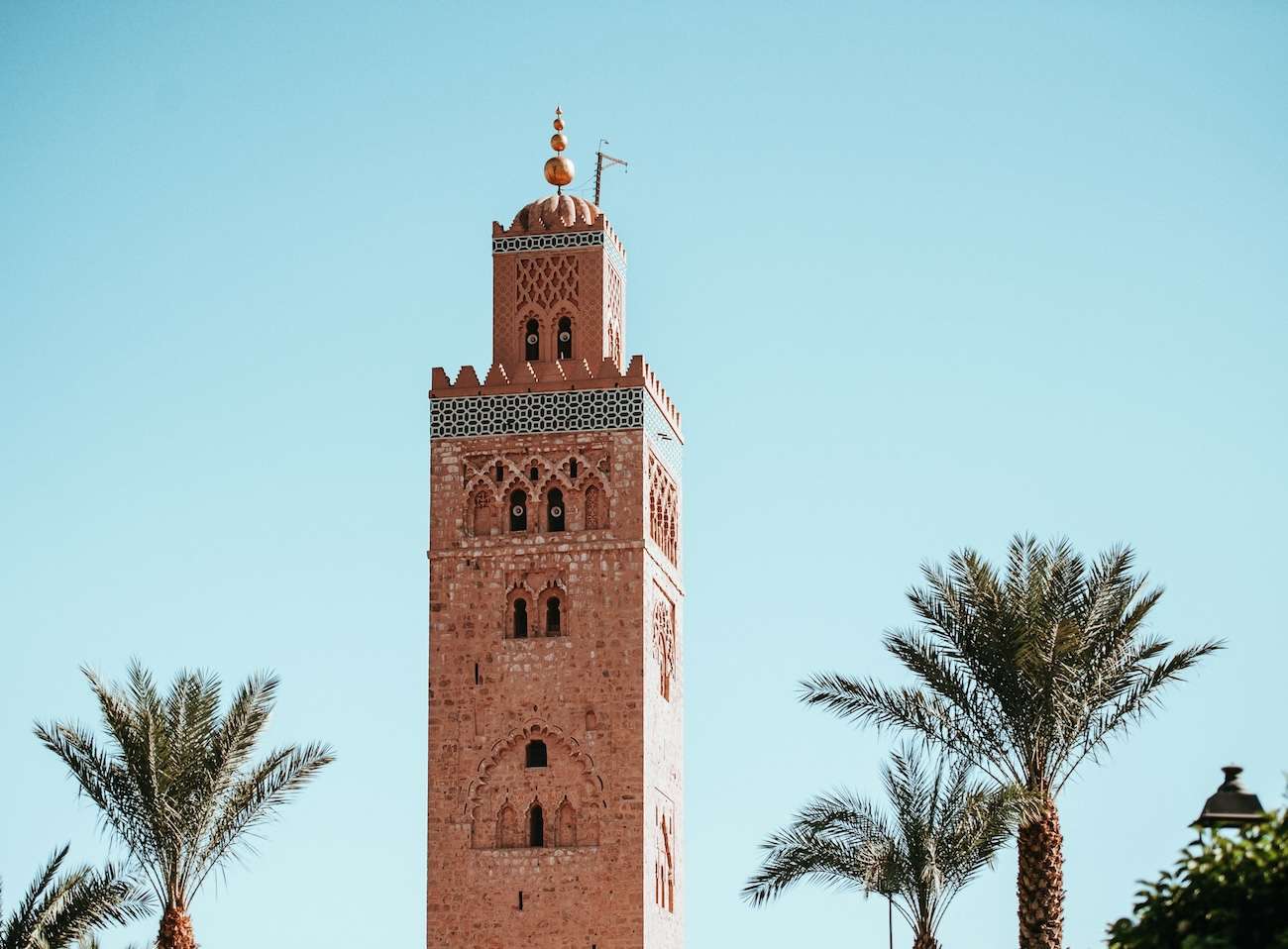 Photo by Annie Spratt on Unsplash
The Koutoubia Mosque has shaped the skyline of Marrakech for more than eight centuries. Built during the 12th century under the Almohad dynasty, the mosque was commissioned by Caliph Abd al-Mu’min following the Almohad conquest of Marrakech in 1147. Its name comes from the Arabic word kutubiyyin, meaning booksellers, a reference to the manuscript merchants whose stalls once filled the surrounding streets.
The original mosque was replaced by a second structure after its prayer orientation was found to be incorrectly aligned towards Mecca. Construction of the present mosque began around 1158, while its celebrated minaret was completed towards the end of the century under Caliph Yaqub al-Mansur. Today, the Koutoubia remains an active place of worship and one of the most significant examples of Almohad architecture in Morocco.
The mosque’s minaret is its defining feature, rising approximately 69 meters, or 77 meters including its decorative finial. Built from reddish sandstone, the square tower is decorated with carved stonework, geometric patterns and bands of ceramic tile. Each face features a different arrangement of ornamental designs, while the upper section is crowned by a spire and four copper spheres. Its proportions and architectural details influenced other celebrated towers built under Almohad rule, including the Giralda in Seville and the Hassan Tower in Rabat.
Although the mosque’s interior is generally closed to non-Muslim visitors, its exterior can be appreciated from several angles around the grounds. The adjoining Koutoubia Gardens, with their orange trees, palms and shaded pathways, offer a quieter place to pause away from the busy medina.
TRAVEL TIPS!
- Approximately a five-minute walk west of Jemaa el-Fnaa.
- Its minaret is visible from many parts of the old city, making it a useful landmark when navigating the surrounding streets.
- There is no admission fee to admire the mosque from outside or walk through the surrounding gardens.
- Visitors who are not Muslim should not expect to enter the prayer hall.
- For photographs, visit in the late afternoon, when the sandstone takes on a warmer tone, or come early in the morning for a quieter walk around the gardens.
- Dress respectfully, avoid obstructing worshippers and be considerate when taking photographs during prayer times.
- Allow around 20 to 40 minutes to explore the exterior and gardens.
- The mosque also makes an easy stop before or after visiting Jemaa el-Fnaa, the souks or the nearby Kasbah.

Address:
Marrakesh 40000, Morocco
Hours:
| Sunday | 24 HOURS |
| Monday | 24 HOURS |
| Tuesday | 24 HOURS |
| Wednesday | 24 HOURS |
| Thursday | 24 HOURS |
| Friday | 24 HOURS |
| Saturday | 24 HOURS |