Ulaanbaatar’s main plaza, Sükhbaatar Square, is named after a revolutionary hero and home to the city’s cultural events.
 Sükhbaatar Square. PHOTO WENDY HUNG
The heartbeats of a bustling Ulaanbaatar is arguably Sükhbaatar Square, named after 1921 Mongolian revolutionary leader Damdin Sükhbaatar, whose equestrian statue can be seen in the middle of the square and is emblematic of an independent Mongolia.
In 2013, the name of the square shifted to Genghis Khan, reflecting upon his founding of the Mongol Empire. In 2016, the name of the square was changed back to Sükhbaatar Square. Today, the plaza is home to political ceremonies, cultural events and live concerts.
View this post on Instagram

The square is iconically framed by the Mongolian Stock Exchange building, Central Post Office, State Ballet, Opera House, Blue Sky Tower, the Gallery…and much more. Hard to miss is the statue of Genghis Khan against the Parliament building, bridging the past to the present.
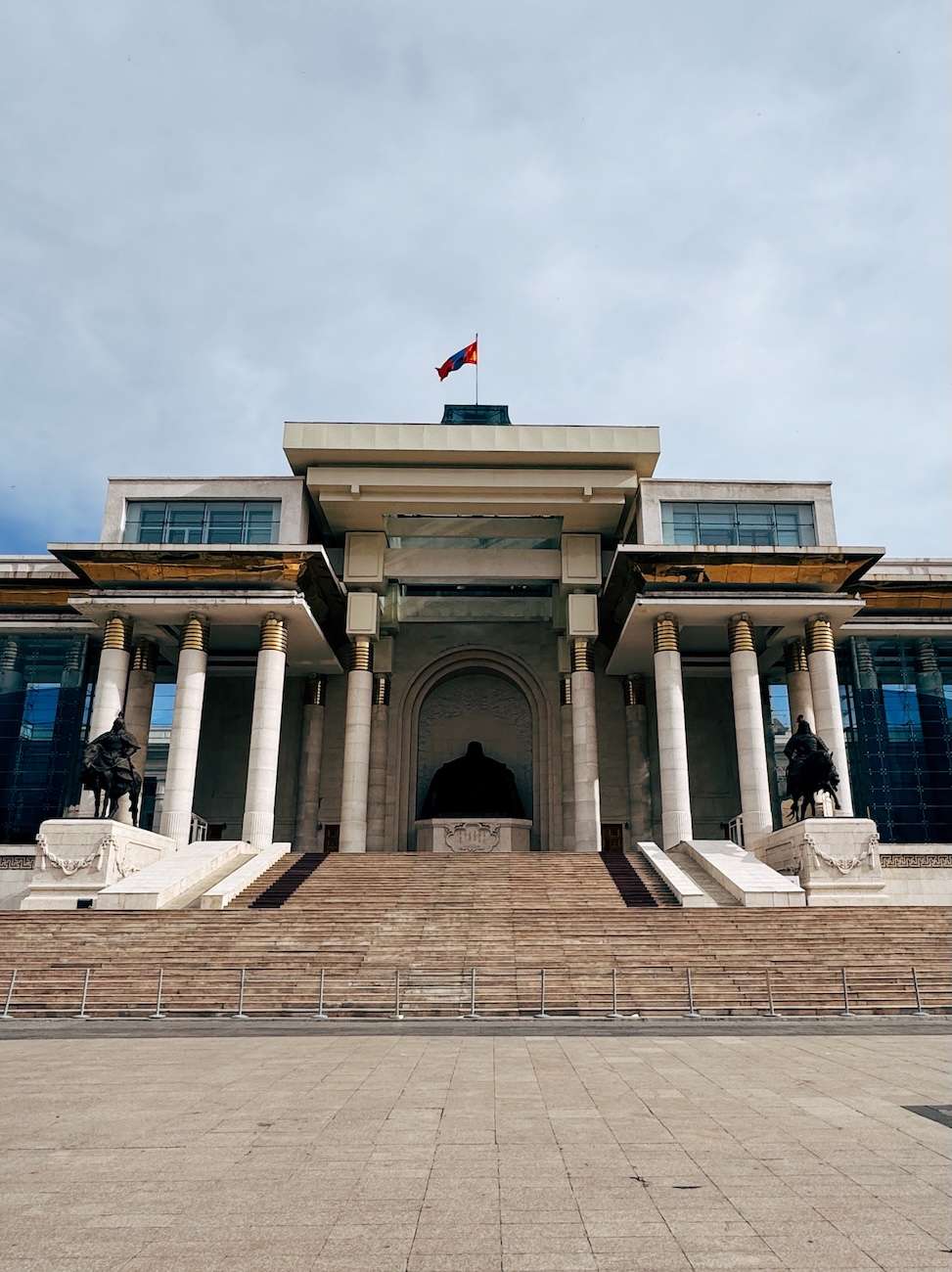 Parliament Building. PHOTO WENDY HUNG
Until Mongolia’s Socialist Period in 1989, Sükhbaatar Square witnessed military and civil parades as party leaders gazed over parades and ceremonies from top of the Sükhbaatar’s Mausoleum. In 1990, the square became the epicenter of Democratic Revolution that captivated anti-communism protests and peaceful hunger strikes. In July of 2008, riots over the parliament election erupted on the square. Today, it’s a place for visitors to further understand Mongolia’s political history, directly from the heart of its capital city.
Address:
WW99+J27, SBD – 6 khoroo, Ulaanbaatar 14201, Mongolia
Hours:
| Friday | 24 hours |
| Saturday | 24 hours |
| Sunday | 24 hours |
| Monday | 24 hours |
| Tuesday | 24 hours |
| Wednesday | 24 hours |
| Thursday | 24 hours |