comWandering past the lazy riverbanks, I suddenly came upon Nonomiya-jinja, or “Shrine in the Country.”

Many routes wind through Arashiyama’s bamboo forest, the blue haze hovering about the green stalks lending each journey a magical air. Sure enough, wandering long enough, past the lazy riverbanks, I suddenly came upon Nonomiya-jinja, or “Shrine in the Country.” During the Heian period, the emperor would offer his youngest princesses to the shrine, so they may be purified and instructed in ancient teachings before serving as high priestesses at Ise. It is also said that this is the very Nonomiya Shrine of The Tale of Genji, where Genji goes to a young woman appointed as a virginal high priestess.

But rather than a grand shrine of flower-laden gold fit for imperial princesses, I found Nonomiya to be humble, if not shy. It was such a little shrine, nearly overwhelmed by towering bamboo, as if it tucked in and out of the green stalks from time to time, that I almost missed its black-wooden gates. In fact, had I been wandering there long ago, I would never come upon the same location twice, as with every new imperial priestess, the women used divination to reassert the shrine’s location, realigning it with the sky. The shrine left within the bamboo cares nothing for it; it communes with the heavens, a node descended. There was a lantern within the shade of a mossy clearing absorbing the sunlight, though it was clearly meant for moonlight. There were many objects like these, configuring into a mysterious constellation. I longed to see the place in the moonlight, with its white porcelain fox statues stealing about.
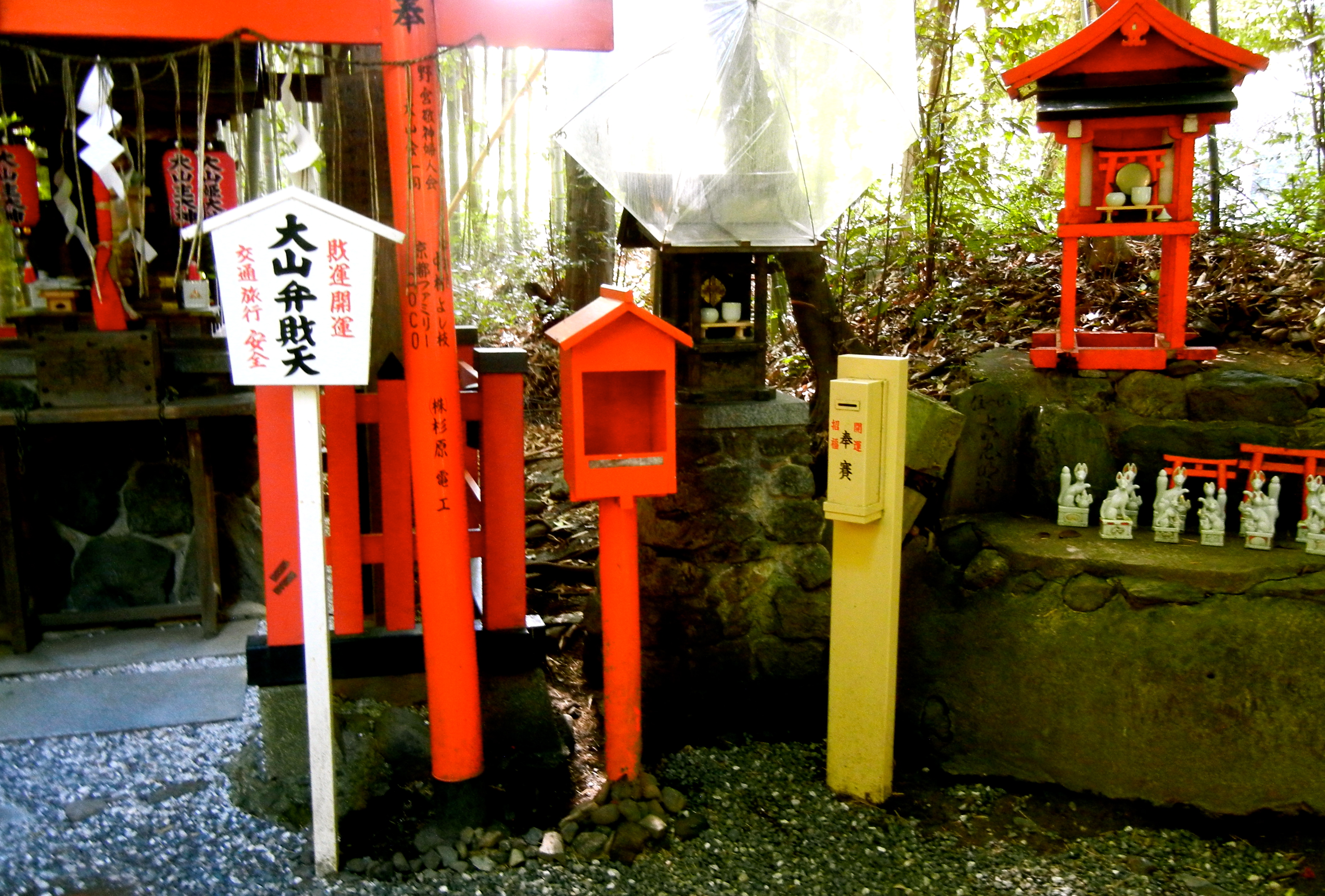
Though the days of young priestesses, protected by fox guardians, no longer exist today. The shrine still devotes itself to the concerns of women, accepting prayers for good marriage proposals and safe delivery and upbringing of children. Wrapped in sparkling yukata and silk-banded geta, young women with bright, pink faces come in packs, laughing and gossiping, to receive the shrine’s thousand-year-old blessings. As I witnessed many of them coming and going, I wonder how the women of before purified themselves. Were they purified like any other religious object, a tool of the gods? Like holy water or incense, to be used or seen once and then left to their own designs? Or were they more like nuns, constantly battling with the demons of human desires within for the rest of their lives? Those little princesses, weighed down by twelve layers or silk.