
Chinese dumpling lanterns, Blues Brothers posters and a glistening mirror ball. Welcome to the eclectic world of Bobby.
Like gleaming French butter, Rue du Temple melts into my Parisian quotidian. I pass by it on my way to the nail salon owned by a friendly Chinese couple, I buy groceries in bulk at the giant Monoprix, while dodging famished pigeons and eager tourists. Extending from the infallibly raucous Place de la Republique, Rue du Temple is ever darted with energy though frequently changing face.
One of the latest peppy addition is Bobby, arguably the trendiest consignment store in Paris right now. In a city never lacking vintage finds, Bobby has managed to sustain a hefty dosage of cool, approved by a wide range of demographics.
Founder Nina Ambart sat down with us to share personal experiences of trailblazing as a young, female business owner. In her city, one that she was born into. In her business, one that she visualized then realized. From one store, going on more.
View this post on Instagram
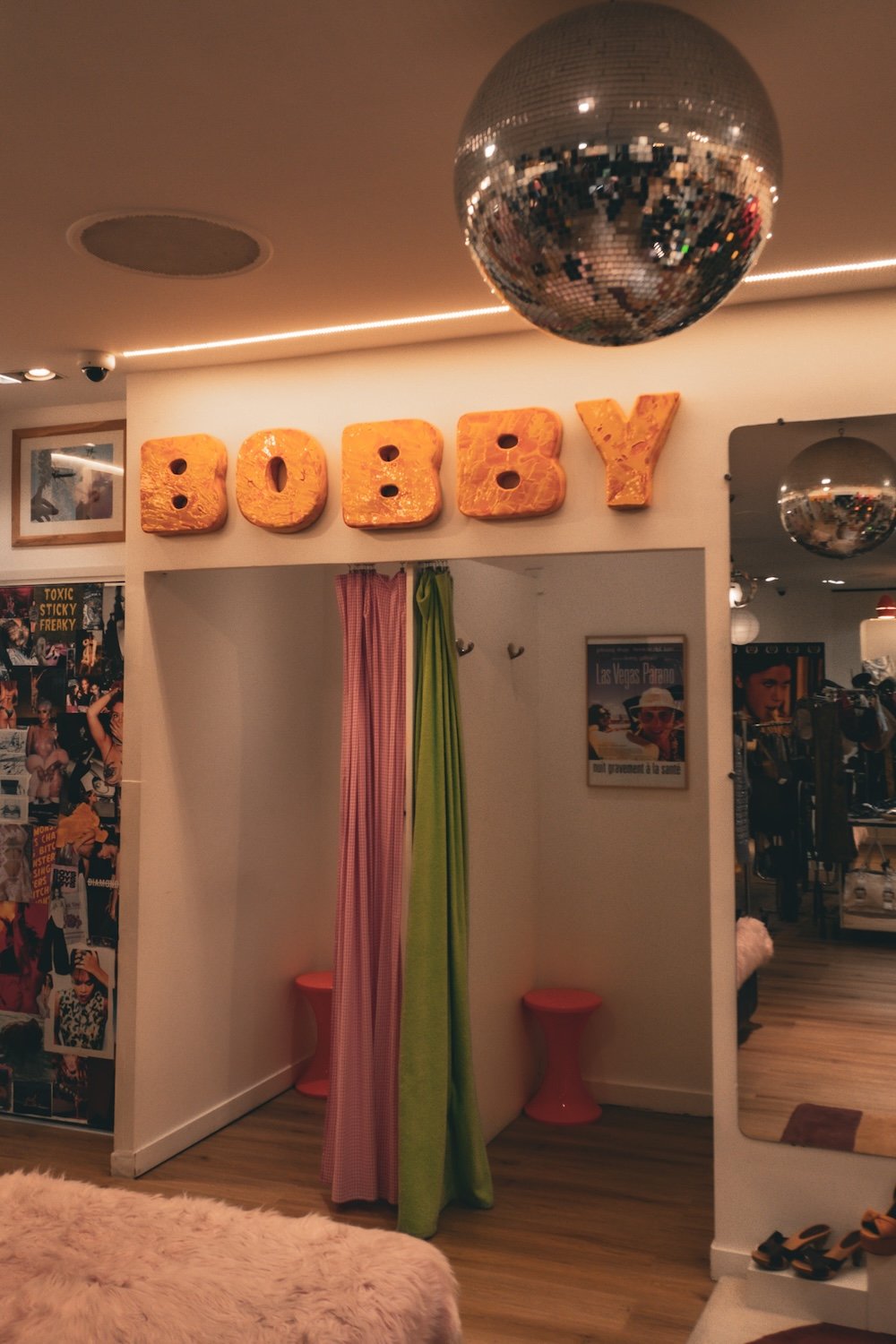 Dressing rooms. PHOTO WENDY HUNG
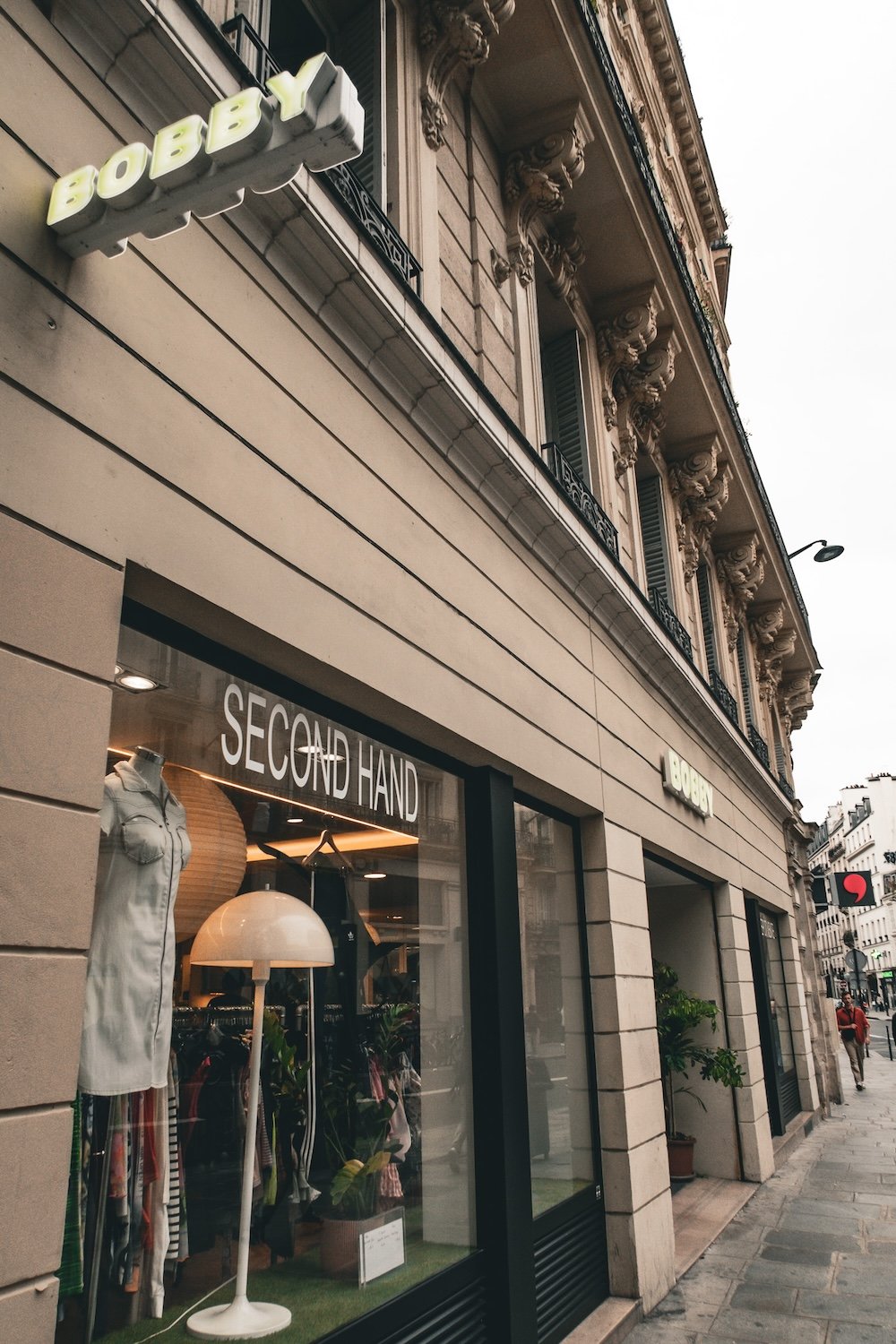 Rue du Temple. PHOTO WENDY HUNG
How did Bobby In Paris start?
NA: Bobby started on a beach in Thailand when I was 22, I wanted to start my own thing. I wanted to be my own boss, and I didn’t want to work for somebody else. So I sat down, and thought about what I do best, and I was like: Well, I can shop. It’s not the best start, but I can shop and know where to find cheap pieces.
It was not as famous at the time, but I would go to thrift stores and find pieces for like 3€, I would mix and match them. Everybody told me: Oh my god, your outfit is so cool, how much did it cost? I was like: Well, I only paid 3€, and that gave me the confidence to start the business of my dream: a second-hand store with inexpensive and expensive pieces that are all trendy and cool. I don’t care for brands like Louis Vuitton because it’s not trendy. I don’t choose clothes for the brand, I choose them for how they make you feel.
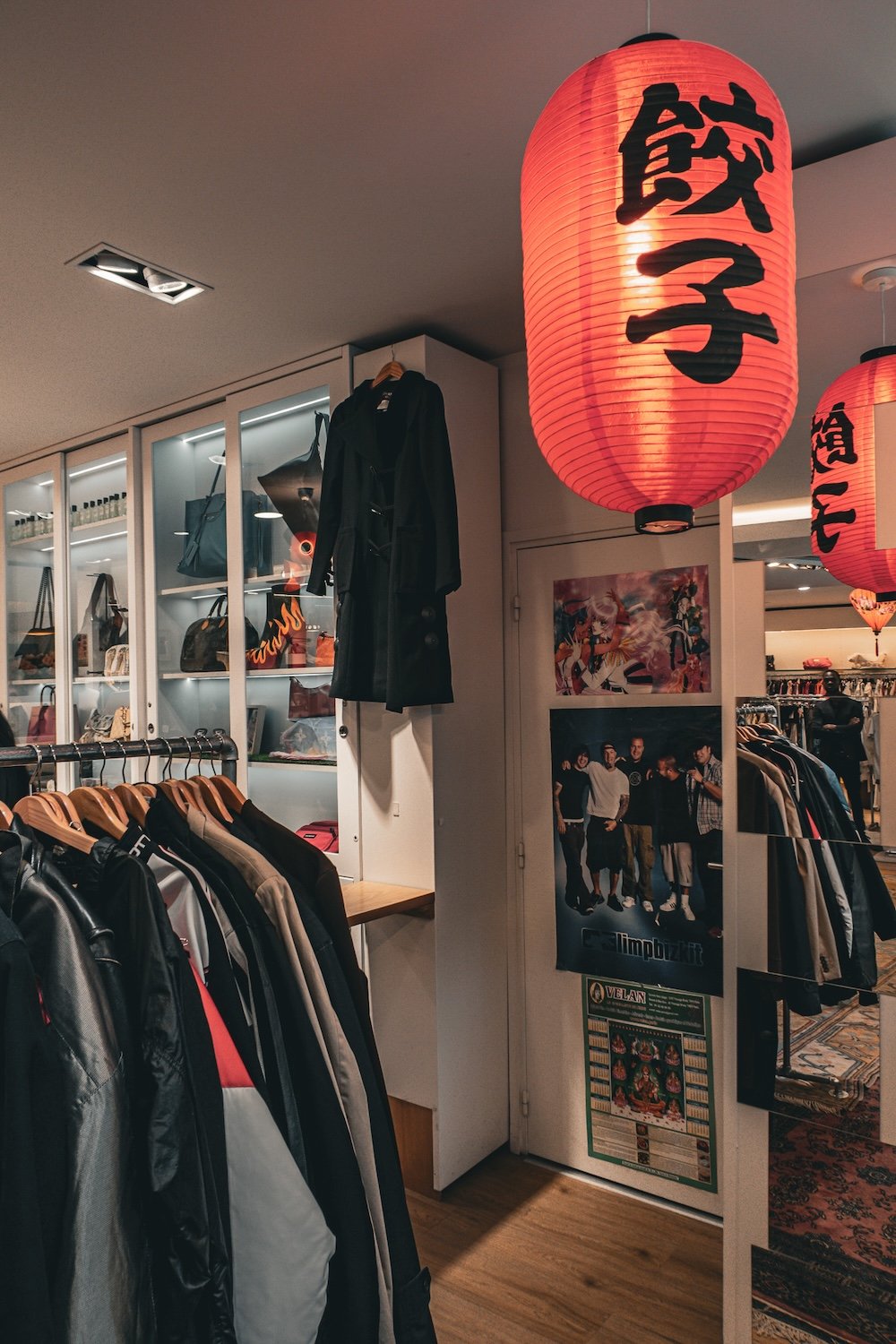 Chinese dumplings lanterns. PHOTO WENDY HUNG
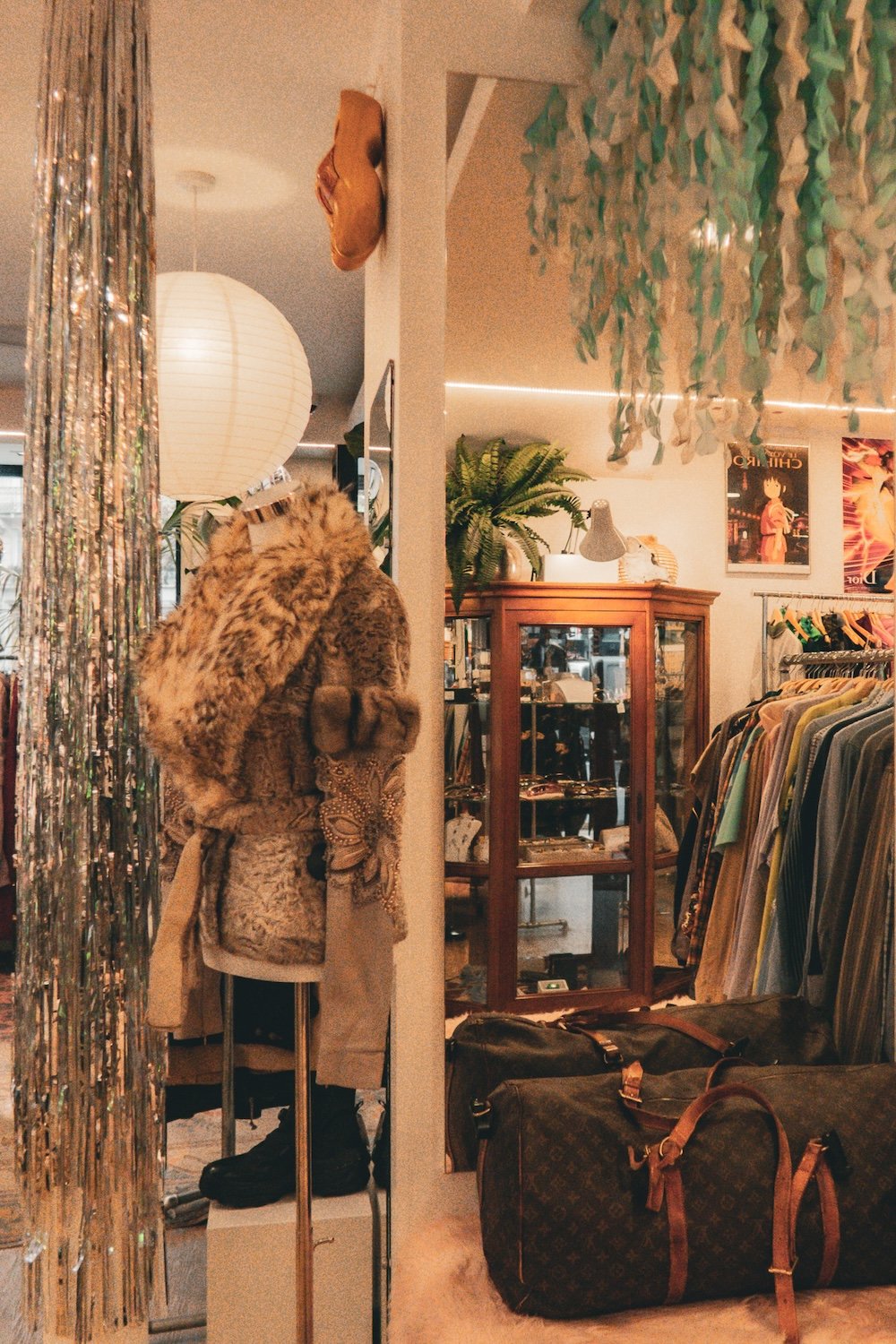 High and low. PHOTO WENDY HUNG
How did you find this shop location?
NA: I grew up in Le Marais, I always dreamed about having a store here because, let’s be fair, it’s one of the best neighborhoods in Paris, but it was way too expensive for me at the time. So the first thing I did was a pop-up store in the 10th arrondissement for one month, and it was very successful. So I extended it for another month. Then I went on a two-month trip to India, and once I got back, I knew I wanted to open my own store.
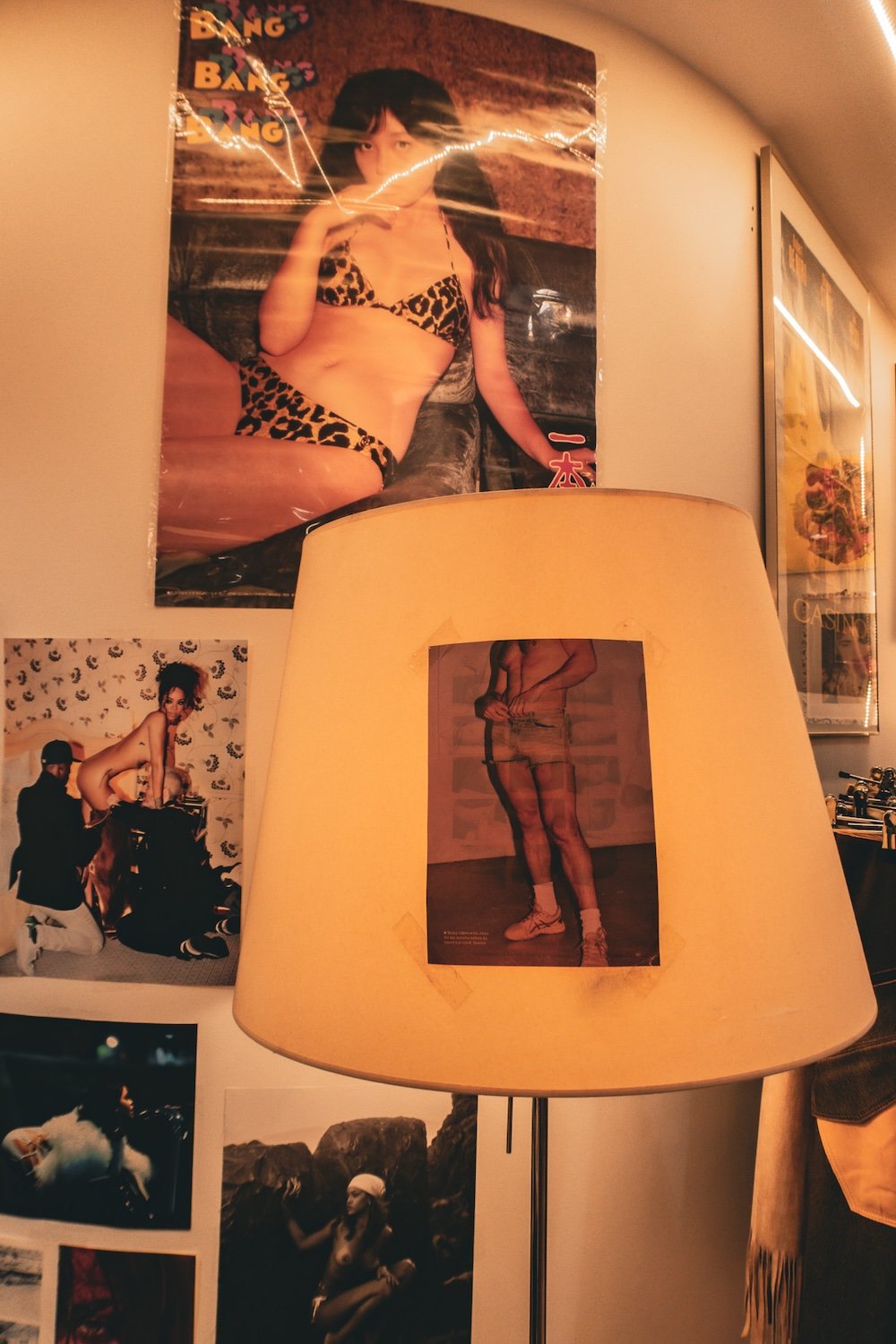 Bedroom wall-ish. PHOTO WENDY HUNG
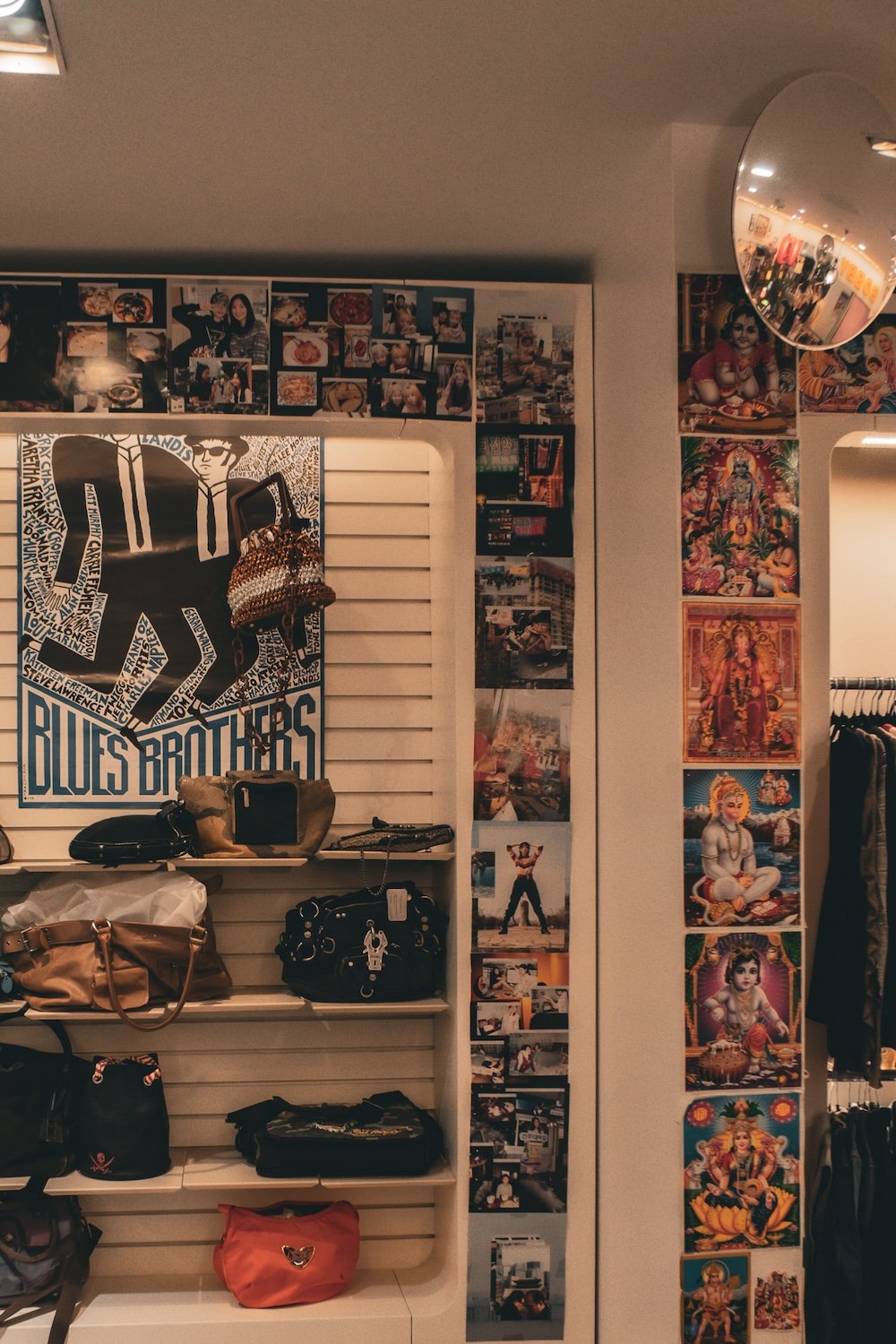 Blues Brothers. PHOTO WENDY HUNG
Can you walk us through the process of how a vintage piece lands in your hands?
NA: Basically, our business model is that people come with the stuff that they don’t want to wear anymore, and we make a selection. It’s a consignment store, so once we go through each item, we give you prices, and if you accept, then we keep it for two months. If it doesn’t sell, then you will need to get them back.
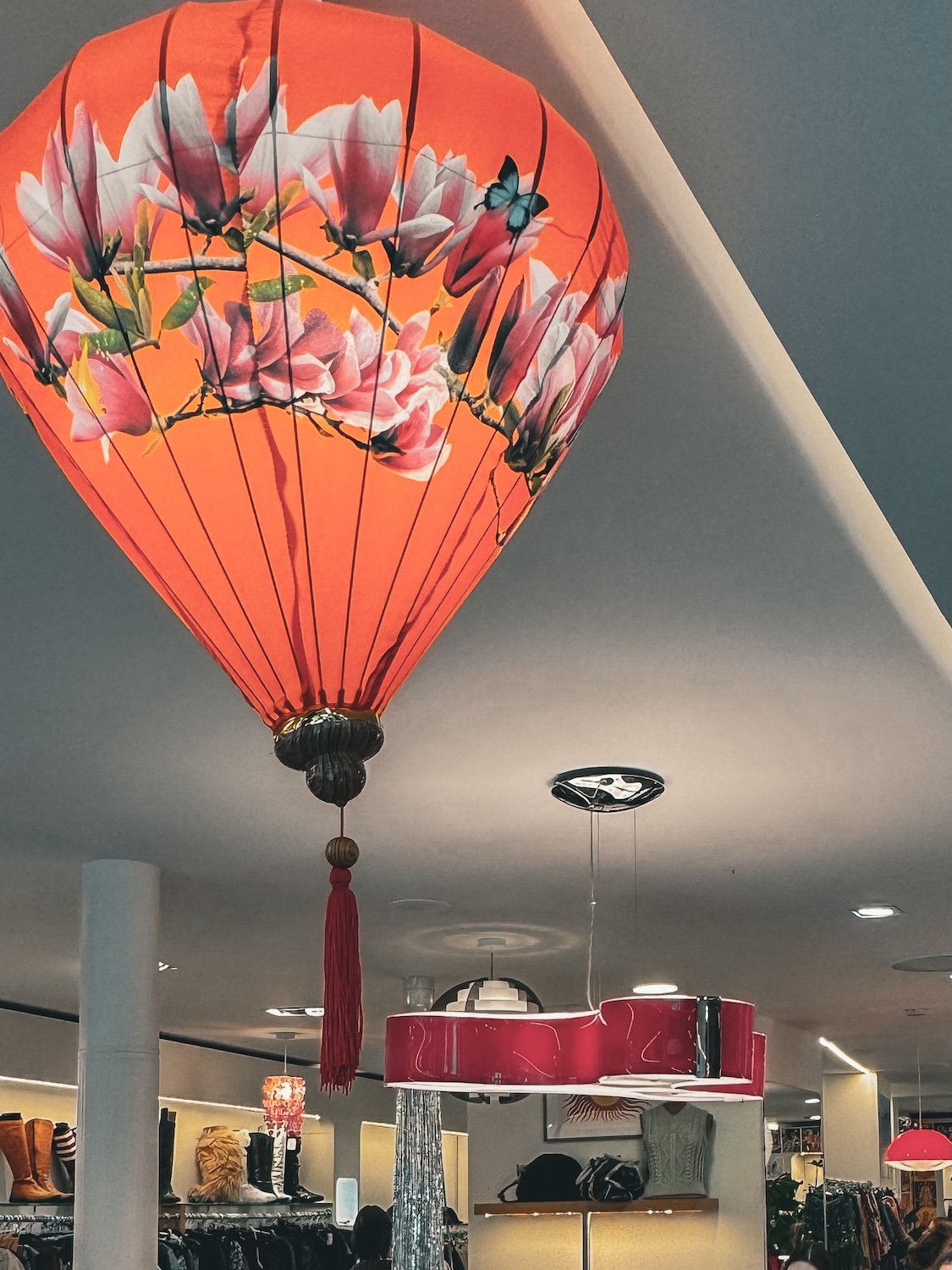 Asian lanterns. PHOTO WENDY HUNG
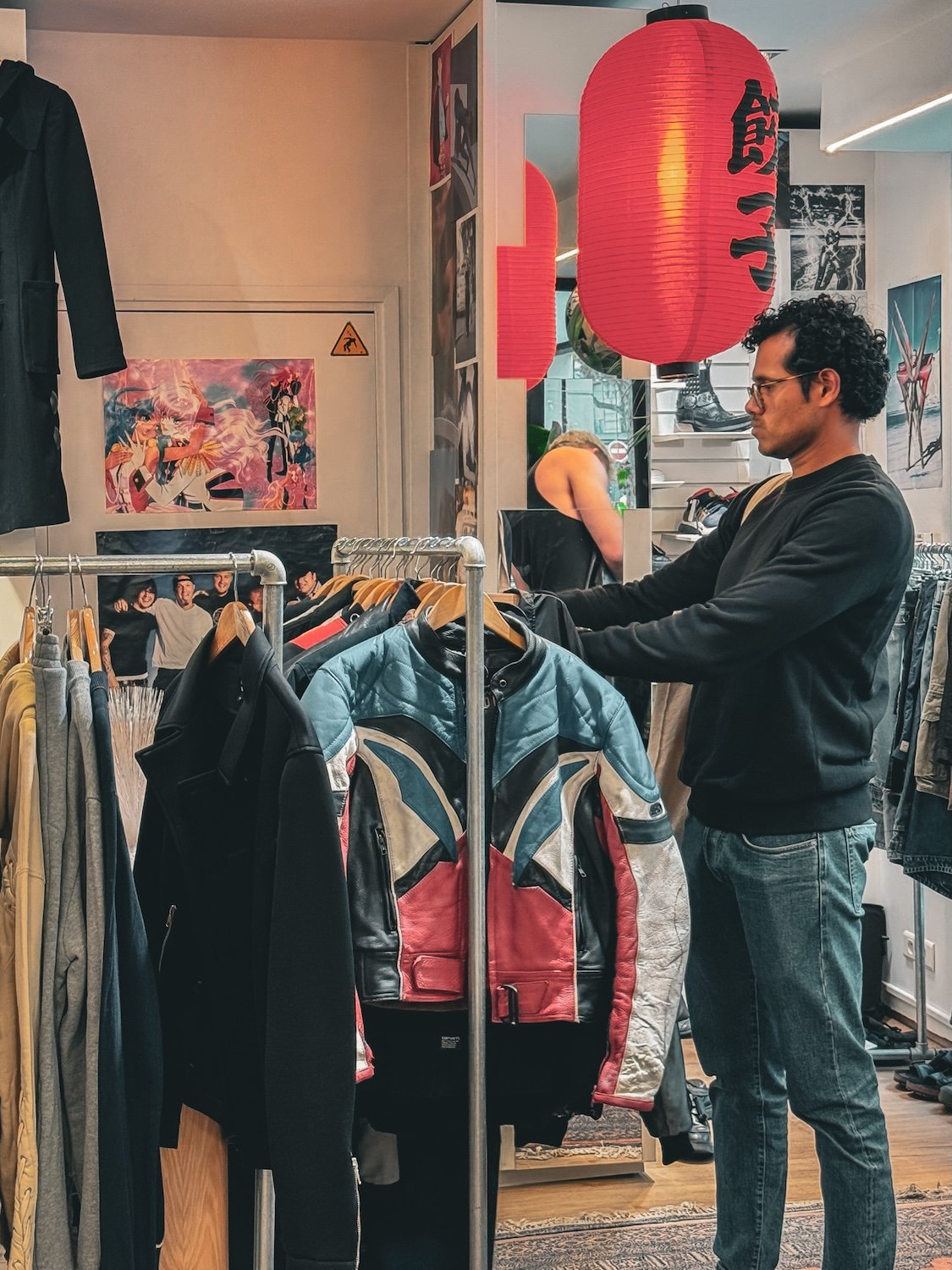 Men’s corner. PHOTO WENDY HUNG
Why should people should shop vintage?
NA: The first reason is, I would say, climate. But when I started, it was not the first reason. It was money, which is now the second reason. It’s always going to be cheaper and better quality than what you get at Zara, H&M…etc. The third reason is style. I think you have much more allure when you wear vintage because you are one of a kind. If you wear big brands, everybody has the same thing, it’s not as fun as having this one piece that you hold on to and that you found like a treasure hunt.
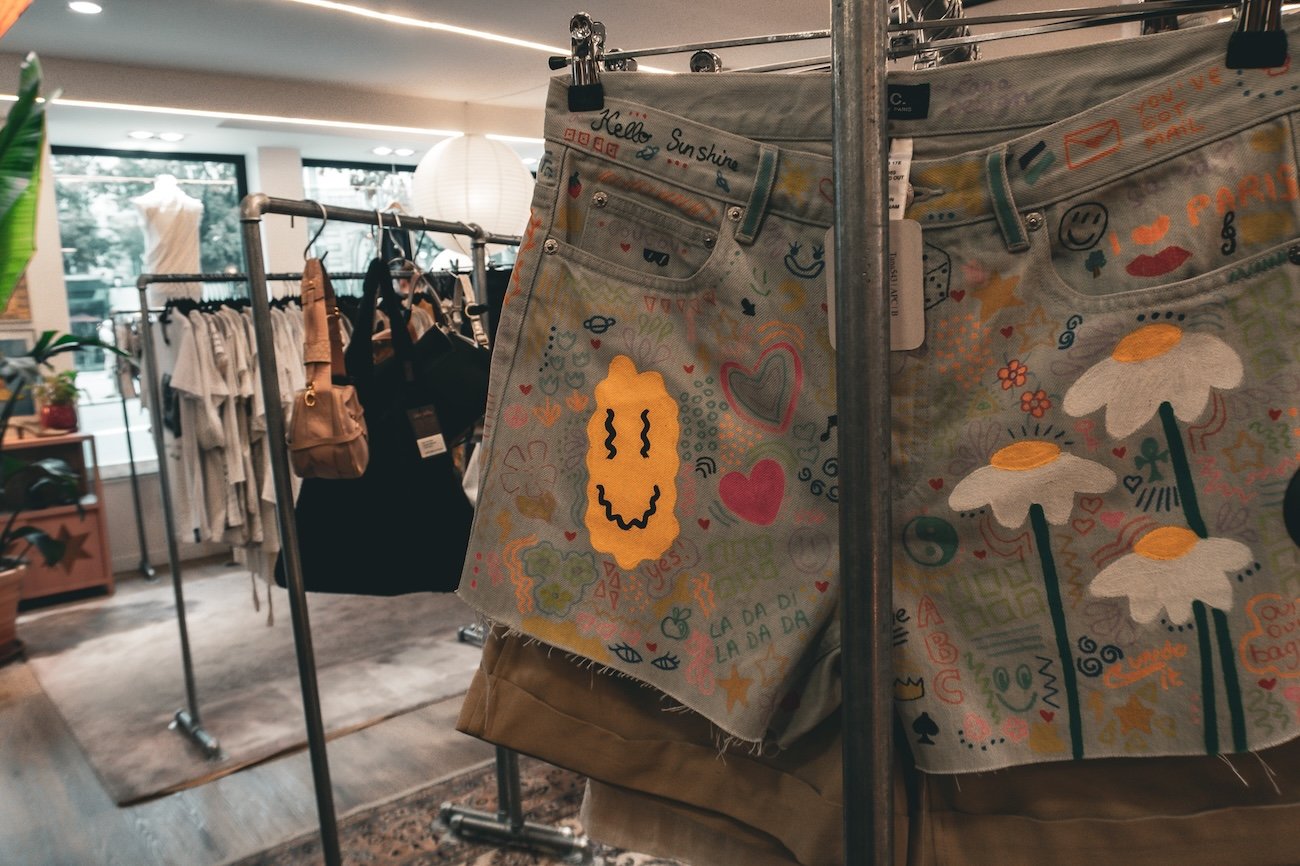 Hello sunshine. PHOTO WENDY HUNG
Why do you think there are so many great vintage finds in Paris?
NA: I think we have a sense of style. Honestly, I think Parisian girls are not the nicest, but they have a sense of fashion. So maybe what happens is that, you know, a lot of things are produced or bought here because we really care about fashion. So maybe it was not produced here, but it’s been bought and resold here. I think if you go to Amsterdam or other places, you will also find vintage, but Paris is known for fashion.
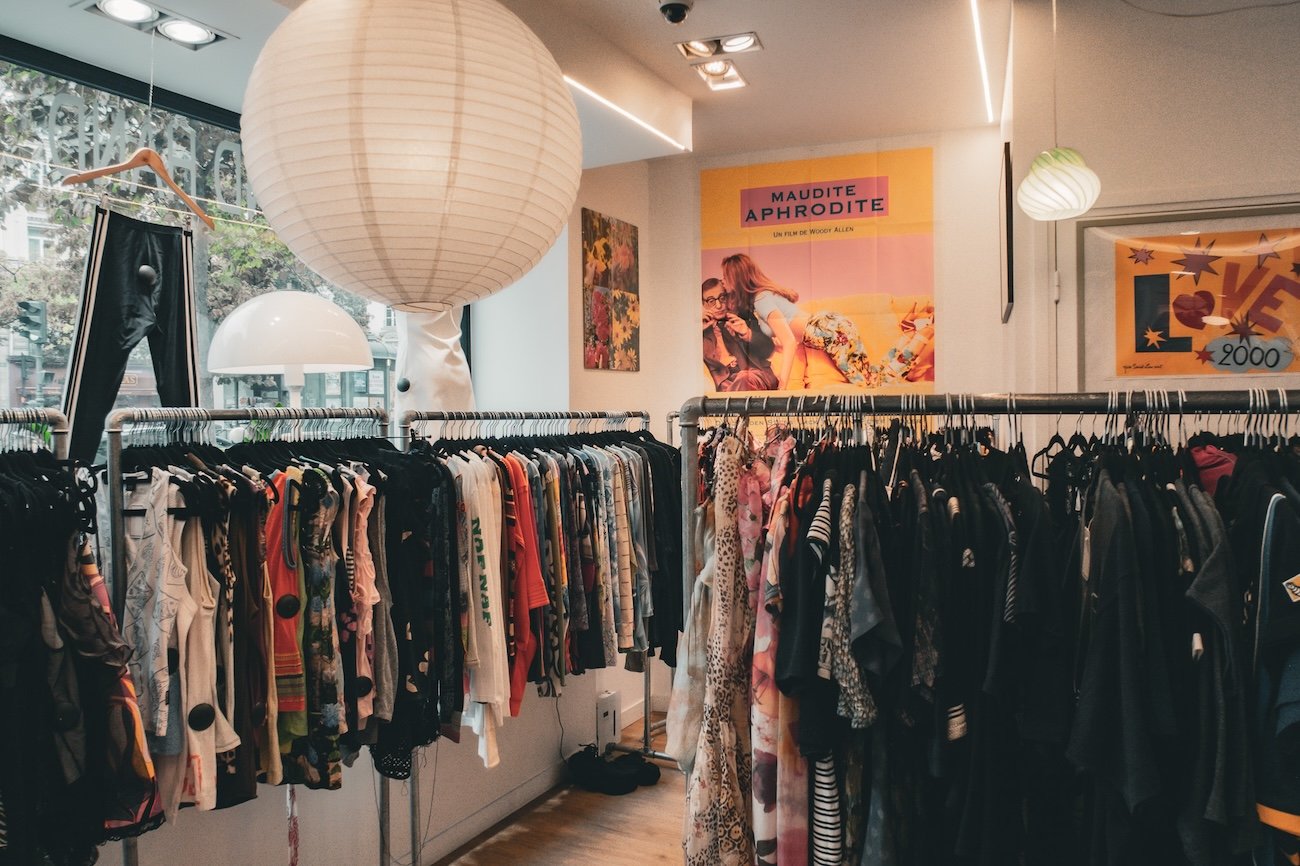 In-store vibes. PHOTO WENDY HUNG
Has it been difficult being a female entrepreneur?
NA: I think it has been difficult to be a young entrepreneur because I started when I was 22-23, so it was hard to set up the first store because I had zero resume. When I was touring different places with real estate agents, I would wear fake glasses to look older, and it worked. I signed my first contract with fake glasses. Personally, it doesn’t feel too difficult working in fashion, but I trust women who say it’s hard. I think being young was the hardest part, but now when I arrive at a store, people take me seriously.
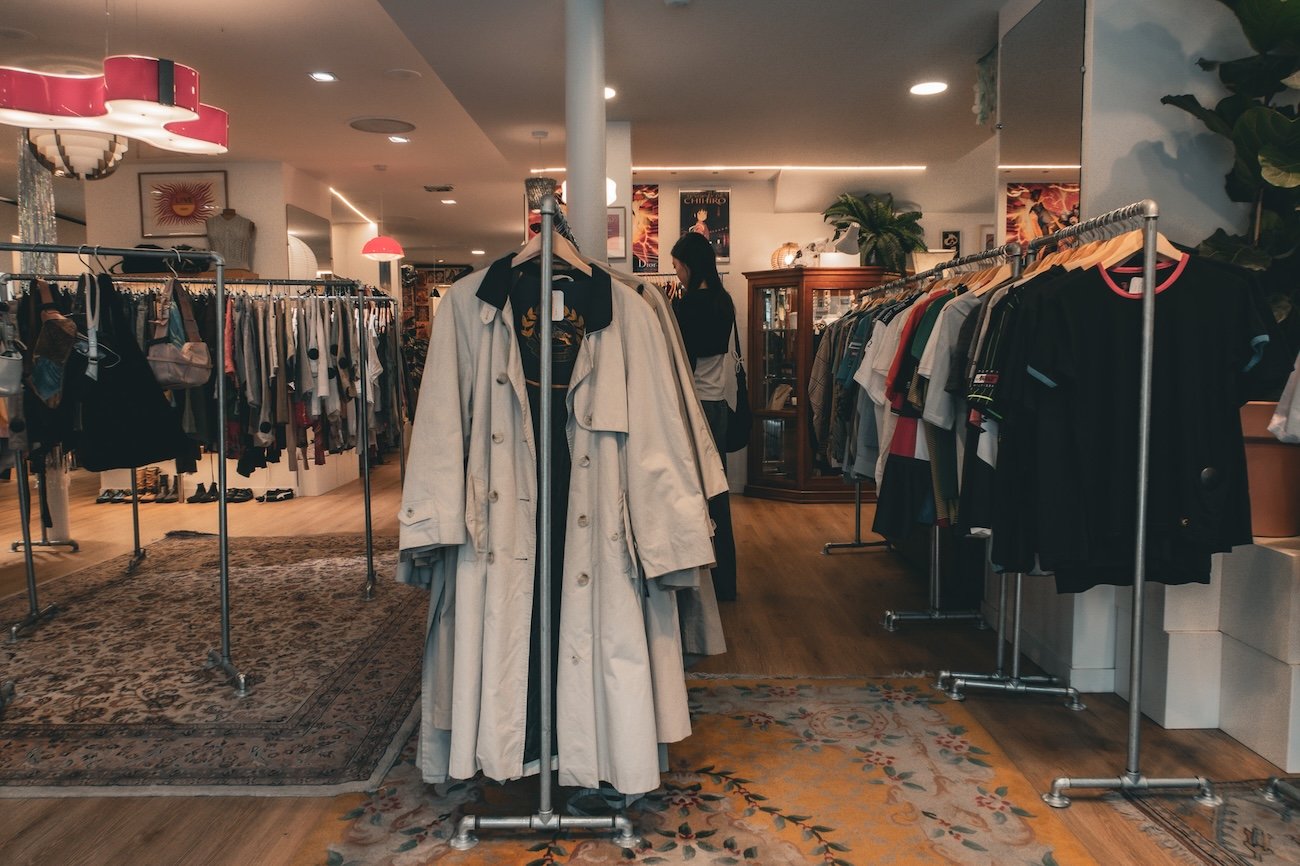 Trench season. PHOTO WENDY HUNG
How did you know this location would be the right fit?
NA: I’m a Parisian, born and raised. I don’t know all the neighborhoods in Paris, but I grew up in the center, so I walked around a lot and window-shopped a lot. I could not open a store in the 15th arrondissement because I don’t know that neighborhood very well, but I know the center of Paris like the back of my hand.
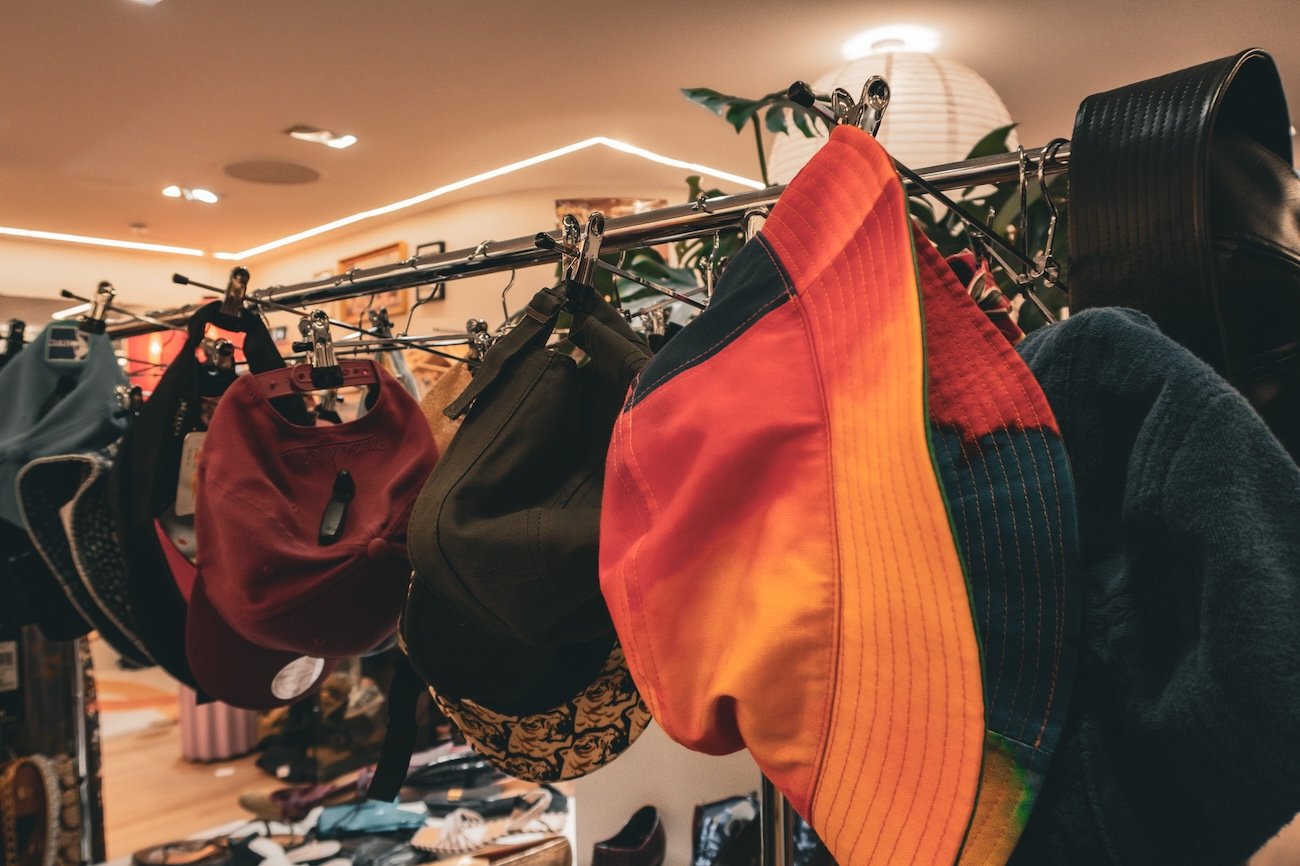 Bucket + caps. PHOTO WENDY HUNG
A few meters down a street makes all the difference. For example, when I was visiting different locations, I saw one in Le Marais next to a very popular street and a lesser-known one, so I didn’t take it. You need to be on the right street where people know you, and it needs to have the right energy.
What do you think has been one of the biggest challenges of starting this company?
NA: The biggest challenge is hard work. It doesn’t feel like you’re working when you do something you like. Every time I open a store, I’m whacked for a few months because it’s so much work and there’s so much to do. All my friends would go out, and I would fall asleep because I was too tired. For me, it takes more time because I want to make sure that everything is perfect.
I didn’t have enough space to do male and female clothes, but I knew one day I wanted to, so I chose a unisex name. I thought Bobby was cool since all of my friends would call each other Bobby. They would say: Ça va, Bobby? Now when I hear people say: Je suis chez Bobby. I’m like: Okay!
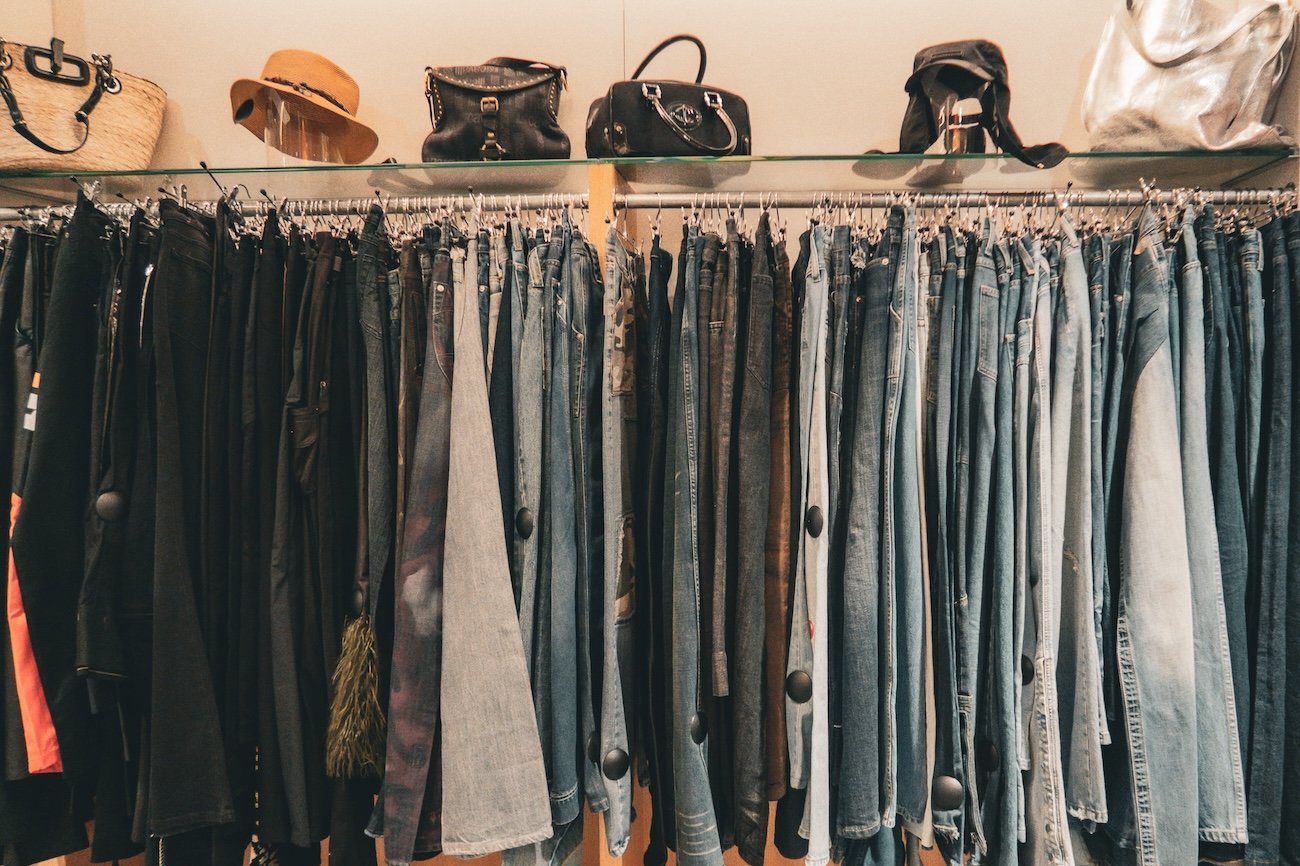 Jeans and things. PHOTO WENDY HUNG
What is your best seller?
NA: I think it really depends on the season and on trends. For example, for years, we sold dresses way more than we sold skirts. This year, we didn’t sell as many dresses, but we sold a lot of skirts because it’s becoming trendy again. Layering is also coming back since young people love to wear big pants with skirts, and when I tried it myself, it doesn’t suit me, but for young people, it does. All of my younger employees dress that way, and it looks super cool.
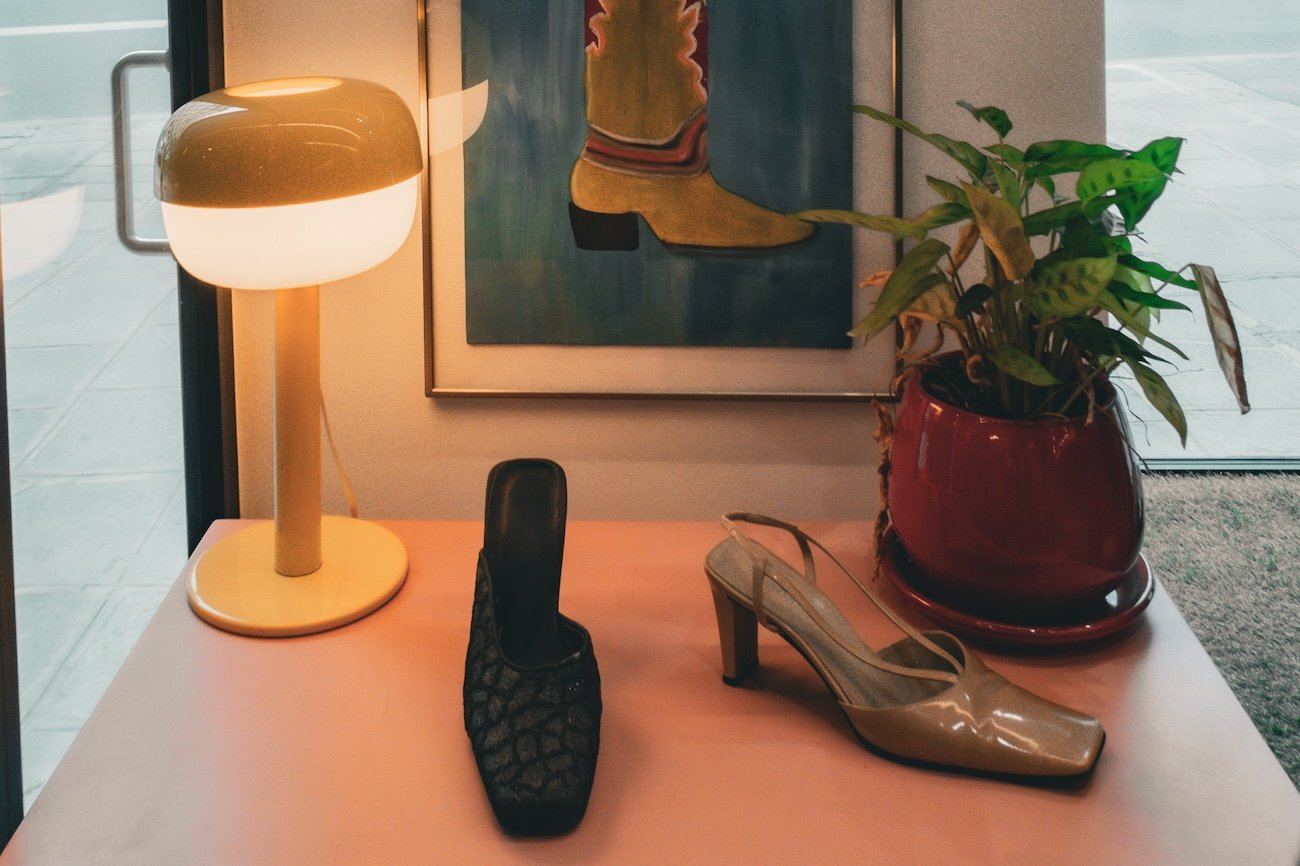 Vintage heels. PHOTO WENDY HUNG
What do you think is Parisian style?
NA: Parisian girls are very undercover. We do not stand out by our style. We do not make fashion mistakes. We’re not like, you know, arriving somewhere with something that is totally off, but we don’t take risks. I would say the people who arrive in Paris later in their life, as young adults, they really want to be seen. can spot them in the street. I would say real Parisian girls have been seen since 15 years old, and now they just want to wear a navy and get on with their lives.
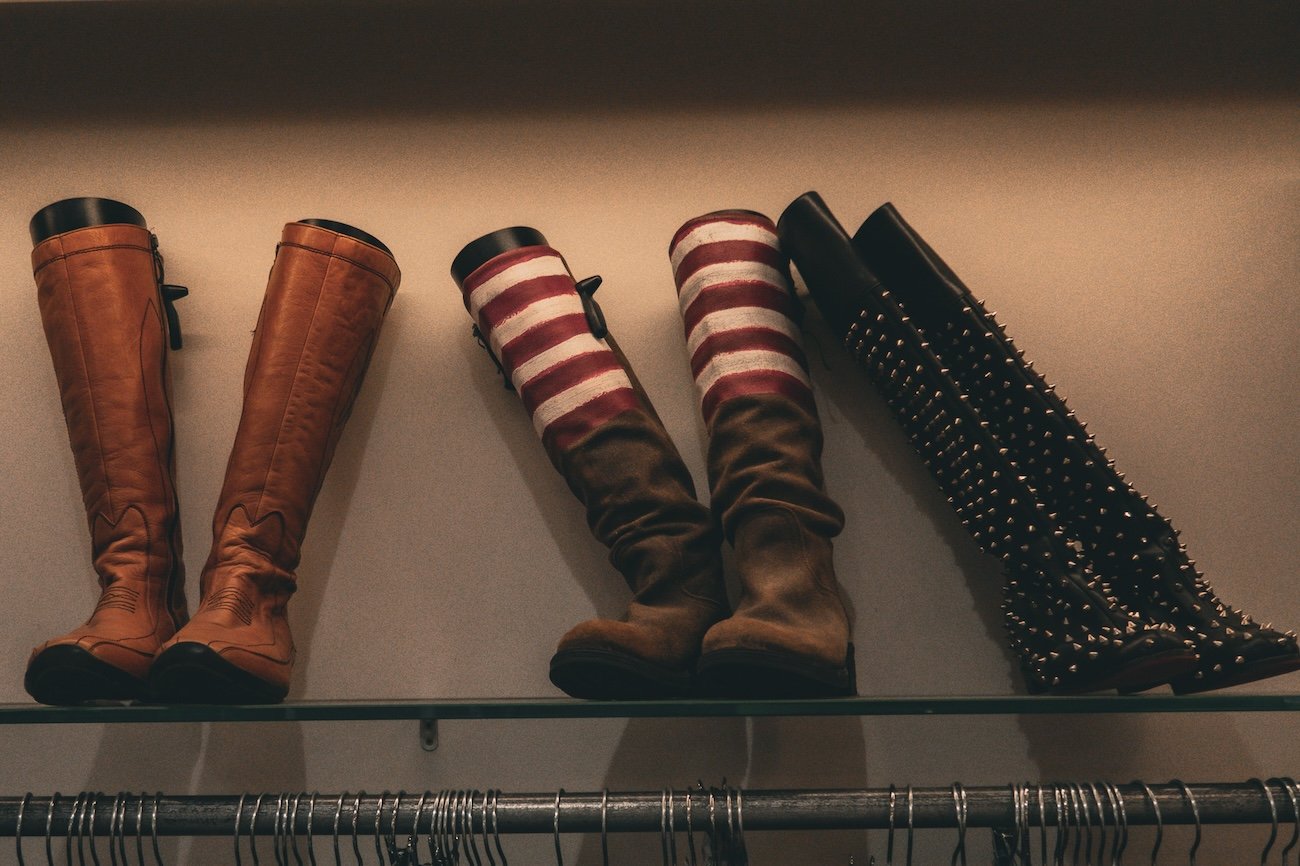 Boots made for walking. PHOTO WENDY HUNG
We could learn a bit from, let’s say, Italians. Italian women really have the cut, but they also have the sexiness. They have womanhood. We’re quite fluid, I would say. When you go to Milan, you really feel like, oh, I could make an effort, you know?
How do you want people to feel when they come in here?
NA: I want them to feel good and free. I want them to feel like they could explore their creativity. I think that’s important, and if you look at our selection, it’s quite wide, which means that, if you’re 16 and you have a lower budget but you have style, you can come, but also if you’re 60 and you love good classics, you can find great pieces. I think that’s such a strength. There’s no need to be posh about making people and yourself happy. I started this business when I was 23, and now at 34, I don’t dress the same. I used to be loud, and now I want to be more understated. I want to keep everything youthful since the youth are fashion lovers, while also speaking to people of my age and older.
Interview transcribed by Natalia Guerra.
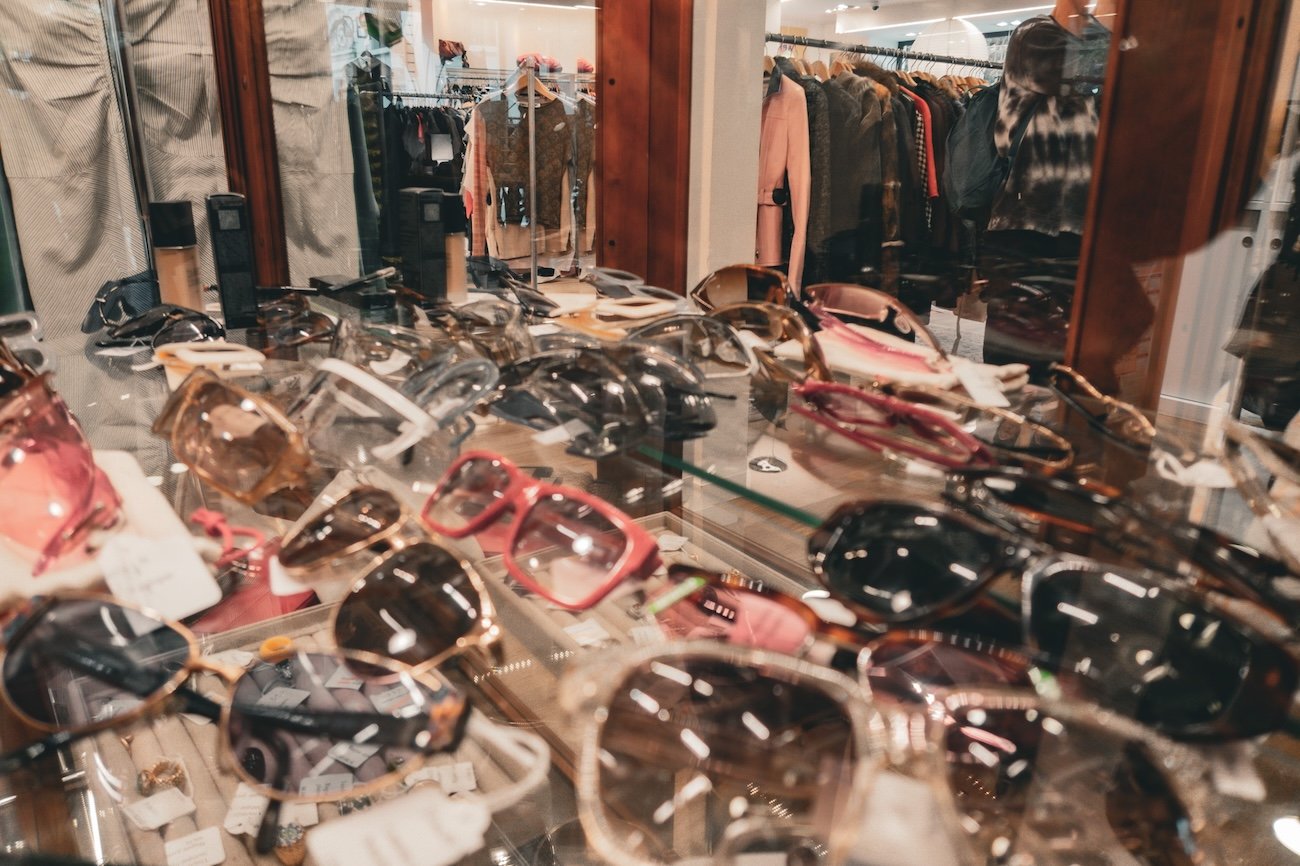 Shady shades. PHOTO WENDY HUNG
