Rising majestically from the sands on the West Bank of Luxor, the Colossi of Memnon are two massive stone statues that have watched over the Nile Valley for more than 3,400 years.
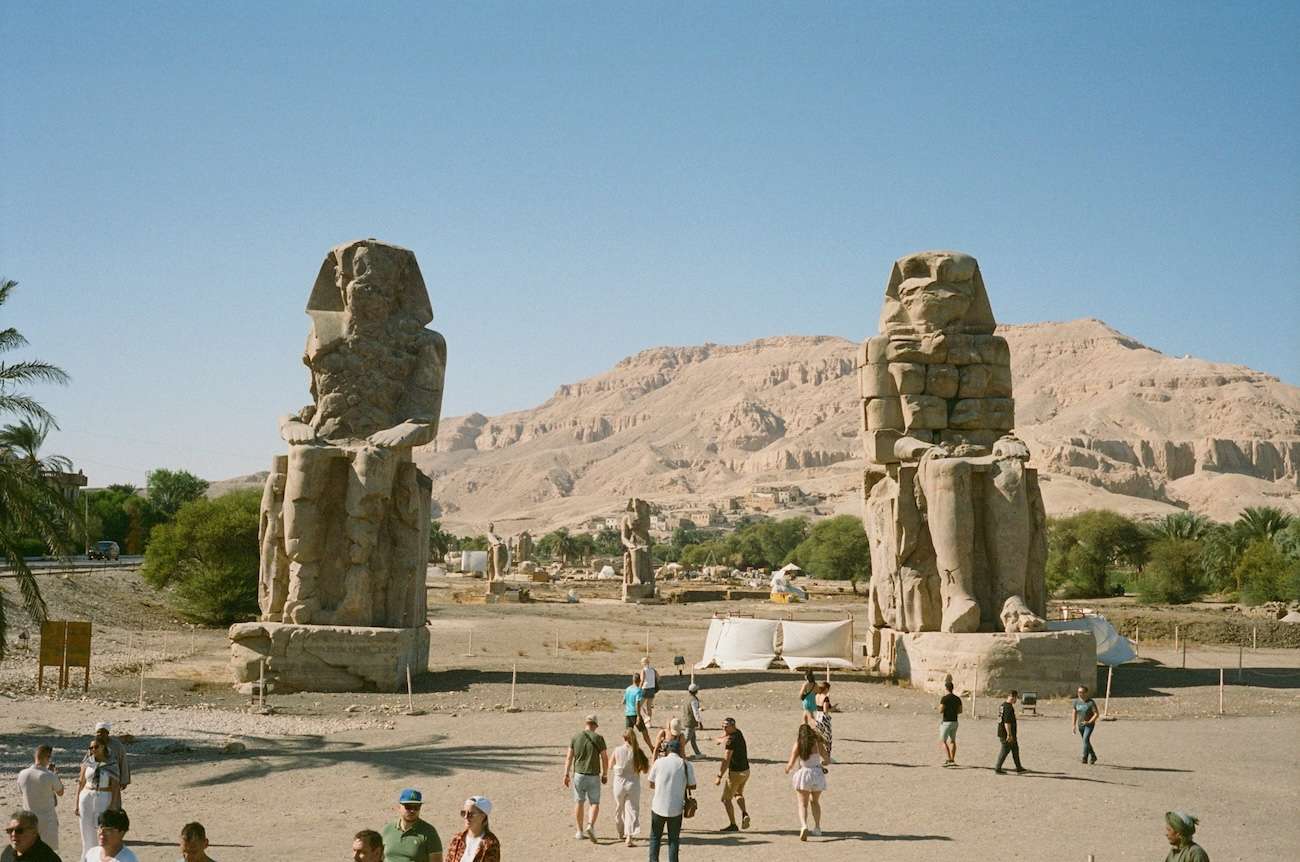 Photo by Jean Carlo Emer on Unsplash
These monumental figures, depicting Pharaoh Amenhotep III seated on his throne, are among the most iconic symbols of ancient Egypt, capturing the imagination of travelers for centuries and standing as silent witnesses to the grandeur of the Theban necropolis.
The statues were constructed during the 18th Dynasty, around 1350 BCE, to guard the pharaoh’s mortuary temple, which at the time was the largest in Egypt. Though the temple itself has mostly vanished over the millennia, the colossal figures remain, a testament to the engineering prowess and artistic skill of ancient Egyptian craftsmen. Each statue, carved from a single block of quartzite sandstone transported from quarries miles away, measures roughly 18 meters (59 feet) high and once featured finely detailed facial features, inscriptions, and depictions of Amenhotep III’s family and accomplishments.

The Colossi were long celebrated not only for their size but also for a mysterious phenomenon recorded by ancient visitors: at dawn, one of the statues was said to “sing” or emit a musical sound, possibly caused by temperature changes and the shifting of sandstone blocks. This “singing” captured the fascination of Greek and Roman travelers, earning the statues the name “Memnon,” after the mythical Ethiopian king famed in Homeric tales. While the phenomenon no longer occurs, the stories add a layer of intrigue and legend that continues to draw visitors.
Approaching the statues, visitors can appreciate the scale of Egyptian royal ambition, the precision of the carvings, and the way the figures were deliberately aligned to face the rising sun over the Nile. Photography is particularly striking at sunrise and sunset, when the warm desert light casts dramatic shadows across the statues and the surrounding landscape.
Located along the West Bank road leading from Luxor city to the Valley of the Kings, the statues are easily accessible by car, taxi, or guided tour. Comfortable footwear is recommended, as the site is open and exposed to the sun, and carrying water and sun protection is essential during the hotter months. Though the Colossi themselves can be fully appreciated in a brief visit, combining the site with nearby attractions — such as the Valley of the Kings, Hatshepsut’s Temple, and the Mortuary Temple of Amenhotep III — creates a rich, full-day experience of Luxor’s West Bank.
The Colossi of Memnon endure not only as architectural marvels but also as symbols of timeless grandeur and the enduring legacy of Egypt’s pharaohs. Standing before these towering figures, travelers are reminded of the ambition, artistry, and spiritual devotion that shaped ancient Thebes, making the Colossi a must-see destination for anyone seeking to understand the heart of Luxor’s history.
Address:
Al Bairat, Al Qarna, Luxor Governorate 1341703, Egypt
Hours:
| Monday | 6 am–5 pm |
| Tuesday | 6 am–5 pm |
| Wednesday | 6 am–5 pm |
| Thursday | 6 am–5 pm |
| Friday | 6 am–5 pm |
| Saturday | 6 am–5 pm |
| Sunday | 6 am–5 pm |