
This American author and avid surfer discusses influence of traveling.
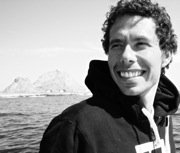
Jaimal Yogis believes that if he hadn’t traveled, he would merely be a shadow of who he is now. We sat at Beachside Cafe in San Francisco, near the waves of the Pacific Ocean, where he frequently retrieves meditative solace. “I’ve had so many great memories in so many places. The ocean is constantly changing its personality. You can be in Morocco on a perfect day, or you can be out here in Ocean Beach, it’s stormy and you’re out by yourself. But for some reason, everything clicks.” He expresses an adoration for the city by the bay. It seems the more he travels, the more he appreciates the city deep rooted within an urban environment. “Ultimately, I realize that, I’m an urban creature but I’m also a nature seeker. Here, you get a meeting of the two. I love sitting here with you and drinking this incredibly great coffee.” I, too, was grateful for an introspective dive into a fearless conversation with tides of worldly experiences.
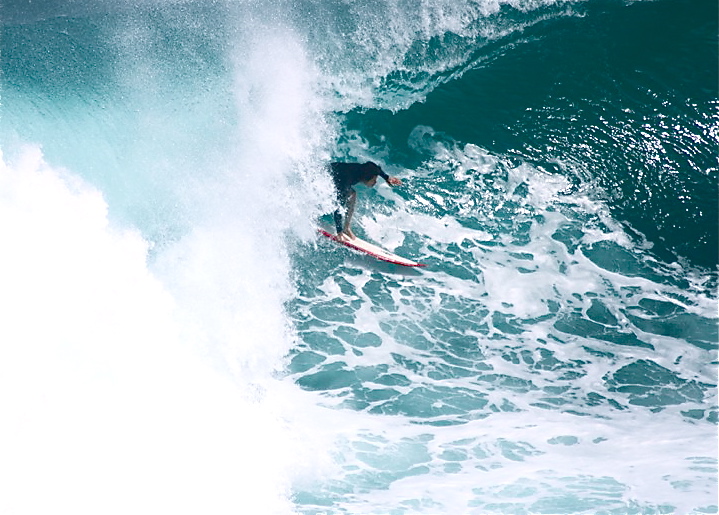
Like the ocean, comprised of conglomerate elements and compounds, Jaimal is a body of multilayered traits. He is an author as well as an athlete. He is a father, a husband, and a traveler. He was a rebel with a surfboard who returned to shore with the current of Buddhism. He is calm and extremely relaxed. His positivity compliments pensive thoughts that ride along ripples of growing up in multiple parts of the world. His father was in the Air Force, so the family moved frequently. From New York, Washington to Portugal, when the family settled in Sacramento, Jaimal ran away from home at the age of 16. He bought a one-way ticket to Hawaii while being on probation, a period of his life that also begins the pages of Saltwater Buddha – a book that chronicles his journey of zen and self-discovery through philosophical waves.
During senior year of high school, he moved to France and eventually lived in Plum Village, a Buddhist monastery in Dordogne. “Especially as a teenager, when you’re forced into a new culture, it’s like a mirror shining back at yourself.” He remembers, “suddenly, I couldn’t use slangs that were popular in America to communicate in France. All the basic questions that come up when you can’t really communicate, like ‘who am I,’ are really self reflective, and Buddhism was perfect for that. Here was a structure to look at your mind on who you really are, and what you really are.” As a teenager, he wanted to know why people suffer, what real happiness was. He began toying with the idea of becoming a monk in Plum Village. When he moved back to California, he lived in Berkeley Buddhist Monastery for several months. The abbot of the monastery, however, advised him to go to college.
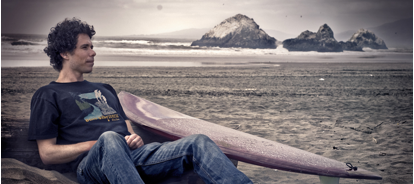
Since the age of 16 to 25, Jaimal has never lived in the same town for more than a year. Even in college, he always figured out ways to travel, transferring school credits across various campuses. He stayed in Mexico, India, Hawaii and Santa Cruz. With an undergraduate degree from the University of Hawaii, he later settled on Religious Studies and Journalism at Columbia University. “I was able to argue to Columbia that, because of traveling, I was very good on my toes. I put together this haphazard college career, and everything had been done on the fly, which is what journalism is about, being snappy and learning where you go.” Columbia bought it and he has been a writer and a journalist ever since.
So much of his writing has been about surfing, traveling and how it all relates to life. Saltwater Buddha came to life because surfing has always been a form of meditation for him. Throughout monastery’s long retreats, he learned the diligence of a formal zen. Similar to his surf trips, although it embodied a different feeling, it was also a sense of retrieving the basics, going back to his original nature. “There’s something about ‘all life originally comes from the sea,’ so when I’m out there, I’m reconnecting with the source of life. When I’m sitting still, I’m also reconnecting with the source in a different way. I’m getting rid of the static in life, so I can just be with what is.” He deeply understands that zen is about quieting oneself to the point where all there is, is now. The ocean is eternally changing, thus, it demands one to be, here.
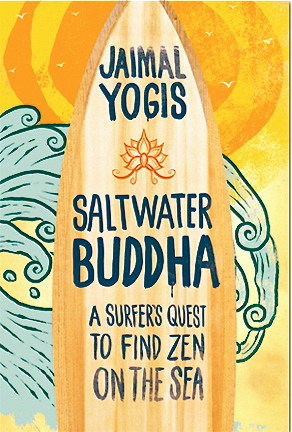
From Saltwater Buddha to The Fear Project (Jaimal’s new book due out January 2013,) traveling is again, an enormous influence on his writing. From the beginning, he has maintained an interest in how people overcome fear and how strengths are developed. After a breakup few years ago, he was suddenly enfaced with immense insecurities. “Suddenly, I felt afraid for the first time in a long time.” He recounts a fascination to discover where his emotions derived from, “I was also interested in fear within extreme sports, since I always dreamt of surfing the Mavericks waves. So I started thinking about fear, I wanted to understand it. I had some theories about it from Buddhism and philosophy. I began interviewing neuroscientists, psychologists, sports psychologists, people around phobias, trying to figure out: fear.” Every chapter in The Fear Project is a different story. Some are based on relationships that plunge into reasons why humans struggle with insecurities and phobias. Some chapters encompass a more direct approach: why are we afraid of sharks? Fear occurs in all aspects of our lives, he veraciously wanted to understand all of it.
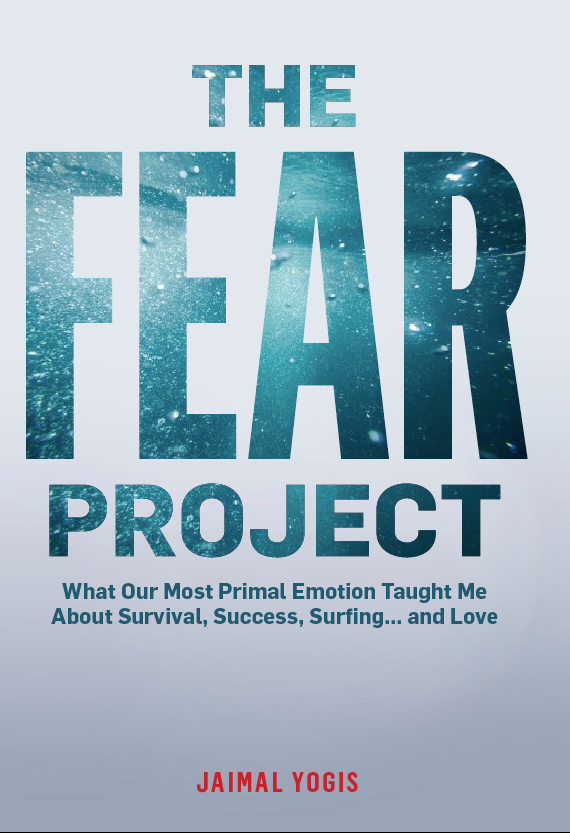
What he has gathered and learned from The Fear Project, is that human beings are capable of so much more than we think we are. “We let fear lie to us,” he continues, “so many people accept their fears as limits of their potential. If you can do one thing a day that makes you a little uncomfortable, you will be amazed at what happens.” Trusting the fear and succumb to it.
From a multitude of neuroscience research conducted, he has gathered from experts that, the way human brains grow stems from new experiences. He explains, “We can do the same old things and be good at it. But real brain growth is when we’re learning a different instrument, learning a new language. Especially in a place where you don’t speak the language, I think your synopsis is just saturated. So I don’t know who I would be if I didn’t travel, but I know that I would be boring.” The Pacific waves rolled by us with time, our cups of coffee have emptied. Moments stood serene and still, resting on memories from around the world. All fears subsided, this Saltwater Buddha, I have always known, is so much more than the shadow of himself.
Get your copy of Jaimal’s new book: The Fear Project on Amazon.
Go behind the scenes with photos and thoughts from the interview with Jaimal here.
