The Cathedral of Santiago de Compostela is a historical piece of art visited by several pilgrims.
The Cathedral of Santiago de Compostela is well known for numerous reasons. Besides the fact it is the reputed home of the Apostle James’s remains, it is also a structure featuring works of art, including: the Platerías façade, Pórtico of Glory and Chapel of Our Lady of The Pilar. The cathedral is the stopping point for pilgrims coming to the city of Santiago, and upon their arrival, they are greeted by one of the most significant historical sites in Spain.
Although construction on the church began in 1075, during the rein of Alfonso VI, work was slowed until around 1110, the times of Archbishop Diego Gelmírez. The work was commissioned to Master Esteban, and throughout the 12th century, construction on the cathedral progressed.

In 1168, Master Mateo was commissioned to complete the work on the church, and later, in 1211, it was consecrated. Since then, the church’s appearance has changed, as several areas and significant features have been built during different periods of time.
For example, the Cloister and its annex areas were added during the Renaissance, and the main chapel, organs and closing of the chevet were constructed during the Baroque period. Later, in the Neoclassical period, the Azabachería façade was built. While these structures were among the most significant that were forged, several other works were also engineered during these periods that help give the Cathedral of Santiago de Compostela its noteworthy status.

The Platerías façade is one of those works. Constructed in the 12th century, it is the only Romanesque façade remaining of the cathedral and contains a series of scenes in its reliefs, including those depicting the Epiphany, Flagellation and Crown of Thorns. The Clock Tower sits next to the façade and is an example of Baroque architecture from the 14th century.
The Pórtico of Glory is another significant example of art from the 12th century. Led by Master Mateo, the Pórtico of Glory is a granite and painted portico that combines French, Italian and Spanish influences. A scene inspired by the Apocalypse is depicted on the portico and is one of the features that helps give it its noteworthy status.
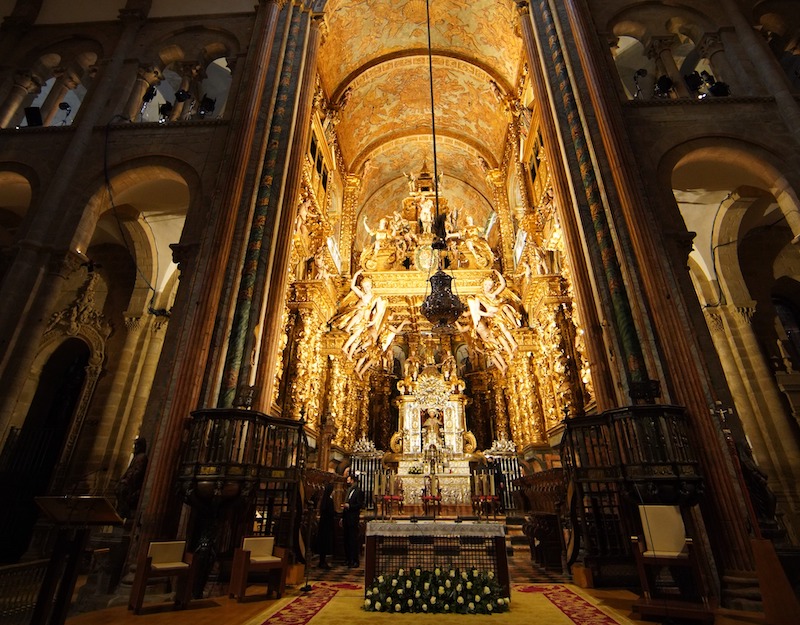
Established approximately 600 years later, the Chapel of Our Lady of The Pilar features a significant display of decoration. Comprised of jasper and marble, the decoration, which includes its altarpiece, is one of the reasons why the chapel stands out. Additionally, the dome and chests made of fine wood may also attract visitors to this storied room.
The Cathedral of Santiago de Compostela draws pilgrims due to its religious significance, though its art might also assist in providing travelers with an unforgettable experience. Regardless, pilgrims take several different routes to get there.
One may travel via the French Way, which enters the Iberian Peninsula through Roncesvalles and Galicia through O Cebreiro, the Portuguese Way, which passes through different routes in Portugal, or the Via de la Plata, which begins in Seville and passes through Mérida en route to Galicia.
Whichever route travelers take, they will surely arrive at the Cathedral of Santiago de Compostela in awe, as the experience of visiting it is unforgettable.