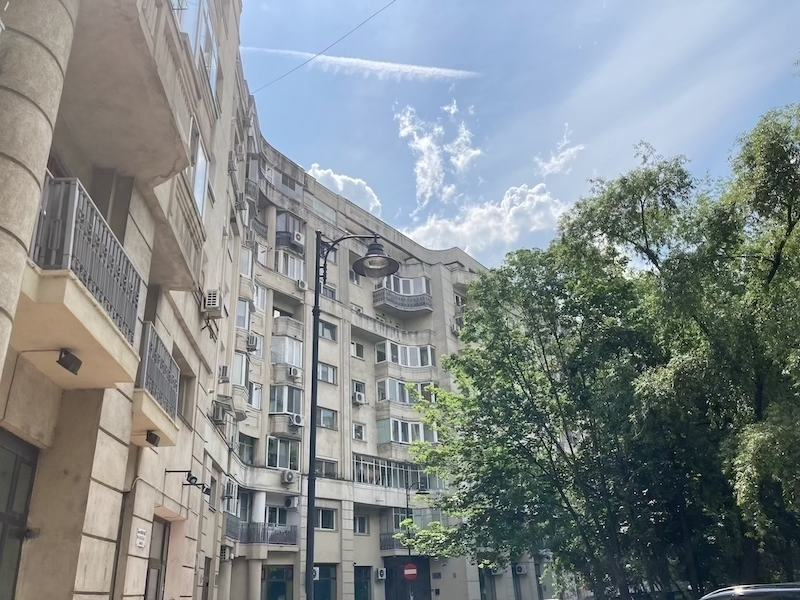
Communism has a bad rap, it’s no surprise that its buildings also do.
Walking down the streets of Bucharest can sometimes feel like working through a dismaying maze. With every apartment block, the feeling grows deadlier – like the gray blocks of nothingness would stretch on forever, until you would fade yourself, turn gray, and merge into the cold, hard walls on either side.

Yet, humans have a peculiar tendency to liven up any environment we inhabit. After a little getting used to, one naturally begins to muse about the lives of the individual inhabitants.
Strollers stacked against the window, a busy family with two toddlers. Pots of pink and purple petunias lining the balcony, a retired couple with simply flowers to take care of, their children having long left. A few empty liquor bottles on the windowsill, catching the afternoon sun in silver and green, a college boy figuring out how to live on his own. He hears footsteps from upstairs, voices from downstairs, but his own flat is void of life. On Friday, he invites his friends, puts some music on, and drinks.
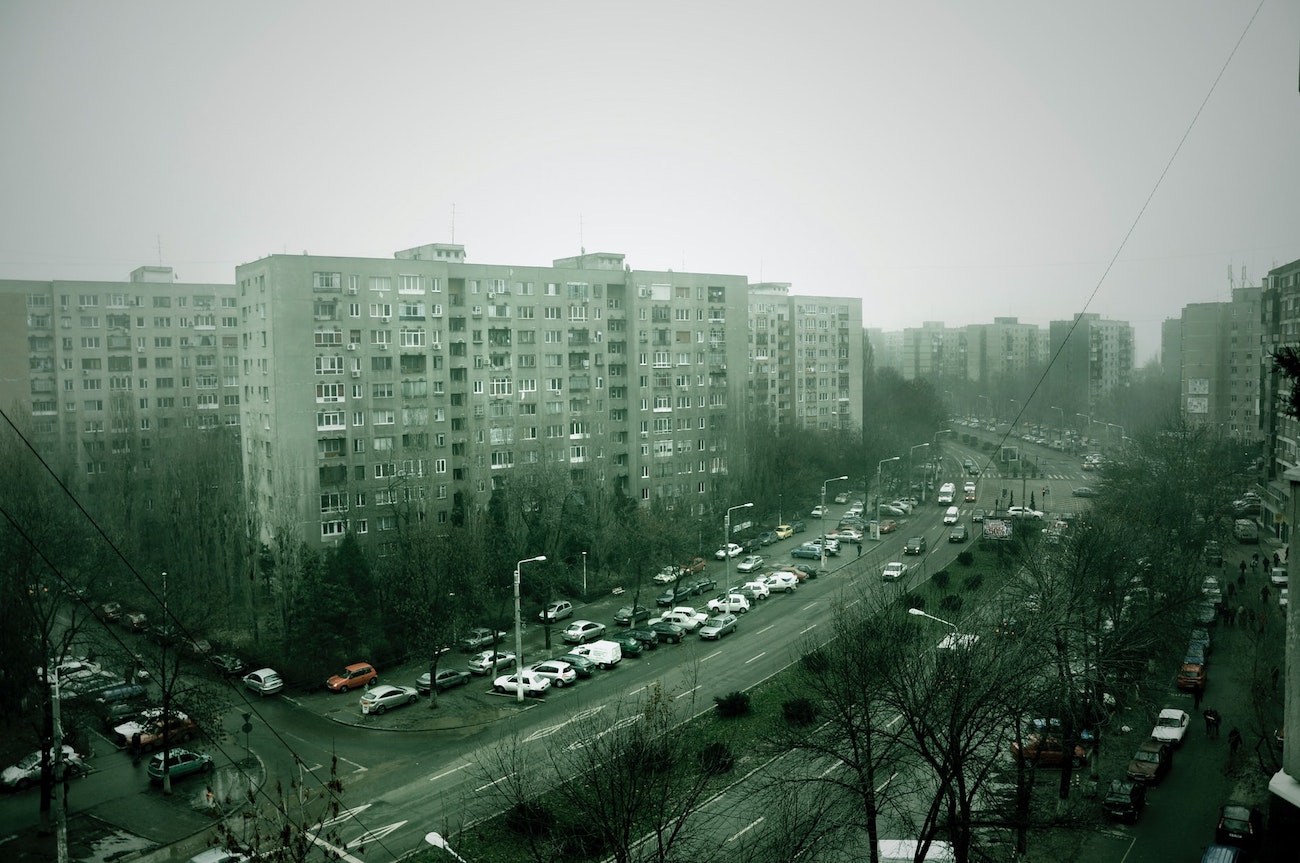
Functionalism
Functionalism is an architectural style that closely follows the philosophy,
“form follows function.”
In a Functionalist building, there is no feature or ornament that serves no tangible purpose for the people in them.
Functionalism first came into fashion in the wake of WWI, as architects and urban planners were inspired by visions of a better tomorrow. The style was mostly used for apartments that represented ideas of socialism, and were mostly popularized throughout Eastern Europe and Scandinavia.
Brutalism
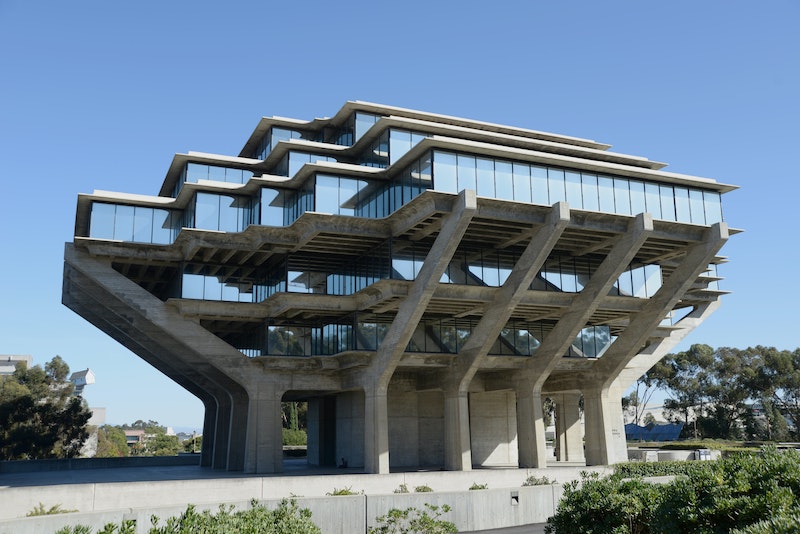
The negative connotation of “Brutalism” is quite inescapable, but the term comes from the French words Béton Brut, meaning raw concrete. Still, the name is quite straight-forward: Brutalist architecture’s most permeating characteristics are its exposed concrete and bold, geometric lines that indicate the function of each part of the structure.
Brutalism started catching popularity from the 1950s as a quick, efficient method to rebuild the demolished cities throughout Europe. Apart from high-rise apartments, this architectural style was commonly used for public facilities, including: libraries, hospitals, and universities.
Initially, Brutalism was a response to the despairing economic inequality seen in Britain at the time, representing a utopian ideal of universal housing. While Brutalism was in fashion, it was associated with social progression from the ruins of two devastating world wars. Brutalist buildings were undecorative — thereby in theory, evading the dangers of political or religious agendas — cheap, and most of all, did their job.
Today, both Functionalist and Brutalist architecture are often referred to by everyday people as “Communist architecture.” This is profoundly misleading — Western Europe used to have a fair share of these, too. In fact, “form ever follows function” was first proposed by the American architect Louis Sullivan, while “Brutalism” was coined by British Alison and Peter Smithson.
As high-rise apartments began to be associated with crime, poverty, and urban decay; the UK and other Western European countries sought to destroy them and built anew. Because these structures are more prevalent in Eastern Europe (mainly, post-Soviet-bloc countries) now, they are often mistaken as remnants of Communism. That, and the already negative impression of Communism itself.
Moreover, such architectural styles have become a staple in dystopian films. The directors of 1984, Blade Runner, The Hunger Games, and many more have set their stories in cities of massive, faceless concrete structures to convey decaying urban environments. Perhaps a good chunk of what we notice as pretty or ugly architecture isn’t intuitive. Unsurprisingly, Hollywood may have a say or two in our perceptions.
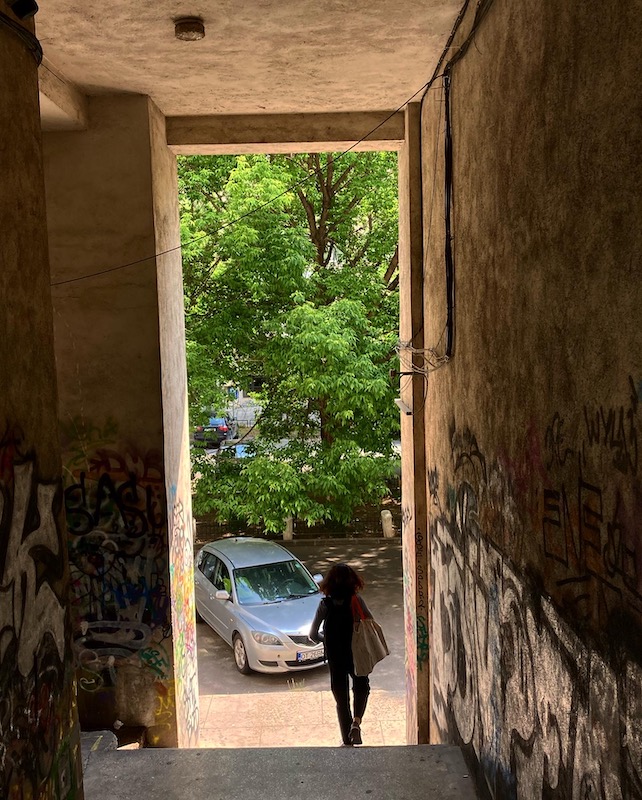
We might have been primed to believe “Communist architecture” is soulless and dead. Entering into one of Eastern European cities which is still dominated by them can feel like time-skipping to an oppressive, Totalitarian day. But take a closer look as you walk past the rainbows of life, smell the bread from the bakeries and the roasting pork from the kebab houses that line the first story. Listen to the traffic, street-vendors, pedestrians.
Here are their homes where citizens flaunt not their wealth, but their personality. Can we get past the ugly and see the charm?