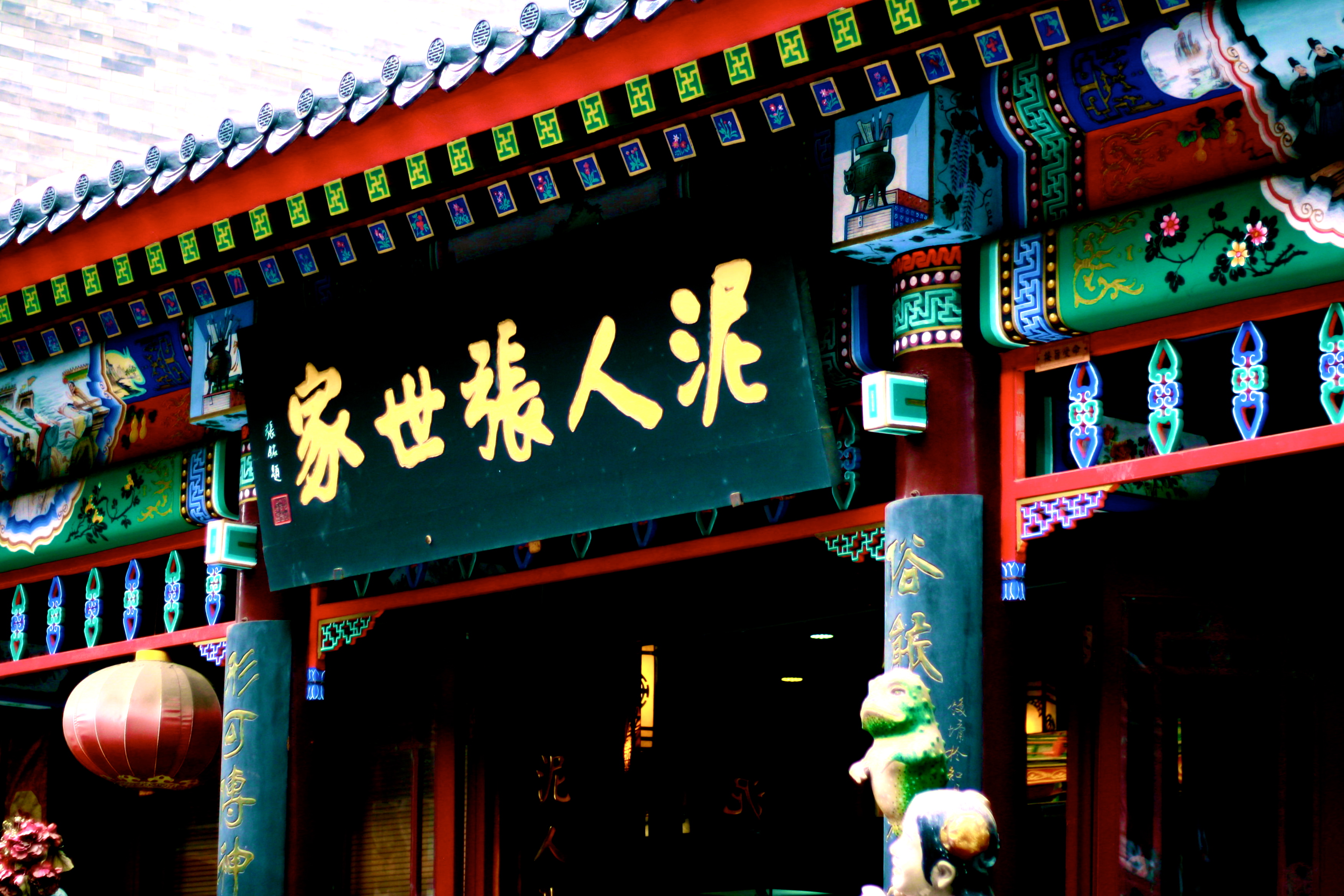
The Ancient Cultural Street of Tianjin (古文化街, guwenhua jie) is a tiny time capsule buried deep within newly renovated, 30-floor apartments and office buildings.
The transition from metropolitan high rises to small, grey brick buildings is sudden. I am walking dubiously through an alleyway one moment and next, emerging into a busy market street from hundreds of years ago. The Ancient Cultural Street of Tianjin (古文化街, guwenhua jie) is a tiny time capsule buried deep within newly renovated, 30-floor apartments and office buildings. Shopkeepers boast of carved red stones and jades that bring good luck, of antique teacups with cracked clay lines, of made-to-order name stamps from marble. A small girl runs past me with a kebab of perfectly spherical, red hawthorn berries in one hand. In her other hand, an intricate and thin sugar lollipop dragon waves back and forth precariously.
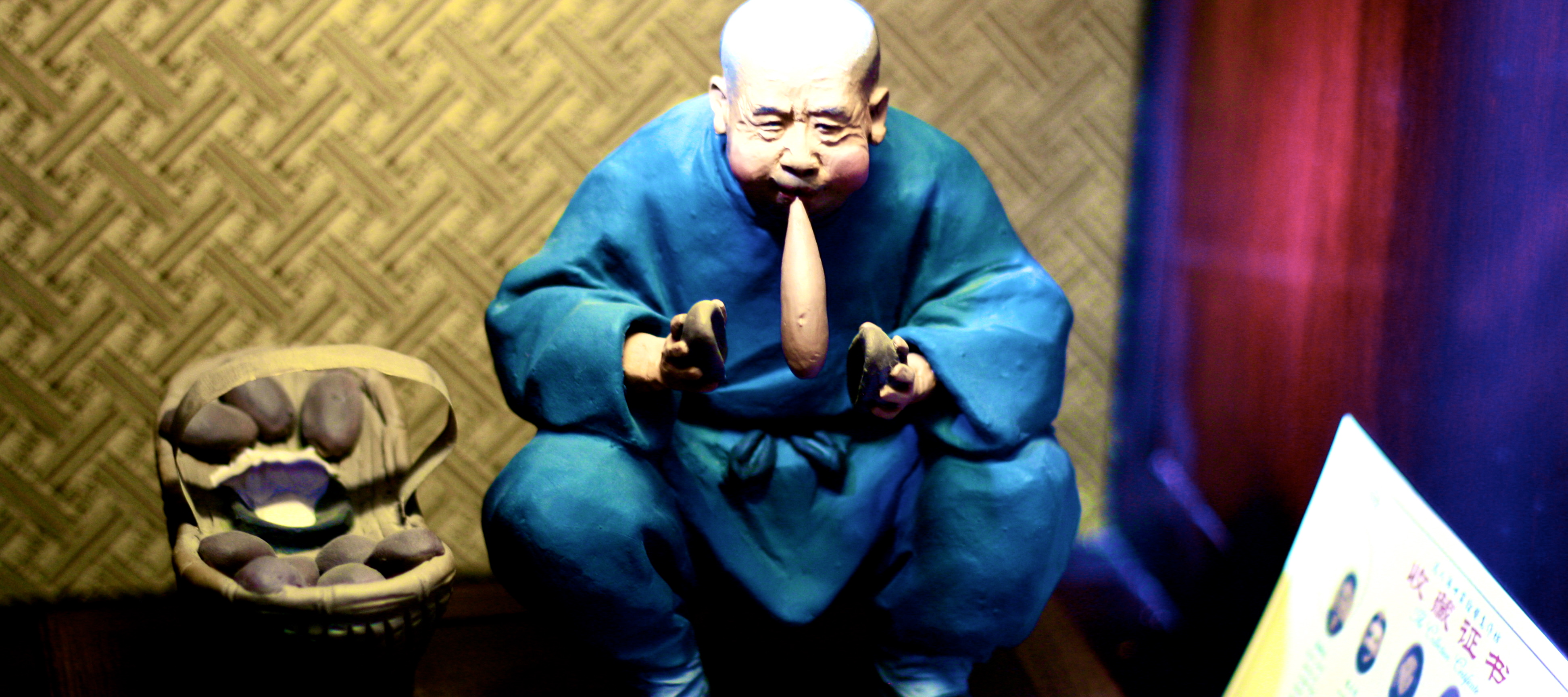
Art pervades these narrow streets in the form of candies, accessories, paintings and to, my favorite, clay sculptures. In Tianjin, the concept and art of clay sculpting is attached to a family: 泥人张 (niren zhang.) Zhang Clay Figurines, as known otherwise, has passed down the legacy of clay sculpting, six generations and counting. Hanging on the wall across the entrance of a small museum of sculptures, six pictures show the original founder 张明山 (Zhang Mingshan) in his washed-out sketch to the current head artist 张宁 (Zhang Ning) in all his fully-colored photograph glory.
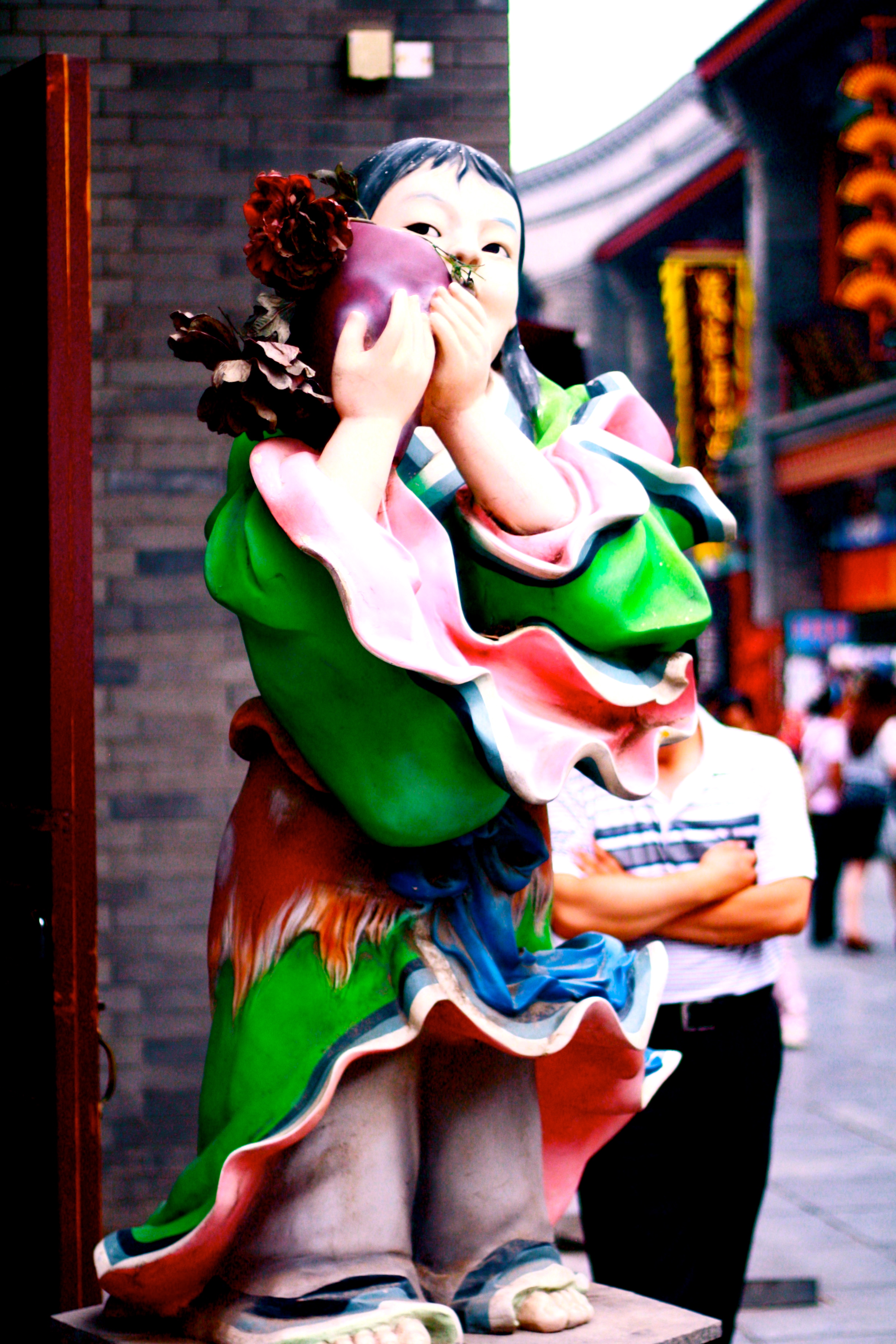
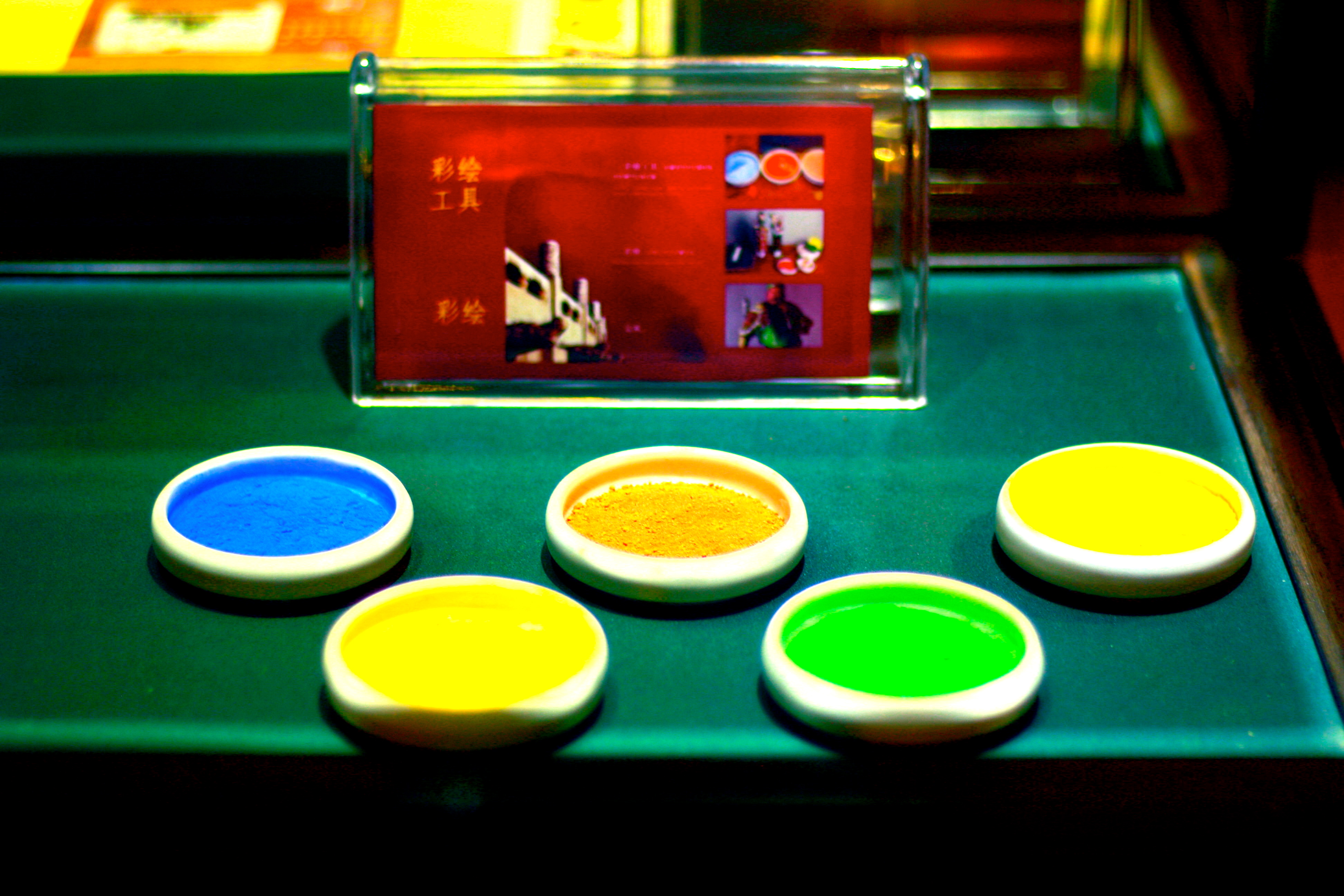
There are weighty, life-sized clay figurines of deities with faded colors to small, packaged ones of characters from stories ranging from: Journey to the West, popular Beijing Opera shows, to Snow White and the Seven Dwarfs. Known for his larger creations, Zhang Ning uses a range of wooden tools with sharp, flat, or round tips along with his hands to shape the sculptures. He then paints the clay, by adding water to a spectrum of colored powder and relying on the magic of his brush. Next to the museum is an even busier store selling most of the smaller figurines carrying the Zhang family name.
While most of these figurines are now produced in mass by molds and the anonymous hands of machines, the novelty of clay figurines are not lost. On brightened display shelves, clay figurines pinched by the fingers of Zhang Ning himself depict the characters with fierce, coy, strained, aloof expressions. In the dusty cabinets of my parent’s old apartment, clay figurines presenting an old married couple smile genuinely through glass doors with rusty hinges. In an anecdote from my just-graduated cousin, the memory of clay figurines clumsily kneaded and colored during a kindergarten craft class reemerges from long ago. The legacy of these figurines lives on not only in the hands of Zhang Ning, but also in the hearts of the people.
Article written by Ruoxi Yu.