While Giza may capture the imagination, Saqqara deepens it. Visiting Saqqara transforms the pyramids from isolated wonders into part of a much larger story—one of experimentation, ambition, and enduring legacy.
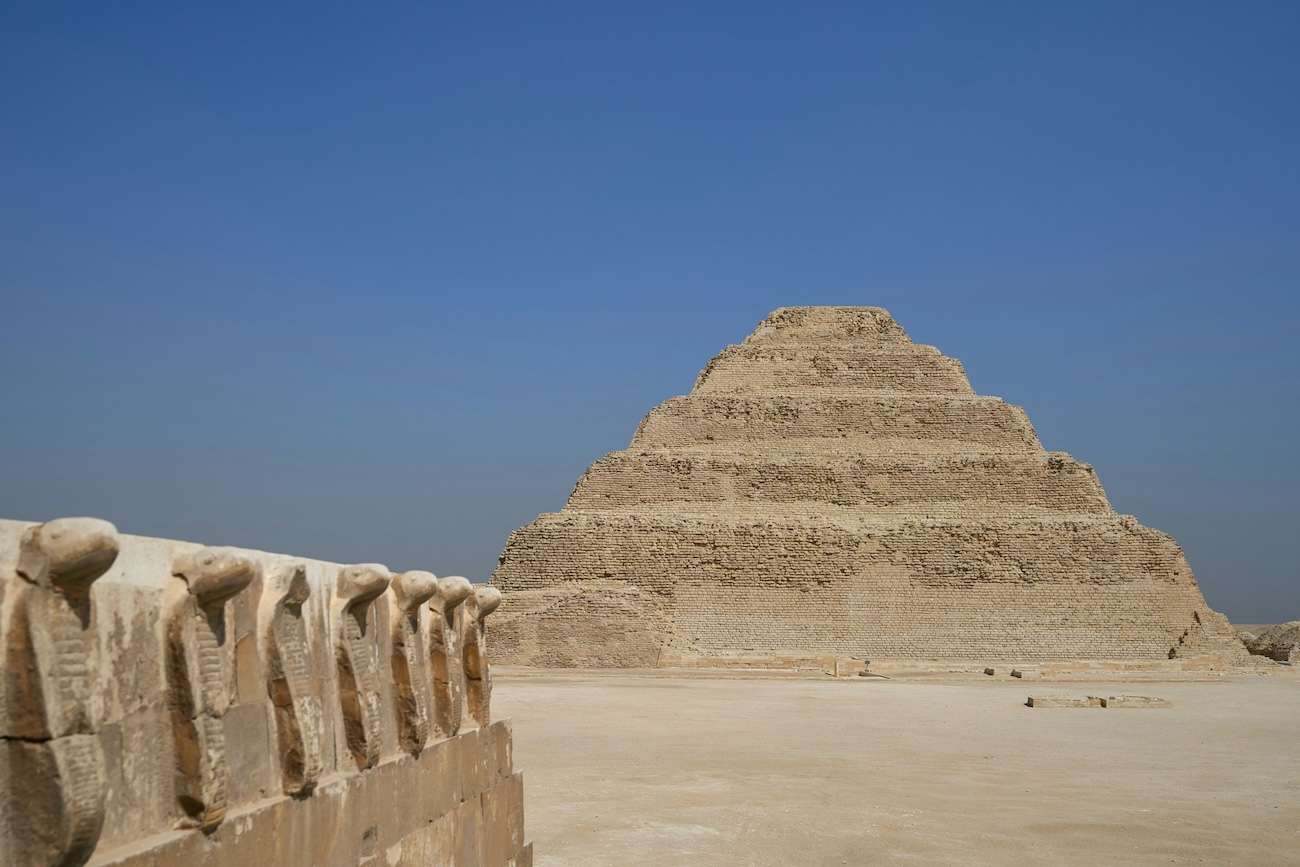 Photo by Dmitrii Zhodzishskii on Unsplash
South of Cairo, stretching across the desert plateau near the ancient capital of Memphis, Saqqara is one of Egypt’s most extraordinary archaeological landscapes. More than a single monument, it is a vast necropolis that chronicles the very beginnings of monumental stone architecture—and the birth of ideas that would shape ancient Egypt for millennia.
Saqqara is best known as the home of the Step Pyramid of Djoser, built in the 27th century BCE. Designed by the visionary architect Imhotep, it was the first large-scale structure in the world constructed entirely of stone.

This revolutionary design marked a turning point in human history. The Step Pyramid introduced concepts—scale, permanence, and divine symbolism—that later evolved into the smooth-sided pyramids of Giza. Standing before it today, visitors witness the moment architecture changed forever.
For over 3,000 years, Saqqara served as the main burial ground for Memphis, used by kings, nobles, priests, and officials across multiple dynasties. The site is scattered with pyramids, mastaba tombs, underground chambers, and richly decorated burial complexes.
Many of Saqqara’s tombs preserve vivid wall reliefs depicting daily life—farming, fishing, craftsmanship, music—offering intimate insights into how ancient Egyptians lived, worked, and believed in the afterlife.
Address:
Badrshein, Giza Governorate 3352001, Egypt
Hours:
| Monday | 8 am–4:30 pm |
| Tuesday | 8 am–4:30 pm |
| Wednesday | 8 am–4:30 pm |
| Thursday | 8 am–4:30 pm |
| Friday | 8 am–4:30 pm |
| Saturday | 8 am–4:30 pm |
| Sunday | 8 am–4:30 pm |