Perched against the dramatic cliffs of Deir el-Bahari on Luxor’s West Bank, the Mortuary Temple of Hatshepsut is one of ancient Egypt’s most stunning architectural achievements.
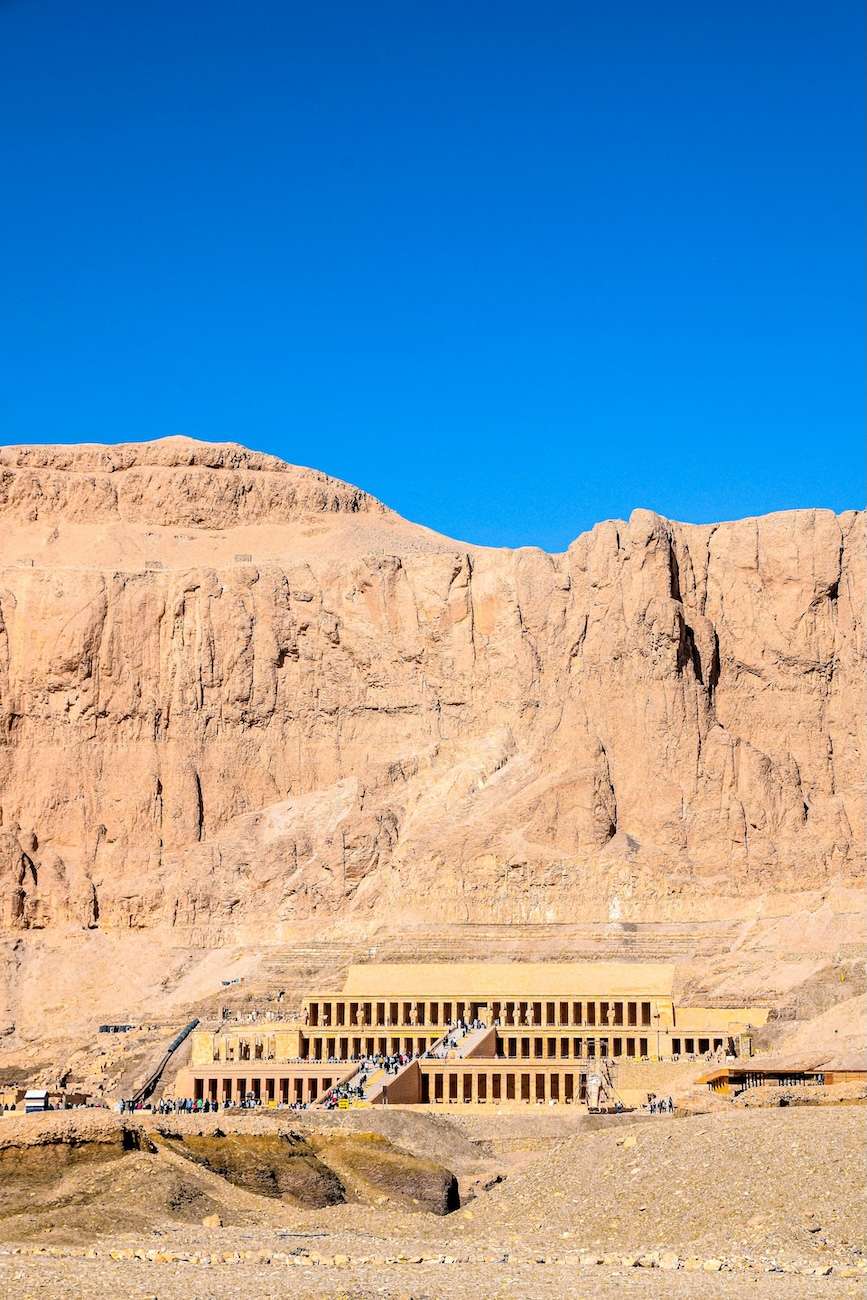 Photo by Tom Podmore on Unsplash
Commissioned by Queen Hatshepsut, one of Egypt’s few female pharaohs, the temple was built to honor her legacy and to serve as a sacred space for her cult after death. Constructed during the 15th century BCE, the temple reflects a unique combination of artistic vision, religious devotion, and architectural innovation that distinguishes it from other monuments along the Nile.
Visitors approaching the temple are immediately struck by its terraced design, rising gracefully in three levels connected by long ramps that draw the eye toward the cliff face above. Each terrace is lined with colonnades, housing statues of the queen and intricate reliefs depicting her divine birth, coronation, and voyages to the famed Land of Punt. These murals not only celebrate Hatshepsut’s reign but also provide a vivid glimpse into the ceremonial life and mythology of ancient Egypt. The temple’s careful integration into the natural landscape makes it a harmonious blend of stone and cliff, giving the impression that it emerges organically from the desert itself.

Inside, the temple reveals halls adorned with finely carved reliefs, sanctuaries dedicated to the gods, and chapels that served as venues for rituals honoring Hatshepsut and Amun-Ra. The architecture emphasizes balance and symmetry, with clean lines, axial alignment, and thoughtful use of light and shadow, creating a serene and contemplative atmosphere. Unlike many other mortuary temples, Hatshepsut’s temple is remarkably well-preserved, allowing modern visitors to fully appreciate the artistry and grandeur of her reign.
The best time to explore is early in the morning when the desert heat is mild, and the soft sunlight illuminates the terraces and reliefs in golden hues. Comfortable shoes are essential, as the temple is built on several ascending levels and involves walking over stone ramps and uneven surfaces. Bringing water, sunscreen, and a hat is highly recommended, especially during the summer months when temperatures can be intense. Photography enthusiasts will find endless opportunities for dramatic shots, from wide-angle views of the terraced façade against the cliff to close-ups of intricate hieroglyphs and carvings.
Visitors should also take time to appreciate the temple in context: it sits along the west bank necropolis of Thebes, in close proximity to the Valley of the Kings and the Mortuary Temple of Mentuhotep II, making it an ideal centerpiece for a full day of West Bank exploration. Hiring a licensed guide can greatly enhance the visit, providing historical insight into Hatshepsut’s reign, the religious significance of the temple, and the stories depicted in its art.
The Mortuary Temple of Hatshepsut stands today as a testament to the vision, power, and ingenuity of one of Egypt’s most remarkable rulers. Its elegant terraces, artistic mastery, and integration with the dramatic natural landscape make it a must-visit destination for travelers seeking to connect with the grandeur of ancient Egypt while experiencing the serene beauty of Luxor’s West Bank.
Address:
Al Qarna, Luxor Governorate 1340420, Egypt
Hours:
| Monday | 6 am–5 pm |
| Tuesday | 6 am–5 pm |
| Wednesday | 6 am–5 pm |
| Thursday | 6 am–5 pm |
| Friday | 6 am–5 pm |
| Saturday | 6 am–5 pm |
| Sunday | 6 am–5 pm |