How American businesses are raking in billions from the prison-industrial complex.
There is an incarceration crisis in the United States, one in which undermines the values of liberty and justice for all.
The Covid-19 pandemic has served as an eye-opener for people worldwide, as we had to reconsider which workers are considered “essential,” and whether or not we treat them as such. Throughout this conversation, however, many have forgotten incarcerated laborers.
Prisoners have been amongst those who have worked tirelessly throughout the pandemic, working in agriculture to help provide and keep food on the shelves, and also making personal protective equipment (PPE) for frontline workers. Although the Thirteenth Amendment abolished slavery in the United States, the exception to the clause allows for servitude as a punishment for a crime of which one has been convicted. This exception has allowed states and prisons to maintain their reliance on forced, uncompensated, and predominantly Black labor to date.
The Beginning
When incarceration rates hit new record highs in the 1980s and 90s, corporations saw this as a business opportunity. The Thirteenth Amendment institutionalized convict labor by expanding involuntary servitude as a punishment for crimes, and States would, in turn, lease prisoners to farmers, factory owners, and other businesses for low fees. This practice filled the capitalistic needs in the country, especially in the South, by the creation of a cheap labor force and generating revenue for the State.
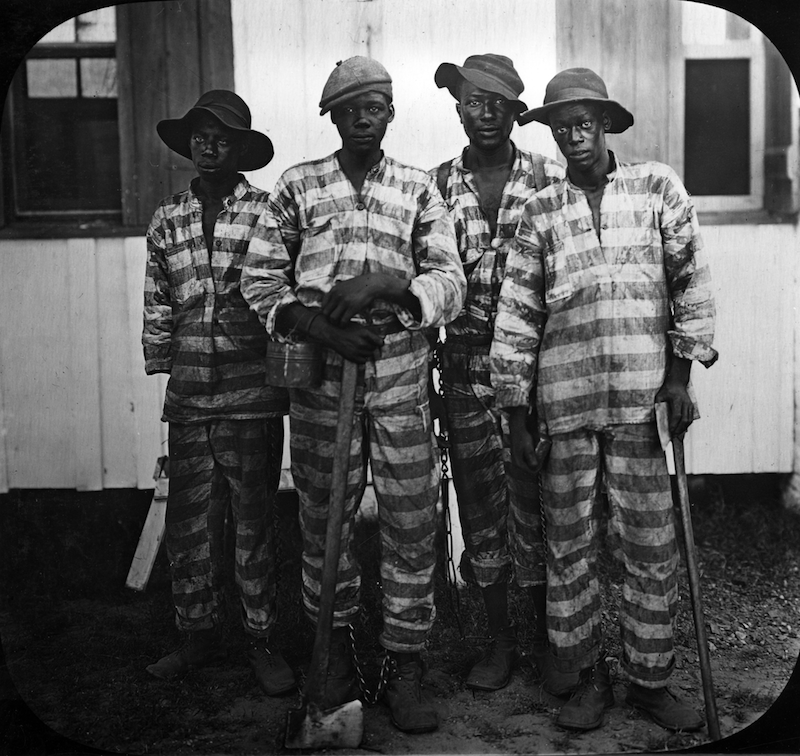
There were no legal safeguards in place for those working in the convict lease system, as workers would frequently work 16-hour days, and would be beaten for failing to meet daily quotas. If equipment or products were accidentally damaged, workers would be severely punished, as inmate labor was about generating revenue, not about rehabilitation.
The racial disproportionality of the convict lease system also mirrored that of slavery, with the inmates being almost entirely African American. Not much has changed today either, as Black Americans are still incarcerated at five times the rate of white people, and one in three Black men will go to jail at some point in their lives, resulting in an inmate workforce and population that is still disproportionately Black. This shows how the criminal justice system, at all levels, is stacked against Black people, communities of color, and immigrants.
Prison Labor Systems Today
Today, of the 1.8 million incarcerated people in the United States, over half are employed in some sort of prison labor with tasks including: cooking, farming, assembly, firefighting, digging ditches, picking up roadkill, and groundskeeping. Around 63,000 inmates work in prison industries that produce goods for external sale.
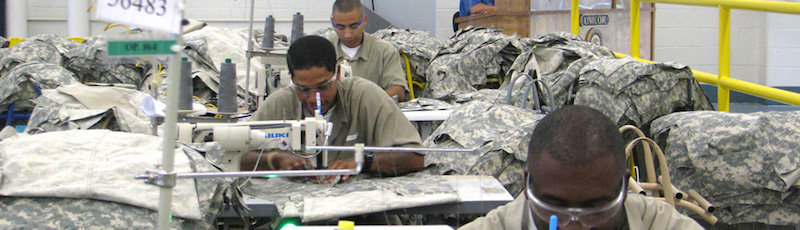
Prisons fall under two categories of ownership: privately owned prisons and government prisons. Under the Prison Industries Enhancement Certification Program (PIE), up to 80% of wages can be taken from workers, and these garnished wages go towards victim funds, room and board charges for prisoners, the creation and maintenance of prisons, and taxes. In some states, prisons are not even required to pay inmates for their labor and this is upheld and considered just under the clause of the Thirteenth Amendment.
Moreover, there is no worker’s compensation, and workers are not allowed to formally strike or unionize. Privately owned prisons continue to lease their inmates out to companies who utilize the nearly free labor without obligation to providing health care or any other employee benefits.
This just goes to show that prison workers are not protected from labor exploitation in the way that free American workers are. In fact, prisons as employers are not subject to Occupational Safety and Health regulations. This lack of safeguards and care for prisoners has manifested and allowed for inhumane labor practices that are deeply ingrained into the fabric of the criminal justice system.
Raking in Billions
Thousands of U.S. businesses participate in this exploitative system, including many publicly traded and household names like McDonald’s, Walmart, Starbucks, American Airlines, and Verizon. These corporations have monetized crime and punishment with the help of the government.
There are over 4,100 corporations engaged in the prison industrial complex, some of whom support prison labor directly or through supply chains. In April 2020, Worth Rises released “The Prison Industry: Mapping Private Sector Players”, cataloging the participating companies, and calling for the immediate divestment from the 180 large, publicly traded companies involved in prison labor.
Prison Labor and the Pandemic
The pandemic has highlighted the country’s reliance on prisoners to perform risk tasks for next to no pay. Since the beginning of the pandemic, inmates working in correction industries have been tasked with making PPE, hand sanitizer, face masks, and protective gowns. In Oregon, they were responsible for washing hospitals’ laundry, and in New York City, inmates at Rikers Island are being paid $6 per hour to dig mass graves for Covid-19 victims.
Similarly, in response to a shortage of migrant labor (caused by anti-immigration legislation,) state lawmakers have turned to prisoners to perform agricultural work. Although this echoes the old convict leasing system, now that the country is battling a pandemic, inmate workers in this industry are even more at risk.
The CDC has suggested safety precautions for incarcerated workers, such as social distancing and the use of PPE, but it seems like not many of the facilities are following this guidance, with various reports of inmates working in close quarters with no access to products like the protective equipment or sanitizer they are producing.
Prison labor has the potential to be beneficial for prisoners, but in order for it to be ethical, the power dynamic and masked racism must be addressed. The foundation of slavery and convict leasing must also be considered when creating and enforcing prison labor regulations and policies, and the exploitation of prisoners for private or governmental profits must end.