
You can spend months curating a bedroom that looks like a travel magazine, but if the bed doesn’t feel right, it falls flat.
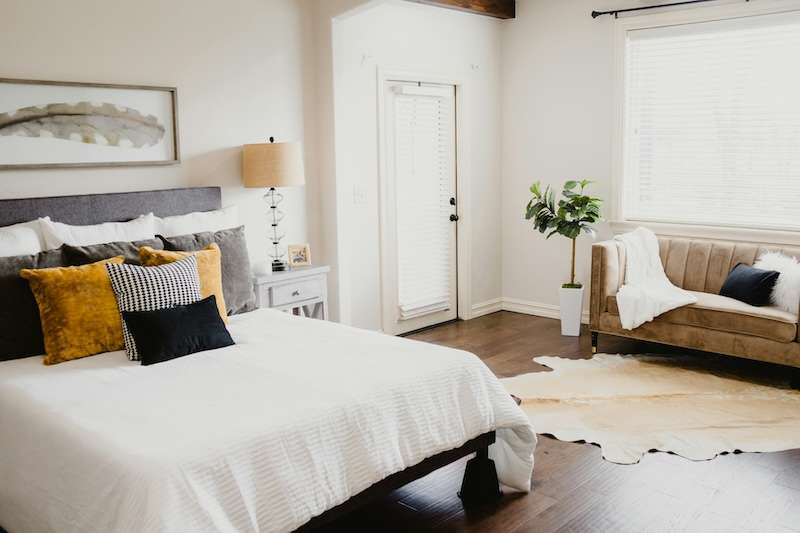 Photo by Isaac Martin on Unsplash
The real secret to global-inspired spaces isn’t just in the visuals. It’s in how you sleep. Travelers know this better than anyone: comfort isn’t universal, but it can be learned, adapted, and brought home.
The little sleep hack frequent flyers swear by
You never really know what kind of bed you’re going to land on when you’re living out of a suitcase. One night it’s a memory foam cloud in Copenhagen, the next it’s a paper-thin mattress over creaky wood in a friend’s spare room in Mexico City. For long-haul travelers and nomads, it’s not just about where you sleep, but how your body resets in between the motion.
That’s why more people are packing mattress toppers. Not the bulky kind your parents used to have, but slim, rollable ones you can stuff in a duffel. They’re a subtle upgrade that turns a questionable Airbnb into something you can actually fall asleep on. It’s less about luxury, more about consistency. Like bringing your own little square of control to unfamiliar places.
Newer travel-friendly models are built for this kind of life. Thin enough to carry, thick enough to matter. In a world where you’re constantly adjusting, a familiar surface makes all the difference. It’s a buffer not just against bad beds, but against that feeling of sleeping in a space that isn’t yours.
What really makes hotel beds feel so good?
It’s not just the crisp sheets. What makes hotel beds stand out is how they’re layered: mattress, pad, topper, featherbed, and linens all working together. The result is that soft-yet-supportive feel you can’t quite recreate with a single mattress at home. The mattress pad is the quiet layer that pulls the whole experience together.. It adds loft, softens firmness, and helps regulate heat. According to SleepFoundation.org, even a basic pad with breathable fabric can noticeably improve comfort and hygiene. It’s a simple layer, but it changes everything.
You don’t need a suite to get that feeling. Start small. One extra layer, well chosen, can turn your bed into a space that feels just a little more designed for rest, not just for show. Even Air France has leaned into this idea, adding plush mattress pads from Sofitel to its long-haul Business Class cabins, a move that proves thoughtful layering isn’t just for hotels anymore, but for travelers who expect comfort at 30,000 feet.
When your bed starts thinking globally
Travel reshapes what comfort means. In Tokyo, you might sleep on a futon rolled over tatami. In Marrakesh, a firm mattress rests on tile. In Stockholm, the bedding is feather-soft, but the room stays chilly. Each place offers a different take on rest, rooted in climate, tradition, and lifestyle.
You start to notice what your own sleep routine lacks. Maybe it’s the firm support of a thinner layer. Or the way natural fabrics breathe better than bulky ones. In much of Europe, removable mattress pads are standard not for luxury, but for practicality and hygiene. After enough nights abroad, that starts to make sense.
Designers talk about global style as a visual thing. But comfort is just as cultural. A mattress pad isn’t just about softness it’s about shaping your bed with intent, the way you’d style a space. Memory, texture, temperature each filtered through what you’ve lived, and where you’ve slept.
