
Winter sports offer a fantastic way to get outdoors and break a sweat. Once spring arrives, you may find yourself longing to keep those winter sports going, even if the snow is beginning to melt.
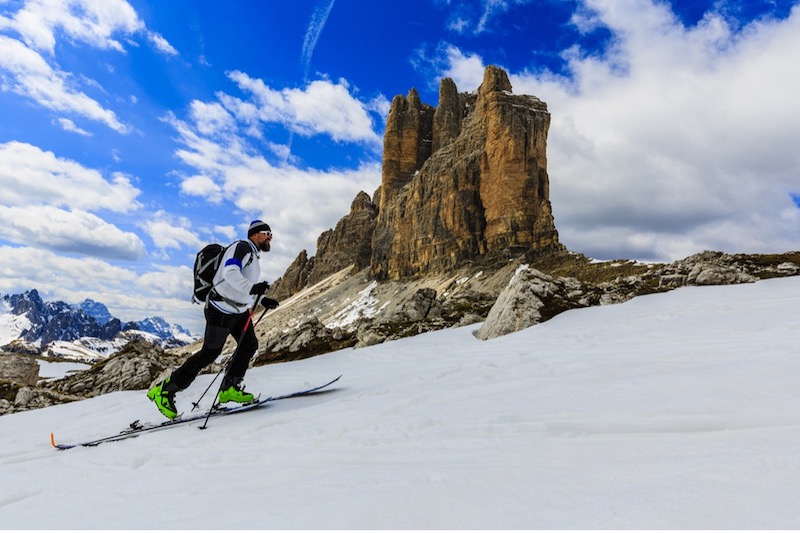
But the season’s not over yet, don’t worry. At high-altitude destinations throughout the U.S., it’s possible to backcountry ski well into the summer. And it’s one of our favorite ways to welcome spring.
Never tried this snow sport before? Start by gearing up with moisture-wicking, temperature-regulating wool baselayers and sign up for an avalanche safety course, or hire a private guide with extensive experience to take you out into territory appropriate for a beginner.
Here are five tips for backcountry skiing in the early spring, from dressing in moisture-wicking, smell-repelling merino wool layers for warmth and sun protection to understanding basic avalanche and cornice safety.
#1. Learn Avalanche Safety
Avalanches are serious business, and it’s essential to seek proper training before setting off into territory prone to slides. Once you’ve purchased the necessary gear, including a beacon, probe, and shovel so you and your ski buddies can locate and dig one another out in the event of an emergency, take the time to learn how to use those tools from an expert trained in avalanche science. If you don’t live near terrain where you can easily take a class like this in person, make a trip out of it. Colorado Mountain School, for example, offers multi-day AIARE (American Institute for Avalanche Research and Education) training courses out in the snowy Rocky Mountains. We can’t think of a more scenic classroom.
# 2. Dress in Layers
When your body is working hard in winter months, layer management is more than just a comfort issue. It can be life-or-death. You need to make sure you’re wearing layers that allow you to dump heat without holding on to sweat. If you overheat and sweat, you could catch a chill—or, worse, hypothermia—when you stop moving or if the weather takes a turn for the worse.
You want to wear moisture-wicking, quick-drying fabric such as merino wool to keep your core body temperature regulated. Merino wool helps insulate you against the cold while also being super-breathable to dump body heat and keep you from even starting to sweat in the first place. Bonus? It naturally repels odors from sweat and can be worn for days, or even weeks, at a time between washing.
Choose a Merino wool base layer top to draw moisture away from your body as you break a sweat skiing. While Merino wool can adjust to your body temperature, making it an excellent fabric in both winter and summer, make sure to throw on or carry insulative outerwear or a softshell jacket for chilly conditions in higher altitude areas. For your bottom layer, slip into a pair of well-ventilated, breathable hardshell or softshell pants. And be sure to keep your feet and boots warm with Merino wool socks.
#3. Protect Yourself from the Sun
Did you know that merino wool offers grease-free, natural protection against harmful UV rays? The American Wool Council states that wool reaches a 30+ UV protection factor, higher than cotton and many other materials.
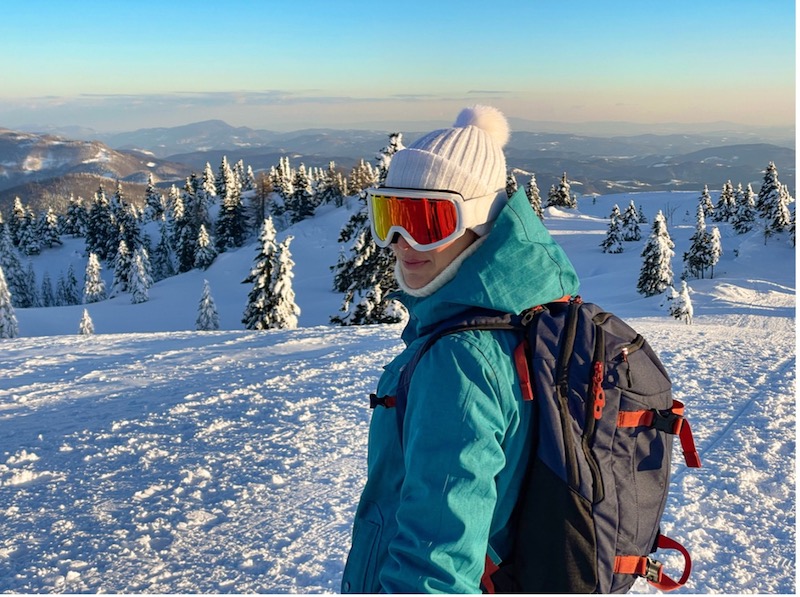
Even on cold and cloudy winter days,even a tiny bit of sun can burn you, no matter how cold your skin may feel—especially in high-altitude areas. Make sure you’re wearing a ski-specific helmet and goggles to shield your face and eyes and protect you against injury. You can pull a neck gaiter up over the lower half of your face for additional sun protection if you prefer to avoid sunscreen.
For anything that is not already protected by warm gloves and long sleeves, make sure to apply sunscreen. This goes for your nose, face, ears and even lips. Yep, make sure you bring an SPF chapstick or lip balm, too.
#3. Wax Your Ski Skins
Even your skins can benefit from waxing. Applying a skin wax will prevent snow buildup on your skis that causes what’s referred to as “skin glopping.” While there are many tips and techniques to stop skin glopping, prevention is often key. So before you head out on your first backcountry skiing trip in spring, be sure to apply some wax to your skins.
Carry a block of skin wax in your backpack, too. This way, you can rub your ski skins from tip to tail while they’re attached. A fresh coat of warm weather wax on your skis also helps keep your turns from getting slow in gloppy, sticky snow. Another trick is to use fresh wax to keep skin glue from transferring onto your ski’s bases.
#5. Stay Hydrated
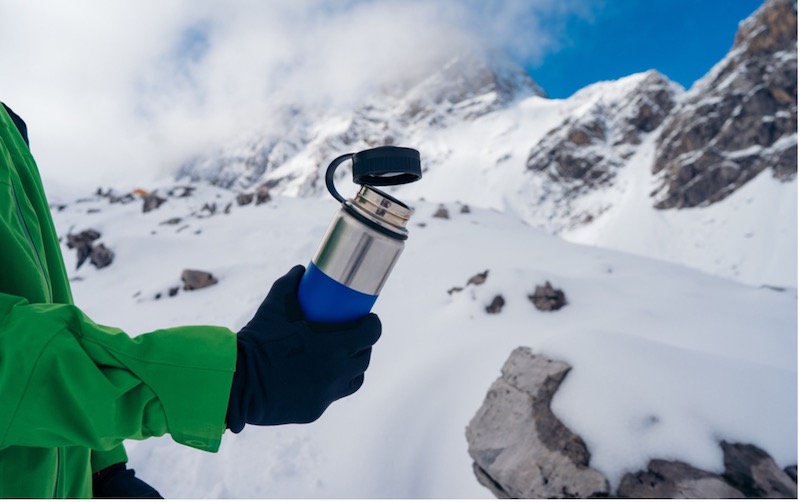
Remember to stay hydrated. Even in the middle of winter with the ground still covered in powdery snow, all those layers and strenuous exercise can make you break a sweat. Drinking tea to keep warm as you trek through the snow becomes more of a soothing treat than a task. But once spring rolls around and you’re able to shed some layers on a warmer day, you might sweat even more while touring. In turn, this can dehydrate you quicker than you may realize.
That’s why whenever you go backcountry skiing in the early spring, you should make a habit of bringing plenty of water. Packing a thermos of tea is always a fantastic idea, but in spring, that’s not always going to quench your thirst. One simple solution is to carry a camelbak-style backpack or some sort of hydration bladder filled with water so you can be hands-free and manage your poles more readily and safely. Mid-winter your sip tube and valve might freeze solid, making hydration a bit of a challenge. However, with warmer spring temps, you never have to worry about this happening. Also, while you should always carry water with you on the tour, leave a water bottle in the car for when you return too.
