Jovenel Moïse, Haiti’s President, was assassinated in an attack on his private residence on the outskirts of the country’s capital, Port-au-Prince, on Wednesday, July 7, 2021. The assassination left a ripple effect that is deepening the turmoil that has gripped Haiti for years, pushing the country further into lawlessness. Here is everything you need to know about Haiti’s history of political instability and violence.
Haiti is a country riddled with dramatically contrasting distinctions. With a vibrant economy producing half of the world’s sugar and coffee supply, colonial Haiti was considered to be the pearl of the Caribbean. In 1804, Haiti won its independence through the only successful slave revolt in the world’s history, however, today Haiti is known to be one of, if not the poorest countries in the Western Hemisphere, with dismal socioeconomic indicators and little social and political infrastructure.
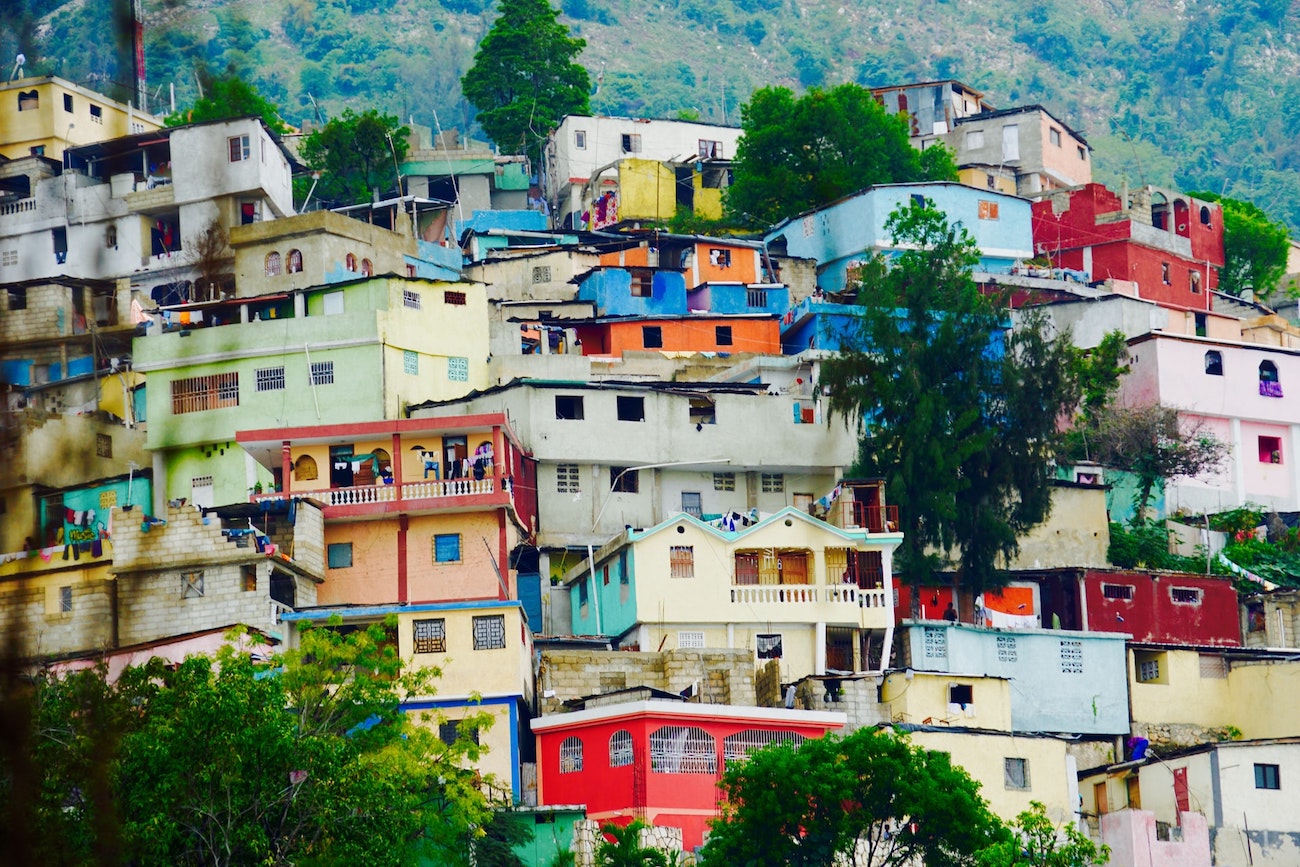
Here is the turbulent history of Haiti’s political instability and violence.
Early Period & Spanish Colonization
The island that is now Haiti and the Dominican Republic, was first inhabited around 5000 BCE. By 300 BCE, the Arawak and other indigenous peoples, including the Taino and Ciboney, began developing farming villages and communities, basing their economies on fishing, farming, trade of gold, pottery, and other goods.
In 1492, Italian navigator, Christopher Columbus, sighted the island, naming it La Isla Española (“The Spanish Island.”) Following were decades of Spain enslaving vast numbers of the indigenous peoples to mine for gold and other riches.
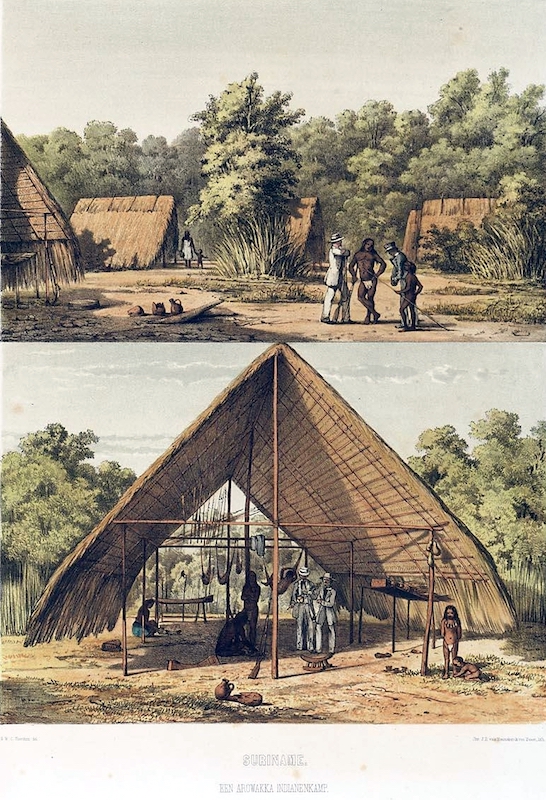
European diseases and inhumane working conditions devastated the indigenous population, which, by the end of the 16th century, had virtually vanished. Similarly, thousands of slaves imported from neighboring Caribbean islands met the same fate. In the mid-16th century, the French found themselves on islands off the west of Hispaniola. Subsequently, both French and British buccaneers held bases there, and permanent settlements, including plantations, began to quickly develop.
In the 1660s, the French founded the Port-de-Paix in the northwest, and the French West Indies Corporation took control of the area. Landowners in western Hispaniola imported increasing numbers of African slaves, which, by the late 17th century, totaled over 5,000.
French Colonial Rule
The Treaty of Rijswijk in 1967, which formally ceded Hispaniola from Spain to France, allowed the colony’s population and economic impact to rapidly grow during the 18th century, making the island France’s most prosperous source of income at the time, exporting sugar, cotton, indigo, coffee, and cacao.
By the 1790s, nearly two-thirds of France’s foreign investments were based on the island, and in 1789, there was an estimated population of 556,000 people, including roughly 500,000 African slaves, 32,000 European colonists, and 24,000 affranchis, who were people of mixed European and African descent.
Haitian society was deeply fragmented by skin color, class, and gender. The “white” population comprised of elite merchants, slave owners, and landowners, and the slave population, most of whom were African-born, majority of West African ethnic descent. The affranchis, who were sometimes slave owners themselves, aspired to the economic and social levels of the elite, however, the colonists generally discriminated against them.
The aspirations of the affranchis and slaves, who, suffered from brutal working conditions, malnutrition, and starvation; became a major factor in the colony’s struggle for independence.
The Haitian Revolution
The Haitian Revolution, lasting from 1791 until 1804, had many precipitating factors, however, the most standout being the brutality of the French colonial administration.
Uprisings began in late 1970, but by the summer of 1971, isolated fighting broke out between Europeans and affranchis, which later acted as a catalyst for the thousands of slaves joining together in rebellion that August. Europeans granted citizenship to all affranchis in 1972, hoping to appease the situation, however, this may have done more harm than good. Spain ceded the rest of the island to France in the Treaty of Basel in 1795.
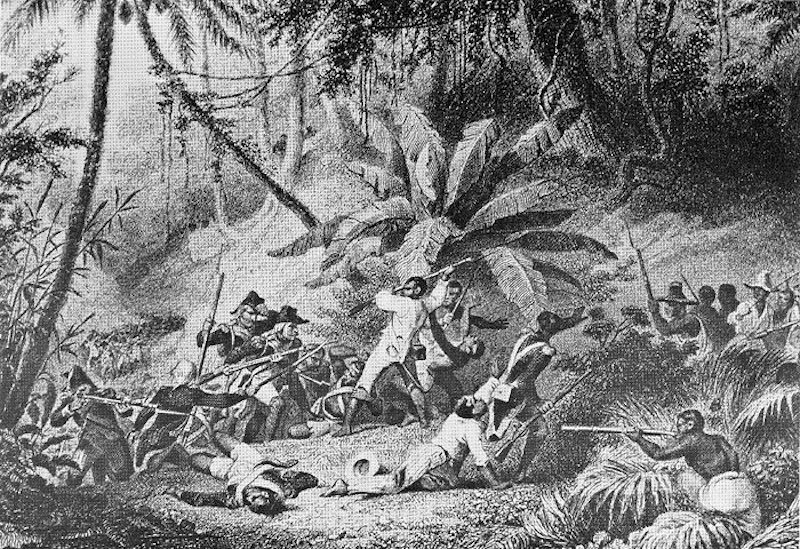
Jean-Jacques Dessalines and Henry Christophe, who both led a Black army against the French in 1802, defeated the French commander and by November of 1803, the French surrendered. France withdrew from Haiti but maintained a presence in the eastern part of the island until 1809.
Haiti’s Independence
On January 1, 1804, the entire island was declared independent under the Arawak-derived name of Haiti. Following independence, the young nation found itself, however, with enormous economic burdens and challenges. The war had destroyed many plantations and towns, and the new republic was plagued with civil unrest and a lack of administrators and craftsmen.
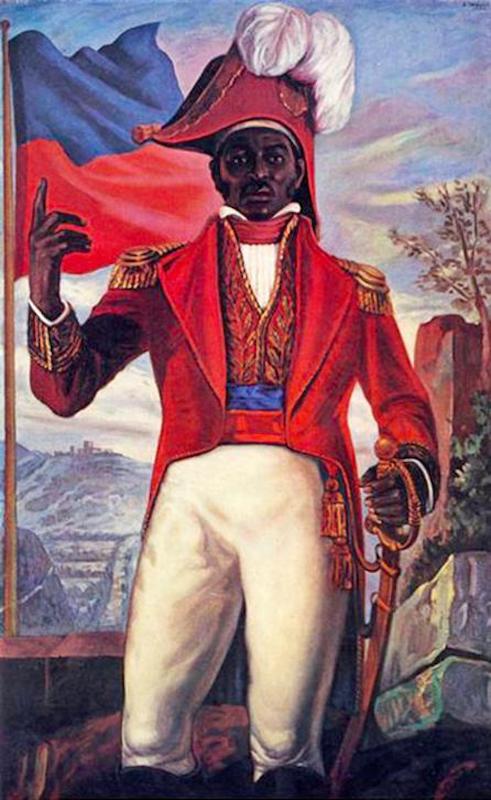
Surrounded by slave colonies and slave-owning United States, Haiti became an international desired good, and France demanded massive reparations for assets seized during the war in return for the country recognizing Haitian independence.
(France formally recognized Haitian independence in 1825, followed by Britain in 1833, and the United States in 1862.)
By 1838, more than 30 million francs had been transferred from Haiti’s treasury to Paris, and the demands for indemnities continued until 1887, dooming Haiti to extreme international debtor status.
The Haitian Revolution not only resulted in the island’s independence, but also gave rise to two distinct populations in Haiti: a small urban elite who were mainly French-speaking, white, mixed-race, and the vast majority of Black, Creole-speaking peasants.
This elite population, in alliance with the military, reshaped themselves into a mercantile class, which would later become an extractive state. Peasant agriculture was organized through an egalitarian system of small landholdings geared towards subsistence agriculture, and this structure of the economic division, which was reinforced by the cultural divisions, gave shape to the extractive, violent nature of the state that has lasted into the present.
This structure has functioned to fulfill the needs of its elite while offering little to no benefits to the Haitian people.
The 1900s and United States Occupation
The 19th century only reinforced the social and economic divide between the small urban elite and the vast majority of the Black population. Social services, infrastructure, community, and resources were near non-existent in the countryside where the majority Black population lived, whereas Port-au-Prince, where the small urban elite resided, was the center of culture, politics, and business.
In the late 1890s, the U.S. attempted to gain additional military and commercial privileges in Haiti, but by 1905, it took control of Haiti’s customs operations, gaining a secure financial foothold in the country.
In 1915, a United States invasion interrupted a nearly century-long period during which Haiti alternated between dictatorship and anarchy. The U.S. occupation of Haiti, largely motivated by a regional stabilization policy, did succeed in at least a temporary restoring of some order, however, many Haitians believe that the Marines had really been sent over to protect U.S. investments and establish a base to protect deals with the Panama Canal.
While there was some economic growth, it was not sustained, as infrastructure had crumbled from neglect, and the vast majority of Haitians continued to live in rural poverty. When the United States did leave in 1934, they did so without preparing Haiti for self-governing.
Interestingly, the period from 1934 until the rise of Dictator Francois Duvalier in 1957, constitutes a period of progressive politics and political promise for Haiti. Within the context of military juntas, dictatorship, and coups; radical groups emerged, succeeding to transform Haiti’s political culture and discourse. This promise of social, economic, and political developments, however, did not last, and the grievances of Haiti’s masses remained largely ignored.
Political Instability and Violence
Rising to power in 1957, François Duvalier promised a revolution. Although it did nothing to alter the relationship between the extractive Haitian state and the majority of rural citizens, it did achieve a reconsolidation of economic and political power into the hands of the emerging new Black middle class.

At the height of the Cold War, it was in Duvalier’s favor that he was an asserted anti-Communist. The United States, in turn, rewarded this loyalty by turning a blind eye to the human rights violations perpetuated by his dictatorship, supplying Duvalier with military aid and other assistance.
Jean Claude Duvalier, François’ son, became president in 1981, with a commitment to an economic revolution that would modernize the country and address the needs of the poor. Throughout the 1970s, bilateral and multilateral assistance poured into Haiti. A decade later, however, Haiti remained the poorest country in the hemisphere. With public outrage at an all-time high, violence ensued, ushering Jean Claude Duvalier into exile in 1986.
In the post-Duvalier period, an interim government formed with the mandate to carry out elections but ultimately failed. As a result, unrest, strikes, and demonstrations culminated.
In 1988, Haiti saw three presidents come and go, as the military reconsolidated power. Jean Bertrand Aristide won the Presidential victory by massive voter turnout, and this priest turned politician wasted no time beginning radical reforms, including a purge of the top military ranks and proposed tax on elites. The backlash that followed from elites was severe, less than eight months after his election to office, Aristide was deposed in a violent military-led coup, igniting yet another wave of violence and terror into the country.
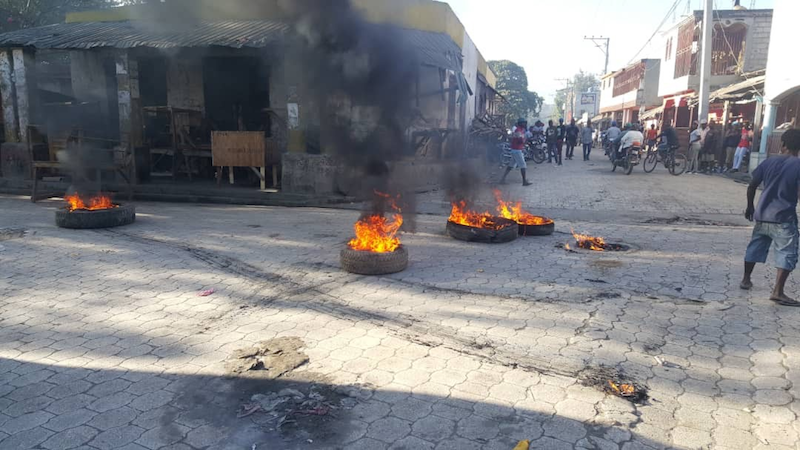
Three years of brutality followed, as the new dictatorship under the leadership of General Raoul Cèdres, waged a violent crackdown on political opposition. Aristide returned to office under the protection of the U.S. Multi-National Force (MNF) in 1994, winning a second term in office in 2000.
During his second administration, Haiti was steeped in violence, as political factions and economic interests fought for power, making the country ungovernable and the economy slowly imploding. In 2004, a coalition of ex-military, paramilitaries, economic aristocrats, and many of Aristide’s once-loyal supporters overthrow Aristide in a second violent coup.
The Roots of Violence
The effects of Haiti’s chronic political instability and violence, and the government’s failure to deliver promises have been crippling to the country’s development. As a result, Haiti has become not only the poorest country in the Western Hemisphere, but also among the world. Almost half of the population has no access to clean drinking water, one-third has no sanitary facility, and only 10% has electricity.
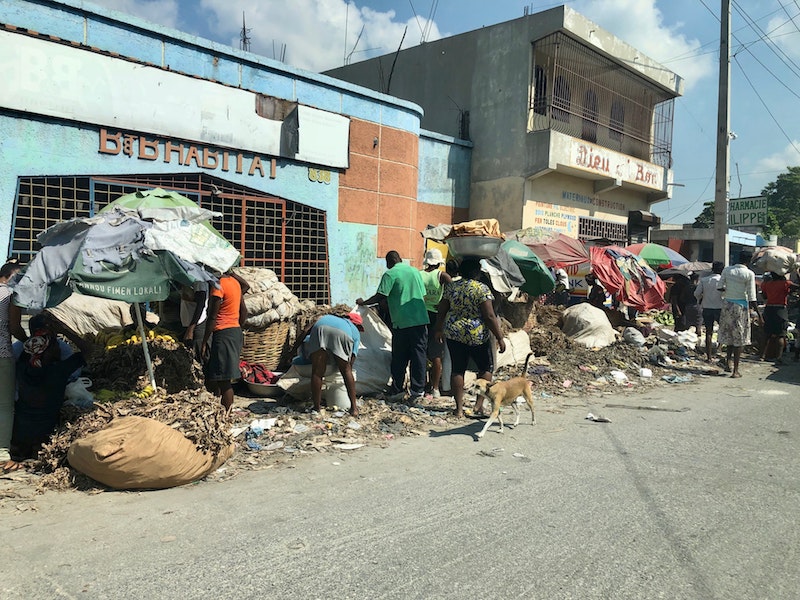
Similarly, Haiti ranks near to the bottom on every system of governance ranking. In the World Bank’s government assessment, Haiti ranks in the bottom 8th percentile for government effectiveness, and in the bottom 4th percentile for the absence of corruption as compared to the rest of the world.
Just as devastating, Haiti has slowly become an environmental disaster. From colonization to the stripping of natural resources, 97% of Haiti’s forests are gone, resulting in repeated catastrophic flooding. According to the United Nations Development Program’s Disaster Risk Index, Haiti is one of the most vulnerable countries to natural disasters.
Violence in Haiti is often explained through these dreadful conditions and circumstances, however, one must look at the historical roots of these plights to explain why Haiti is locked in a negative spiral.