
Traveling to a new city or country during one of its provincial holidays can be the richest way to experience it, as you are engulfed in a celebratory milieu of cultural idiosyncrasies.
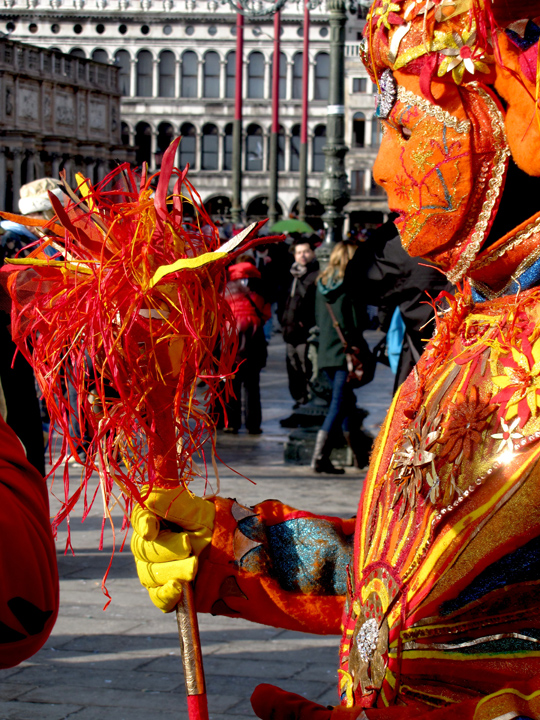 One of the more impressive practitioners of Carnival’s masquerade tradition. PHOTO MACEAGON VOYCE
It’s quite evident that all places have unique cultures, even within the United States. There exists an incredible array of colloquialisms that make regions and their residents identifiable, whether it’s a southern drawl or the casual negation of the letter ‘R’. Those discrepancies exist throughout the entire world, and the further you venture from home, the more conspicuous those idiomatic distinctions become. Travelers love to seek out the authenticity of a place, to viscerally immerse themselves in those colloquial hallmarks that make that culture unique from all others. When better to do this than when that culture is itself celebrating those hallmarks? Traveling to a new city or country during one of its provincial holidays can be the richest way to experience it, as you are engulfed in a celebratory milieu of cultural idiosyncrasies. Sometimes you may even accidentally stumble upon such a celebration without foresight of its existence, a nice perk to any trip. I have witnessed a number of regional/national holidays—all of them unintentionally.
Quito, Ecuador
I WWOOF-ed (World Wide Opportunities on Organic Farms) with a family outside of Quito, Ecuador for several weeks, building chicken houses and rabbit pens in exchange for meals and a place to stay. One day they informed me that I’d be accompanying them on an outing to celebrate the city’s Spanish foundation, and of course I was thrilled because who doesn’t enjoy a celebration after a long day of building chicken houses?
We drove into the city and hopped onto one of the hundreds of trolleys (called “Chivas”) that were touring the city with traditional Ecuadorian bands on their roofs. We drank canelazo, a local alcoholic beverage derived from sugarcane that is possibly the strongest, least palatable and most efficient drink I’ve ever consumed. Our trolley—or proverbial party bus—stopped at many of Quito’s squares for dancing and intermingling amongst the other trolleys as a night of revelry continued to ensue. I was drenched in the celebration of the country’s rich history with all of its people, and for that night I felt like I could say that I was, at least partially, Ecuadorian. I continue to echo the phrase we shouted incessantly that night: “¡Viva Quito!”
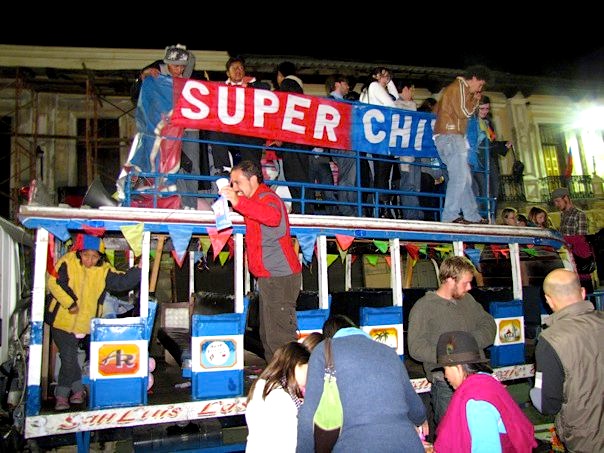 Our glorious Chiva, complete with roof band and lighthearted revelry. PHOTO MACEAGON VOYCE
Venice, Italy
I arrived in Venice on the penultimate day of Carnival in the midst of a blizzard—the first Venetian snowfall in years—along with my shredded hope for balmy Italian weather (although I did get glimmers of it later in my stay). Carnival is an annual masquerade celebrated all over the world—most famously in Italy—that culminates on Fat Tuesday to usher in the season of Lent. I decided to disregard the accumulating slush, don a mask and join the vivid spectacle of ostentatious disguise. Hundreds of people were decked out in ornate garb and spent most of their days posing for visitors in popular locales throughout the floating city. Winding my way through the maze of canals, walkways and vibrant décor,both alive and inanimate, I resolved to get lost amongst the wonder.
Carnival had the largest tourist presence of any holiday I’ve experienced in another country, and it was thus more commercialized which detracted slightly from the sense of authenticity. That being said, it’s still quite humbling to participate in the infamous masquerade whose turbulent history dates back to the 13th century; Carnival remains a solid bucket list candidate for anyone.
Ljubljana, Slovenia
The most unanticipated holiday I’ve ever stumbled upon is Prešeren Day in Ljubljana, Slovenia. The day is named after a famous Slovenian poet whose ardor and nationalist ethics are intended to represent the legitimacy and potential of the nation, making Prešeren Day the only nationalist celebration of the country’s culture. To bolster that sense of nationalistic pride in its citizens, and to raise awareness of the history that has engendered the Slovenian people, Ljubljana makes its museums free for the day and gives everyone the day off; so, I spent the day in museums and parks learning about the culture with the people who keep it alive today.
But the pride that Slovenian people feel in their culture comes with expectations of the potential that Prešeren represents, and citizens angry about the current economic direction of the state used the day to march 10,000 strong through the capital. There was very little hostility amongst the sea of dissenting Slovenians, but their dissatisfaction was palpable, manifesting itself in banners and chants of protest. Several masked men climbed the walls of the Slovenian bank, using the financial center as an economic figurehead and inciting a particularly salient uproar in the demonstration. Prešeren Day was a great exhibition of what a provincial holiday should be: both a celebration of culture and a reminder to hold that culture to the standards and hallmarks that created it.
Article written by MACEAGON VOYCE.
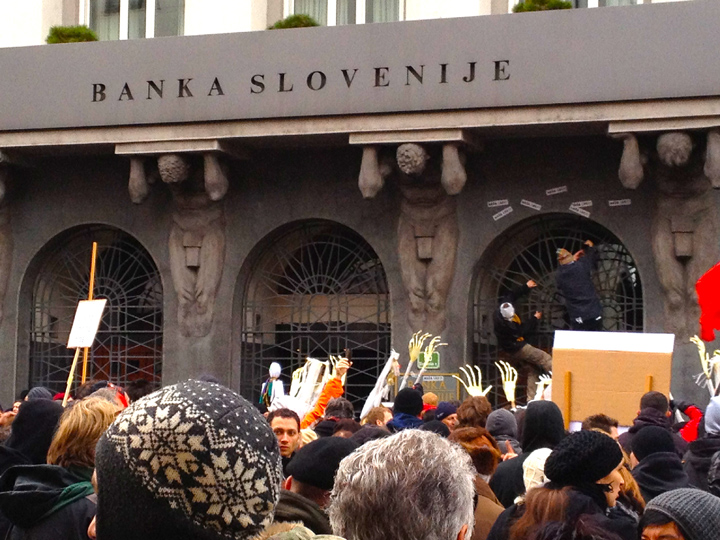 Two masked men climb the walls of a Slovenian bank duringa Prešeren Day protest.PHOTO MACEAGON VOYCE
