Superba was created so the community can feel at home, leaving pretense behind.
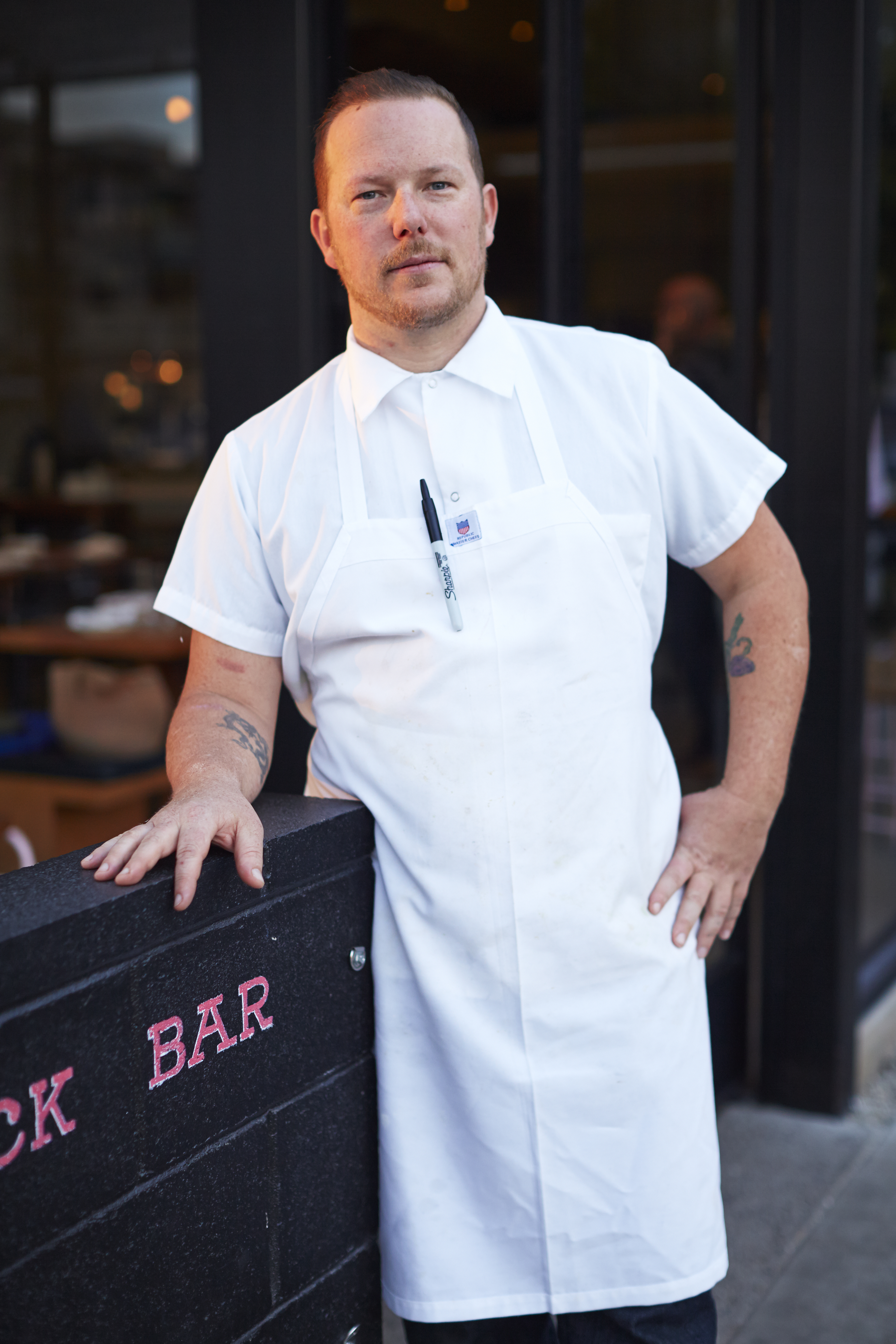
By showcasing his version of the world with eclectic art on plates, Chef Jason Neroni lets you know exactly where he’s traveled to. He’s lived in Mexico City, Barcelona, San Sebastian and has worked in some of the world’s most legendary kitchens. From Alice Water’s famous Chez Panisse in Berkeley, Alain Ducasse au Plaza Athénée on Champs-Élysées in Paris, to New York City’s iconic Le Cirque and Tabla.
People may comment on his style as one that “jumps around,” but he’s lived through colorful stories around the world while acquiring a decorative career. “It’s always how I’ve wanted to cook. I want to do global cuisine. Maybe I do jump around, but why do I have to be tied down anywhere? I’m a chef with the ability to live and go wherever I want to. That’s who I am.”
His latest venture, Superba Snack Bar, perfectly fits into Los Angeles’ kickback Venice community; he thrives in the widest range of palates. “We call this a ‘snack bar’ because when you go to the beach, you simply get food at the snack bar. But it can also mean different things: street food, American food. That’s our approach, there’s Japanese, Chinese, Spanish, Southern American, French elements to everything.” Having fun with the pasta element thrown in, Jason shines with his forte and true love.
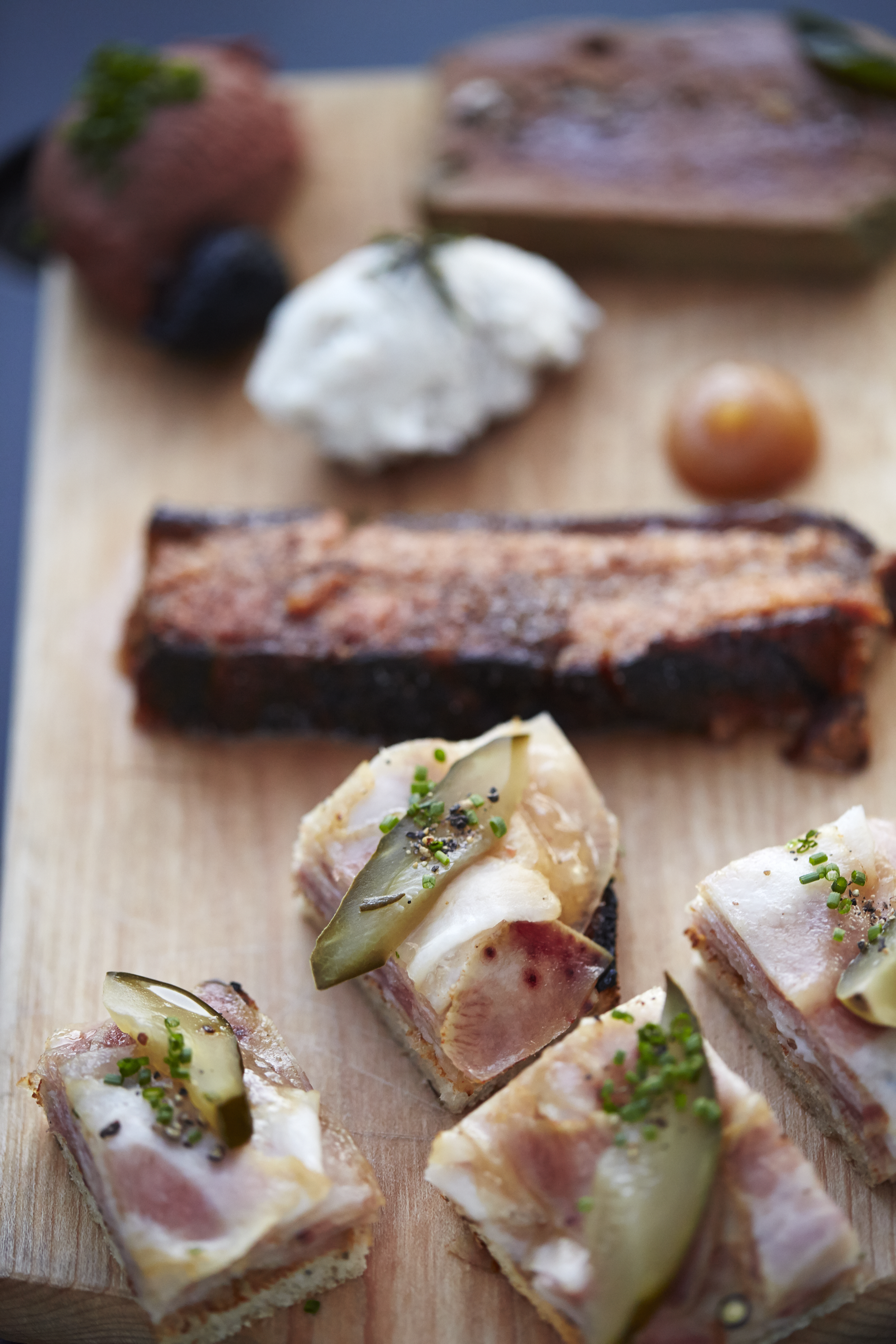
The idea behind Superba is a classic case of how most partnerships are built in Los Angeles, in the backlot of Paramount. Owner, Paul Hibler was already in the pizza business, and Jason had longed for a pastaria of his own. “We wanted a community-based restaurant that people can come and do what Italians do. They go into a pastaria, they can either have a meal or some cheese and a glass of wine.” Simple, casual. But if guests want something more, Jason’s fried chicken and braised octopus are dishes that his team take immense stride for.
Superba was created so the community can feel at home, leaving pretense behind. Though labeled as a “snack bar,” the broad variety of even its pasta selections well represent parts of the world where Jason has lived. His chocolate pasta is similar to how Sicilians make their own by using cocoa powder. He transforms wakame (typically used in Japanese dishes with the black salad tossed in sesame seeds and oil) into a spectacle of flavors with a wakame spaghetti accompanied by: uni, Dungeness crab, miso butter and pickled jalapenos. He adds hot mustard to a Korean spin of an Italian classic by using black garlic, clams and a splash of kimchi.
He works with a number of local markets and growing his own products with Eclectic Acres in Riverside area, a farm where he has his own plots. He has a clear idea of the types of vegetables to grow. The farm grows chickens producing weekly eggs delivered to the restaurant. These come in handy as poached eggs are quite popular among Jason’s team and guests.
“I started cooking at Disneyland. Like every kid who grew up in Orange County, I originally wanted to work at the rides.” But he was hired at sixteen years old to work at Disneyland’s kitchen that served six restaurants inside the amusement park, “They had a huge space with ten refrigerator walk-in, basically they could store an army in there. That’s how I started: peeling vegetables, potatoes, salads, anything they asked me to do.”
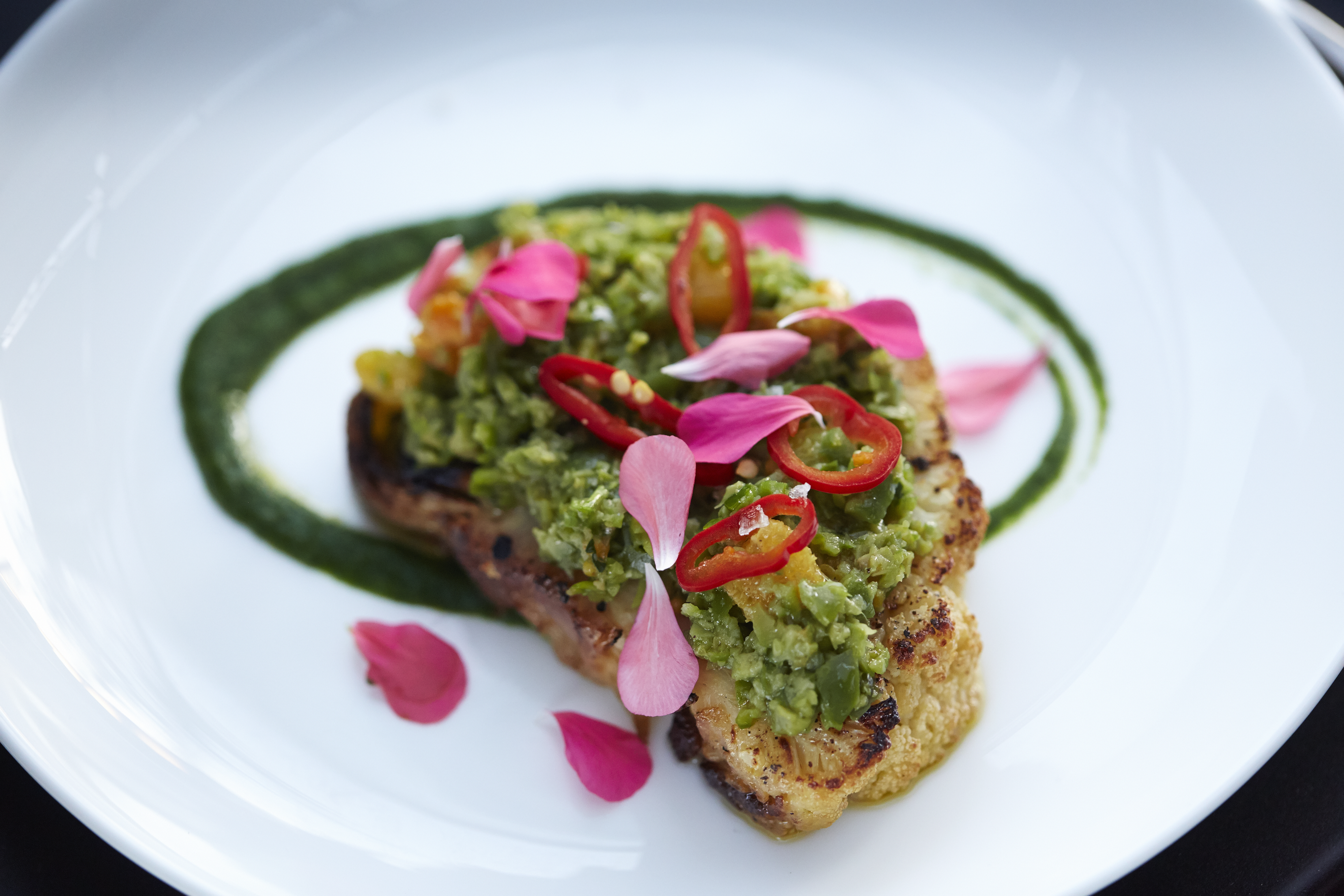
It wasn’t until someone took notice of his work and brought him to Club 33, a higher-end restaurant inside Disneyland. “I really wanted to be an artist at the time, ready to attend a visual art school in Oakland since I was producing graffiti-type t-shirts. But Club 33’s kitchen introduced me to the world of culinary art.” For the first time, he realized edible art was beautifully created on a plate.
He worked at Club 33 for a year and a half, then elevated to Chez Panisse in Berkeley, Wolfgang Puck’s Postrio in San Francisco’s Union Square and Spago in Beverly Hills. When he was brought to New York for an opportunity that evaporated, he walked through the dining room at Le Cirque and boldly asked to be hired. “I started working the next day. They couldn’t believe I had the balls to walk straight into the kitchen of Le Cirque!”
His career in New York also consists of learning Indian cuisine at Tabla, a restaurant headlined by Danny Meyer and Chef Floyd Cardoz. By 9/11, he was also working for Alain Ducasse, an opportunity that eventually brought him to Europe. “In New York, most kitchens are French brigade. If not, then a kitchen isn’t taken very seriously. I do agree with that, because it shows team work, people have aspirations to move up to different positions.”
His worldly experiences have set the tone for his way of managing Superba: a disciplinary style that holds every staff accountable but opportunities to move up in a chain are also recognized. His vision for Superba is about evolvement. “I really hate that people judge how you’re going to be in the first six months. We’re always going to be changing and there’s still a lot that we can explore.” In the near future, there’s Superba Food and Bread in the works, his idea of simple and rustic food on long, communal tables. Simple but done very well.
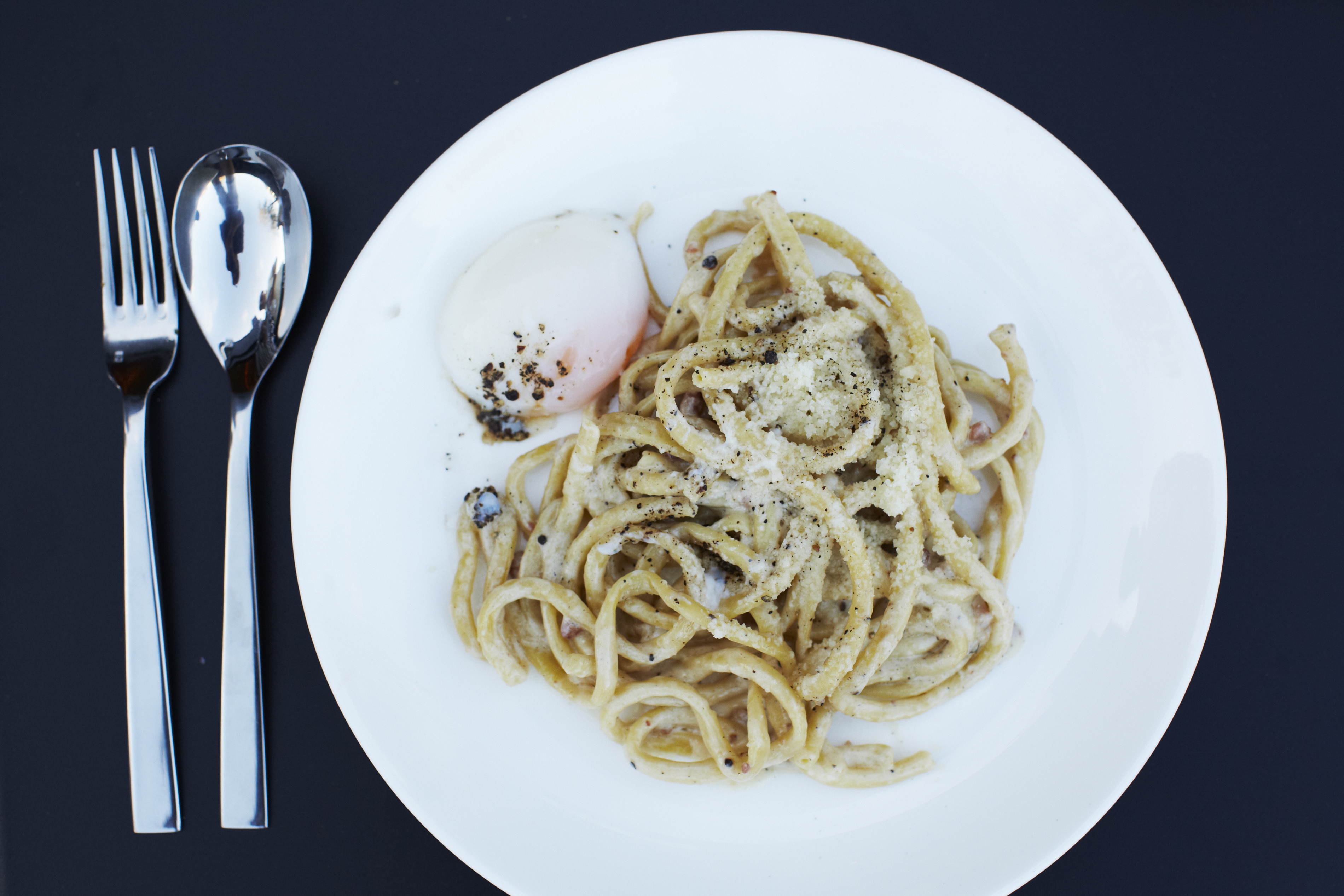
Some of his personal favorite dishes on the menu include: braised octopus with morcilla, chickpeas, olives and salsa verde. One that he describes as “stewey, very good for the weather in LA. The octopus is cooked slow and low for six hours long.” Another popular item is the smoked bucatini carbonara with poached egg, pancetta, black pepper and parm. “It’s a big gooey loveliness, a very warmy and welcoming dish.”
With such loveliness, the biggest lesson he’s learned with Superba is, “You can’t tell people how to eat, now matter how much you try. We say on the menu that substitutions are politely declined but people will still ask. We’re pretty sensitive to the needs of today’s clients, and we still can’t tell people how and what to eat.” This is coming from a restaurant – a rare find – that offers gluten-free options.
Maybe he can’t tell people how to eat, but like flipping through a scrapbook of travel photos, he certainly can tell great stories of his world through what he does best: eclectic global cuisine.