Why Turkey is #1 in global tea consumption.
It was a chilly, cloudy morning in Istanbul when I was suffering through a cold. My friends and I sat at our table while I desperately tried to contain my sniffles and sneezes — I couldn’t let anyone suspect that I had COVID (I didn’t). They served us what they call “Turkish Breakfast.” Found all over the country, Turkish Breakfast usually consists of a few cheeses, olives, omelets, along with bread, butter, and tea.
The star of the show, in my opinion, is the tea. Turkish tea invariably comes in these tulip-shaped clear glasses and a glass saucer. It’s the most terrifically inconvenient cup to drink your tea from, as you can’t hold it in your fingertips without burning them or otherwise letting the tea grow cold. But, wobbling it by the rim and breathing in the steam through my stuffy nose, I couldn’t stop sipping. It was the most delightful gift for anyone suffering a cold. The best part was that the servers came to refill it before I had a chance to look at my empty glass.
It’s quite a mystery why Turkish tea (or çay, as it’s called in Turkish) always comes in this specific glass. It’s not the most intuitive way to serve a liquid at boiling temperature, but what it does is that it shows off the clear mahogany color of the liquid. These glasses are found everywhere — in every café, bar, office, and tea garden — tea weaves in and out of the diverse lives of Turks.
 Turkish tea by the sea. PHOTO: Hana Travel
Coffee, not tea, had historically been the more widespread drink in Turkey for centuries. Tea only saw the light of day when, in the first half of the 20th century, the Turkish government (newly formed in 1923) generated incentives and subsidies for tea farmers. Tea was easy to grow in Turkey’s climate and was a convenient avenue to promote the national economy. At the same time, coffee diminished in the market as Turkey lost its coffee-growing territories with the fall of the Ottoman Empire. Atatürk, the first President of the Republic of Turkey, then promoted tea-drinking to separate the newly born Republic from the old Empire.
As Turkey has indeed been Westernized ever since, with Starbucks and McDonalds populating the cities, it’s curious that domestically-grown tea is still inseparable from the lives of Turks. Turkey is easily the world’s heaviest tea-drinking nation per capita. It also comes first for internal consumption — while it produces huge amounts of tea leaves, few of them are being exported. Tea grown in Turkey is under criticism for its low quality, but as the state maintains its protectionist policies on domestic tea production, Turks continue to enjoy locally-sourced tea in their everyday lives.
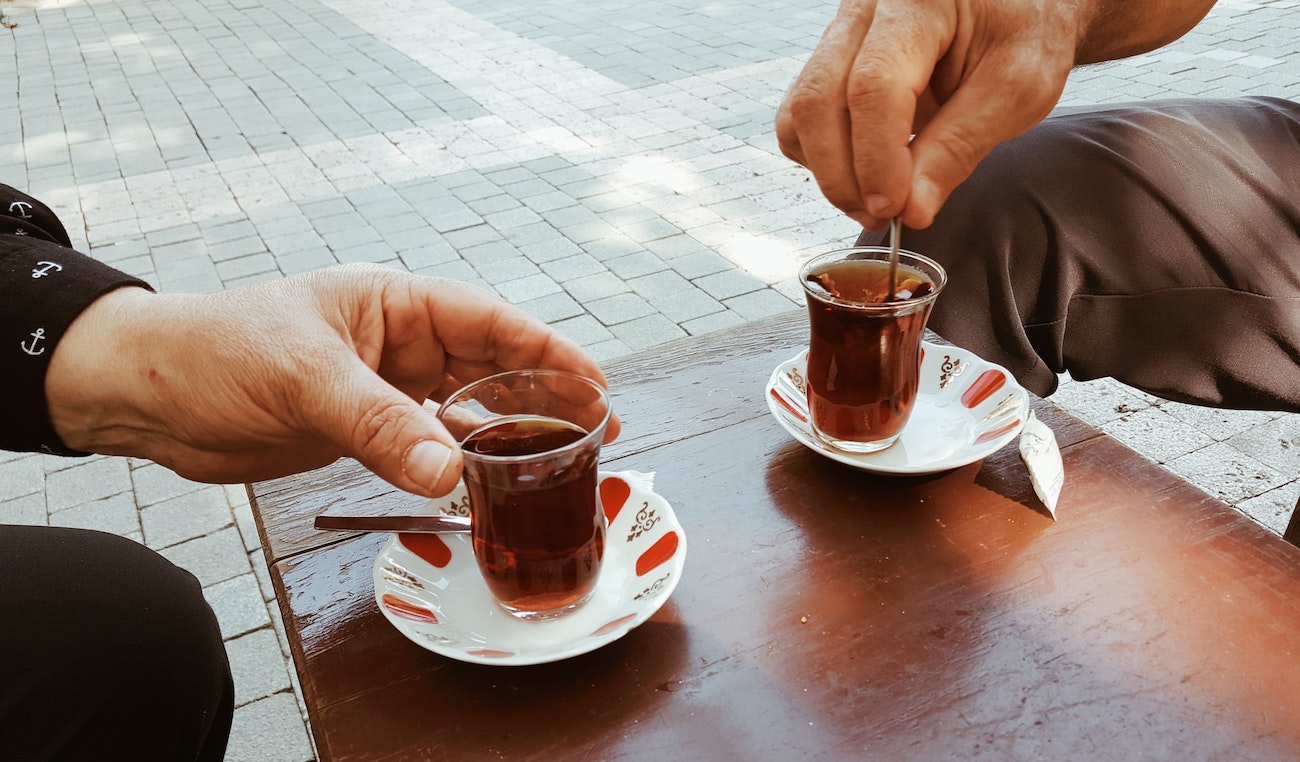 Turkish tea. Photo by Zeynep Sümer on Unsplash
Tea is, in the modern Turkish context, strikingly ordinary. It serves as the background to every workplace and home, where the “teapot continuously boils.” It comes, like water, as a uniform taste everywhere with only slight variations. In an ever-diversifying and competitive market for addictive soft drinks and exotic tea brands advertised from all over the world, the Turkish tea persists, flowing through the cracks of time and space. Olga Kravets, Assistant Professor of Marketing at Bilkent University, suggests one explanation: that tea prevails in modern Turkey not for its taste or material quality, but for the social meanings it carries, which are hospitality, generosity, and sociality. As a guest in Turkey, you are offered multiple servings of tea — and it is always impolite to refuse. It is drunk in every social occasion, the celebratory and the mundane, in work and in leisure, lubricating the interactions between people while itself keeping discreet in its everyday frankness. No Coke or Sprite can perform the same function in Turkey.
Not to mention the positive health effects that tea brings into Turkish society. Drinking tea has been shown to combat obesity, aging, tooth cavities, and even cancer. But beyond its effects on the individual, tea serves as a democratic tool to promote active and tolerant citizenship. Sharon Wohl, Associate Professor of Urban Design at Iowa State University, argues that tea gardens (Cay Bahcesi), which are scattered all over Turkish cities, have come to serve as a “third space” where citizens “leave their solely pursuits behind, and arrive at consensus regarding the common good.” In most other municipal spaces, such as homes, offices, and schools, individuals mostly act as individuals and do not have the chance to converse with others, at least with those outside of that specified social realm. But tea gardens are open to everyone and, in fact, are visited by everyone.
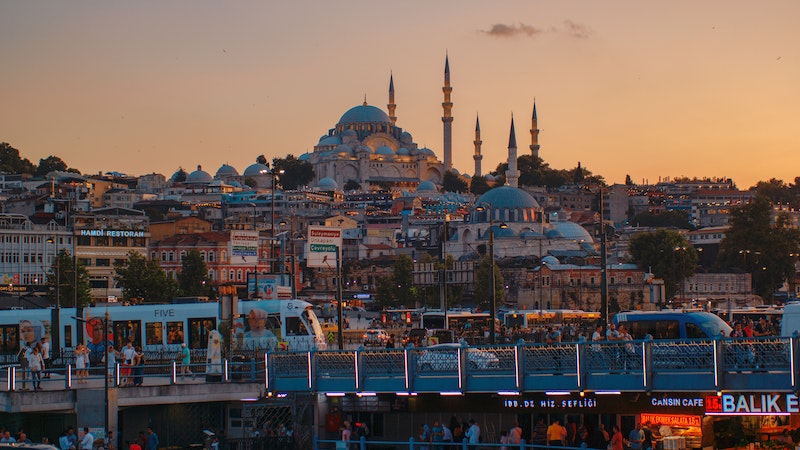 Istanbul skyline. Photo by Ibrahim Uzun on Unsplash
At the same time, tea gardens exist in a state of separation from its surrounding environment. Architecturally, this can take the form of bordering low walls or elevation of the ground. Culturally, it is separated in its values. In a country that has tried to closely follow the tails of the West ever since the beginning of the Republic, the tea garden single-handedly hangs on to the country’s older Ottoman roots: ideologies that emphasize plurality (different people coexisting peacefully) instead of forced singularity (making everyone the same to achieve peace and modernity).
What’s more, tea gardens aren’t perceived as conservative or “backwards” because of this. Rather, they are cherished, by young and old, for the opportunity to relax and be “natural”. Everywhere else in the city, including Western-style cafés and bars, Turks have expressed feelings of pressure — pressure to look good and hold a polite conversation, perhaps — which reserves authentic communication as something that can only happen in the Turkish tea garden.
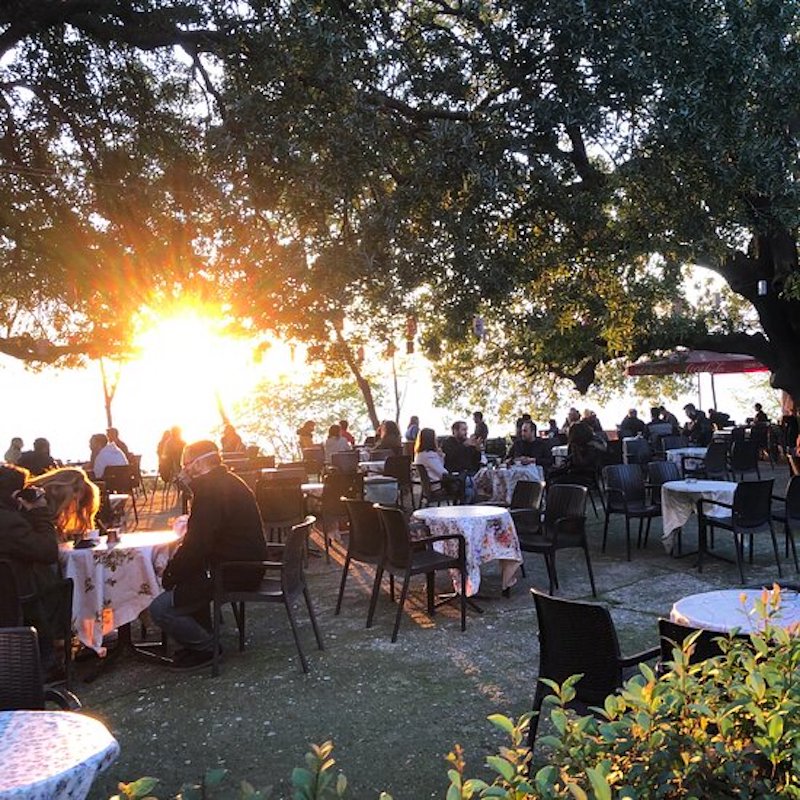 Moda Çay Bahçesi, a scenic tea garden on the Asian side of Istanbul, popular among both tourists and locals. PHOTO: Eleef
Tea isn’t just a sub-par drink to have for people who can’t afford a latte. At a time when Turkish politics are taut with social and religious tension, tea represents a cultural space where acceptance and democracy are fostered.