Learn about flamenco’s importance by immersing yourself in it.
Flamenco – a form of song, dance and instrumental music – has been meaningful for Andalusian inhabitants for centuries. With its roots stretching to at least the ninth century, when Indian migrants began to bring musical instruments, songs and dances to Spain, flamenco has become intertwined with the cultures of several ethnic groups and developed into a significant form of music for the nation.
One may experience flamenco by embarking on various routes in Spain, such as the Bajañí route, route of the ¾ beat and mining route. With each moving through the provinces of Andalusia, travelers can immerse themselves in several of the towns and tablaos, or places where flamenco shows are performed, for which the music is culturally significant.
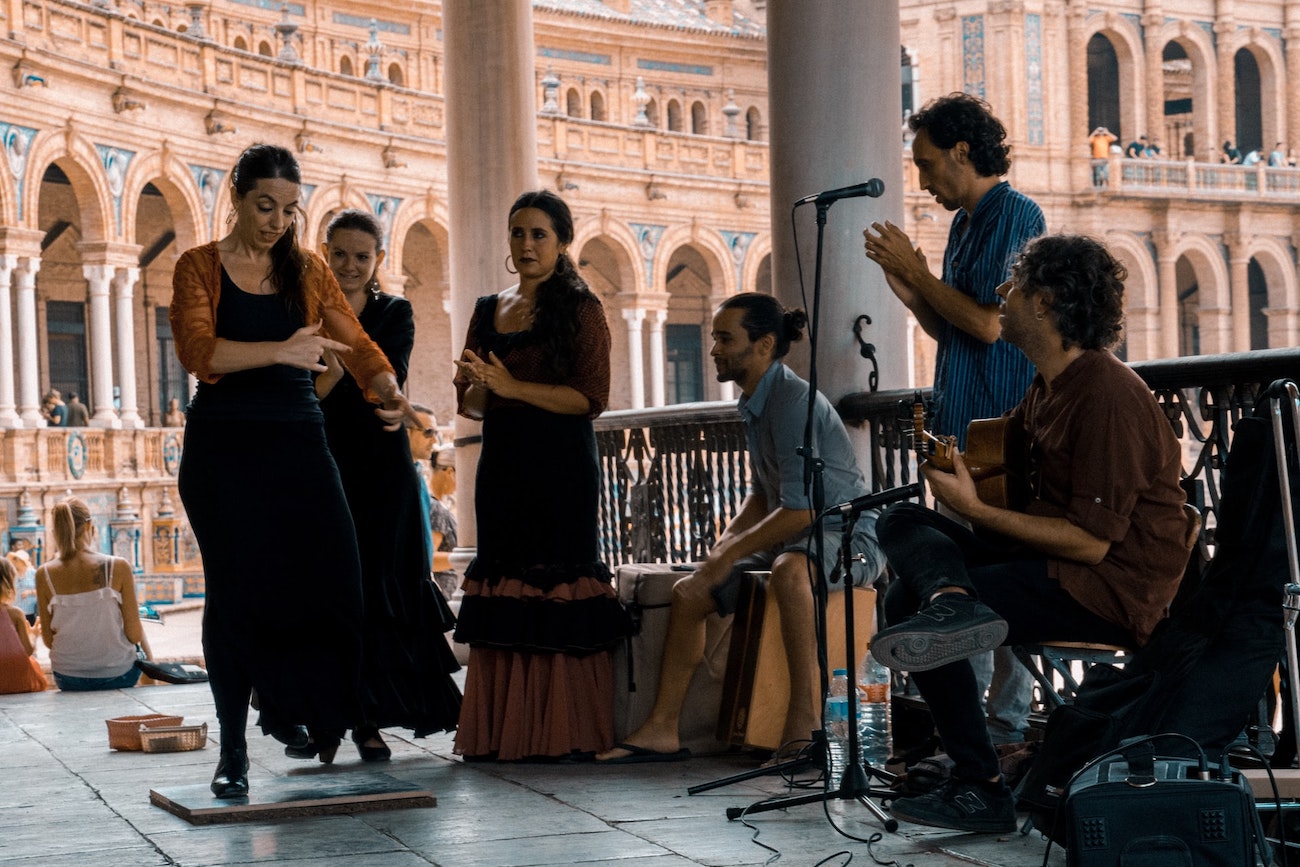 People performing. Photo by Amy Gatenby on Unsplash
The Bajañí route, which passes through Cadiz and Seville provinces, concentrates on locations connected to guitar music, which began to accompany flamenco cante, or song, after the mid-19th century. Travelers can visit Algeciras, Jerez de la Frontera, Morón de la Frontera, San Fernando and Sanlúcar de Barrameda on this route, along with the city of Marbella which is situated an approximately 1-hour drive away from Algeciras.
In Marbella, one may visit The Farm Restaurant, which is an establishment serving organic food and hosts a variety of experiences, including: flamenco concerts, markets, barbecues and DJ and yoga sessions. At the concerts, patrons may join the performers, learn the dance and also request a song for a unique experience.
 Rubén Escalona performing. Instagram @thefarmmarbella
The route of the ¾ beat, which also traverses Cadiz and Seville provinces, stops at some of the same locations as the Bajañí route, although most differ. On this route, one may explore Alcalá de Guadaíra, Cabezas de San Juan, Dos Hermanas, Jerez de la Frontera and Mairena de Alcor, as well as the cities of Cadiz and Seville.
While in the city of Seville, explorers can witness a flamenco show at La Casa del Flamenco. Here, the performers demonstrate different styles of the music and display popular dances and songs through guitar music, cante and baile, or dance.
The baile element of flamenco has been the music’s main component since the mid-1800s, guests may experience Andalusia’s traditional flamenco at this establishment.
 Macarena Ramírez performing. Facebook: La Casa del Flamenco: Auditorio Alcántara
On the mining route, which moves through Almería and Jaén provinces, travelers can also witness flamenco’s elements at several tablaos in municipalities like Andújar, Linares and Paterna del Río, along with different subsets of the music like fandango and jota in Puerta de Segura, Siles, Albanchez and El Ojuelo.
Approximately 1 hour away from the city of Jaén is Jardines de Zoraya. At this restaurant, patrons may eat in a garden situated next to the Parish Church of Our Salvador, as well as attend a flamenco show that incorporates the guitar, cante and baile.
With artists from various towns in Andalusia as well as other parts of Spain, Jardines de Zoraya offers a unique experience visitors can enjoy.
 Flamenco dancer at Jardines de Zoraya. Instagram @jardinesdezorayaflamenco
Although each of the routes presents opportunities for explorers to immerse themselves in Spanish culture, there are several others as well, including the Camarón Route and route of the cantes abandolaos.
Regardless of the path one takes, though, it is likely they experience flamenco in a unique and unforgettable way.