
“Debí tirar más fotos” is a journey through Bad Bunny’s native Puerto Rico. A love letter to its history, its rhythms, and its people.
It’s been over ten years since Bad Bunny reaped first successes through the Latin trap tracks he published on SoundCloud, a humble upbringing that, in some ways, has everything and nothing to do with who he is now. His experimental skills and ability to reinvent himself have become his hallmark.
Bad Bunny’s sounds are never predictable, and yet, with “Debí Tirar Más Fotos,” he managed to surprise all of us. His sixth studio album is probably the most personal portrait, a collection of lyrics that, above all, depict an undying love for Puerto Rico – his home.
It is a celebration by incorporating local sounds, such as: jíbara music, plena, and salsa, alongside modern rhythms like dembow and reggaeton. The vibrant Caribbean energy invites enjoyment and dance while intertwining with an ideological commitment to the Latin people.
The album is an emotional journey through Puerto Rico’s history and a desperate cry for help for its population. Below, we analyze some of the most characteristic themes of “Debí Tirar Más Fotos,” a beautiful soundscape written as a love letter to his roots, naturally destined to build bridges between generations and communities.
Track 1: “NUEVAYol”
 Photo by @badbunnypr
The album kicks off with a declaration of intentions, a premonition of what will be the rest of the album – Nuevayol, a direct hit to the memories of the older ones. Track one opens with the smooth salsa melodies of Un Verano en Nueva York, a classic 1975 song by El Gran Combo de Puerto Rico, which Bad Bunny reinterprets and makes his own. The song unexpectedly transitions into a dembow rhythm, more reminiscent of the singer’s previous works. While blending Dominican musical influence, Bad Bunny interweaves the traditions of both Puerto Rico and Dominican Republic. Nuevayol, which pays tribute to the island’s diaspora in New York, was performed by Bad Bunny and Jimmy Fallon in a fun street rendition in the city’s subway.
Track 3: “BAILE INoLVIDABLE”
 Photo by @kiriacospsd
Track three of the album, Baile inolvidable, has become Bad Bunny’s unequivocal favorite, as he himself has revealed. The song marks his personal foray into the world of salsa – both music and composition were created from scratch by the artist through a long creative process. Behind its technical elaboration lies a deep sense of patriotic unity: young Puerto Rican musicians, just 20 and 21 years old, directly from Escuela Libre de Música – a public music school in the country – contributed to the track. From the very first chords, sitting down becomes nearly impossible. Without a doubt, it is one of the most energetic songs in the album, conveying, concurrently, a bittersweet longing for a lost love.
Track 11: “TURiSTA”
 Photo by @cheeryviruet
The poetic beauty of “Debí tirar más fotos” radiates with full splendor in Turista, a slow bolero which, hopelessly, seems to cry about a past, fleeting love. Yet the lyrics may carry a deeper meaning: what if Turista isn’t speaking about a person at all?
Turista becomes the personification of Puerto Rico, a country which uses Bad Bunny’s voice to address tourists. Puerto Rico points out its wounds, lamenting how these struggles are overshadowed by the country’s natural beauty in the eyes of visitors. The tourist’s gaze, always attentive to sunsets and warm Puerto Rican nights, remains blind to the social and political sorrows that affect the island’s people. These issues fade into the background as travelers leave, capturing only the beautiful part of Puerto Rico in their photos and memories.
Track 14: “LO QUE LE PASÓ A HAWAii”
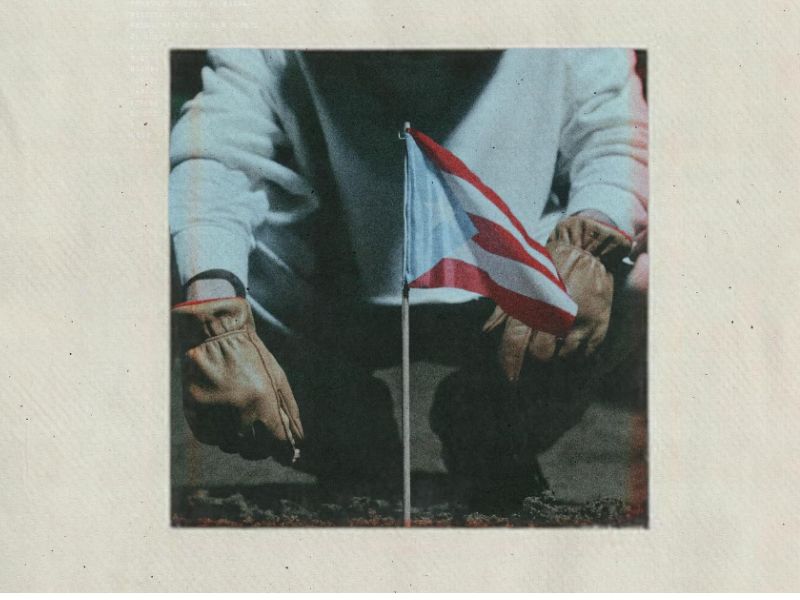 Photo by @kiriacospsd
The critique of Puerto Rico gentrification and the consequential loss of cultural identity of its citizens is a major theme in an album that, eminently, aims to raise awareness and educate its listeners. Lo que le pasó a Hawaii is based on a comparison between the two tropical islands, lamenting about the respective processes of colonization and vanishing of communities. Bad Bunny considers Hawaii as a more than likely future for his country, a sentiment reflected in the trailer that serves to introduce the album. In it, we see a futuristic Puerto Rico with an elderly man as the protagonist. Still anchored to extinct traditions, he tries to cope with his life in a hostile city where he can’t even communicate in Spanish. Lo que le pasó a Hawaii is born as a warning, a call to his neighbors to wake up to avoid, literally, what happened to Hawaii.
Track 16: DtMF
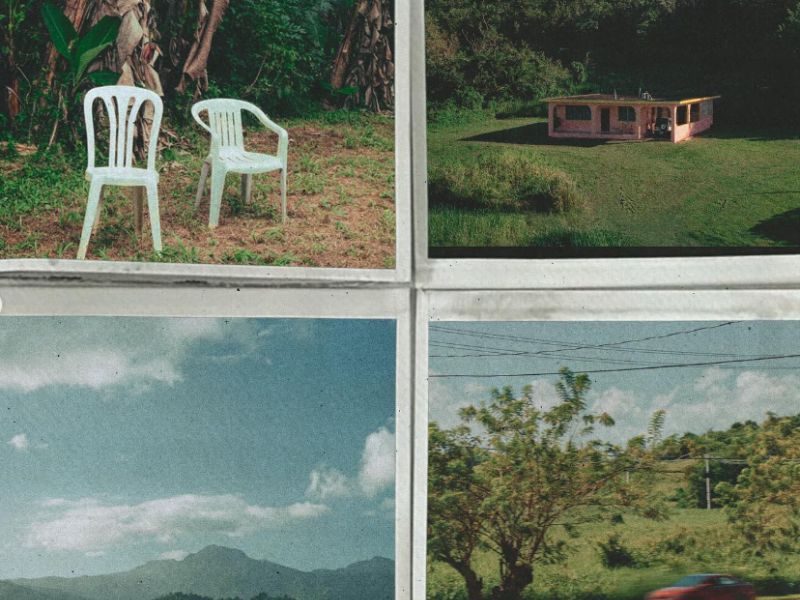 Photo by @kiriacospsd
The song which gives the album its title is arguably the one that best encapsulates its essence. In Debí tirar más fotos, the singer reflects on the importance of treasuring the present and embracing the here and now. In an interview with Chente Ydrach, he reminisced about moments from his childhood, before the era of mobile phones, when taking dozens of pictures in an instant was not a possibility. Decades ago, photos were reserved for special, significant moments, those that deserved to be immortalized on paper forever. Debí tirar más fotos (“I should’ve taken more photos”) expresses a longing to have lived more fully, to have loved more deeply, especially those who are no longer with us.
You can stream “Debí Tirar Más Fotos” on Spotify and all music streaming platforms today.
