
Nestled between three of the continent’s most visited countries (Brazil, Argentina, Bolivia), Paraguay is often passed over by travelers for its lack of bucket list attractions or major cities—but that, in fact, may be its greatest appeal.
 Photo: Flickr/Deni Williams
Paraguay may not leap off the map for most travelers, but it does offer something much more appealing: an authentic experience far from the gringo trail, seemingly untrammeled by the footprint of overcrowded tourism. So whether you delve deep into the Chaco wilderness, trek across the Pantanal, gaze in wonder at the Itaipu Dam, or embrace the carnaval spirit in “The Pearl of the South” – Paraguay is one of South America’s best-known secrets.
5 things to avoid:
- Do not buy crafts made from native woods, such as lapacho and palo santo.
- Don’t throw toilet paper into the toilet bowl, only in the wastebasket.
- Avoid drinking water in rural areas unless it is filtered.
- Few public camping grounds exist, as most lands are privately owned, so ask permission before setting up camp.
- Avoid using credit card outside of major cities, as they are rarely accepted in smaller towns.
Weather:
- Jun-Sep: Rainfall: 1.5-3.5 in. Temp: 55-75 °F. Winter weather makes this the best time to visit the Chaco.
- Oct-Jan: Rainfall: 4-6 in. Temp: 65-85 °F. Expect increased rainfall, higher temperatures and warmer weather from December-February.
- Feb-May: Rainfall: 4-6 in. Temp: 70-90 °F. The weather begins to cool, which is just in time for the famous Carnaval in Encarnación.
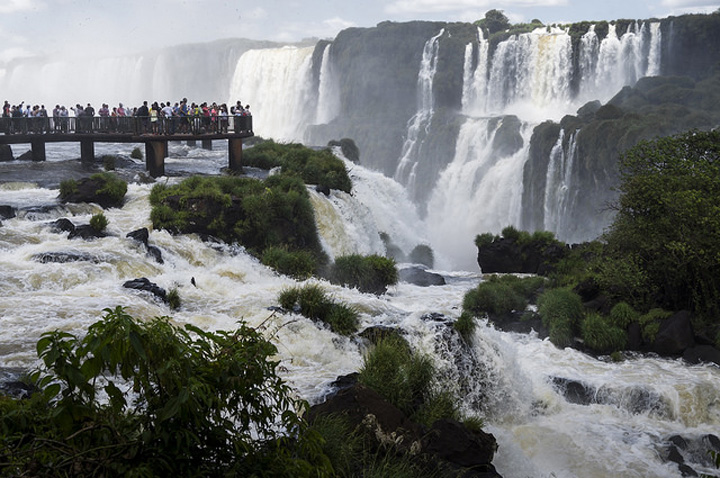 Photo: Flickr/Deni Williams
Time:
Local time is GMT minus four hours.
Visa requirements:
Similar for a Brazilian visa, the process of attaining a Paraguayan visa requires a bit of patience on behalf of the traveler.
- For citizens of Canada, New Zealand and US, all visas must be attained in person, at the nearest Paraguayan embassy in the respective country or in the consulate of a neighboring country around Paraguay (Brazil, Argentina, or Bolivia).
- US citizens must pay a $160 fee for a tourist visa. For more information on US visa requirements, see the US State Department’s site here.
- For most other nationalities, you can obtain a same-day visa by bringing two passport photos and two print copies of the following documents: passport, proof of onward travel and proof of adequate funds (i.e. credit cards, ATM cards).
- Make sure to get your passport stamped upon entering the country or face heavy fines when exiting.
Citizens of the following countries are not required to have a visa for tourist entry:
Andorra, Argentina, Austria, Belgium, Bolivia, Brazil, Bulgaria, Chile, Colombia, Costa Rica, Croatia, Cyprus, Czech Republic, Denmark, Ecuador, Estonia, El Salvador, France, Finland, Germany, Greece, Guatemala, Honduras, Hungary, Iceland, Israel, Italy, Ireland, Japan, South Korea, Latvia, Liechtenstein, Malta, Mexico, Netherlands, Nicaragua, Norway, Panama, Peru, Poland, Portugal, Slovakia, Slovenia, South Africa, Spain, Sweden, Switzerland, Turkey, Ukraine, U.K., Uruguay, and Venezuela.
Language:
Here are a few phrases you should know:
- Hello = Hola
- Goodbye = Adiós
- How are you? = ¿Qué tal?
- Fine, thanks = Bien, gracias
- Excuse me = Perdón
- Sorry = Lo Siento
- Please = Por favor
- Thank you = Gracias
- You are welcome = De nada
- Yes = Sí
- No = No
- My Name is… = Me llamo…
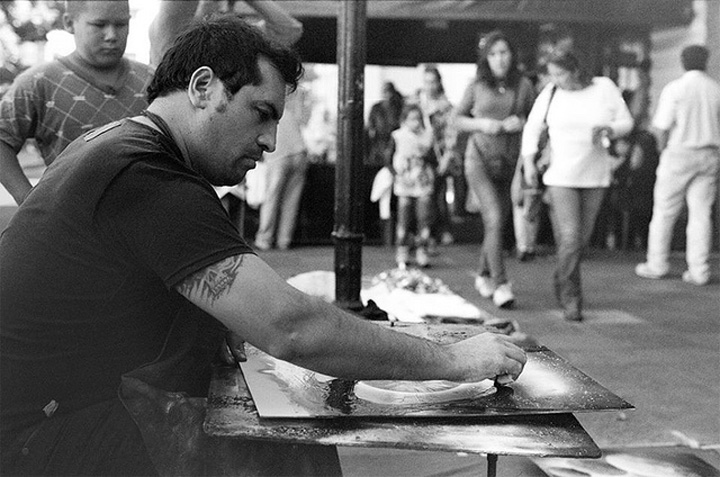 Photo: Flickr/The PhotoMarksman
Etiquette:
Men and women will give a kiss on the check when greeting.
Safety:
Paraguay is often touted as one of the safest countries to visit in South America. Except in parts of Ciudad del Este and Asunción, walking alone at night is safe. Make sure to bring a guide with you when you head out to the Chaco region, as the environment can be hostile and barren.
Money:
Paraguay uses the Guaraní (G) currency and issues banknote denominations of 2000G, 5000G, 10,000G, 20,000G, 50,000G and 100,000G. It’s recommended to keep smaller note with you, as change for larger notes may be difficult to find.
Money exchange:
It’s okay to exchange money through street vendors, though they tend to give slightly lower rates than casas de cambio (exchange offices), which are readily available in any major city. Make sure to shop around for rates.
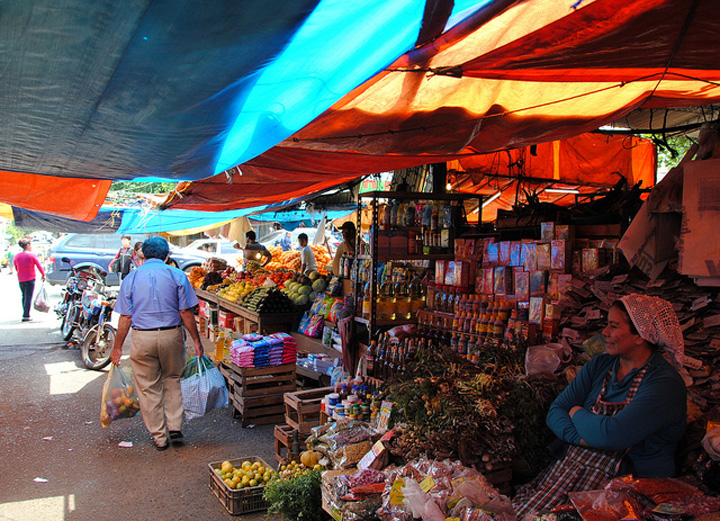 Photo: Flickr/Leandro Neumann Ciuffo
ATM:
Visa, MasterCard and Cirrus can be found in every major city and town. Keep in mind that outside of the Mennonite Colonies, you will not find any ATMs in the Chaco region.
Credit cards:
Credit cards are accepted in major cities only, but watch out of for surcharges. Call your bank or credit card company for more information.
International calls:
Skype, Google+ Hangouts, or FaceTime will be your best options for cheap international calling. If you don’t have a laptop or Internet access, try a locutorio (phone office) where you can call for about a $1 per minute (rates may vary). For the international operator dial 0010 and for an international direct call dial 002.
Mobile phone:
Recommended mobile phone companies include Tigo and Claro, which sell chargeable credit tarjetas (cards) at almost every newsstand or kiosk.
SIM card:
Many companies offer very low rates for domestic mobile calls, with some even offering free SIM cards, or SIM cards with small amounts of saldo (credit) already on them for a small fee. Claro SIM cards can work in both Brazil and Argentina, so make sure to ask the newsstand merchant on how to format the card.
 Photo: Flickr/Arcadiuš
Wi-Fi:
Internet access is widely available in major cities but less so in small towns.
Electricity:
Paraguay uses round or flat, two-prong outlets with no grounding pin. The electrical current is 220V at 50hz.
Water:
Drinking water in cities is potable. The same cannot be said, however, for rural sourced water, especially in the Chaco region.
Tipping:
Service fee is not included in restaurant bills, but is always welcomed.
Taxi:
Taxi fares in major cities are metered, so avoid using taxis that don’t have a meter. In Asunción, there is a mandatory 30% recargo (surcharge) applied on Sundays and holidays, between 10PM and 5AM.
Guided tours:
A visit to Paraguay wouldn’t be complete without trip through the Chaco region and the Pantanal. For an eco-friendly tour through many of Paraguay’s most remarkable outdoor regions, make sure to visit FAUNA Paraguay for more information.
