
Mexico City exudes limitless and vibrant art. It’d be a huge miss not to step inside one of these creative hubs.
One of the first impressions that a traveler might encounter in Mexico City is an undeniable pop of its vivacious art scene. From folk, classics, ancient to modern; the list of museums to visit in CDMX can stretch to an elongated list. But here are some significant museums that might satisfy the art fanatic in all of us.
Museo Nacional de Antropología
Local Mexicans will proudly present Museo Nacional de Antropología as, without question, the most quintessential museum in Latin America. It thoroughly showcases Mexican art, history, life and culture in the most comprehensive manner. At the entrance, you’ll see a massive pillar fountain referred to as el paraguas, or the umbrella. It’s a symbol of our bond with nature.
This is the largest and the most popular museum in the country as it contains archeological and anthropological artifacts from the pre-Columbian era. You don’t want to miss the Stone of the Sun and the Aztec Xochipilli statue, and the Olmec head carvings of two stones that weigh almost 20 tonnes.
 PHOTO WENDY HUNG
Frida Kahlo Museum
The Frida Kahlo Museum is located outside of city center, in the neighborhood of Coyoacán. Known as the Blue House, or La Casa Azul, this is home where Kahlo grew up then eventually lived with her husband. Later, the iconic Mexican painter passed away in a room on the upper floor of the house. During the visit, you can see her paintings, her rooms, kitchen, and gaze at several of her paintings.
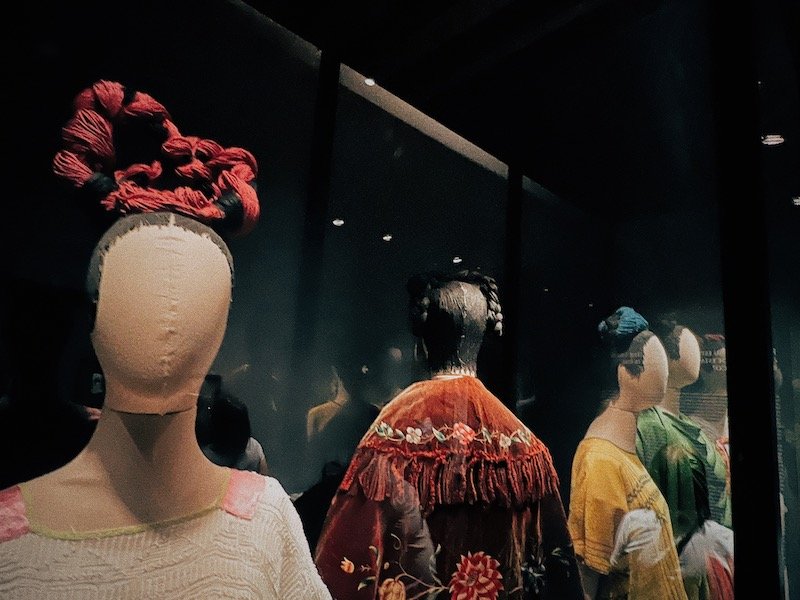 PHOTO WENDY HUNG
Museo Soumaya
Now we move from Centro to Polanco, there’s Museo Soumaya which is a free-entry museum, named after the wife of Carlos Slim – the Mexican business magnate. The iconic structure is, nonetheless, bewildering to the eye. Thousands of silver hexagons make up the breathtaking architecture designed by Mexican architect Fernando Romero, who was Slim’s son-in-law. The museum houses more than 66,000 pieces of artworks created by Rodin, da Vinci, Dali, Monet and many Mexican artists.
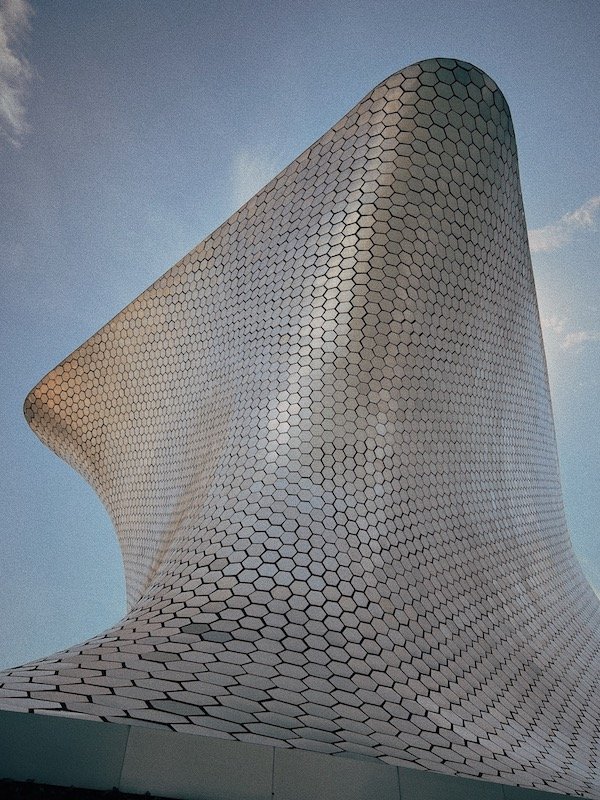 PHOTO WENDY HUNG
Museo Jumex
Neighboring the Soumaya, Museo Jumex is one of the largest contemporary art museums in Latin America. Funded by one of the most prominent juice companies in Mexico, Grupo Jumex, the refined gallery boasts creative works by Andy Warhol, Damien Hirst, Martin Kippenberger, Cy Twombly…and many more.
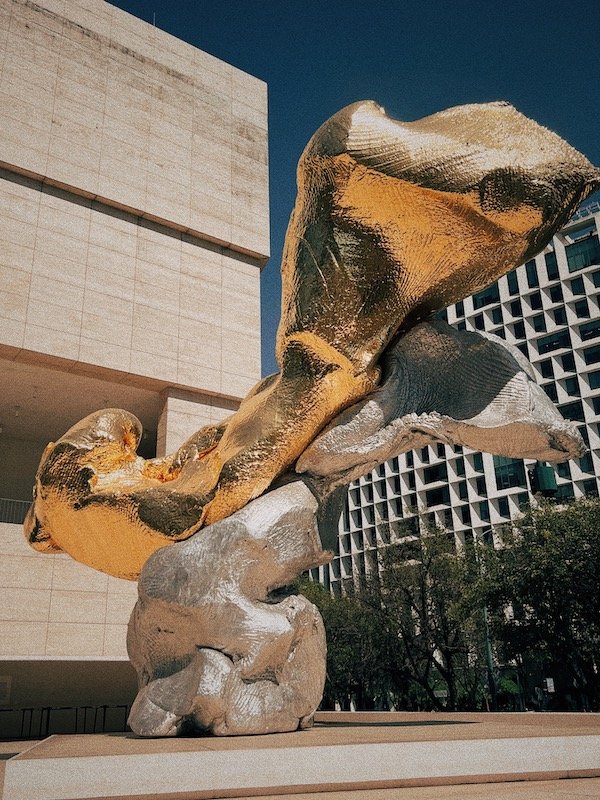 PHOTO WENDY HUNG
Palacio de Bellas Artes
Then, walk over to Palacio de Bellas Artes, which is the Palace of Fine Arts where many calls it as the “Cathedral of Art in Mexico.” I didn’t have a chance to enter, but you’ll want to climb up to the second floor for famous murals completed by Mexican artists.
You can admire the early works of painter Rufino Tamayo: México de hoy (Mexico Today) and Nacimiento de la nacionalidad (Birth of Nationality) – a significant portrayl of of the mestizo (mixed ancestry) heritage. In addition, there’s a plethora of photography, sculptures and even more paintings inside the historic building.
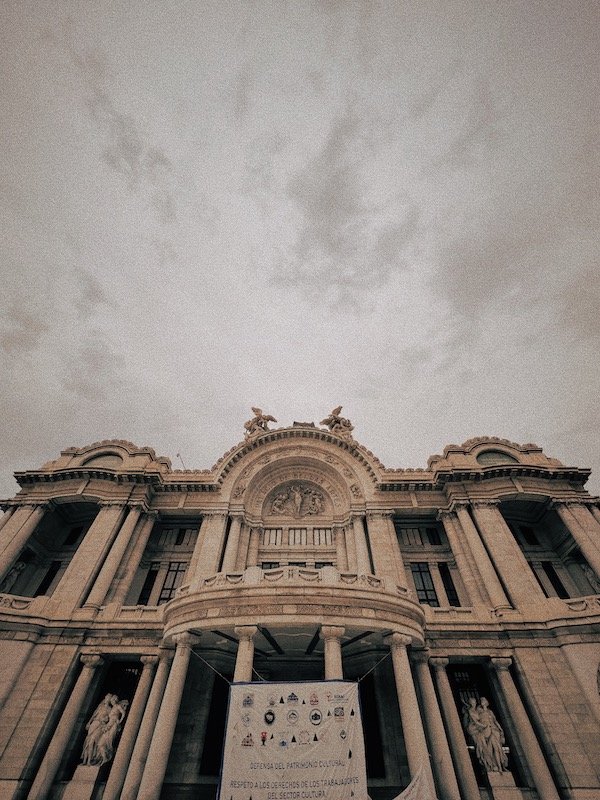 PHOTO WENDY HUNG
Chapultepec Castle
The Chapultepec Castle or Castillo de Chapultepec means “on the hill of the grasshopper in the Nahuatl language. Situated in the grandiose Chapultepec Park, the castle was originally a sacred location for the Aztecs and it eventually shifted to the home of Military Academy, Imperial residence, Presidential residence, an observatory, and the National Museum of History. Reserve a few hours for your visit, since the castle is immense, boasting enormous art and various sections to stroll through and admire.
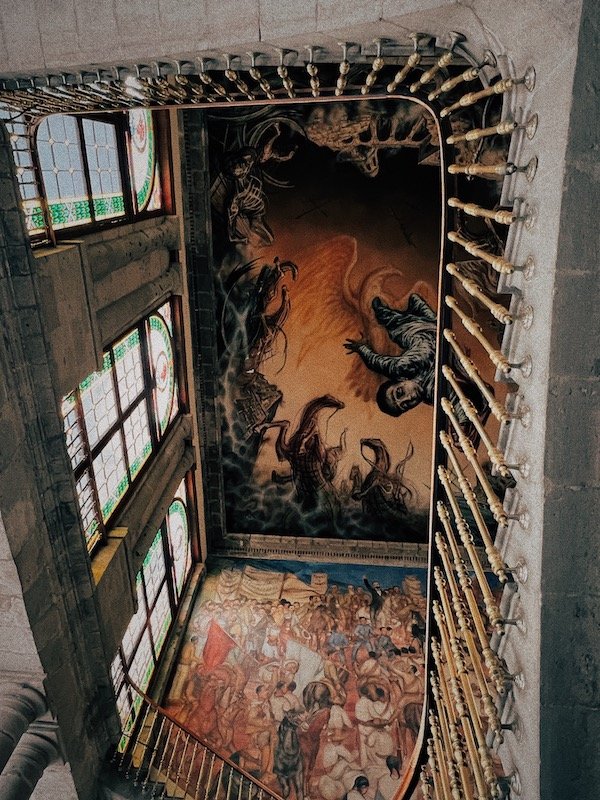 PHOTO WENDY HUNG
Casa Estudio Luis Barragán (Casa Luis Barragán)
First and foremost, unlike other museums in CDMX, this one needs reservation far ahead of time because space is limited due to its exclusivity. Museo Casa Luis Barragán’s building itself was constructed in 1948 and symbolizes the famous architect’s contemporary brilliance. The only structure of its kind to be declared as a UNESCO World Heritage Site in Latin America, Museo Casa Luis Barragán is exactly how the artist left it when he passed away in 1988.
 FACEBOOK Casa Estudio Luis Barragán
Museo de Arte Popular
Located in an old fire house, Museo de Arte Popular (Museum of Folk Art) preserves Mexican handicrafts. You’ll be able to learn about various textiles, ceramics, glassware, and even piñatas. There are five major categories in the museum: “Las raices del arte mexicano” (Roots of Mexican art,) “Las raices del arte popular” (Roots of crafts or popular art,) “Lo cotidiano” (Everyday things,) “Lo religioso” (Religious items) and “Lo fantasmagico” (Fantastic and magical things.)
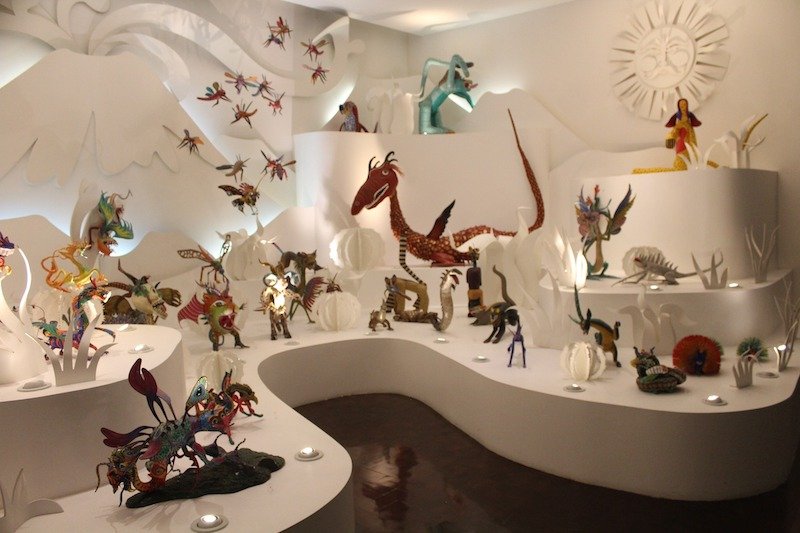 FACEBOOK Museo de Arte Popular