When I made the puddle-jump from Taiwan to Okinawa, I knew very little about the impending flavor-lottery I would soon find on the Japanese prefecture.
 PHOTO LENA KAZER
I anticipated engorging myself on raw fish and seaweed, cramming decades of youth-revitalizing vitamins into my body before heading back to the land of white bread and cholesterol.
With a bit of research (namely, wandering the streets of Naha, the capital) I quickly learned that while fresh fish are a beloved staple of the Okinawan diet, the rich history of the island makes for a far more exciting culinary experience. With influences from Japan, China, and even the United States, you can’t fully understand the flavor of Okinawa without first understanding a bit of the history.
In early written history, a people called the Ryukyu ran the show, as an independent kingdom. In the 14th century, the Ryukyu’s prime real estate in the Pacific led them to begin trade with China, and soon became a playground for trade with other Southeast Asian countries, including Japan, South Korea, and nations even as far as Indonesia. Those were the good times, as the next 700 years dealt Okinawa a tough hand. China and Japan took turns bullying the Ryukyu into paying tributes until the 19th century, when Okinawa received its name and officially became Japan’s 47th prefecture. Then, World War II happened, Okinawa lost almost a third of their population to bombings, the U.S. seized control, and then gave Okinawa back to the Japanese in the seventies. You could call Okinawa the tragic hot potato of the Pacific.
For good and for bad, Okinawa’s history has led the island to become a multicultural flavor bastion that only gets more delicious with time. These nine foods and drinks are must-eats for anyone who wants to experience the history of Okinawa the best way possible: with their taste buds.
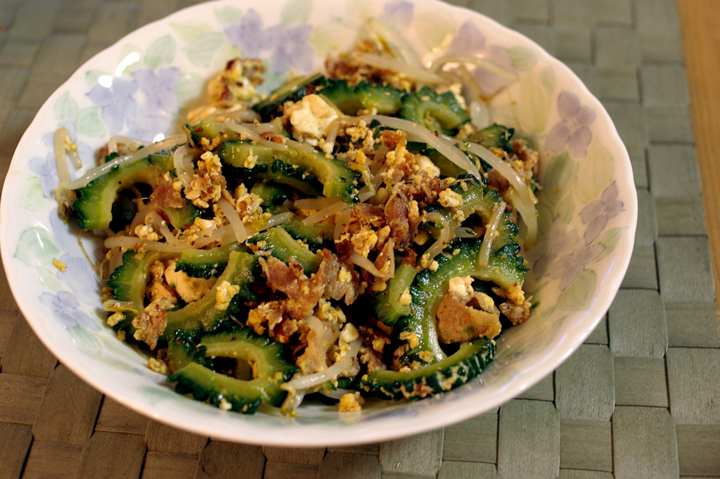
1. Goya champuru
Champuru is the must-try of Okinawa, because the word “champuru” symbolically and literally means “something mixed” in the Okinawan language. This variety features goya, a bitter green melon with an herbal aftertaste, that is popular in Southeast Asian cuisine. This dish usually mixes goya with pork, tofu, and eggs.
 Pelican via Flickr
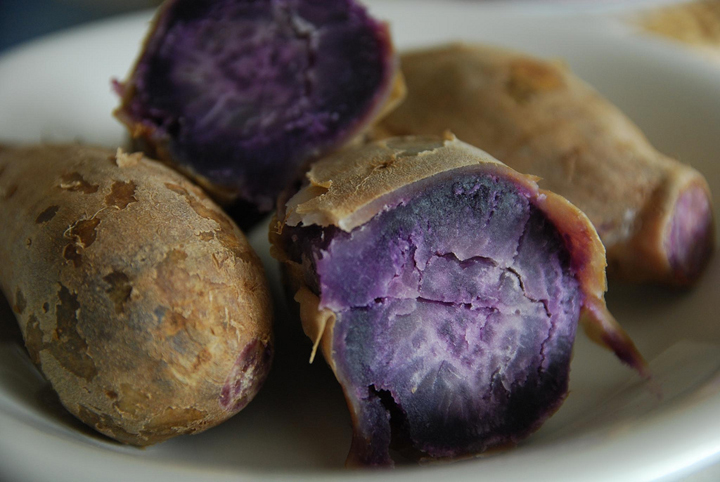
2. Purple sweet potato
The purple sweet potato made a long journey to Okinawa. It originated in the Americas, made their way to Japan in the 15-16th centuries, and then to Okinawa, where the superfood instantly became a staple. Blended into ice creams, folded into donut batter, and eaten on its own, this delicious potato deserves your utmost respect (and ample stomach space).
 Alpha via Flickr
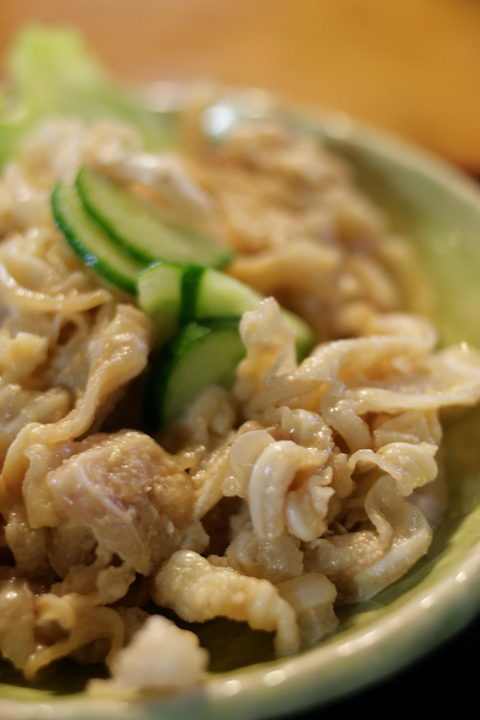
3. Mimiga
As a religiously ambiguous Jew, I never thought I would love pig ear as much as I did. Served as a side dish with everything from shabu-shabu to fresh sashimi, mimiga is a tangy mix of thinly cut pig ear in a savory peanut dressing. Addictive: yes. My chopsticks dove in and out of that plate like a pelican in an aquarium.
 T Y via Flickr
4. Sashimi
The time to eat raw fish is now. Put your big girl panties on, because sashimi in Okinawa isn’t your mother’s spicy tuna roll. It’s octopus. It’s sea urchin. It’s some unnamed creamy god-knows-what that makes your neck itch and your mouth sing. Eat it all. Eat it bold. Shop for your fish of choice at the Makishi fish market, and bring it upstairs to the restaurants above the market – they’ll prepare it for you!
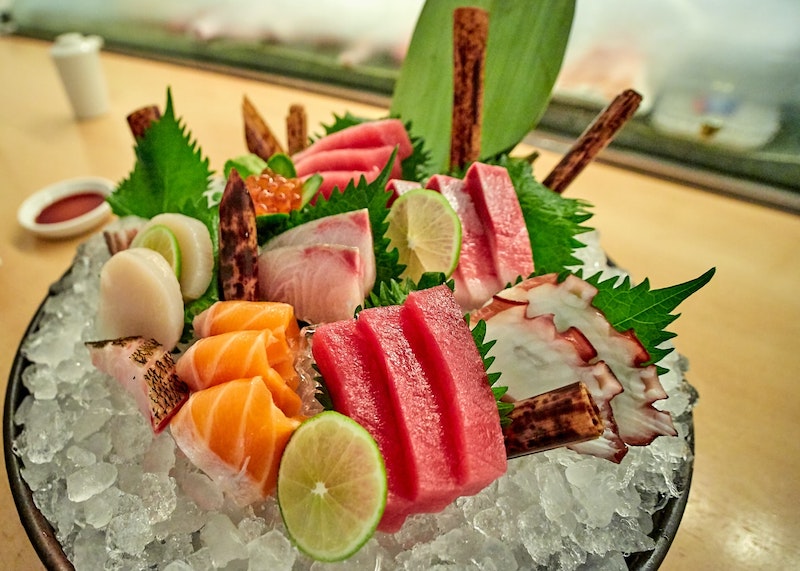 UNSPLASH Jongsun Lee
5. Okinawa soba
Here’s your island soup-fix for when the sun gets pouty and your stomach gets mean. Unlike Japanese soba, this Okinawan favorite includes thicker udon-like noodles, pork, green onion, and ginger. It’s everything savory and comforting in one steaming bowl. Make culture your mistress and do something dirty with this dish.
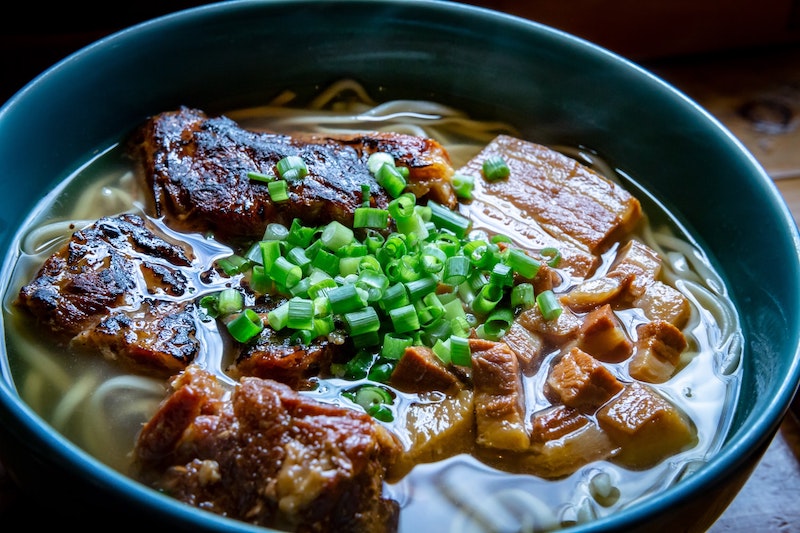 UNSPLASH 8-Low Ural
6. Sata andagi
Act like you’re not always ‘sort of’ searching for a donut. The sata andagi is a dense, cake-like donut that comes in a variety of flavors. I went purple sweet potato (knocking two birds with one stone like a boss) and tasted the glory of fried dough with a punch of purple. I died.
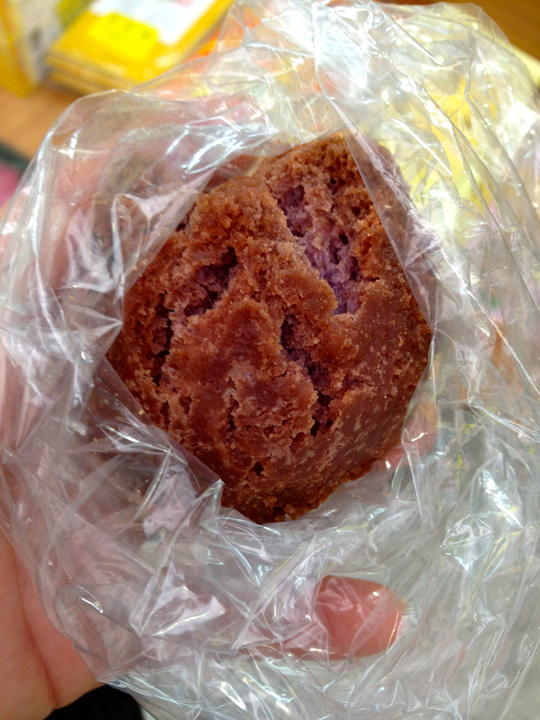 PHOTO LENA KAZER
7. Taco rice
You can guess the origin of this bad-boy. Popularized by the U.S. military, taco rice is a winning combo of ground beef, salsa, cheese, and lettuce served on a bowl of rice. As a nation already full of mixed cultures and cuisines, I guess we shouldn’t be all that surprised that we brought tacos to an island in the middle of the Pacific.
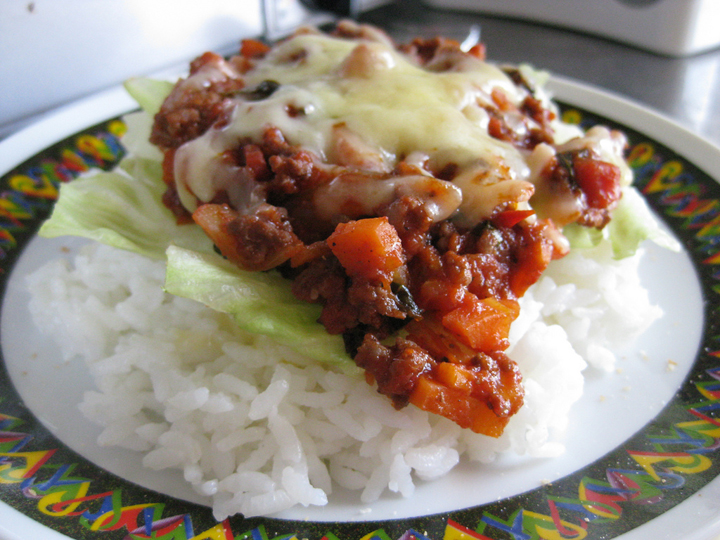 Imissdaisydog via Flickr
8. Awamori
Sake’s Sasha-Fierce big sister. Distilled rather than fermented, awamori is the Okinawa spirit you must try. When the Thai’s generously taught the Okinawans distillation back in century 15, it wasn’t long before long grain rice crossed the rainbow bridge into a mild, herb flavored liquor. If vodka and sake had a love child, her name would be awamori. Tip: pay a trip to the Mizuho Shuzo distillery for a complimentary tasting!
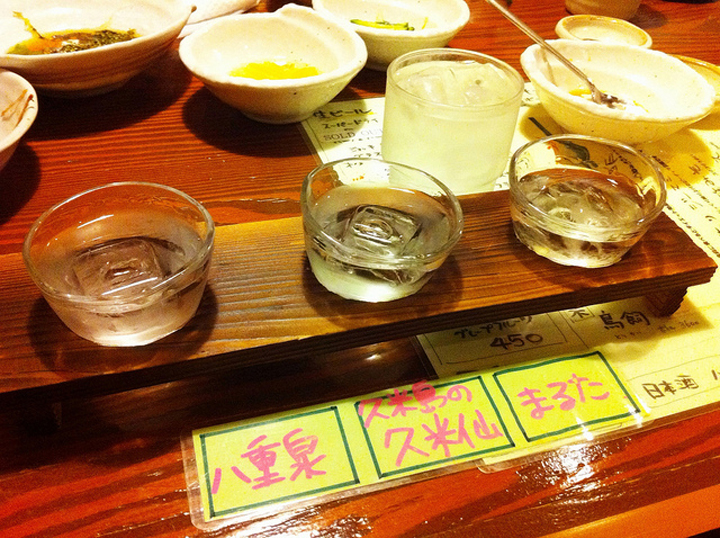 CLF via Flickr
9. Orion Beer
Excluding recovering alcoholics and the gluten-free, you can not travel to a new destination without tasting the local beer. It tells you a lot about the people, and I consider it a requirement. Orion is da bomb, folks. Like a crisp pilsner with a warmer, bronzy aftertaste, Orion and I had a thing from night number one. Don’t dip without throwing back one of these inexpensive local bevs.
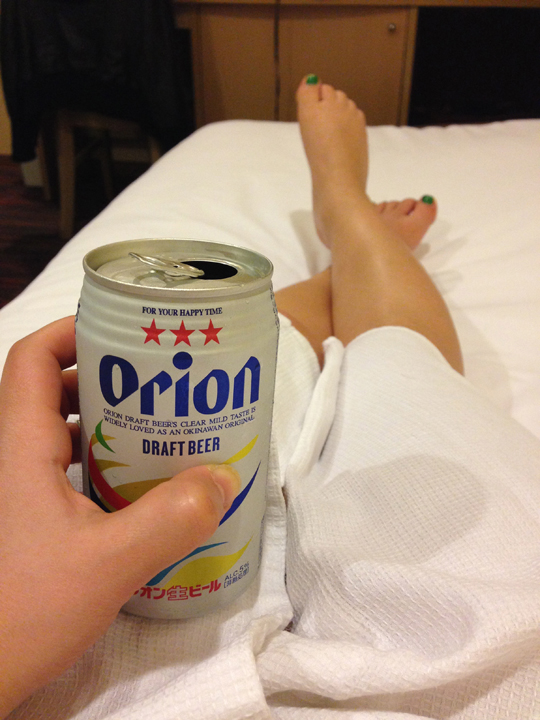 PHOTO LENA KAZER