Michaelangelo Merisi da Caravaggio, also known as Caravaggio, was an Italian painter most famously known for his tenebrism technique that showcased a contrast between light and shadow that falls under the canon of Baroque art.
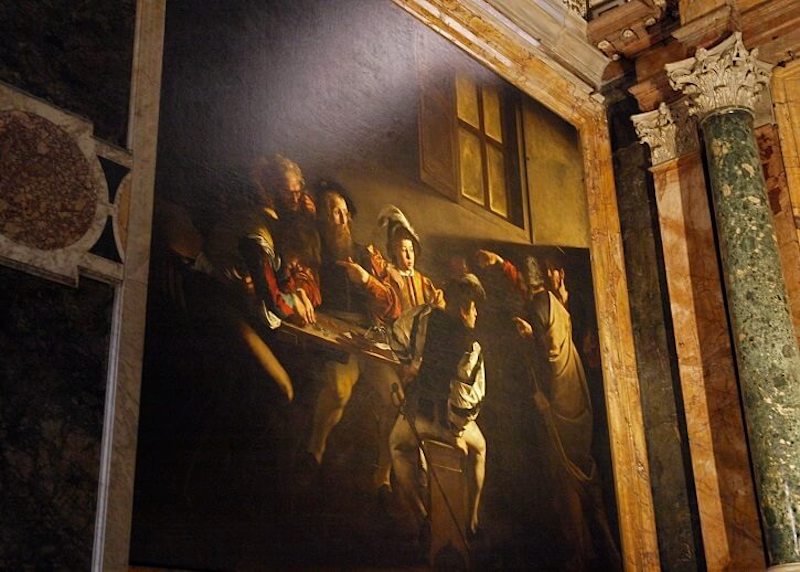 Calling of St. Mathew. PHOTO caravaggio.org
As an artist that spent most of his life and professional career in Rome, Italy, Caravaggio and his most famous works still reside in the city and are one display. The works are a must-see for those that are interested in art history.
The Calling of St. Matthew
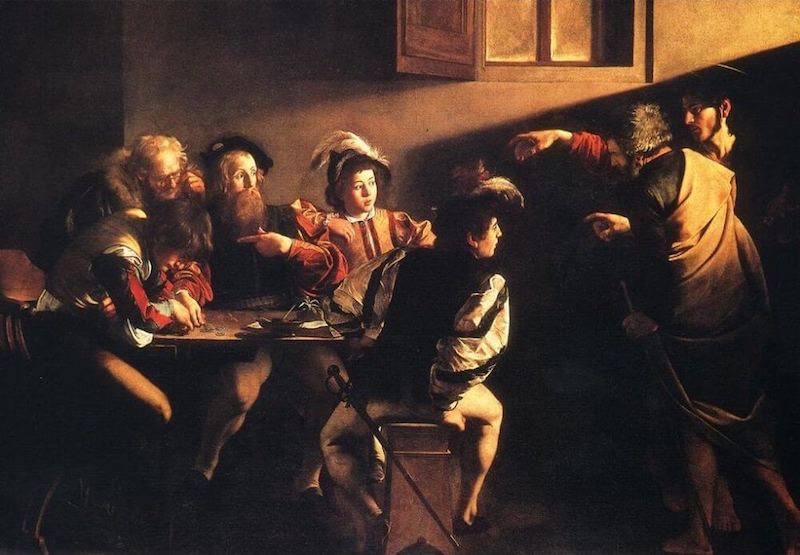 The Calling of St. Mathew. PHOTO caravaggio.org
Located in the church of San Luigi dei Francesi, The Calling of St. Mathew is arguably one of Caravaggio’s more famous paintings and is an essential showcasing of his skills as an artist. The subject depicts the biblical story of when Jesus called Mathew to follow him. In the painting, you can see how Caravaggio plays with light casting down from the right side of the image onto Mathew pointing at himself. The expression on his face is as if to say “who me?”
The Fortune Teller
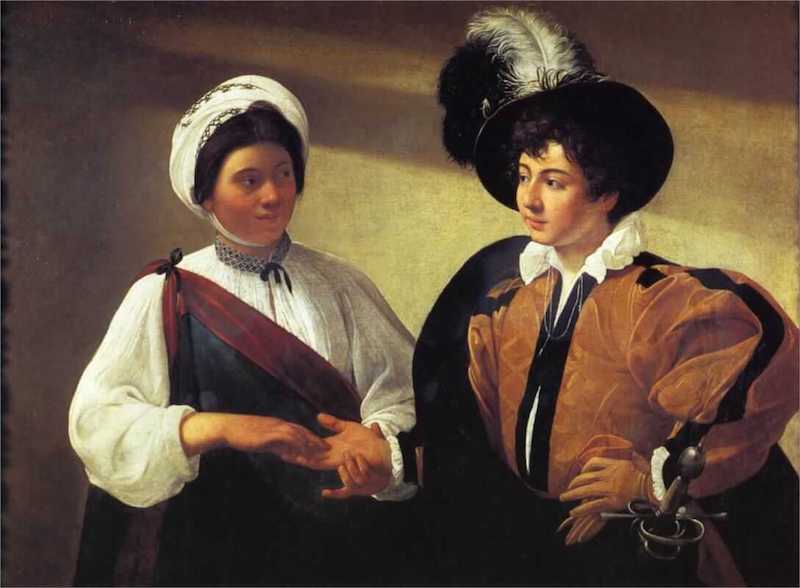 The Fortune Teller. PHOTO caravaggio.org
One of the two renditions Caravaggio created on this subject is located in the Capitoline Museums, a must-see for art and archeology lovers. The image showcases a boy getting his palm read by a gypsy girl, unaware of the fact that he is being robbed in the process.
David with the Head of Goliath
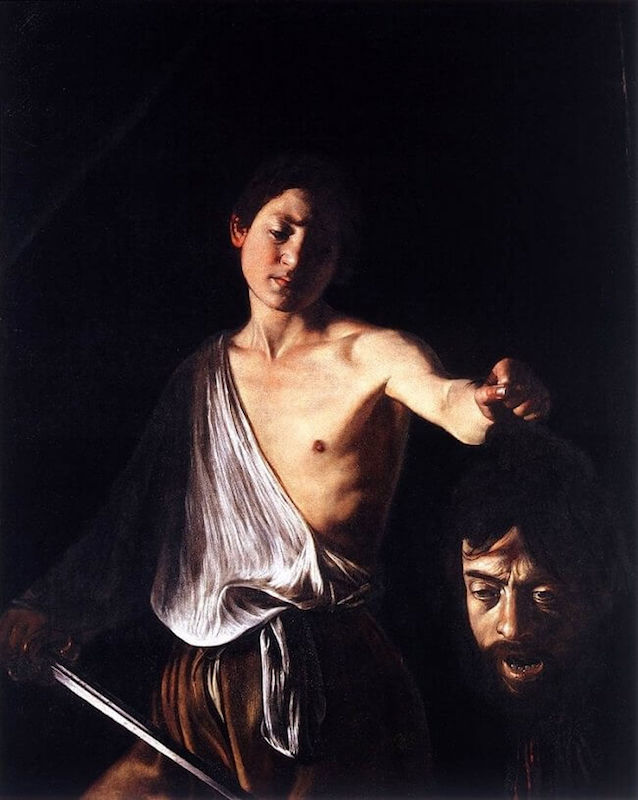 David with the Head of Goliath. PHOTO caravaggio.org
You can find this work in the Borghese Gallery, a quaint countryside villa outside the center of Rome. Like many of the subjects of his work, Caravaggio depicts another biblical story of David slaying Goliath. If you look closely, you may notice that the head of Goliath is actually a self-portrait of Caravaggio himself as a petition to the papal courts for his pardoning after being accused of murder.
Crucifixion of St. Peter
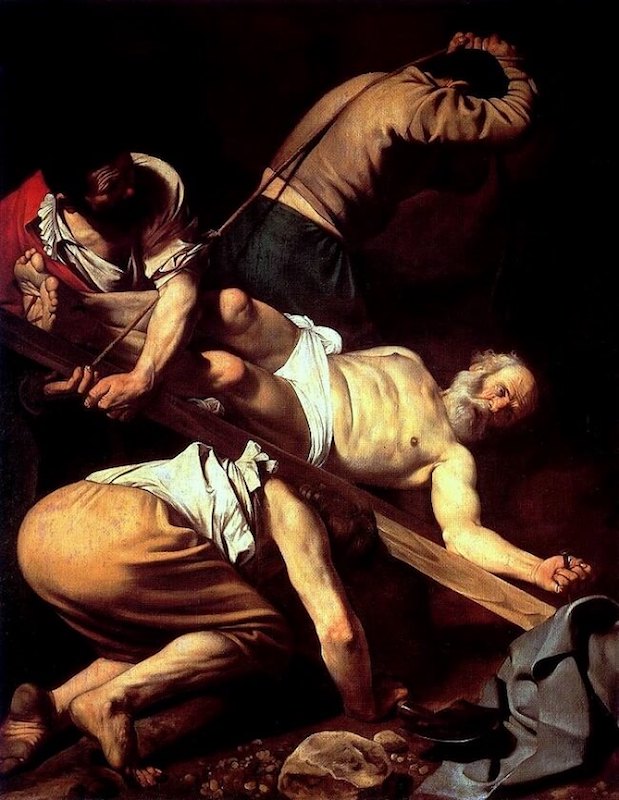 Crucifixion of St. Peter. PHOTO caravaggio.org
Located in the church of Santa Maria del Popolo but more specifically the Cerasi Chapel, this painting depicts the story of the crucifixion of St. Peter. As a loyal follower of Jesus Christ, St. Peter opted to be crucified upside down and this image depicts him being lifted on the cross.
The Entombment of Christ
 Entombment of Christ. PHOTO caravaggio.org
This painting has been an influence of many other great artists and has been recreated on at least forty different accounts. This work can be viewed in the Vatican museums on the way to the Sistine Chapel.