Rome was once named the Eternal City, for the Romans believed that no matter what befell the world or how many empires perished, the city would live on forever.
Because of Rome’s exuberant history, the Romans created museums to preserve artifacts, sculptures, mosaics, paintings, and more. Visit some of the most unmissable museums spread across the Eternal City.
Capitoline Museums: Palazzo dei Conservatori and Palazzo Nuovo
Piazza del Campidoglio, 1, 00186 Roma RM, Italy
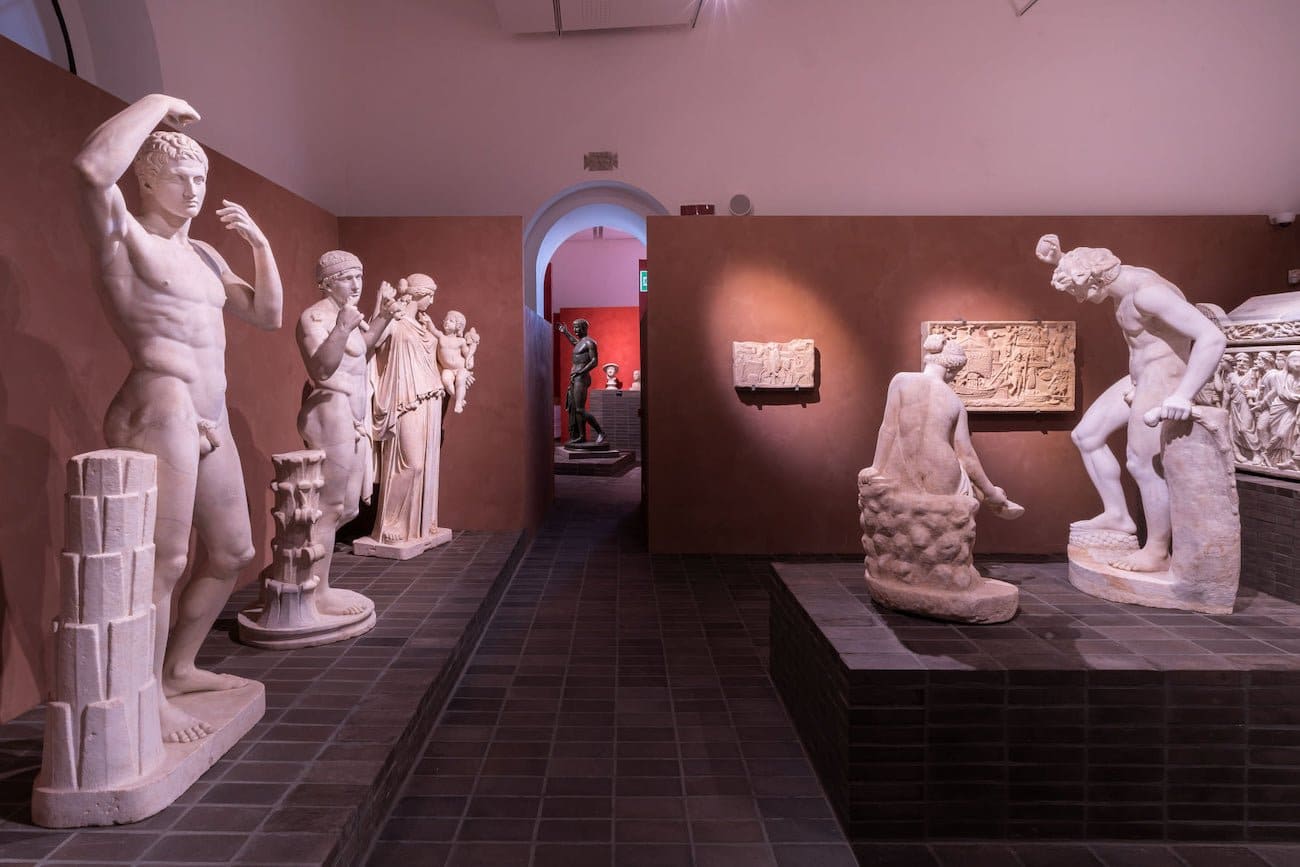 FACEBOOK Musei Capitolini
The Capitoline Museums are located right on Capitoline Hill in Rome. This two-in-one historical center is divided into buildings connected by an underground corridor. The Piazza del Campidoglio and its two museums: Palazzo dei Conservatori and Palazzo Nuovo, were designed by Michelangelo. The Capitoline Museums date back to 1471 when Pope Sixtus IV gifted the people of Rome the statues of symbolic value. You’ll find a collection of significant artworks, like the famous She-Wolf suckling the twins Romulus and Remus. The exhibits are open daily from 9:30 a.m. to 7:30 p.m. General admission costs €11 per person, upgrade to an exhibition pass for an additional €25. You can buy tickets at the entrances or book them in advance online.
Castel Sant’Angelo and Ponte Sant’ Angelo
Lungotevere Castello, 50, 00193 Roma RM, Italy
 Ponte Sant’ Angelo, Rome. Photo by Gabriella Clare Marino on Unsplash
Step into the estate of the Roman Emperor Hadrian. Inside the castle, you’ll observe furniture, paintings, weapons, and other objects from the Renaissance era. Don’t miss out on the most breathtaking view of the city at the top of the estate. Castel Sant’Angelo, also known as the Mausoleum of Hadrian, is open Tuesday to Sunday from 9 a.m. to 7:30 p.m. Admission for adults is €19 and for ages, 0-17 tickets are €3.50. You can buy tickets at the gates, but you’ll have a better chance of entering the castle by ordering tickets online.
Emperor Hadrian constructed the Castle Sant’Angelo in the 2nd century. The estate did not receive its name until Pope Gregory I saw archangel Michael sheathe his sword on top of the castle to connote the end of the plague which overtook Rome. Afterward, Pope Pius II built a chapel where archangel Michael appeared, and placed a statue to rest above the people of Rome. In addition to the chateau, Pope Clement IX commissioned Lorenzo Bernini to embellish the Bridge of Sant’Angelo. Thus, the Ponte Sant’Angelo Angles carrying emblems of Jesus’s death distribute along the Bridgeway.
Museo Nazionale Romano: Palazzo Massimo
Largo di Villa Peretti, 2, 00185 Roma RM, Italy
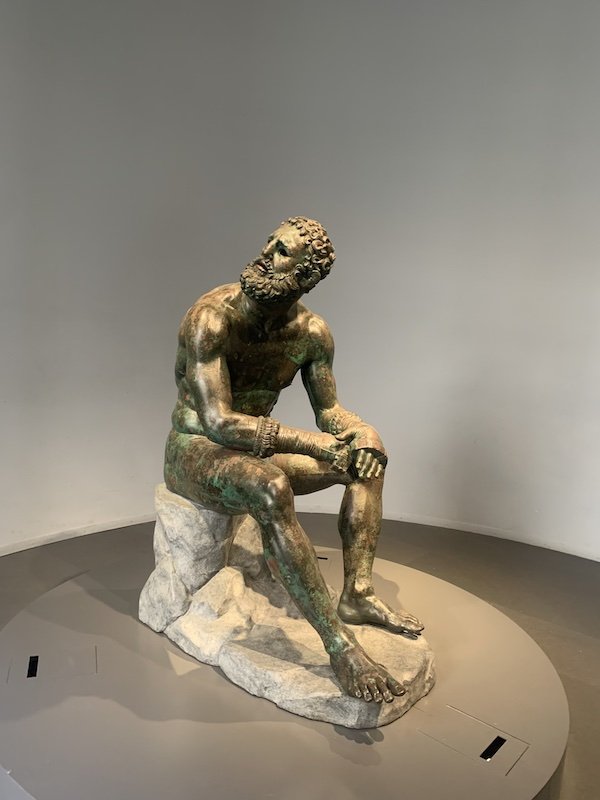 “Boxer” at Palazzo Massimo. Photo: Precious Vue
Built during the 16th century by the Jesuit priest Massimiliano Massimo, the site was acquired by the Italian government for the Museo Nazionale Romano (National Roman Museum.) Roam through the rooms of the Palazzo Massimo and its four floors. The gallery consists of some of the greatest masterpieces of the Roman world. The design of the museum is based on chronology and theme. Become awestricken by the elegant and harmonious Greek statues of deities, frescos, mosaics, stuccoes, and sarcophagi. The Museo Nazionale Romano: Palazzo Massimo costs €8 per person and is open Tuesday to Sunday, from 11 a.m. to 6 p.m. Purchase your tickets online or simply walk into the museum and purchase your tickets.
Galleria Borghese
Piazzale Scipione Borghese, 5, 00197 Roma RM, Italy
 “Ratto di Proserpina” at Galleria Borghese. Photo: Precious Vue
Located right on the estate of the Villa Borghese, the Galleria Borghese is quite possibly one of Rome’s most notable museums. After the death of the estate owner, Cardinal Scipione Borghese, Flaminio Ponzio built the Galleria Borghese to preserve the proprietor’s collection of Roman, Renaissance, and Baroque art. This famous gallery holds an indescribable collection of paintings and sculptures from artists, including: Bernini, Caravaggio, Canova, Raphael, and Titian. The gallery is open Tuesday to Sunday from 9 a.m. to 7 p.m. Admission costs €21 per person. Each ticket should be booked before your visit due to a check-in time and a visit duration of two hours.
Vatican Museum
00120 Vatican City
 “Hermes del Belvedere” at Vatican Museum. Photo: Precious Vue
The Vatican Museum was founded by Pope Julius II in the 16th century, right in the center of Vatican City. With 54 museums within one, 1,400 rooms, chapels, and galleries, the historical center becomes the world’s largest collection of art. The exhibit is opened every day at 9 a.m. with final admissions at 4 p.m. The mandatory exit time is 6 p.m. Tickets are sold at the doors or can be booked online with or without a tour guide. General admission is €17 per person, guided tours can cost between €44 to €72. Inside the Vatican, paintings, sculptures, mosaics, frescoes, vases, and the famous Sistine Chapel, created by Michelangelo, and the Stanze della Segnatura, made by Raphael, await your visit. Take your time gazing in wonderment as you stroll through the inventive and picturesque artworks of all time.
Precious’ personal favorite museum was the Museo Nazionale Romano: Palazzo Massimo. The gallery had many breath-taking sculptures of Greek deities and was not as busy or compact as opposed to the other museums.