
Ravenna is a small town in Northern Italy filled with short buildings and complete with the signature Palladian arches of the Renaissance.
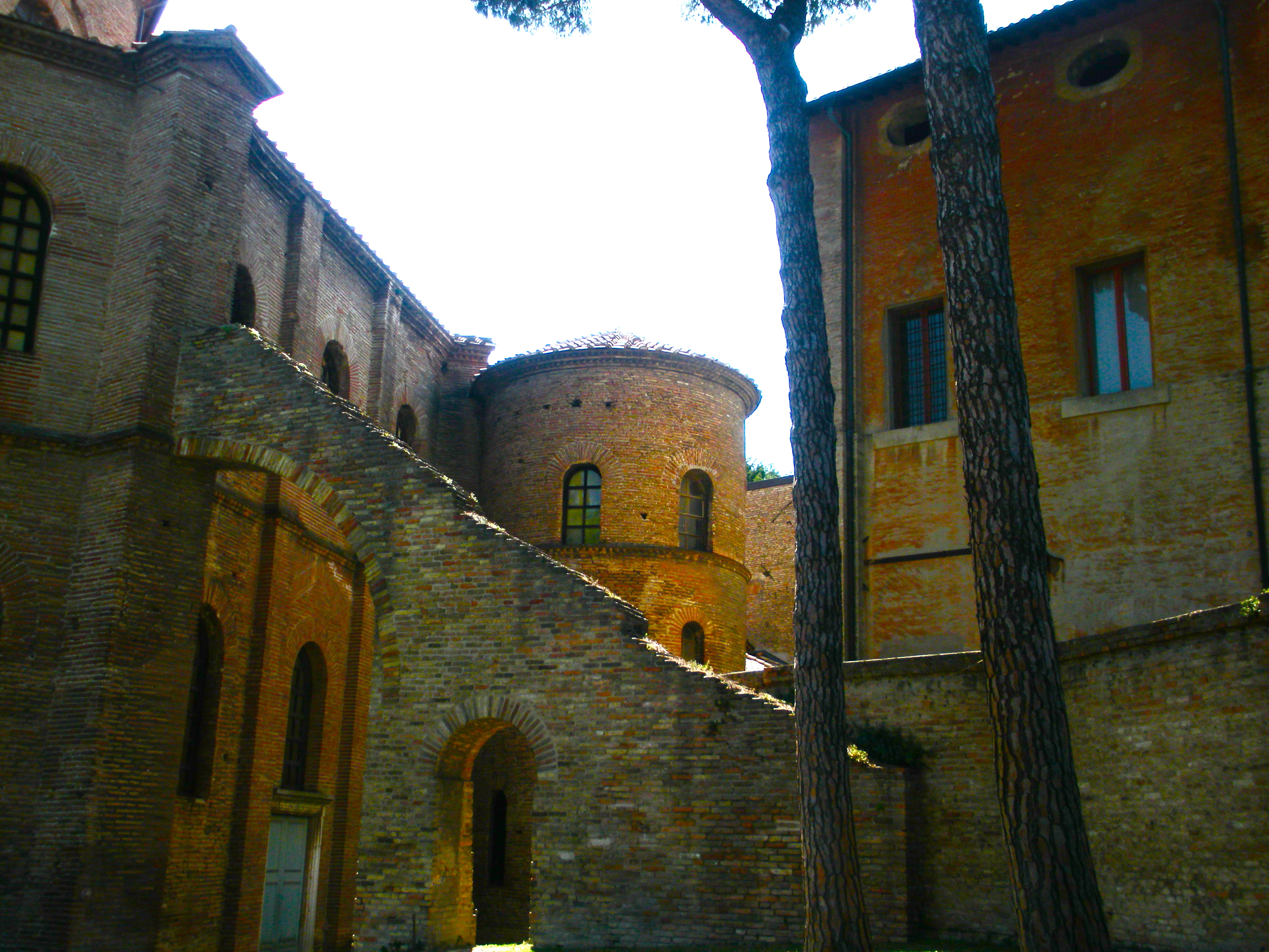
It has with wide, open streets paved with loose stones that press against the bottoms of your feet as you walk. Ravenna is very bike-friendly; the city offers free rental bikes for residents and cheap ones for tourists. Ravenna is home to many fantastic pieces of artwork; the most prominent is its mosaics. It also has the tomb of renowned poet Dante Alighieri, despite persistent demands from Florence for the return of its most famous exile.
Ravenna is home to many magnificent churches; the most notable is the Basilica of San Vitale. Its architecture is unlike any I’ve seen: it looks like a medley of different ideas, each competing to make itself known, resulting in a quaint puzzle-like exterior. Its interior is an octagonal dome, a Roman element, but its overwhelming feature is perhaps its mosaics, Byzantine in style. The colors are very rich, filled with vibrant greens, reds, and blues. They make up religious figures like Abraham, Abel, and Cain, and animals like peacocks. It certainly demands awe. A choral group happened to be visiting the church, and I was fortunate enough to experience the acoustics of the building. As the troupe sang their religious hymns and praises, the sound echoed clearly throughout the church, immersing us in song. The Basilica of San Vitale had been completed in the year 548, but today, it still stands strong. And though it may not always be used as it was intended to be, moments like these help bring a little tranquility and joy to its visitors.
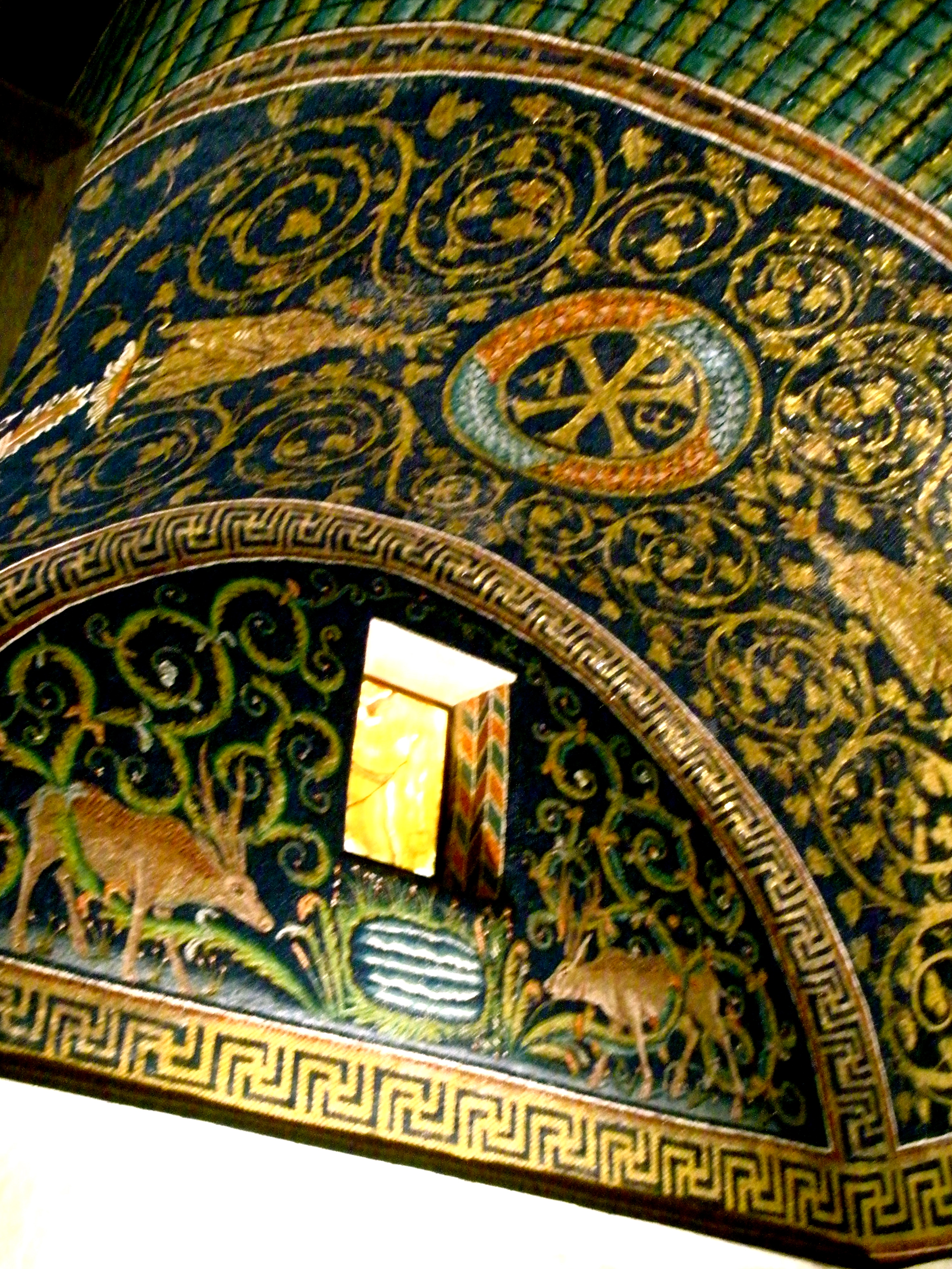
Another example of Ravenna’s brilliant mosaic art is the Mausoleum of Galla Placidia. According to the United Nations Educational, Scientific and Cultural Organization (UNESCO) is the “earliest and best preserved of all mosaic monuments, and at the same time one of the most artistically perfect.” It is a small building and its inside dimly lit – light enters through tiny rectangular alabaster window panels – but the mosaics are still decipherable. Swirls of gold leaves and vines surround figures of the divine and animals, filled with emblems that look like symbols. It houses three sarcophagi, contents unknown but speculated upon. They perhaps contain the remains of Galla Placidia, daughter of the Roman Emperor Theodosius I; her son, Emperor Valentinian III; and her husband, Emperor Constantius III. Ravenna is a little-known quaint town, and it is perhaps a best kept a secret. There is not much foot traffic in this city. It truly is peaceful, giving one the calm necessary to reflect upon these magnificent works of art.
Article written by Becky Chao.
