Millions of feral cats equals a whole lot of feline love!
Anyone who has ever visited Israel leaves with deep spiritual sediment, a belly full of delicious Israeli food, and a repertoire of new feline friends. Israel is home to an estimated 1-2 million feral cats, with visitors and locals alike fond of the feral felines. As the cat population continues to explode, locals know that there are no signs of them slowing down. But the question on most travelers’ lips is: where did these cats come from? And, will their welcomed reception last as more of them take over Israeli streets?
History of cats in Israel
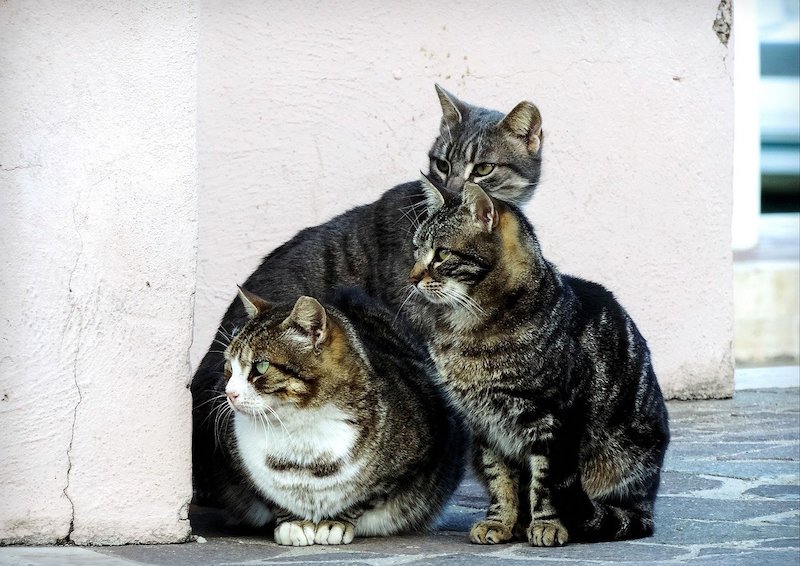 Image by loveombra from Pixabay
In the 1930s, British cats were brought over to Israel (then Palestine) in response to a British mandate that required assistance for the rat epidemic plaguing the area. As the cats happily munched on a decreasing rat population, the feline species continued to thrive in the warm climate and wetland environment. Due to the absence of cold winter months, the Middle East’s warm weather allowed cats to continue to reproduce in their ideal temperatures. Evidence also points that some parts of the cat population also originated in Egypt where Egyptians domesticated a large majority of cats between 2310 B.C. and 1950 B.C. Ever since, the cat’s free rein has caused significant political points of contention.
Public reception
Public reception to the influx of cats has been generally positive, contributing to the country’s high percentage of vegans as the reason for its animal-friendly environment. It’s common to walk down residential communities and see bowls of food and water on virtually every doorstep. In urban cities, many women go out of their way to feed the strays and often help Animal Activist Groups trapping them for TNR. The Israeli Defense Force (IDF) has reported a large influx of cats patrolling their bases. They survive off of the rats and cooked food thrown out by kitchens. While most soldiers don’t mind the presence of furry friends, there are people in Israel who strongly dislike the number of cats in the country.
Government’s Response
 Image by Martin Forciniti from Pixabay
In 1994, the Israeli government implemented the “Animal Cruelty Prevention Act,” making all animal-cruelty illegal; this includes mass execution of stray animals. Because of this, government regulations need to work around the act to keep the population of cats somewhat in control. Widespread efforts from multiple Animal Activist Groups include the “Trap, Neuter, Return” (TNR) method. Clipped ears mark a neutered and released cat; however, warm climate allows non-neutered cat reproduction to take place two or three times a year. Unfortunately, an Israeli feral cat’s life is a little more than 3-4 years due to various feline diseases, including: FIV, dental infections, heartworms, Leukemia, Kidney Disease, and many other contagious ailments. Rabies is virtually non-existent in Israel, however, there are still risks and environmental interference with having an overrun population of cats.
Issues
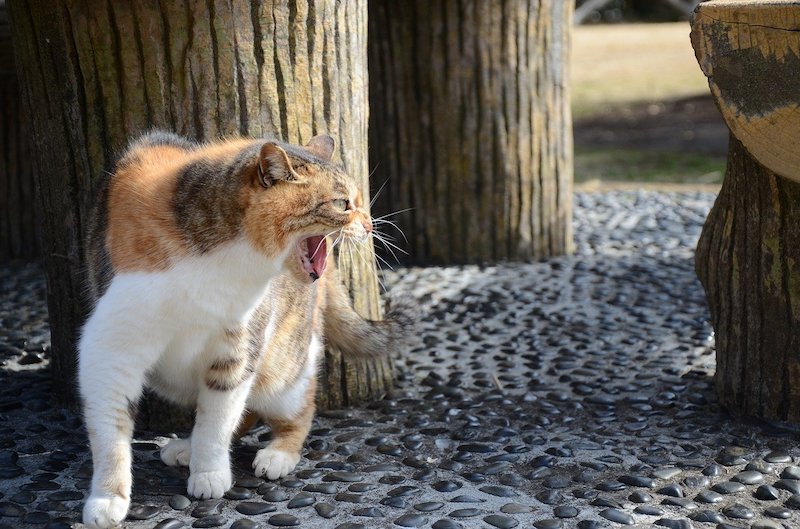
With an overrun population comes the unfortunate reality of cat-related issues. Cats can become extremely territorial, especially when their litter is around, then attacking unsuspecting pedestrians is nothing out of the ordinary. Expect to be swat or hissed at if you’re walking through a particular cat’s territory. Their unpredictability makes them dangerous to travelers. Cat’s hunting is also creating a major problem for the surrounding population of mammals, birds, and reptiles. Overhunting not only severely harms the ecosystem but essentially takes away food from other cats not being fed by humans. The TNR method has also been subject to controversy. Many believe neutering cats while allowing others to reproduce can mess up the gene-pool and ultimately harm species.
As cats continue to reproduce in Israel at an exponential rate, many fear that the feline species will grow too out of control for government interference. Next time you visit Israel, remember that these cats are wild animals no matter how cute and fluffy. If you see a colony of feral cats, call local activist groups to ethically and safely take care of them.