Immerse yourself in the archaeological treasure of Delphi.
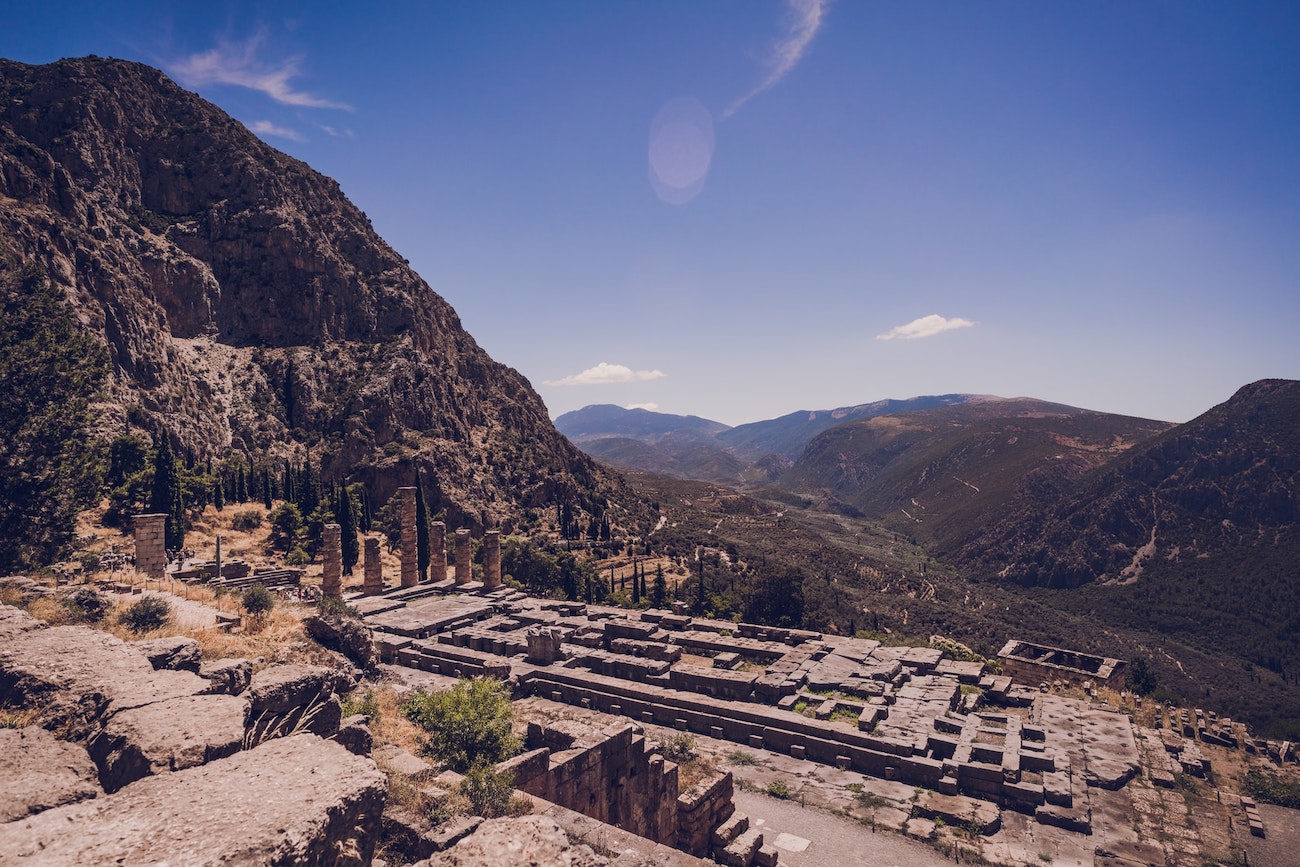
The ancient town of Delphi is a site of historical and natural marvels. In addition to the ruins dating back thousands of years, you can revel in the gorgeous scenery surrounding the city. After just one day at this archaeological gem, you will have experienced the man-made and natural beauty of Greece.
Upon arrival to Delphi, one of the first things you will come across is the Sacred Way. Originally used as the main road from the entrance of the courtyard to the Temple of Apollo, the Sacred Way guides visitors through the religious sanctuary.
Lined with stone from nearby abandoned buildings in the Late Roman period, the road was eventually decorated with votive sculptures and monuments. These statues and podiums honored important political and military events most of the time, though were also dedicated to gods at times. Although the monuments have mostly disappeared, the bases still remain, providing for the opportunity to imagine the architectural grandeur.

Located along the Sacred Way is the Athenian Treasury. Despite the original structure is in the Archaeological Museum of Delphi, the replica inspires just as much awe as the one erected 2,500 years ago. Measuring approximately 22 by 32 feet, the treasury housed the Athenians’ votive objects and goods from their military victories.
The treasury’s walls were filled with inscriptions dating back to the third century B.C., while its frieze depicted the heroism of Hercules and life of Theseus. The terraces and pediments also featured statues and sculptures, which commemorated important figures such as deities and tribal warriors.
Situated at the end of the Sacred Way is the Temple of Apollo. The structure’s foundations are the only parts of the site that remain. Interestingly, the temple was constructed on the same spot three times, and the current building was raised in the fourth century B.C.
When in use, the Pythia spoke the words of the Oracle, which were sent to her by Apollo and interpreted by the priests, according to Greek mythology. Supporting the temple’s platform is the polygonal wall, a sixth-century retaining wall containing ancient inscriptions.
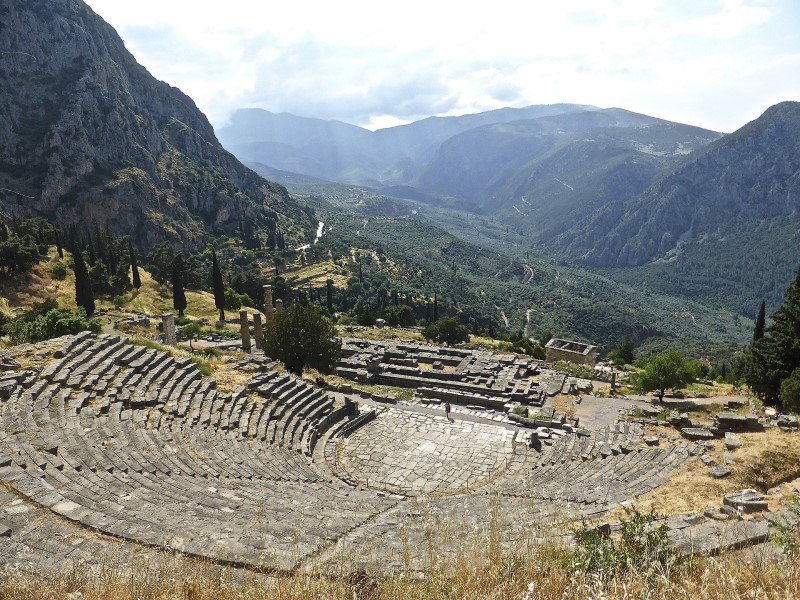
Northwest of the Temple of Apollo lies the ancient theater. Constructed in the fourth century B.C., the theater features 35 rows of stone benches that were able to hold 5,000 spectators at the time. At the top of the theater, the valley and sanctuary are visible, allowing for an astonishing view of Greece’s natural composition.
Farther north is the Ancient Stadium of Delphi. Though it was originally built 2,500 years ago, it took its present display in the second century. The stadium hosted the Pythian Games, which were a series of athletic and musical competitions to commemorate Apollo.
Although not a ruin, you need to visit the Archaeological Museum of Delphi before completing your day at the ancient town. Containing exhibits such as the Charioteer, which dates back to the fifth century B.C., and the statue of Antinous, which was created in the first century, the museum is home to many significant objects that are sure to capture your wonder.
After spending a day in admiration of these sites, it can be said that you have immersed yourself in one of Greece’s historical treasures.
Ray visited Delphi in 2019.