
If you’re like me, and prefer a more intimate way of experiencing of the royal residence.
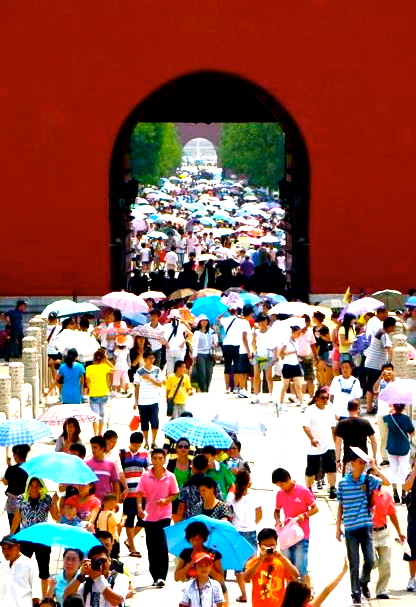
As one of Beijing’s richest and most iconic historical monuments, the Forbidden City is a must-see for many visitors to China’s capital. However, as a museum that has seen up to 128,000 visitors in a single day, sometimes the crowds can get a little overwhelming. If you’re like me, and prefer a more intimate way of experiencing of the royal residence, here are just a few of my favorite spots to escape the crowd:
The Hall of Martial Valor and The Hall of Literary Glory
Flanking either side of the Gate of Supreme Harmony, these buildings house rotating exhibitions of the museum’s prized painting and porcelain collections. Even though the crème-de-la-crème of the palace’s collection was taken by the Guomindang to Taipei in the 50s, I like to come here in the afternoons to seek respite from Beijing’s sweltering summer sunshine. Even though the building isn’t air conditioned, at least you won’t get sunburnt while you peruse the priceless works of art that span virtually every dynasty and style in Chinese history. The only downside to the beautifully arranged exhibition halls is that English labels are few and far between – the gift stores outside the entrance sell introductory guides to Chinese painting and porcelain if you find yourself hooked.
The Crystal Palace
This odd, hulking relic is tucked away in the northeast quadrant of the Forbidden City, and in my opinion is definitely the most unusual building in the whole complex. Built in the early 1900s when there was a push towards modernization and the adoption of Western values, the Crystal Palace was designed and commissioned to embody European aesthetic values, complete with the requisite glass windows, domes and classical columns. However, after the collapse of the Qing Dynasty the building was never completed, and today the metal window-frames remain gapingly empty. Even though the building is out of place and decrepit compared to the gaudily painted wooden beams of the main complex, there’s something poignant about the structure, an echo embodying China’s historical efforts and failures to emulate the West. Yet it still retains a stately beauty, and due to its low profile, it’s a great place to sit and reflect about the past.
Qianlong’s Garden
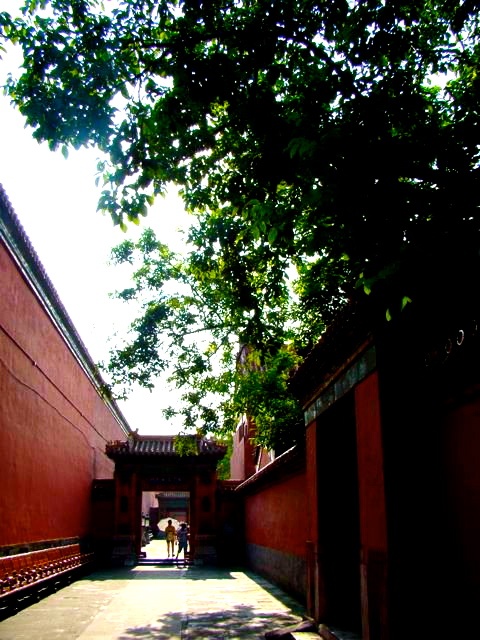
I generally try to avoid the main imperial garden, which in my opinion is always denuded of plant-life, crowded with people and littered with trash; when searching for tranquility I always head to this secluded gem instead. The target of an extended conservation program between the Palace Museum and the World Monument Fund, this beautifully restored garden was designed as the retiring-place of the Emperor Qianlong in his old age. Falling into disrepair after his death, the gardens have only recently been reopened to the public, and are a spectacular example of classical Chinese scholars-gardens. A must-see is the pavilion that houses an innocuous curving channel set into the ground – when filled with water, the Emperor and his retinue would float cups of wine in the miniature stream and drink while composing poetry (a drinking game that I think is beyond the abilities of most college students that I know today).
Changyin Pavillion
Back in the day, the royal court frequently held private showings of Chinese opera for the entertainment of the Emperor and his concubines, and this impressively imposing 3-story stage is the largest of such performance spaces in the Forbidden City. Trapdoors and hidden pathways allowed for fancy stage-effects, while the audience would sit elevated in the surrounding buildings. Exhibitions nearby display costumes and props used by the actors, as well as audio tracks of opera performances recorded in the space. Unlike the main buildings, the wooden beams of this structure were not selected for repainting during the rush of the Olympics in 2008, so the faded red and green pigments consist of the original colors left from the time of the Qing. Bright though the renovated sections may be, I personally like the aged and weathered look of the original beams in these building – to me they speak of historicity and faded glories, befitting China’s greatest link to its rich imperial past.
Article written by Asia Chiao.
