

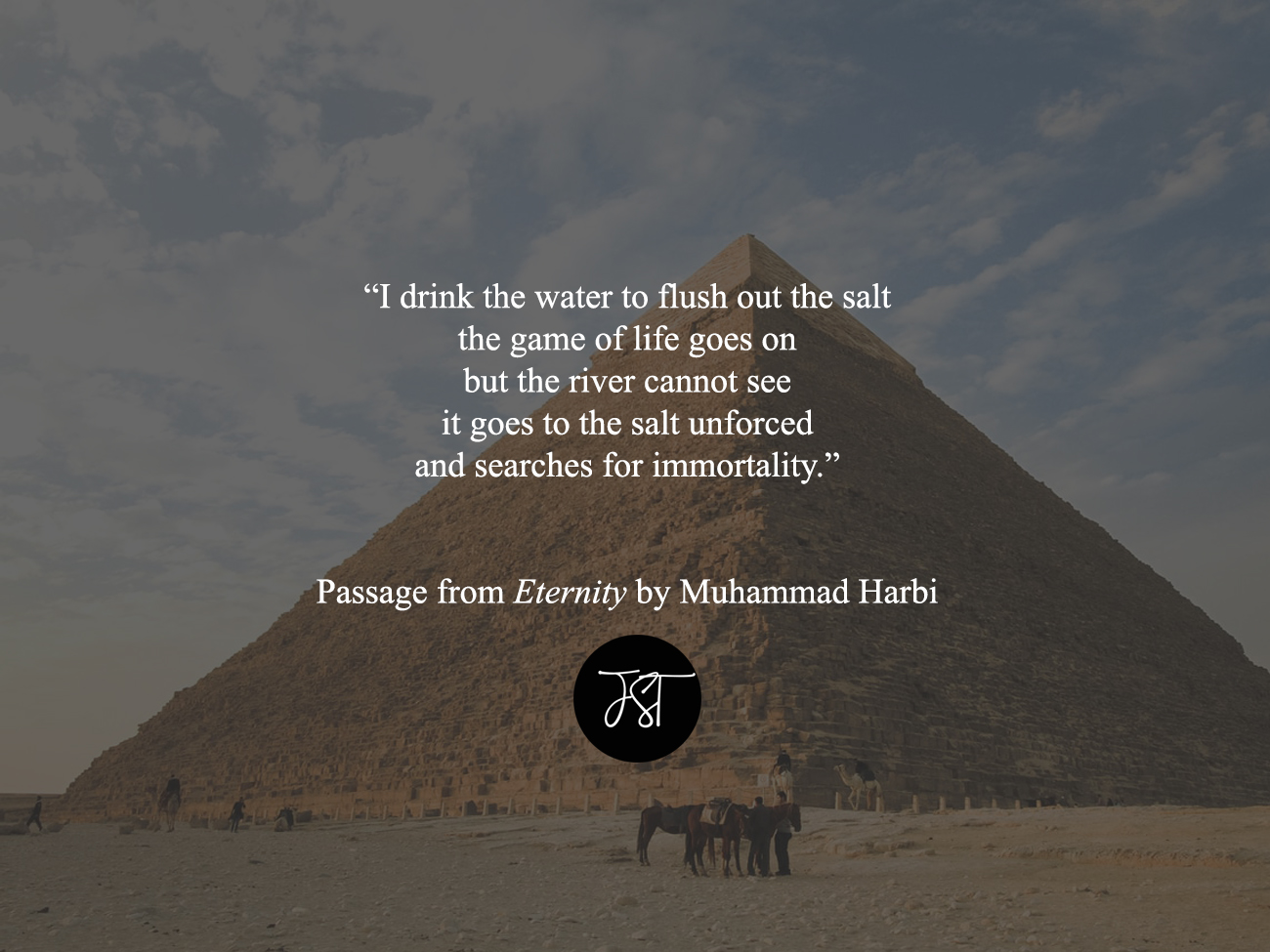
The Nile was a great source of Ancient Egypt's wealth. It provided food, soil, water, and transportation for the Egyptians.

Romania belongs to the Central European Time zone (CET), which means it is 6 hours ahead of Eastern Standard Time (EST.)
Visas are not required to travel to and visit Romania. As long as you have a valid passport, you can stay in Romania for up to 90 days.
Bucharest Henri Coanda Airport is the main international airport of Romania, with connected busses, trains, and taxi services, as well as car rentals. It is a 40 minute car ride to the city.
As with most Central European countries, public transportation is not only convenient, but super affordable. For example, a train ticket from Bucharest to Brasov will cost you as little as $7. Within the cities, a plethora of trams, busses, and taxis will occupy every major street corner, offering quick and easy trips around Romania’s beautiful country.
Bucharest itself is easy to get around, and you only really need to use public transport for longer trips. The Arc de Triomf is an hour walk from the center of town, or 18 minutes with public transport, so it is really up to you!
When ordering a taxi, try to find ones outside of major transport hubs such as bus or train stations, as the general rule in Central Europe is that only company taxis may wait in the taxi lines to prevent fraudulent business. There is also, however, an alternative called “maxi-taxi,” which are individual minibuses with posted specific routes. This is a cheaper alternative to normal taxis and can offer more ways to get around than conventional modes of transport.
Romania is a safe country for travelers, crimes only extending as far as petty pickpockets or scams. The most popular of these are money changing schemes and tourist exploitation. Romania is an economically developing country, and fights organized crime within its borders actively. Exercise caution when traveling at night, alone, without a translator, or on the outskirts of town and rural areas.
Be very careful with pickpockets!!
Romania’s weather is very similar to the rest of Central Europe – humid and hot in the Summers, reaching between 80-100 degrees Fahrenheit, and short, cold Winters, ranging between 37 and 5 Fahrenheit. Summers are the perfect time to visit one of Romania’s many beaches, all bordering the Black Sea.
The language of Romania is Romanian. Some say it has similarities to Hungarian, though, let’s be honest, that won’t help too much. While in the city you will have no difficulty finding English speakers, Romania is full of obscure dialects, especially in rural areas, that make it difficult to get around with just a few words. If possible, travel with a translator or guide.
Hello: Buna ziua
Thank you: Mulțumesc
You’re welcome: Cu plăcere
Excuse me: Scuzati-ma
I’m sorry: Imi pare rau
Please: Vă rog
Good morning: Buna dimineata
Good night: Noapte bună
My name is…: Numele meu este…
How much is this?: Cât de mult costă aceasta
I don’t understand: Nu inteleg
Do you speak English?: Vorbesti engleza?
Where is the bathroom?: Unde este toaleta?
Try to avoid talking about gypsies in relation to Romanians – while there is a large population of the former within the country, Central Europeans do not like being compared to them because of social and political stigmas regarding their culture. For the most part, however, the center of Bucharest is filled with polite and accommodating hosts. As with most European cities, the farther outside the center of town you travel, the more confrontational people can become, and safety may become an issue in the form of pickpockets, alcoholics, and general no-gooders.
The official currency of Romania is the Romanian Leu, which is divided into 100 bani. When exchanging money, look for its symbol (RON) to make sure you are exchanging the right currency. It is expected for visitors to tip, as working wages are extremely low and reliant on tipping. 10% of your bill is the common standard.
Romania uses Type C and Type F plugs, outputting between 220 and 240 volts.

Romania collects most of its fresh water (about 52%) from the Danube, collecting the rest from inland rivers, springs, and groundwater. Since it is a mountainous country, you can expect most of the water to be clean and healthy.
While the main cities of Romania have good access to Wi-Fi in cafés, hotels, and restaurants, for example, it is not recommended to rely on Cell service when travelling through rural regions, such as Transylvania, let alone the internet.
While Romania is officially tolerant of LGBTQIA+ individuals, it is always good not to bring up political or “controversial” topics, as the general population may have both highly conservative and aggressive views on such subjects. In the center of Bucharest, however, it is easy to find both acceptance and accommodation as an LGBTQIA+ member. International hotels such as the Berthelot Hotel, off the Calea Victoriei, or Thor’s Hammer Gay Bar on Strada Blănari 12. Though there is most certainly a community that will welcome you, please be aware that much of Romania is also extremely religious, and that there can be uncomfortable confrontations. In these cases, it is best to ignore such people, or, if you feel unsafe, take some time inside any “up-scale” venue.
While Romania is easy to get around without leaving much of a carbon footprint, its economy is not developed enough to support exclusively green modes of tourism. There are, however, modes of transport that are innately clean, such as the trams, metros, and trolleys, which rely on electricity exclusively. There are also bikes and scooters available for rent for about 15 lei a day!
A TIMELINE OF EGYPT'S HISTORY
Pyramids of Giza were constructed.
 UNSPLASH Lea Kobal
Egypt is introduced to Christianity and becomes the major religion by the 4th century.
Egypt is introduced to Christianity and becomes the major religion by the 4th century.
Muslim conquest of Egypt began, overseen by the Rashidun Caliphate. The Rashidun Caliphate was the first of the four major caliphates established after the death of prophet Muhammad.
Cairo is established as the capital of Egypt by the Fatmid Dynasty.
Egypt is taken into the Turkish Ottoman Empire, as a result of the conquest of Mamluk Egypt.
 Wikipedia
Napoleon Bonaparte attempts to take over, but is resisted by the Turks and the British.
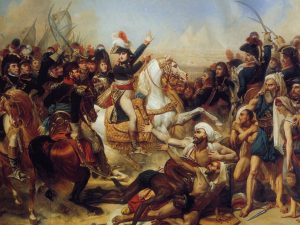 Wikipedia
Suez Canal is built, nearly bankrupting Egypt along with various other infrastructures, leading to British conquest.
Due to the declaration of war with the Ottoman Empire, which Egypt was only slightly a part of, in 1914 Britain declared a Protectorate over Egypt.
Independence is restored, and Fuad I becomes king. British influence still remains significant until the 1950s.
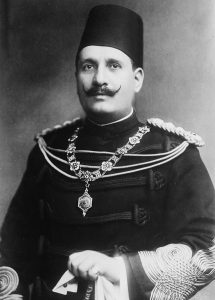 Wikipedia
President Anwar El Sadat goes to Israel to begin works on 1979 Peace Treaty
President Anwar El Sadat is assassinated by Islamic extremists in light of anti-government riots. Vice President Hosni Mubarak succeeds him, and reimposes state of emergency, which restricted freedom of expression and political activity.
Fall of President Mubarak begins. Encouraged by Tunisian street protests, anti-government demonstrations begin due to high unemployment, poor living conditions, and political corruption.
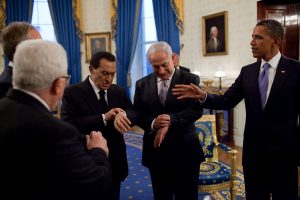 Wikipedia. The White House from Washington, DC – P090110PS-0824
Mohamed Morsi, a Muslim Brotherhood candidate, just barely wins election. Yet, it was an extremely short lived presidency, as in 2013 he was overthrown by the army, and the Muslim Brotherhood is declared a Terrorist organization. In 2014, former army chief Abdul Fattah al-Sisi wins the presidential election, and wins the next term in 2018.
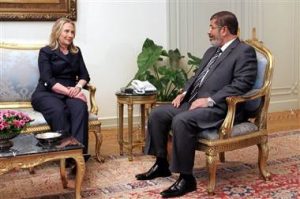 Wikipedia