
Most golfers underestimate how much goes into picking the best home golf simulator brands until they’re standing in a half-finished garage bay wondering why their setup cost twice the budget and still reads ball spin wrong.
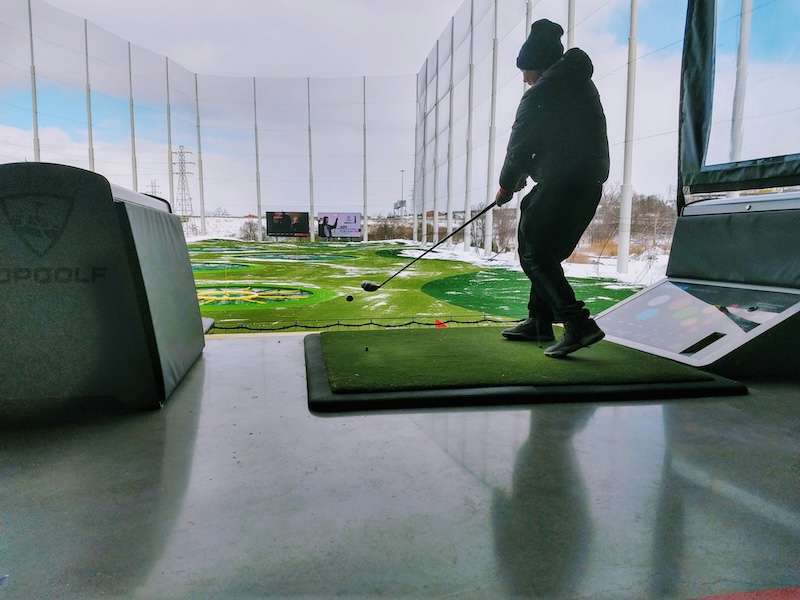 Photo by Mariah Hewines on Unsplash
The upfront costs alone, ranging from $2,000 to $70,000+, make this a real decision with real consequences. Add ceiling height restrictions, calibration headaches, and the fact that camera-based and radar-based tracking systems behave completely differently, and the margin for a bad call is wide.
After reviewing the top options across professional adoption, shot data accuracy, and long-term reliability, this guide breaks down exactly which brands are worth your attention and why.
The shortlist methodology
Every pick here was shaped by publicly available information, drawing from user reviews, feature breakdowns, official product pages, and industry directories. Only options with a proven track record in the sports equipment space made the cut, so the list reflects real-world performance rather than marketing claims.
→ See the full research breakdown
- Foresight Sports – Best for professional golf launch monitors and home golf simulators
- Friendly Golfer – Best for home golf simulator research and reviews
- SoundCheck – Best for custom smart home systems and golf simulator installation
- LaunchPad Golf – Best for golf facility partnerships and year-round golf entertainment experiences
- Eaglewood Golf – Best for golf courses and event venues
The Stakes Behind Choosing Home Golf Simulator Brands
Picking a home golf simulator brand is not a casual purchase. You’re committing serious money, often $10,000 to $50,000 when you factor in the screen, enclosure, launch monitor, and software, and the margin for regret is real.
Space constraints add another layer. Most home environments weren’t built with a 10-foot ceiling or a 15-foot hitting bay in mind, and not every simulator system accounts for that honestly upfront.
The brands that actually deliver are the ones where ball speed and spin rate accuracy hold up against real on-course performance. A tight margin of error in mph and rpm readings is what separates practice that translates from practice that just feels productive.
Course library depth and visual rendering quality at high frames per second also matter more than buyers expect. Getting those three things right leads to a setup you’ll actually use year-round, not one you’ll resent by spring.
5 Home Golf Simulator Brands Compared
Note: All data in this table is sourced from review platforms and the official websites of the listed companies.
| Company Name | Headquartered In | Best For |
| Foresight Sports | San Diego, California | Professional launch monitors and home golf simulators |
| Friendly Golfer | Not disclosed | Home golf simulator research and reviews |
| SoundCheck | Southfield, Michigan | Custom smart home systems and golf simulator installation |
| LaunchPad Golf | Okotoks, Alberta, Canada | Golf facility partnerships and year-round golf entertainment |
| Eaglewood Golf | North Salt Lake, Utah | Golf courses and event venues |
Foresight Sports – Best for Professional-Grade Launch Monitor Technology and Home Simulators
Which Services Does Foresight Sports Provide?
Foresight Sports designs and builds launch monitors, golf simulators, and performance software from their San Diego facilities. Engineering and manufacturing both happen in-house, which shows in how consistently their products perform. Serious players who want a Foresight Sports premium home golf simulator built on the same technology used by equipment manufacturers and tour professionals gain access to over 15,000 globally deployed systems’ worth of refinement. Their GC2 and GCQuad monitors remain benchmarks for shot data accuracy in both residential and commercial settings.
Why Pick Foresight Sports for Home Golf Simulator Brands?
Foresight Sports solves the accuracy gap that frustrates serious golfers when simulator data doesn’t match real on-course performance. Their patented camera-based tracking technology consistently delivers spin rate and ball speed readings with tight margins of error, and that kind of precision is rare in a home-ready package.
What the Reviews Show:
The GCQuad earning Golf Digest’s Editors’ Choice Award for Best Launch Monitor four years running says a lot on its own. Professionals and serious amateurs consistently point to data reliability and build quality as the two reasons they come back to Foresight over other options. That level of sustained recognition across both consumer and tour-level users is hard to match.
Friendly Golfer – Best for Home Golf Simulator Research and Reviews
Which Services Does Friendly Golfer Provide?
Friendly Golfer is a dedicated review and education resource focused entirely on home golf simulators and launch monitor technology. They cover launch monitors, impact screens, hitting mats, enclosures, and simulation software in depth. That narrow focus is what makes them useful. Rather than being a broad golf instruction site that dabbles in gear reviews, they dig into the specifics that buyers actually need before spending $10,000 to $50,000 on a setup.
Why Pick Friendly Golfer for Home Golf Simulator Brands?
Friendly Golfer fills a real gap for buyers who feel overwhelmed by the technical decisions involved in building a home simulator, from tracking technology choices to ceiling clearance requirements. Their focused approach means the information is specific enough to actually move someone from confused to confident before they spend anything.
What the Reviews Show:
Friendly Golfer doesn’t carry traditional ratings the way product brands do, but the site’s content structure makes clear that the audience is buyers who are deep in the research phase. The level of detail in their guides suggests a readership that takes the purchase seriously, which reflects well on the resource’s credibility in this niche.
SoundCheck – Best for Custom Golf Simulator Installation and Smart Home Integration
Which Services Does SoundCheck Provide?
SoundCheck designs and installs custom smart home systems and Full Swing golf simulators across Michigan. They handle audio, video, lighting, temperature, and security alongside certified simulator installation. As Michigan’s first Control4 Pinnacle dealer and a recognized name among the top 100 home theater companies nationally, they bring a level of technical knowledge to golf simulator setups that most AV companies can’t match. Their founder’s 25+ years in low voltage work gives the technical side real credibility (not just a marketing claim).
Why Pick SoundCheck for Home Golf Simulator Brands?
For buyers who want a golf simulator that actually works with the rest of their home, rather than sitting as an isolated tech island in the garage, SoundCheck addresses that problem directly through certified installation and smart home knowledge. Their track record in complex AV environments means the simulator setup gets the same professional treatment as every other system in the house.
What the Reviews Show:
Recognition as one of the top 100 home theater companies in the country is a meaningful signal. Clients value the turnkey nature of their work, where the simulator, the room acoustics, and the lighting all come together as one system rather than three separate headaches. That kind of full-room thinking is genuinely uncommon in this space.
LaunchPad Golf – Best for Golf Facility Partnerships and Year-Round Entertainment Experiences
Which Services Does LaunchPad Golf Provide?
LaunchPad Golf runs year-round golf entertainment facilities in Canada with expansion into the United States. They use award-winning Inrange radar technology for ball tracking, which gives their setups a strong accuracy foundation. Their facilities go beyond just hitting bays, combining heated golf suites, dining, and driving ranges into one venue. With a 25,000-square-foot U.S. facility in development, the scale they’re working at puts them in a different category from most regional golf sim operators.
Why Pick LaunchPad Golf for Home Golf Simulator Brands?
LaunchPad Golf addresses the gap for golfers who want professional-facility-level simulation without building it at home, which makes them a strong reference point for understanding what quality radar-based ball tracking actually feels like when you use it. Their Inrange technology gives buyers a real comparison baseline when evaluating what accuracy looks like at scale.
What the Reviews Show:
LaunchPad Golf’s growth into the U.S. market and their partnerships with established golf clubs suggest that the experience holds up under real usage. The combination of technology and venue quality is what drives repeat visits, and that consistency matters when you’re judging how well their tracking systems perform over time.
Eaglewood Golf – Best for Golf Courses and Event Venues
Which Services Does Eaglewood Golf Provide?
Eaglewood Golf Course is a championship 18-hole facility in North Salt Lake, Utah, operating since 1994. They offer public golf rounds, instruction, a pro shop, and an Outdoor Trackman Range System. The venue also runs The Grill restaurant and an Event Center, handling corporate outings, weddings, and business meetings. For golfers who want to see how professional-grade outdoor tracking technology performs in a real course environment, Eaglewood gives that hands-on reference point alongside a full golf experience.
Why Pick Eaglewood Golf for Home Golf Simulator Brands?
Eaglewood Golf serves golfers who want to experience Trackman-quality outdoor range technology before committing to an indoor simulator setup at home, giving them a practical feel for what accurate shot data looks like in a live environment. That kind of real-world exposure often clarifies exactly what level of tracking investment makes sense for a home build.
What the Reviews Show:
Eaglewood’s longevity since 1994 is a quiet credibility signal. Golfers return for the combination of competitive play and quality practice infrastructure, and the Trackman range system is consistently noted as a standout feature that separates this facility from standard public courses in the region.
Evaluation Criteria and Research Approach
Building this list started with a wide initial pull, not a short one. The goal was to gather enough options that the filtering process could do real work, rather than starting narrow and missing something worth including.
Data Collection Fundamentals
The starting point was a broad sweep across golf equipment directories, specialist review platforms, and industry-focused forums where simulator buyers and owners actually share real experiences. Official brand websites were pulled alongside third-party sources so the picture of each company came from more than one angle. Case studies and setup guides from simulator-specific publications also fed into the initial pool, giving context around how these systems perform after installation, not just on spec sheets.
Filtering Candidates Against Criteria
Options without a verifiable track record in the sports equipment space were removed early. Verification meant cross-referencing company claims against patterns visible in review data, not just checking whether a company had positive mentions somewhere. Where review sentiment pointed in one clear direction, that signal carried weight. Where it was scattered or thin, the option was set aside rather than given the benefit of the doubt.
Evidence Review and Cross-Reference
Each remaining candidate was checked for consistency between what their official materials described and what showed up in independent reviews and user accounts. Discrepancies between claimed performance and reported real-world results, particularly around shot tracking accuracy and software reliability, were flagged and factored into the evaluation. Companies where the claims and the real-world evidence lined up closely scored better across the board.
The Authority Layer
Industry recognition, awards, and mentions in respected golf and technology publications were treated as supporting signals rather than deciding factors. Sustained recognition matters, though. A launch monitor winning the same award four consecutive years from a credible publication tells you something different than a one-time mention. Professional adoption rates and appearances in high-stakes contexts, like tour-level events, also contributed to the authority assessment for each brand.
Home Golf Simulator Brands Case Files
Each company’s own digital presence was reviewed for depth of service documentation, quality of technical specification pages, and the presence of verified buyer feedback tied to home simulator use cases. Brands with dedicated residential simulator pages, detailed feature breakdowns, and real buyer reviews tied to specific products carried more weight than those with only general marketing content. The case file review helped separate companies that actively serve the home simulator buyer from those where it’s a minor consideration.
Finding the Right Home Golf Simulator Brands for Your Needs
Choosing the right brand starts with being honest about what you actually need from the setup, because a system built for a commercial facility isn’t automatically the right fit for a 12-foot garage ceiling. Here’s what to weigh before committing:
- Industry/Domain Experience: Look for brands or providers with a specific track record in golf simulation, not just general sports tech. Years in the space and the types of clients they’ve served tell you a lot about what they actually understand.
- Features and Service: Ball speed accuracy, spin rate measurement, course library size, and frames per second on visual rendering all vary significantly between brands. Match the feature set to how seriously you plan to use the system.
- Pricing Structure: Expect to spend anywhere from $5,000 to $50,000+ for a serious home setup. Understand what’s included in the base price versus what requires a software subscription or separate purchase.
- Results Measurement: Ask about the margin of error on shot data readings. The difference between a 1 mph and a 3 mph tolerance on ball speed accuracy compounds across a full practice session.
- Industry Knowledge and Compliance: Brands that meet launch monitor certification standards and have documented adoption by professional facilities give you a real-world performance baseline that consumer-only brands often can’t match.
Getting the home simulator choice right means looking past the spec sheet and asking how a system actually holds up after setup. The best home golf simulator brands earn their reputation through shot data accuracy, course library depth, and consistent performance over time. Foresight Sports sits at the top of the professional adoption tier for good reason, but the right fit depends on your space, your budget, and how seriously you plan to use it. This space is growing fast, and the quality bar keeps rising.
