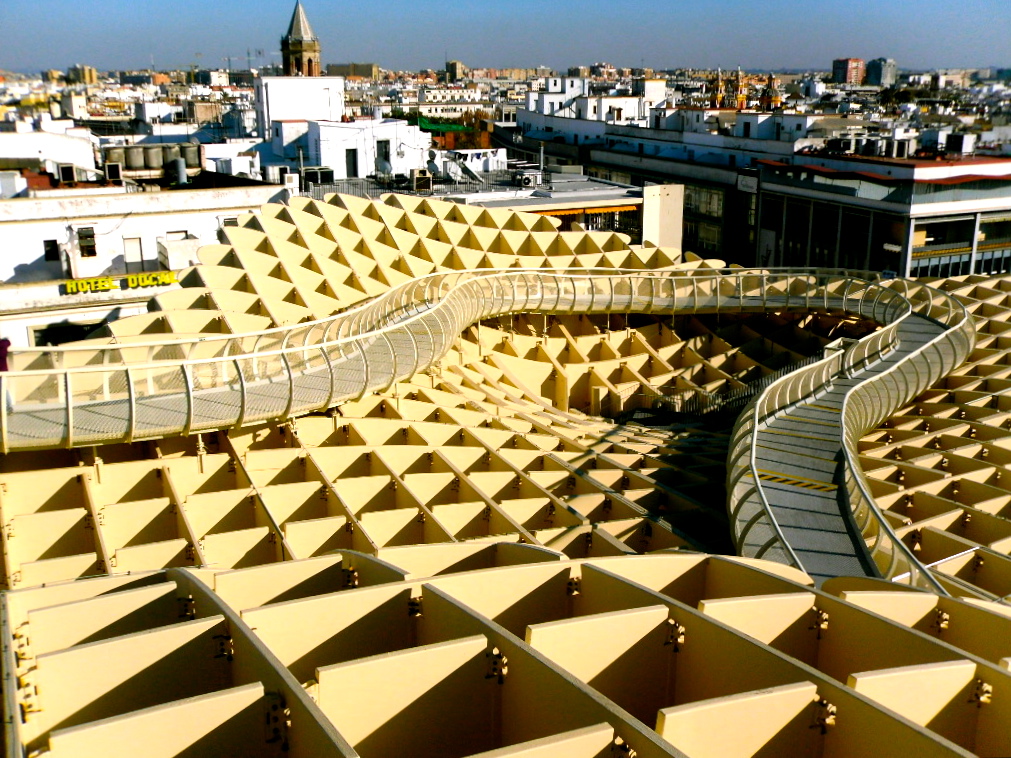
In order to crown the central marketplace in Sevilla, the city commissioned the €86 million project of the Metropol Parasol, known by locals as Las Setas de la Encarnación, or the Incarnation’s Mushrooms.

In Spain, life in the city is all about food. Markets here sell food in much smaller quantities than American supermarkets. Costco style shopping, gallon jugs of milk and 30 packs of beer remain unheard of in Spain. Fresh meat and produce come in from the local farms each day to be sold in the outdoor city market and families attend in order to buy food that they will prepare within the next few days. The interactions and transactions that take place in these food markets throughout the country define a substantial pillar of Spanish culture.
To commemorate the cultural importance of these marketplaces many cities decorate them with works of architecture. In order to crown the central marketplace in Sevilla, the city commissioned the €86 million project of the Metropol Parasol, known by locals as Las Setas de la Encarnación, or the Incarnation’s Mushrooms. The ornate structure designed by Jürgen Mayer-Hermann is ordered into four levels. The underground level houses a typical supermarket along with a display area of the Roman and Moorish ruins discovered on site during the excavation process. The ground level obviously serves as the forum for the outdoor market. Meanwhile the upper two levels allow visitors to climb onto various levels of a meandering pathway atop the mushrooms. The pathway cresting the supposed largest wooden structure in the world provides spectacular 360 degree views of the entire city of Sevilla.
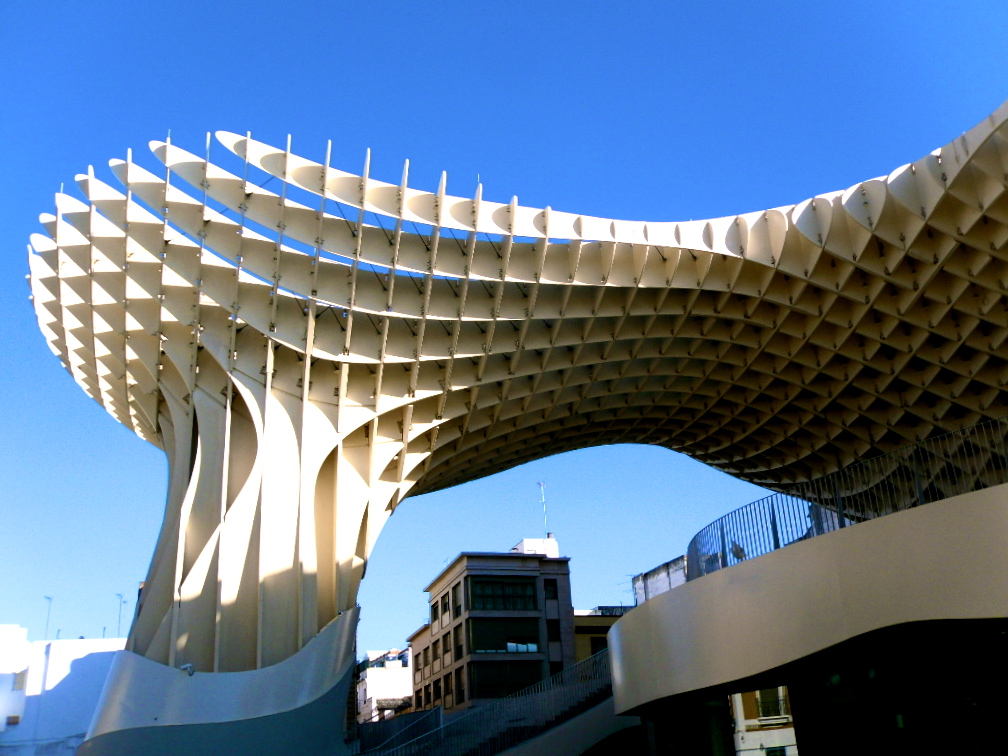
Las Setas de la Encarnación provides more than simply a piece of eye candy for the passing tourist however. The construction of this project illustrates the process of a successful definition of a space. Where the structure now sits once served as a parking lot, a dead part of the city devoid of tourist and resident investment. Now the area serves not only as a tourist attraction, but also a podium for public concerts and a venue for markets and shops. In other words, it has become a common center for social interaction in the city. Whether this transformation warrants the price tag is debatable, but the fact remains that Sevilla has taken a strong element of their culture – the farmer’s market – and utilized architecture to redefine the social conception of a space based on this facet of their society.