“The nails that stick up get hammered down” was how one of my gray-haired students concluded, as he gently banged his fist on the coffee table between us with a stern look on his face. I couldn’t have thought of a better way of summing up a homogenous social structure in Japan that makes up his fascinating society, and I was too lost in thought to go over any grammatical slips.
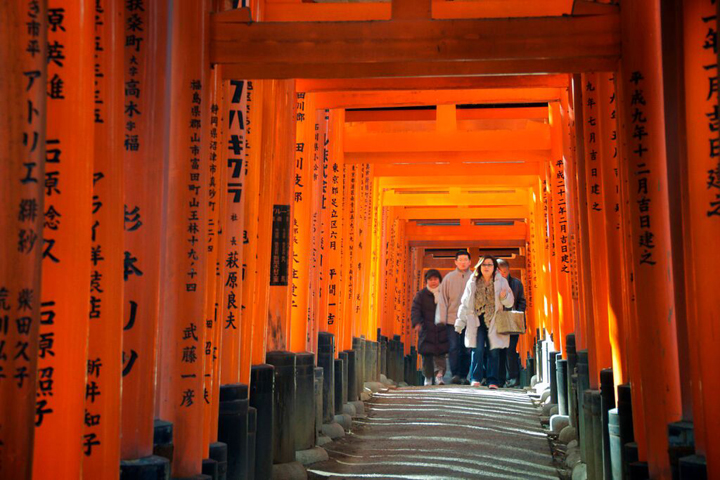 Photo: Gennaro Serra
I’d been teaching adults at an English school in Japan as a way of soaking up some of its culture on a personal level, and coming straight from two years in India, the cultural leap was miles beyond anything I could have imagined. The final chaotic ride to Delhi’s departure terminal came with the usual bombardment of the senses: an ear-piercing sound of the Rickshaw’s two-stroke engine, cows munching on piles of garbage in the middle of traffic, and a dizzying array of smells to name a few. I was always glad to get a driver that covered all the Indian motor requirements: a good horn, good brakes, and good luck.
 Photo: Gennaro Serra
 Photo: Gennaro Serra
In Japan, at Tokyo’s International airport, it felt like being teleported into a kind of urban Alice-in-Wonderland scene. The train conductor, alone in his tiny cabin, was dutifully announcing every stop while making sincere hand gestures as if he were part of an animated conversation between string puppets. Sitting on a swinging window seat, I broke the carriage’s dead silence by opening a sandwich wrapper. My first bite drew enough disapproving glances to suddenly make me feel like the nail that was being hammered down.
I’d experienced several earthquakes before, but nothing came close to the one a year later here in Japan, on March 2011. Soon after pouring Reiko a cup of tea to kick off our weekly conversation class, at 2:45pm, we felt a gentle rumble. Curiously this one slowly grew in strength…and grew. Out my window I could see ‘the Scramble’, the world’s busiest pedestrian crossing, with its giant screen ads and mesmerizing neon backdrop. They say over a thousand people cross here with every light change, and right then they had all stopped in their tracks like a herd of antelopes in fight or flight mode.
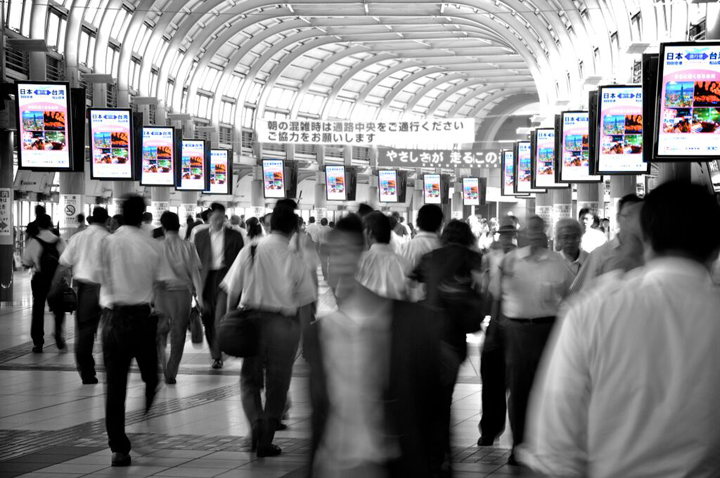 Photo: Gennaro Serra
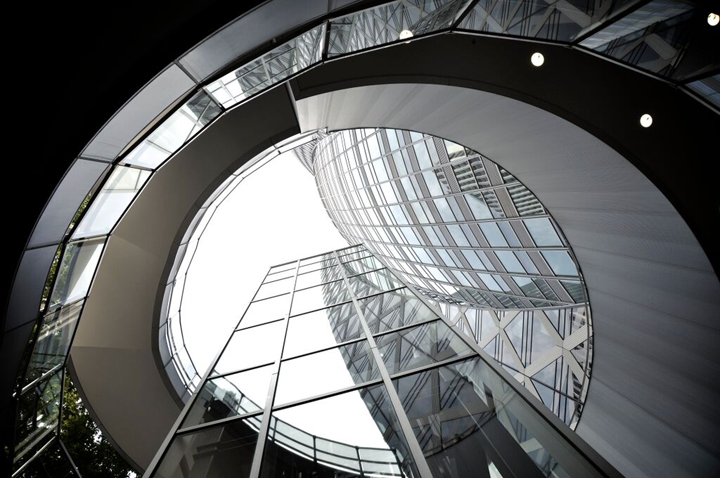 Photo: Gennaro Serra
When high up on the sixth floor of an old building, the mind juggles with too many survival strategies to make any real sense of the situation. As the shaking led to terrifying sounds of rattling and clanging, we wobbled over to the outside fire escape. Reaching the ground was an unimaginable sense of relief. The surrounding buildings, each with their own resonant frequencies, were swaying and knocking each other about like clumsy giants. One teacher motioned over to the top of the Cerulean Tower hotel, a stone’s throw away from us. With chins raised, we stood nervously as this monster of a skyscraper swung in big circles, seemingly defying basic laws of physics. We marveled in silence at the feats of engineering in Japan.
Until that moment, Fukushima had been providing quite a bit of Japan’s power in major cities such as Tokyo, which meant that most of the city was paralyzed by a sudden blackout. The four-hour walk home along the train tracks resembled a mass exodus of commuters. Fifty-meter lines formed at public phone booths and bus stops as people desperately tried to get hold of their loved ones.
 Photo: Gennaro Serra
 Photo: Gennaro Serra
Despite their brief panic, the people of Japan have an incredible level of resilience and adaptation which I’ll always admire. Tokyo was practically open for business again the very next day. I on the other hand, along with most foreigners there, felt it was time to leave when an invisible threat of the nuclear fallout at Fukushima began to stir in our minds. This decision eventually led me to embark on an adventure of a lifetime in the Himalayas.